Loading subject page…


436,009 views


Video Summary: What Is Valence Bond Theory
Why do hydrogen atoms "choose" to bond at exactly 74 picometers apart? Valence bond theory explains this precise molecular choreography by showing how atomic orbitals overlap to form stable covalent bonds when attractive forces outweigh repulsive ones. This fundamental chemistry concept governs everything from water molecules to the complex pharmaceuticals developed by companies like Pfizer and Moderna. Watch the full video on JoVE Coach to master this concept with expert-led visuals and step-by-step explanations.
Valence bond theory represents one of chemistry's most elegant explanations for how atoms form covalent bonds. This quantum mechanical approach reveals that chemical bonds arise when atomic orbitals overlap, creating regions of shared electron density that stabilize molecular structures. Unlike earlier bonding models, this theory incorporates the wave nature of electrons and explains why molecules have specific geometries and bond lengths.
The theory's foundation rests on energy minimization principles. When atoms approach each other, multiple forces compete: electrons attract to both nuclei (favorable), while electrons repel other electrons and nuclei repel other nuclei (unfavorable). The magic happens when these competing forces reach equilibrium, creating the most stable molecular configuration.
The hydrogen molecule (H₂) serves as the perfect case study for understanding valence bond theory basics. As two hydrogen atoms approach from infinite separation, their energy initially decreases due to electron-nucleus attractions. However, this energy reaches a minimum at 74 picometers-the optimal H-H bond length. Further compression increases energy dramatically due to nuclear repulsion, explaining why molecules maintain specific bond distances.
This energy profile appears throughout chemistry, from the 96 picometer bond in hydrogen fluoride (HF) to the complex multi-bond systems in pharmaceutical compounds studied by students at institutions like MIT and Stanford. Understanding these energy relationships proves crucial for AP Chemistry exams and college-level physical chemistry courses.
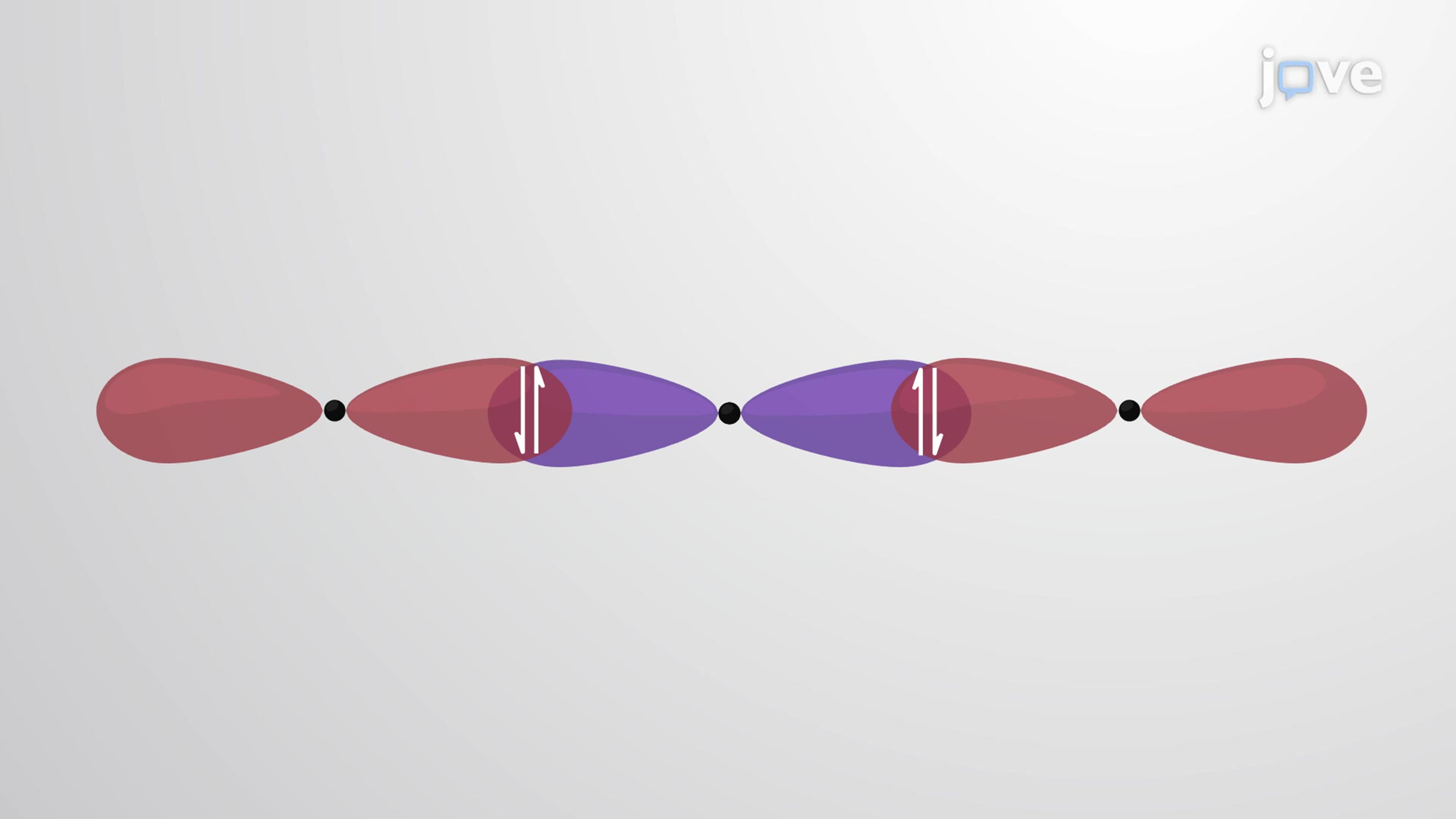
Valence bond theory in detail reveals how different orbital combinations create distinct bonding patterns. The head-to-head overlap between atomic orbitals produces sigma (σ) bonds-the strongest type of single covalent bond. Whether involving s-s overlap (as in H₂), s-p overlap (as in HF), or p-p overlap (as in F₂), maximum orbital overlap always correlates with greater bond strength.
These concepts directly impact success on standardized tests like the MCAT, where students must predict molecular geometries and relative bond strengths. Medical schools across the United States, from Harvard to UCSF, expect students to apply these principles when understanding drug-receptor interactions and biochemical processes.
Modern pharmaceutical development relies heavily on valence bond theory concepts. When companies like Johnson & Johnson design new medications, chemists use these principles to predict how drug molecules will interact with biological targets. The theory also explains why certain molecular shapes facilitate specific biological functions-knowledge essential for students pursuing careers in medicine, pharmacy, or biotechnology.
Students preparing for college chemistry courses or professional school admissions benefit from mastering these fundamentals. The theory provides the foundation for understanding more advanced topics like molecular orbital theory, hybridization, and coordination chemistry-all frequently tested concepts on graduate school entrance exams.
Related Micro-courses