Loading subject page…

- Chemistry
- Molecules, Compounds, and Chemical Equations
- Formula Mass and Mole Concepts of Compounds
Micro-course: Molecules, Compounds, and Chemical Equations
629,318 views
Learn key concepts and earn your certificate.






Formula Mass and Mole Concepts of Compounds


00:00
02:56
Video Summary: Formula Mass and Mole Concepts Tutorial
Did you know that a single teaspoon of table sugar contains approximately 1.5 × 10²² individual sucrose molecules? Formula mass and mole concepts help chemists bridge the gap between atomic-scale particles and measurable quantities in the laboratory. This Formula Mass And Mole Concepts Tutorial demonstrates how to calculate molecular masses, convert between grams and moles, and determine percent composition using everyday compounds like sucrose. Students learn practical calculation methods essential for chemistry coursework and standardized exams. Watch the full video on JoVE Coach to master this concept with expert-led visuals and step-by-step explanations.
- Understand the fundamental relationship between formula mass and mole concepts in chemical calculations
- Identify the difference between molecular mass (in amu) and molar mass (in g/mol) for chemical compounds
- Apply Avogadro's number (6.022 × 10²³) to convert between moles and number of particles
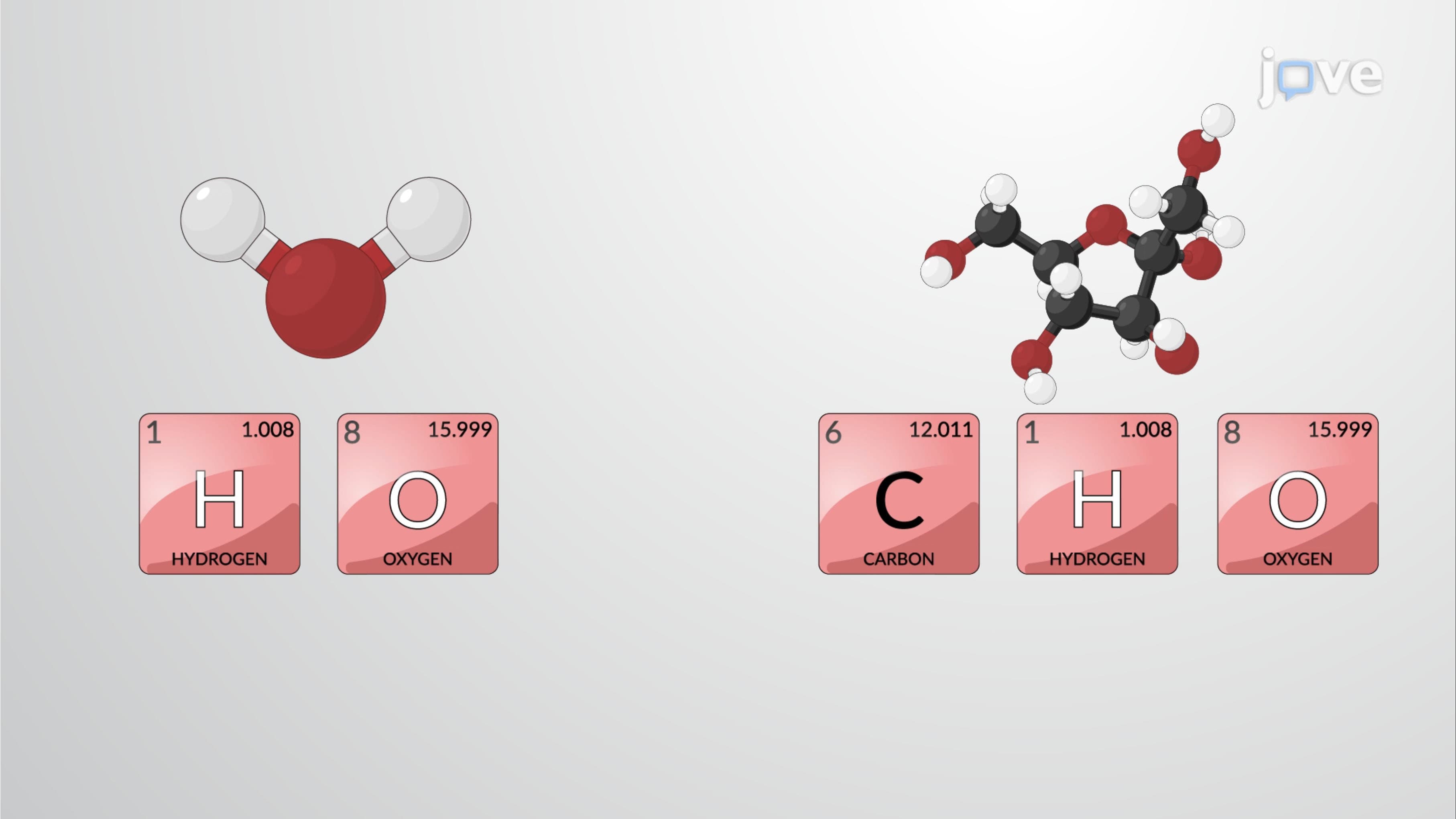
- Analyze chemical formulas to calculate molecular mass by summing atomic masses of constituent elements
- Evaluate percent composition of elements within compounds using mass-based calculations
- Recognize practical applications of molar mass in laboratory measurements and pharmaceutical dosing
- Compare different calculation methods for determining particle quantities in chemical samples
- Explore cross-multiplication techniques for solving mole-to-mass conversion problems
Understanding Formula Mass and Mole Concepts
Formula mass and mole concepts form the cornerstone of quantitative chemistry, enabling scientists to work with measurable amounts of substances while understanding their atomic-level composition. The molecular mass represents the sum of atomic masses for all atoms in a chemical formula, expressed in atomic mass units (amu). This fundamental calculation serves as the bridge between the microscopic world of atoms and the macroscopic world of laboratory measurements.
Calculating Molecular Mass and Molar Mass
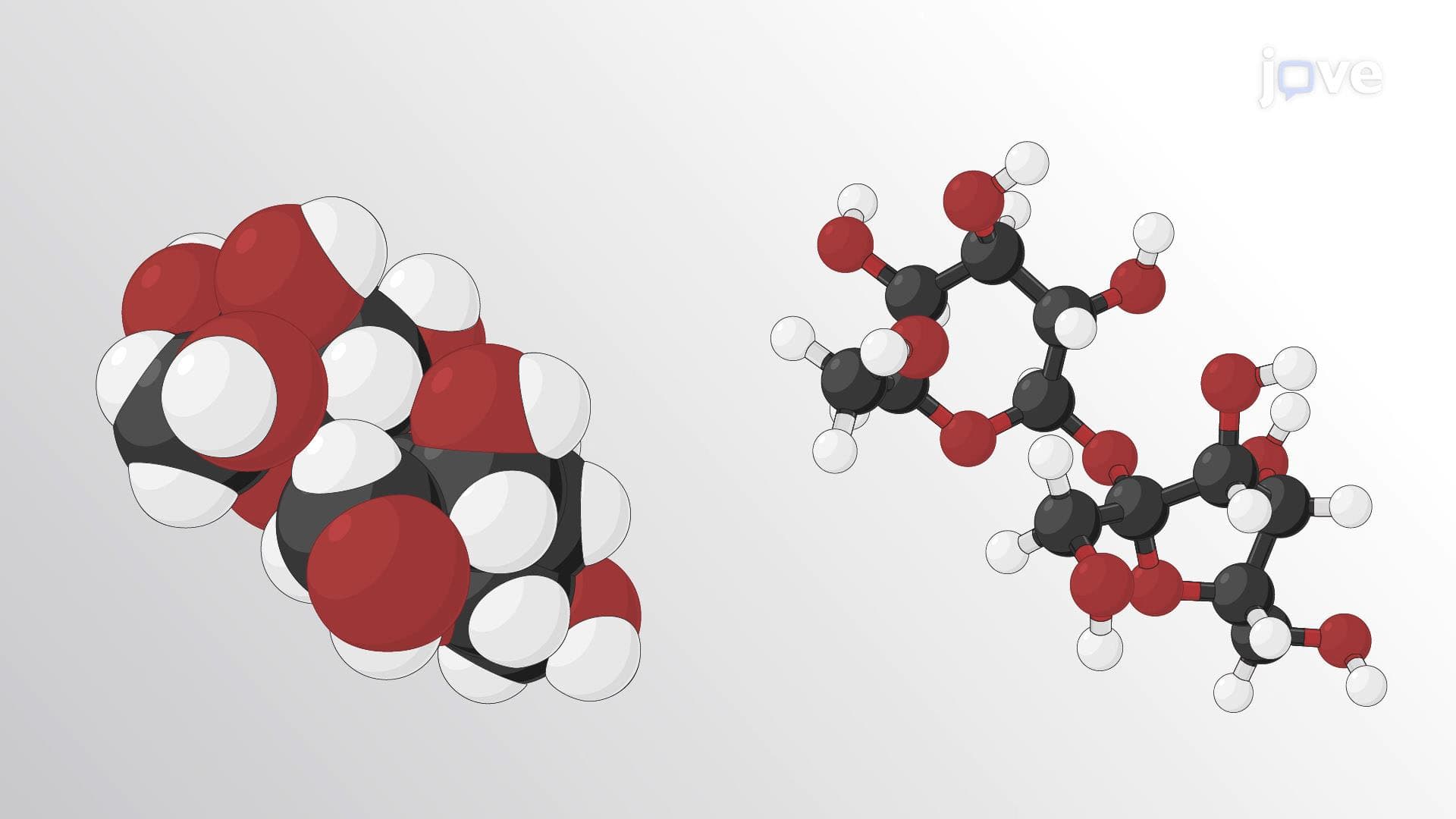
The process begins by identifying each element in a compound's chemical formula and multiplying the atomic mass by the number of atoms present. For sucrose (C₁₂H₂₂O₁₁), students multiply carbon's atomic mass (12.01 amu) by 12 atoms, hydrogen's atomic mass (1.008 amu) by 22 atoms, and oxygen's atomic mass (16.00 amu) by 11 atoms. The sum yields sucrose's molecular mass of 342.3 amu. Importantly, this value numerically equals the molar mass when expressed in g/mol, making 342.3 g/mol the molar mass of sucrose.
Avogadro's Number and Particle Calculations
Avogadro's number (6.022 × 10²³) connects moles to actual particle counts, enabling chemists to determine how many molecules exist in any given sample. This relationship proves essential for pharmaceutical companies calculating drug dosages and food manufacturers determining nutritional content. When working with a 150-gram sample of sucrose, students can use proportional reasoning: if 342.3 grams contains 6.022 × 10²³ molecules, then 150 grams contains 2.63 × 10²³ molecules.
Percent Composition Applications
Mass percent calculations reveal the relative abundance of each element within a compound, information crucial for quality control in manufacturing and nutritional labeling. To find hydrogen's mass percent in sucrose, students divide the total mass of hydrogen atoms (22.18 g/mol) by sucrose's total molar mass (342.3 g/mol), then multiply by 100%, yielding 6.4% hydrogen. This technique applies broadly across industries, from analyzing steel alloys in construction to determining protein content in food products.
These concepts appear frequently on standardized exams including the AP Chemistry exam, SAT Subject Test in Chemistry, and college placement tests. Mastery requires consistent practice with dimensional analysis and careful attention to significant figures in calculations.
Frequently Asked Questions
Formula mass and mole concepts work together to quantify chemical substances at both atomic and macroscopic scales. Formula mass represents the total mass of all atoms in a molecule (measured in amu), while mole concepts use Avogadro's number to convert between microscopic particles and measurable gram quantities. The molar mass numerically equals the formula mass but uses different units (g/mol instead of amu).
AP Chemistry frequently tests formula mass through stoichiometry problems, percent composition questions, and empirical formula determinations. Students must calculate molecular masses accurately, convert between moles and grams, and determine limiting reagents in chemical reactions. Practice with dimensional analysis and significant figures proves essential for exam success.
Focus on memorizing atomic masses for the most frequently encountered elements: H (1.01), C (12.01), N (14.01), O (16.00), Na (23.00), and Cl (35.45). Create flashcards linking elements to their masses and practice calculating molecular masses for common biological molecules like glucose, amino acids, and nucleotides. Regular practice with timed calculations builds both speed and accuracy.
Pharmaceutical companies rely heavily on molar mass calculations to determine precise drug dosages and ensure consistent pill manufacturing. For example, when producing acetaminophen (molecular mass 151.16 g/mol), companies calculate exactly how many molecules deliver the desired 325 mg dose. Quality control labs use percent composition analysis to verify that each batch meets FDA purity standards.
Basic algebra and proportional reasoning suffice for most formula mass calculations. The math involves multiplication, division, and simple cross-multiplication techniques typically learned in middle school. Focus on understanding the conceptual relationships rather than complex calculations, and use dimensional analysis to keep track of units throughout problem-solving.
Create a systematic study plan focusing on three key areas: memorizing common atomic masses, practicing dimensional analysis techniques, and working through diverse problem types. Use active recall by covering answers while working practice problems, and form study groups to explain concepts aloud. Time yourself on calculations to build confidence for exam conditions.
Progress naturally to stoichiometry and chemical equations, which build directly on mole concepts. Then explore solution concentration calculations (molarity, molality) and gas laws, all of which rely heavily on molar mass calculations. Advanced topics include equilibrium calculations and thermochemistry, where precise mole determinations become crucial for solving complex problems.
Related Micro-courses