Loading subject page…

- Chemistry
- Transition Metals and Coordination Complexes
- Crystal Field Theory - Octahedral Complexes
Micro-course: Transition Metals and Coordination Complexes
222,714 views
Learn key concepts and earn your certificate.



Crystal Field Theory - Octahedral Complexes


00:00
02:58
Video Summary: Crystal Field Theory Octahedral Complexes Explained
Ever wonder why ruby gemstones are red while emeralds are green, even though both contain similar transition metals? Crystal field theory octahedral complexes explains how metal ions interact with surrounding molecules to create these stunning color differences. From the hemoglobin in your blood to industrial catalysts used by companies like DuPont, octahedral complexes are everywhere in chemistry and biology. Crystal Field Theory Octahedral Complexes Explained breaks down the electrostatic interactions that determine electronic structure, magnetism, and color properties. Watch the full video on JoVE Coach to master this concept with expert-led visuals and step-by-step explanations.
- Understand the fundamental principles of Crystal Field Theory Octahedral Complexes Explained and how electrostatic interactions shape electronic structure
- Identify the energy splitting pattern of d orbitals in octahedral coordination environments
- Analyze why dz² and dx²-y² orbitals have higher energy than dxy, dyz, and dxz orbitals
- Compare strong-field ligands (like CO) versus weak-field ligands (like I⁻) using the spectrochemical series
- Evaluate how crystal field splitting energy (Δoct) affects magnetic and optical properties
- Apply orbital symmetry concepts to distinguish between eg and t2g orbital sets
- Recognize real-world applications in biological systems and industrial catalysis
- Explore how metal ion charge affects the magnitude of crystal field splitting
Understanding Crystal Field Theory Octahedral Complexes
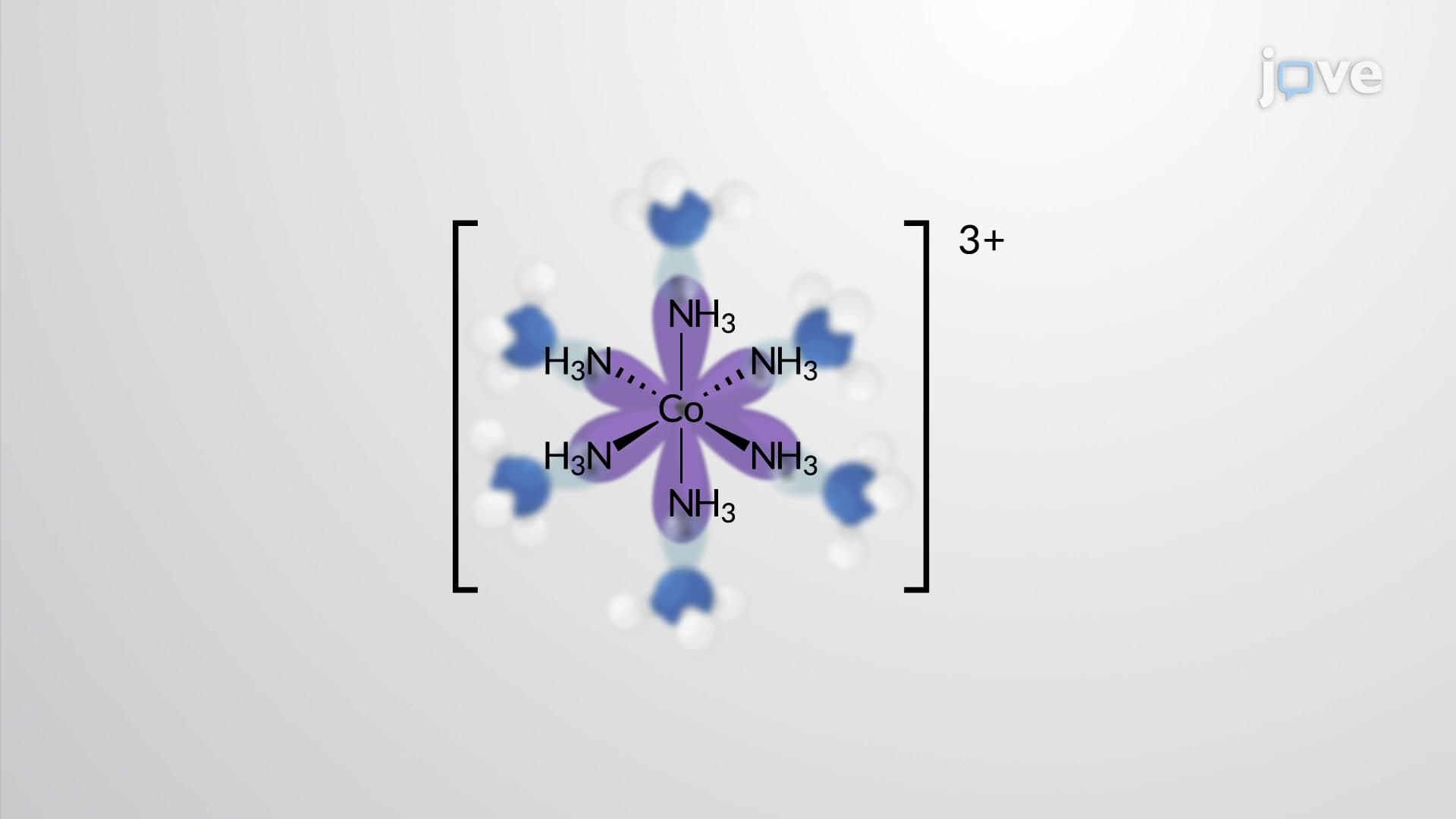
Crystal field theory octahedral complexes represents one of chemistry's most elegant explanations for transition metal behavior. This theoretical framework models ligands as negative point charges surrounding a central metal ion, creating an electrostatic field that splits the normally degenerate d orbitals into distinct energy levels. The octahedral geometry, featuring six ligands positioned along the x, y, and z axes, is incredibly common in both biological and synthetic systems.
Orbital Energy Splitting and Electronic Structure
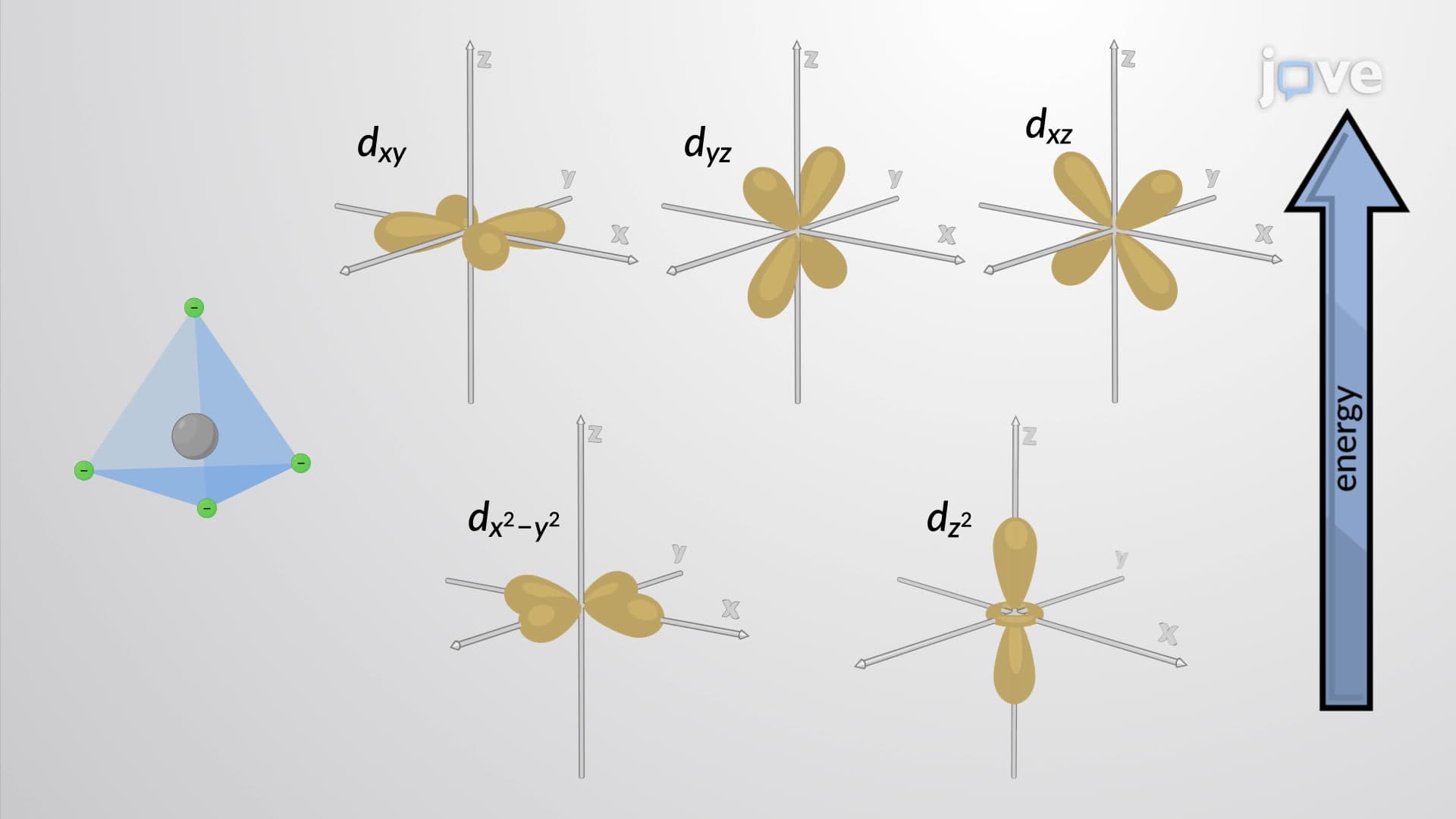
In an octahedral crystal field, the five d orbitals split into two distinct energy groups. The dz² and dx²-y² orbitals, collectively called the eg set, point directly toward the ligands and experience stronger electrostatic repulsion, placing them at higher energy. The dxy, dyz, and dxz orbitals form the t2g set, positioned between the ligand axes and experiencing weaker repulsion. This energy difference, termed crystal field splitting energy (Δoct), determines many properties including color, magnetism, and reactivity.
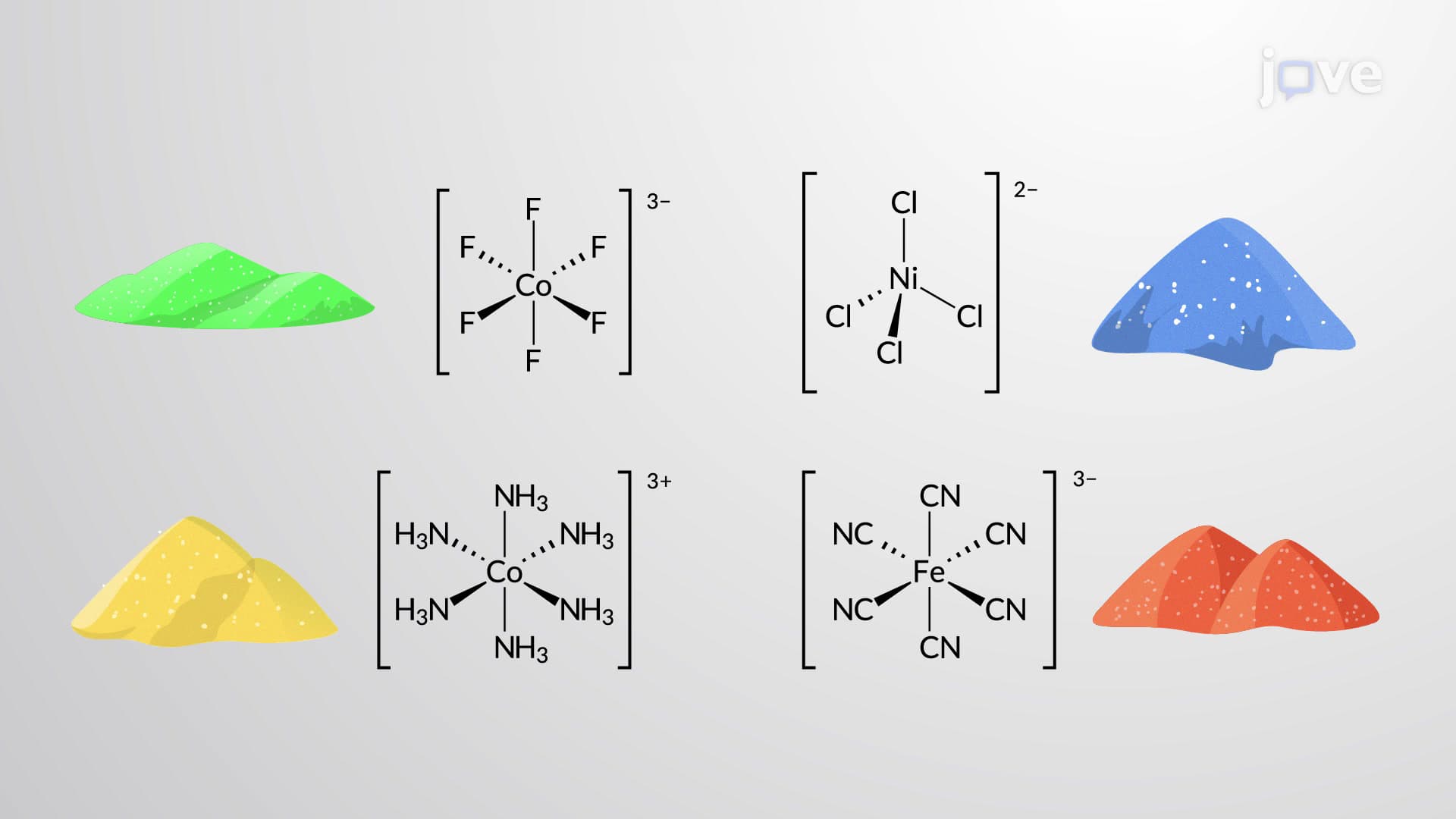
The magnitude of Δoct depends on several factors: ligand field strength, metal ion charge, and metal-ligand distance. Strong-field ligands like cyanide (CN⁻) and carbon monoxide create large splitting, while weak-field ligands like iodide (I⁻) produce smaller energy gaps. This relationship is organized in the spectrochemical series, a crucial tool for predicting complex behavior.
Real-World Applications and Exam Relevance
Understanding octahedral complexes is essential for success in AP Chemistry, college-level inorganic chemistry, and pre-medical coursework including MCAT preparation. These concepts explain why hemoglobin binds oxygen reversibly, how transition metal catalysts work in petroleum refining, and why certain coordination compounds exhibit specific colors and magnetic properties.
In industrial applications, companies like Dow Chemical utilize octahedral titanium complexes as polymerization catalysts, while pharmaceutical companies design octahedral platinum complexes like cisplatin for cancer treatment. The color properties explained by crystal field theory are exploited in everything from architectural glass tinting to gemstone formation.
For exam success, focus on predicting electron configurations in split d orbitals, calculating magnetic moments from unpaired electrons, and explaining color origins through electronic transitions. Practice problems often involve comparing high-spin versus low-spin configurations based on ligand field strength.
Frequently Asked Questions
Crystal field theory octahedral complexes describes how six ligands arranged around a transition metal ion create an electrostatic field that splits d orbitals into higher-energy eg and lower-energy t2g sets. This theory explains the colors, magnetic properties, and reactivity of countless compounds from biological systems like hemoglobin to industrial catalysts. It's fundamental to understanding inorganic chemistry and appears frequently in AP Chemistry and college exams.
MCAT questions often test your ability to predict electron configurations in split d orbitals and explain color changes in coordination compounds. AP Chemistry exams typically ask about orbital energy diagrams, magnetic properties, and spectrochemical series applications. You'll need to identify high-spin versus low-spin configurations and explain how ligand field strength affects these properties.
Create orbital energy diagrams for different metal ions and ligand combinations, practice predicting electron configurations using Hund's rule, and memorize key positions in the spectrochemical series. Use flashcards for strong-field versus weak-field ligands, and work through problems involving magnetic moment calculations. Focus on connecting theory to real examples like colored gemstones and biological systems.
Different ligands create different crystal field splitting energies (Δoct), which changes the energy gap between t2g and eg orbitals. When electrons transition between these energy levels, they absorb specific wavelengths of light, creating the observed color. For example, [Co(NH3)6]³⁺ appears yellow-orange while [Co(CN)6]³⁻ appears pale yellow due to different ligand field strengths.
While the mathematical details can be complex, the core concepts are accessible to motivated high school students, especially those in AP Chemistry. Focus on the visual aspects first, how orbitals split and why certain arrangements have higher energy. The orbital shapes and energy diagrams provide excellent foundations before tackling more advanced applications.
Count the d electrons for your metal ion, then fill the split orbitals following Hund's rule and considering ligand field strength. Strong-field ligands favor low-spin (electrons pair in t2g before occupying eg), while weak-field ligands favor high-spin (electrons occupy all orbitals singly first). Unpaired electrons determine magnetic behavior, more unpaired electrons mean stronger paramagnetism.
Octahedral complexes are everywhere in US industries: titanium complexes in aerospace alloys, chromium complexes in stainless steel production, and iron complexes in pharmaceutical manufacturing. Companies like 3M use octahedral metal complexes in advanced materials, while biotech firms exploit these principles in drug design. Even water treatment facilities use octahedral iron and aluminum complexes for purification processes.
Explore ligand field theory for more sophisticated bonding descriptions, learn about other coordination geometries like tetrahedral and square planar complexes, and study organometallic chemistry applications. Advanced courses cover molecular orbital theory approaches and spectroscopic methods for characterizing coordination compounds. These concepts become crucial for graduate-level inorganic chemistry and materials science.
Related Micro-courses