Loading subject page…


222,714 views


Video Summary: What Is Structural Isomerism
Ever wondered why two compounds with identical molecular formulas can behave completely differently in chemical reactions? Structural isomerism explains this fascinating phenomenon in coordination chemistry, where compounds share the same molecular formula but differ in how atoms connect to the central metal. Consider cobalt complexes used in medical imaging at hospitals like Johns Hopkins-small structural changes dramatically alter their properties and applications. This concept is fundamental to understanding coordination compounds and their diverse behaviors in both laboratory and clinical settings. Watch the full video on JoVE Coach to master this concept with expert-led visuals and step-by-step explanations.
Structural isomerism represents a fundamental concept in coordination chemistry where compounds possess identical molecular formulas but exhibit different atomic connectivity patterns around the central metal ion. This phenomenon is particularly significant in advanced chemistry courses and professional applications, from pharmaceutical development at companies like Pfizer to materials science research at MIT and Stanford.
Coordination-sphere isomerism occurs when ligands within the coordination sphere exchange positions with counterions in the outer sphere of the crystal lattice. This exchange maintains the metal's coordination number while altering the compound's overall composition and properties.
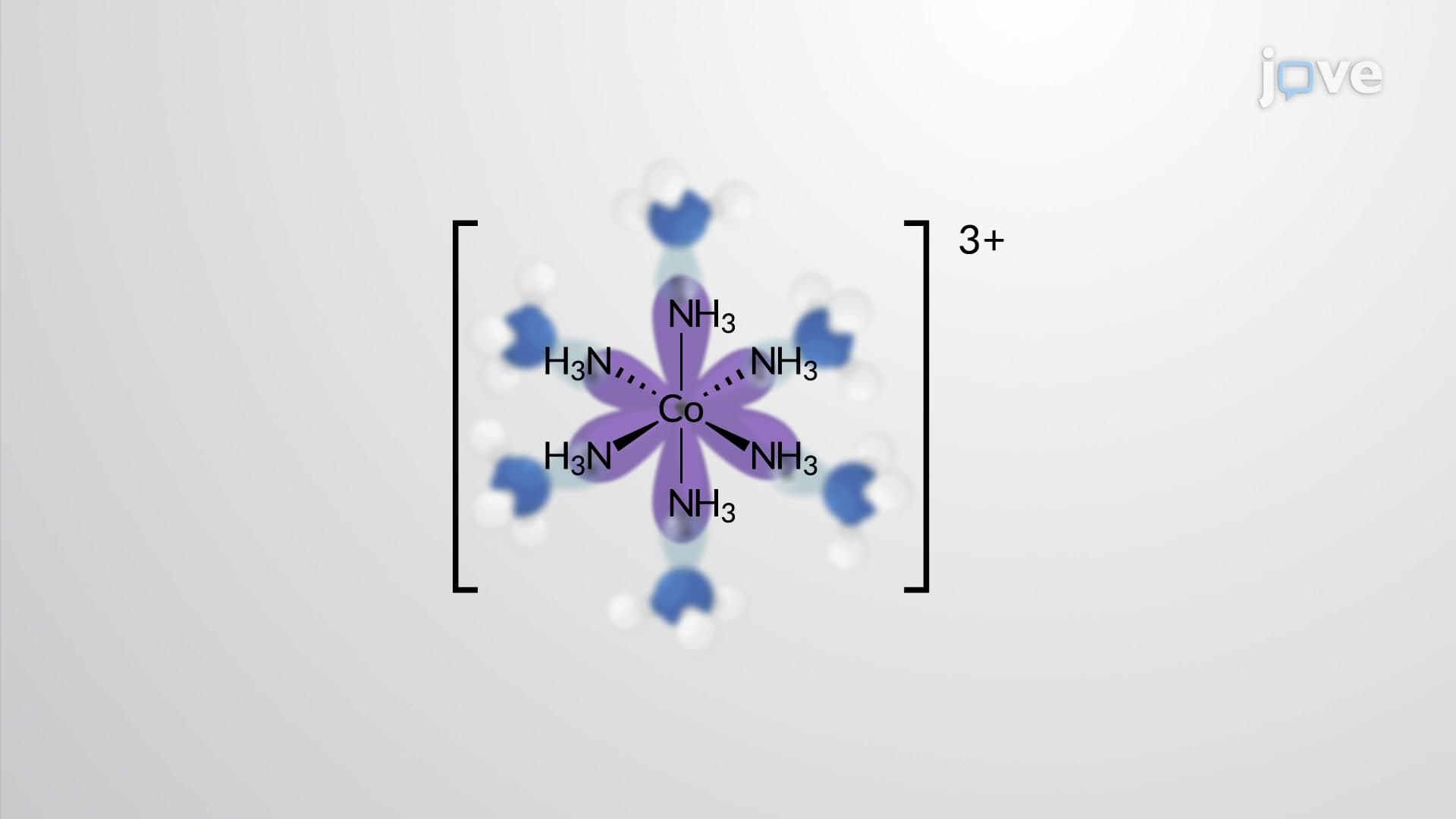
Consider cobalt(III) complexes commonly studied in AP Chemistry and college inorganic chemistry courses. The compound [Co(NH3)5Br]Cl2 (pentaamminebromocobalt(III) chloride) and [Co(NH3)5Cl]Br2 (pentaamminechlorocobalt(III) bromide) exemplify this isomerism. Despite having the same molecular formula, these compounds exhibit markedly different solution chemistry. When dissolved in water, the first compound releases chloride ions, while the second releases bromide ions-a distinction crucial for analytical chemistry applications and MCAT preparation.
Linkage isomerism arises when ambidentate ligands-those possessing multiple potential donor atoms-can coordinate to the metal center through different atoms. This type of isomerism is frequently encountered in advanced undergraduate chemistry and graduate-level coordination chemistry courses.
The nitrite ion (NO2-) serves as the classic example for understanding linkage isomerism. This versatile ligand contains lone pairs on both nitrogen and oxygen atoms, enabling two distinct coordination modes. When coordinating through nitrogen, it forms the "nitro" ligand, while coordination through oxygen creates the "nitrito" ligand. The resulting cobalt complexes, [Co(NH3)5(NO2)]2+ (yellow) and [Co(NH3)5(ONO)]2+ (orange), demonstrate how linkage isomerism affects both nomenclature and observable properties.
Understanding structural isomerism proves essential for success in standardized exams including the MCAT, AP Chemistry, and college chemistry courses. These concepts frequently appear in coordination chemistry sections, requiring students to predict isomer types, explain property differences, and apply nomenclature rules. Research institutions like UC Berkeley and pharmaceutical companies leverage this knowledge in drug design, where slight structural changes can dramatically impact biological activity and therapeutic efficacy.
Related Micro-courses