Loading subject page…


2,661 views

Video Summary: What Is Curing of Concrete
Ever wonder why concrete sidewalks in Phoenix don't crack as much as you'd expect despite scorching desert heat? The secret lies in curing of concrete, a critical process that maintains moisture and temperature conditions after concrete placement. Without proper curing, structures like the Hoover Dam would achieve only half their intended strength and develop surface cracks that compromise durability. This fundamental construction principle determines whether concrete reaches its full potential or fails prematurely in real-world applications. Watch the full video on JoVE Coach to master this concept with expert-led visuals and step-by-step explanations.
Curing of concrete represents one of the most critical phases in construction engineering, directly impacting the long-term performance of infrastructure projects across the United States. This process involves maintaining adequate moisture and temperature conditions to ensure complete cement hydration, transforming fresh concrete into a durable, high-strength building material. The concept extends far beyond simply keeping concrete wet, it's a scientifically controlled process that determines whether structures like interstate highways, bridges, and skyscrapers achieve their designed service life.
Cement hydration occurs within the microscopic capillary pores of cement paste, where water molecules react with cement compounds to form binding agents. This chemical process requires continuous moisture availability, as environmental factors constantly threaten to disrupt hydration. In arid climates like those found in Nevada and Arizona, rapid moisture loss due to low humidity and high temperatures can halt hydration prematurely. Similarly, windy conditions accelerate surface evaporation, creating moisture gradients that lead to differential curing rates within the concrete mass.
The curing of concrete definition encompasses both the prevention of moisture loss and the maintenance of favorable temperature conditions. When concrete's water-cement ratio falls below 0.5, internal drying becomes a concern even in sealed conditions, as the available water gets consumed by ongoing hydration reactions. This phenomenon explains why external water sources often become necessary during extended curing periods.
Professional construction practices in the United States typically employ various curing methods depending on project requirements and environmental conditions. Continuous moist curing, considered the gold standard, can be achieved through ponding, wet burlap coverings, or membrane-forming compounds. The California Department of Transportation, for example, mandates minimum curing periods of seven days for standard concrete and up to 28 days for high-performance mixtures used in critical infrastructure.
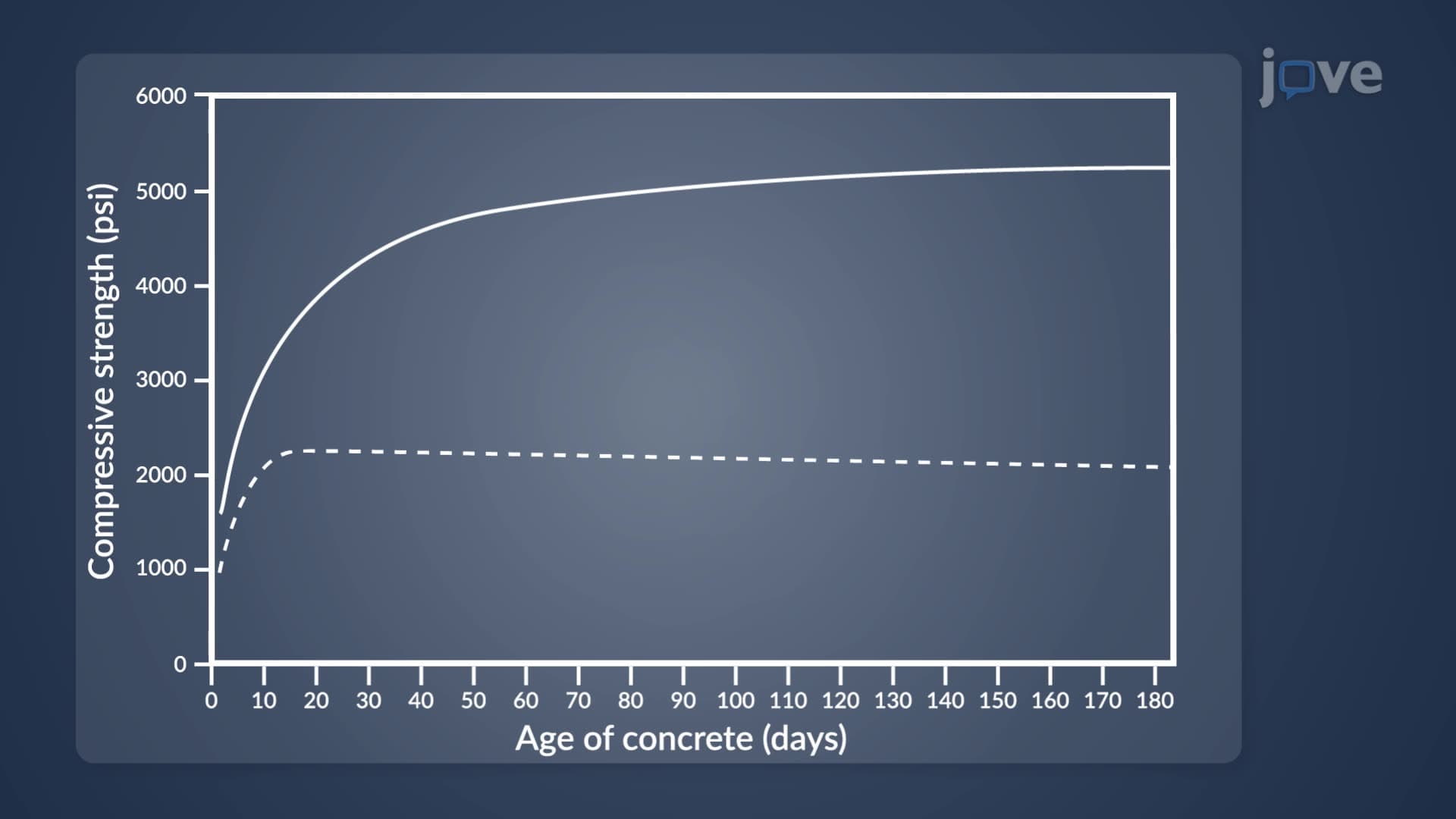
Research conducted by the American Concrete Institute demonstrates that curing of concrete basics involve understanding the direct correlation between curing duration and ultimate strength development. Properly cured concrete can achieve compressive strengths exceeding 4,000 psi, while inadequately cured specimens may reach only 2,000 psi, a reduction that compromises structural safety margins.
Students preparing for Advanced Placement (AP) courses in engineering or materials science frequently encounter curing of concrete concepts in their curricula. College-level civil engineering programs, including those at institutions like MIT and Stanford, dedicate significant coursework to concrete technology, with curing processes forming a cornerstone of materials engineering education. Understanding these principles proves essential for students pursuing careers in construction management, structural engineering, or materials testing, fields experiencing robust growth in the US job market.
Related Micro-courses