Loading subject page…


2,661 views


Video Summary: What Is Ready Mixed Concrete
Did you know that the concrete used in major US infrastructure projects like the Hoover Dam bypass bridge is mixed miles away from the construction site? Ready mixed concrete is concrete prepared at centralized plants and delivered ready-to-use in specialized trucks. This process revolutionized construction by ensuring consistent quality and eliminating on-site mixing challenges. From highway construction to residential foundations across America, ready mixed concrete provides the reliability builders need. Watch the full video on JoVE Coach to master this concept with expert-led visuals and step-by-step explanations.
Ready mixed concrete represents a paradigm shift from traditional on-site concrete mixing to centralized, quality-controlled production. This industrial approach transforms raw materials-cement, aggregates, water, and admixtures-into construction-ready concrete at specialized batching plants before transportation to job sites.
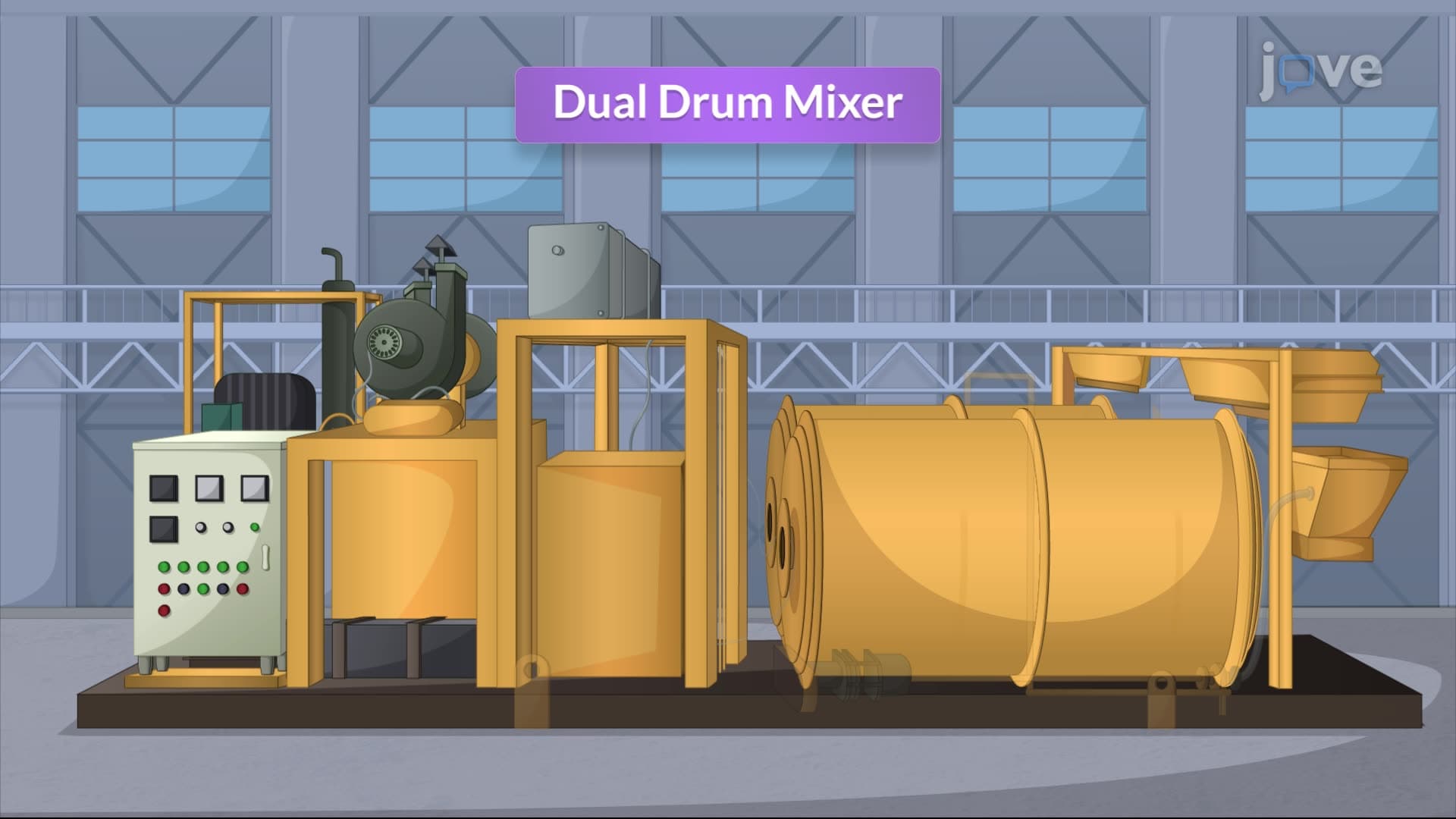
The ready mixed concrete definition encompasses three distinct preparation methods, each optimized for specific project requirements. Central-mixed concrete undergoes complete mixing at the plant facility, with finished concrete transported in agitator trucks rotating slowly at 2-6 rpm to maintain homogeneity without over-mixing. This method suits projects requiring immediate placement upon delivery.
Truck-mixed concrete involves batching ingredients at the plant but conducting the actual mixing within the delivery truck's rotating drum at 4-16 rpm. This approach provides flexibility, allowing mixing during transit or immediately before discharge, making it ideal for projects with variable timing requirements.
Shrink-mixed concrete combines both approaches-partial mixing occurs at the plant, followed by completion during transport at 4-16 rpm. This hybrid method optimizes both quality control and delivery logistics.
Understanding ready mixed concrete in detail requires examining ASTM standards governing its production and delivery. The 300-revolution limit prevents over-mixing, which can cause segregation-the separation of aggregate from cement paste. Similarly, the 90-minute placement window from mixing initiation ensures concrete maintains workability and achieves design strength.
These standards directly impact engineering calculations students encounter in AP Physics, college-level materials science courses, and professional engineering examinations. For instance, concrete strength calculations on the Fundamentals of Engineering (FE) exam often reference ready-mixed concrete properties and quality control parameters.
Major US infrastructure projects demonstrate ready mixed concrete's critical role. The San Francisco-Oakland Bay Bridge replacement utilized thousands of cubic yards of ready-mixed concrete, with centralized batching ensuring consistent performance across the massive structure. Similarly, commercial construction projects like Amazon distribution centers rely on ready-mixed concrete's quality consistency and delivery flexibility to meet tight construction schedules.
This ready mixed concrete concept extends beyond large projects-residential construction, highway repairs, and municipal infrastructure all depend on ready-mixed concrete's reliability and standardized quality.
Related Micro-courses