Loading subject page…

- Civil Engineering
- Permeability of Concrete
- Acid Attack on Concrete
Micro-course: Permeability of Concrete
2,462 views
Learn key concepts and earn your certificate.

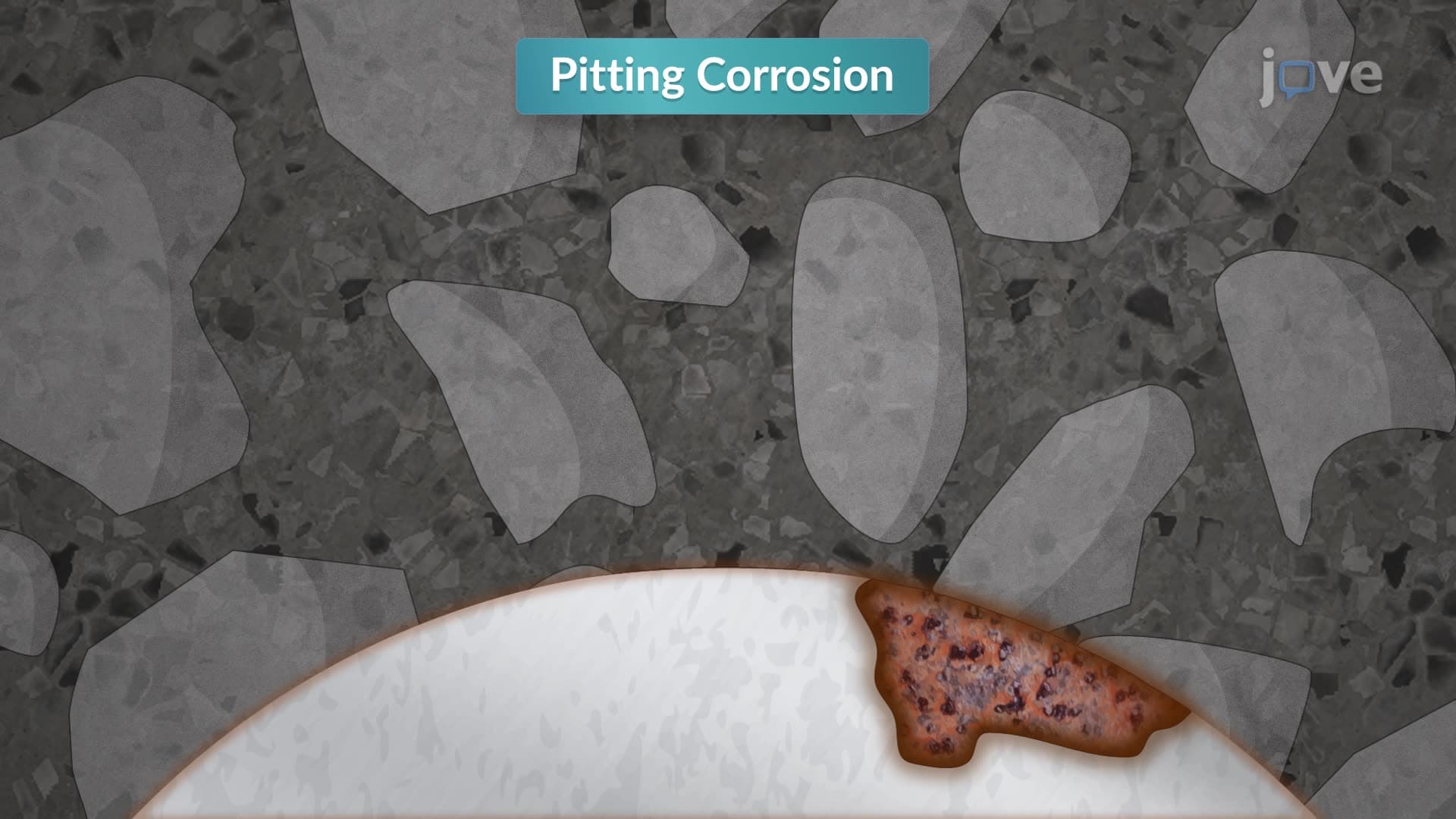
Acid Attack on Concrete


00:00
01:21
Video Summary: What Is Acid Attack on Concrete
Ever wonder why the concrete sidewalks in older US cities like Boston or Philadelphia show mysterious pitting and deterioration? This weathering often results from acid attack on concrete, a chemical process where acids dissolve the binding agents that hold concrete together. From acid rain affecting highway bridges to industrial facilities dealing with chemical spills, understanding what is acid attack on concrete helps explain infrastructure decay across America. Watch the full video on JoVE Coach to master this concept with expert-led visuals and step-by-step explanations.
- Understand what is acid attack on concrete and how acids chemically dissolve the hydrated cement paste that binds concrete structures
- Identify critical pH thresholds where concrete deterioration begins (pH 6.5) and accelerates dramatically (pH 4.5)
- Analyze how different acid sources-from carbon dioxide in groundwater to sulfuric acid from bacterial processes-damage concrete infrastructure
- Recognize the role of calcium hydroxide dissolution in weakening concrete's structural integrity over time
- Evaluate prevention methods including sodium silicate stabilization and protective surface coatings
- Apply knowledge of acid attack mechanisms to assess real-world concrete durability in various environmental conditions
- Compare the corrosive effects of different water types, from melted ice water to peaty groundwater with high CO2 content
- Explore how hydrogen ion diffusion rates influence the speed and extent of concrete deterioration
Understanding Acid Attack On Concrete Fundamentals
Acid attack on concrete represents one of the most significant threats to infrastructure durability in the United States. This chemical deterioration process occurs when acidic solutions contact concrete surfaces, initiating a complex series of reactions that weaken the material's structural integrity. The Portland cement that binds concrete contains calcium hydroxide and calcium silicate hydrates-compounds that are particularly vulnerable to acid dissolution.
Critical pH Thresholds and Chemical Mechanisms
The severity of concrete acid attack directly correlates with solution pH levels. When water pH drops below 6.5, the concrete's protective alkaline environment becomes compromised, allowing acid penetration into the cement matrix. The situation becomes critical when pH falls below 4.5, where deterioration accelerates exponentially. This knowledge proves essential for AP Chemistry students studying acid-base reactions and for civil engineering undergraduates analyzing material degradation.
At the molecular level, hydrogen ions from acidic solutions react with calcium hydroxide (Ca(OH)2) in the cement paste, forming soluble calcium compounds that wash away. This process creates porosity and reduces the concrete's ability to protect embedded steel reinforcement-a concept frequently tested in materials science courses and professional engineering examinations.
Real-World Sources and Applications
American infrastructure faces acid attack from multiple sources. Acid rain, particularly problematic in industrial regions like the Ohio River Valley, contains sulfuric and nitric acids that gradually deteriorate concrete highways and buildings. The Tappan Zee Bridge replacement project in New York specifically addressed acid attack concerns from decades of exposure.
Industrial facilities, especially wastewater treatment plants, experience severe concrete degradation from hydrogen sulfide production. Anaerobic bacteria in sewage systems convert sulfur compounds to hydrogen sulfide gas, which oxidizes into sulfuric acid upon contact with moist concrete surfaces. This process has damaged sewage infrastructure in cities like Los Angeles and Miami, costing millions in repairs.
Prevention and Protection Strategies
Engineers employ several strategies to combat acid attack on concrete. Surface treatments including coal-tar pitch, epoxy resins, and specialized polymer coatings create barrier layers that prevent acid penetration. The Golden Gate Bridge's concrete components receive regular protective treatments to withstand San Francisco's marine environment.
Calcium hydroxide stabilization using diluted sodium silicate represents an innovative approach, forming additional calcium silicates within concrete pores to enhance durability. This technique appears increasingly in MCAT chemistry passages and civil engineering capstone projects, demonstrating its practical importance for future professionals.
Frequently Asked Questions
Acid attack on concrete is a specific chemical deterioration process where acids dissolve the cement paste that binds concrete together, unlike normal weathering which involves physical processes. This chemical attack creates deep pitting, surface scaling, and structural weakening that progresses much faster than typical wear. The process becomes particularly severe when pH levels drop below 6.5, making it a critical concern for infrastructure engineers and a common topic in materials science courses.
AP Chemistry frequently tests acid attack concepts through acid-base reaction problems and pH calculations related to environmental chemistry. Students might encounter questions about calculating pH thresholds for concrete damage (6.5 and 4.5) or predicting products when acids react with calcium hydroxide in cement. The College Board often includes real-world scenarios involving infrastructure damage to test understanding of practical chemistry applications.
College engineering exams typically focus on prevention strategies, pH threshold calculations, and case study analysis of infrastructure failures. Students must identify appropriate protective coatings, calculate deterioration rates based on environmental conditions, and design concrete mixes resistant to specific acid exposures. Many professors use examples from actual projects like highway rehabilitation or industrial facility construction.
Highway overpasses in industrial areas show classic acid attack symptoms including surface pitting and concrete spalling from acid rain exposure. Parking garages, especially in coastal cities, experience deterioration from carbon dioxide and salt-laden moisture. Wastewater treatment facilities provide the most dramatic examples, where hydrogen sulfide conversion to sulfuric acid can destroy concrete structures within decades rather than the typical century-long lifespan.
Basic high school chemistry concepts including pH, acid-base reactions, and solution chemistry provide sufficient background for understanding acid attack mechanisms. Students comfortable with pH calculations and simple chemical equations can grasp the fundamental processes. The concept builds naturally on topics covered in standard chemistry courses, making it accessible to most science-oriented students.
Focus on memorizing the critical pH thresholds (6.5 for onset, 4.5 for acceleration) and understanding the calcium hydroxide dissolution mechanism. Create concept maps linking acid sources to specific damage patterns, and practice calculating pH effects on concrete durability. Review real case studies from American infrastructure projects to understand practical applications and prevention strategies.
Investigate alkali-silica reaction (concrete cancer), chloride penetration and steel corrosion, and carbonation effects on concrete alkalinity. These topics frequently appear together in advanced materials courses and professional engineering examinations. Understanding freeze-thaw damage and sulfate attack provides additional context for comprehensive concrete durability analysis.
The MCAT chemistry section often includes acid-base passages featuring real-world applications like infrastructure deterioration. Understanding concrete acid attack demonstrates practical knowledge of pH effects, reaction kinetics, and material degradation-all testable concepts. This knowledge helps tackle complex passages involving environmental chemistry and industrial processes that appear regularly on recent MCAT administrations.
Related Micro-courses