Loading…
Loading video…

1,284 views
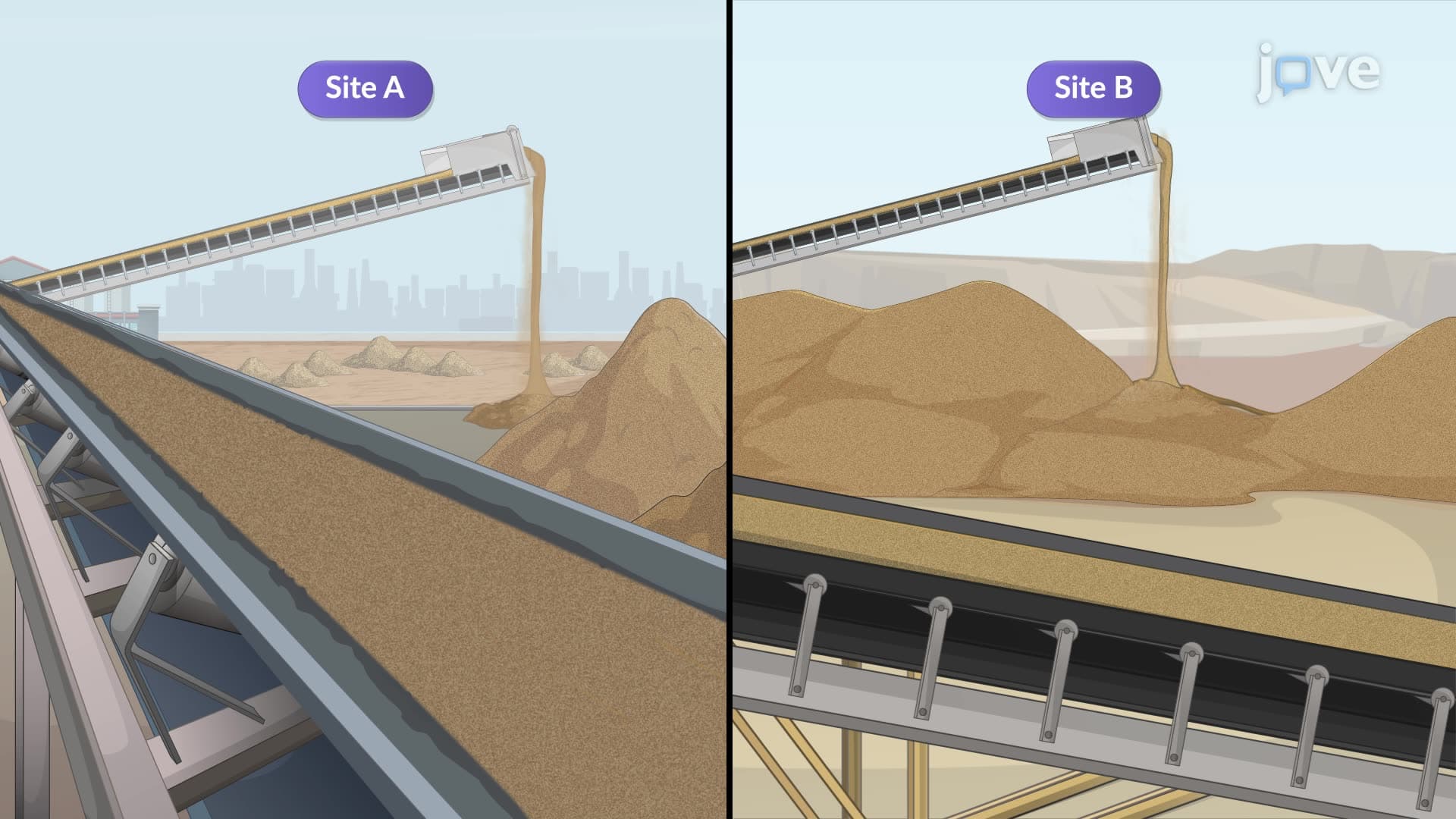
Did you know that the wrong sand choice can cause a $50,000 concrete highway project to crack within months? Design example aggregate gradation demonstrates how construction managers evaluate different aggregate sources to ensure optimal concrete performance. This practical scenario shows a concrete plant manager choosing between two manufactured sand facilities by analyzing gradation curves against specified limits, similar to quality control processes used in major US infrastructure projects like interstate highway construction. Watch the full video on JoVE Coach to master this concept with expert-led visuals and step-by-step explanations.
Design example aggregate gradation represents a practical application of particle size distribution analysis in concrete technology. This concept bridges theoretical knowledge with real-world decision-making in construction materials selection. Aggregate gradation—the distribution of particle sizes within a sand or gravel sample—directly influences concrete workability, strength, and durability. In the United States construction industry, proper gradation analysis prevents costly project failures and ensures compliance with specifications like ASTM C136 and AASHTO T27.
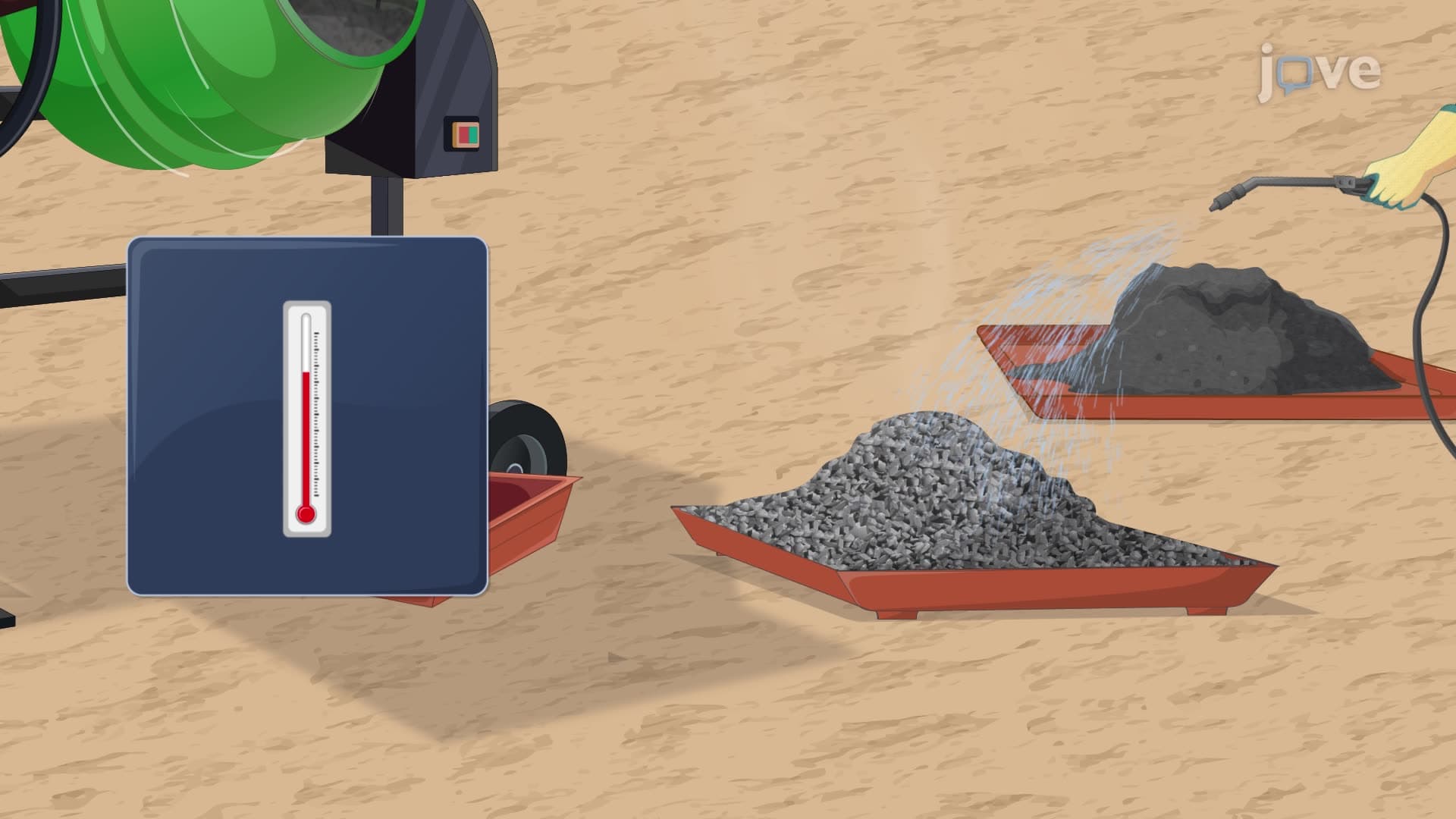
Professional aggregate sampling follows strict protocols to ensure representative results. The template method described involves systematic collection at multiple belt locations, creating composite samples that accurately reflect the material's characteristics. This approach mirrors quality control procedures used by major US aggregate producers like Vulcan Materials and Martin Marietta. After sample preparation and oven-drying, mechanical splitting ensures unbiased portions for sieve analysis.
The sieve analysis process uses standardized mesh sizes (ASTM E11) ranging from coarse (3/8 inch) to fine (No. 200). Each sieve retains particles within specific size ranges, creating a distribution profile. Students preparing for AP Environmental Science or college-level Materials Science courses should understand that this systematic approach eliminates human bias and provides quantifiable data for engineering decisions.
Gradation curves graphically represent particle size distribution, plotting cumulative percent passing versus sieve size. These curves must fall within prescribed envelopes defined by concrete mix designs or specifications like ACI 318. The "fineness modulus"—a single number describing overall gradation—helps engineers quickly assess aggregate suitability.
In our example, Facility A's sand meets specifications while Facility B's does not, demonstrating how gradation analysis guides procurement decisions. This scenario reflects real challenges faced by companies like Ready Mixed Concrete Company or Cemex USA, where material consistency directly impacts product quality and customer satisfaction.
Design example aggregate gradation appears frequently in civil engineering curricula at universities like UC Berkeley and Georgia Tech. Students encounter similar problems in Materials of Construction courses, concrete design labs, and professional licensing exams. The FE Civil exam often includes aggregate gradation calculations, making this concept essential for engineering career preparation.
Understanding gradation analysis prepares students for internships with construction firms, DOT materials testing labs, and consulting companies. This knowledge proves valuable whether pursuing structural engineering, construction management, or materials testing careers in the growing US infrastructure sector.
Frequently Asked Questions
Design example aggregate gradation is a practical demonstration of how engineers analyze particle size distribution in construction aggregates to ensure concrete quality. It involves systematic sampling, sieve analysis, and comparing results against specification limits to make informed material selection decisions. This process prevents structural failures and ensures compliance with building codes and industry standards.
Aggregate gradation connects to particle size analysis and material characterization principles taught in AP Chemistry. Students apply concepts of physical separations, statistical sampling, and data interpretation. College chemistry courses expand on these fundamentals when covering materials science, colloid chemistry, and analytical techniques used in quality control laboratories.
The FE Civil exam includes problems calculating fineness modulus, determining gradation compliance, and selecting appropriate aggregates for concrete mixes. Typical questions involve interpreting sieve analysis data, plotting gradation curves, and applying ASTM standards. Students should practice calculating cumulative percentages and comparing results to specification limits.
Large infrastructure projects like California's Bay Bridge replacement or Florida's Interstate 95 expansion require extensive aggregate testing to ensure 50+ year service life. Project specifications define acceptable gradation envelopes, and materials testing labs perform thousands of sieve analyses during construction. Quality control managers use this data to approve or reject aggregate shipments, preventing costly delays and structural problems.
Basic algebra and graphing skills from high school mathematics are sufficient for aggregate gradation analysis. Students comfortable with percentages, plotting data points, and reading technical graphs can master these concepts. The emphasis focuses on practical application and engineering judgment rather than complex mathematical derivations.
Practice interpreting actual sieve analysis data and plotting gradation curves using semi-logarithmic graph paper. Focus on memorizing common sieve sizes, understanding specification limits, and calculating fineness modulus. Review ASTM C136 procedures and work through sample problems from textbooks like "Properties of Concrete" by Neville or "Materials for Civil and Construction Engineers" by Mamlouk.
Aggregate gradation knowledge provides the foundation for studying concrete mix design optimization, high-performance concrete development, and sustainable construction materials. Advanced topics include gap-graded aggregates, recycled concrete aggregates, and specialty applications like pervious concrete used in green infrastructure projects throughout US cities.
Related Micro-courses
Related Subjects
 Electrical Engineering 33 micro-courses›Mechanical Engineering 28 micro-courses›