- Civil Engineering
- Fluid Dynamics
Micro-courses:30

Fluid Dynamics

1. Bernoulli's Equation for Flow Along a Streamline
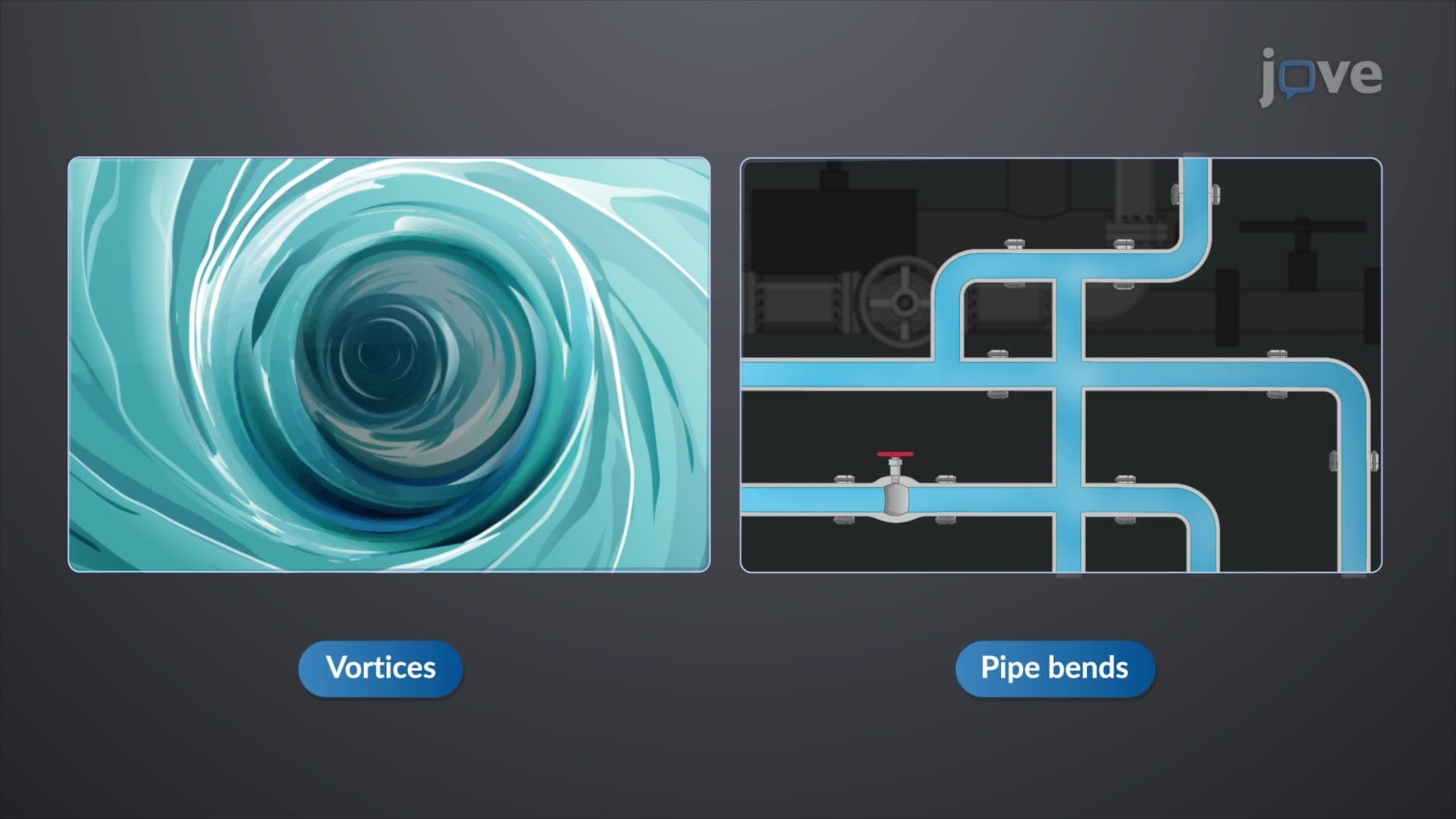
2. Bernoulli's Equation for Flow Normal to a Streamline
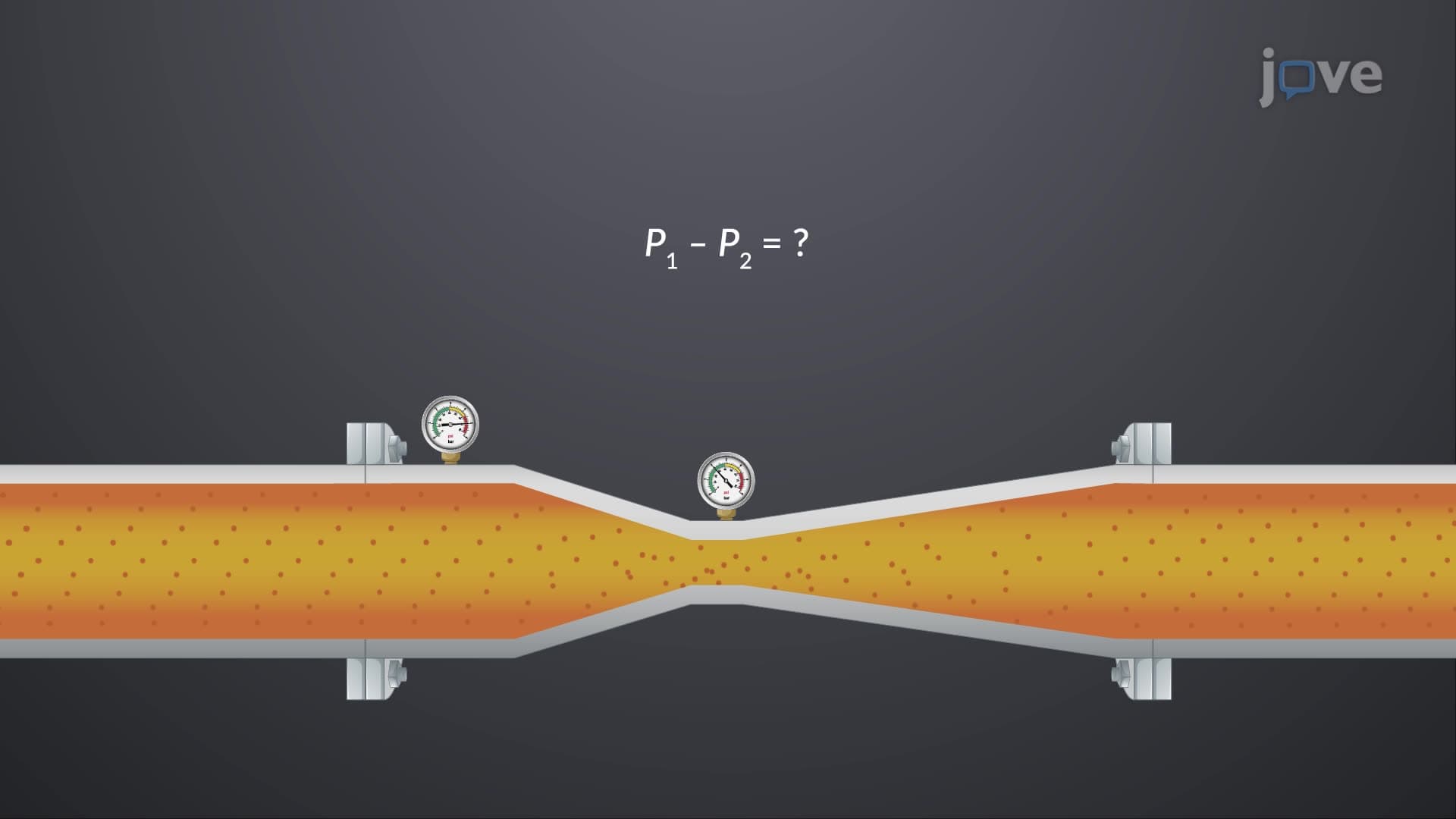
3. Bernoulli's Equation: Problem Solving
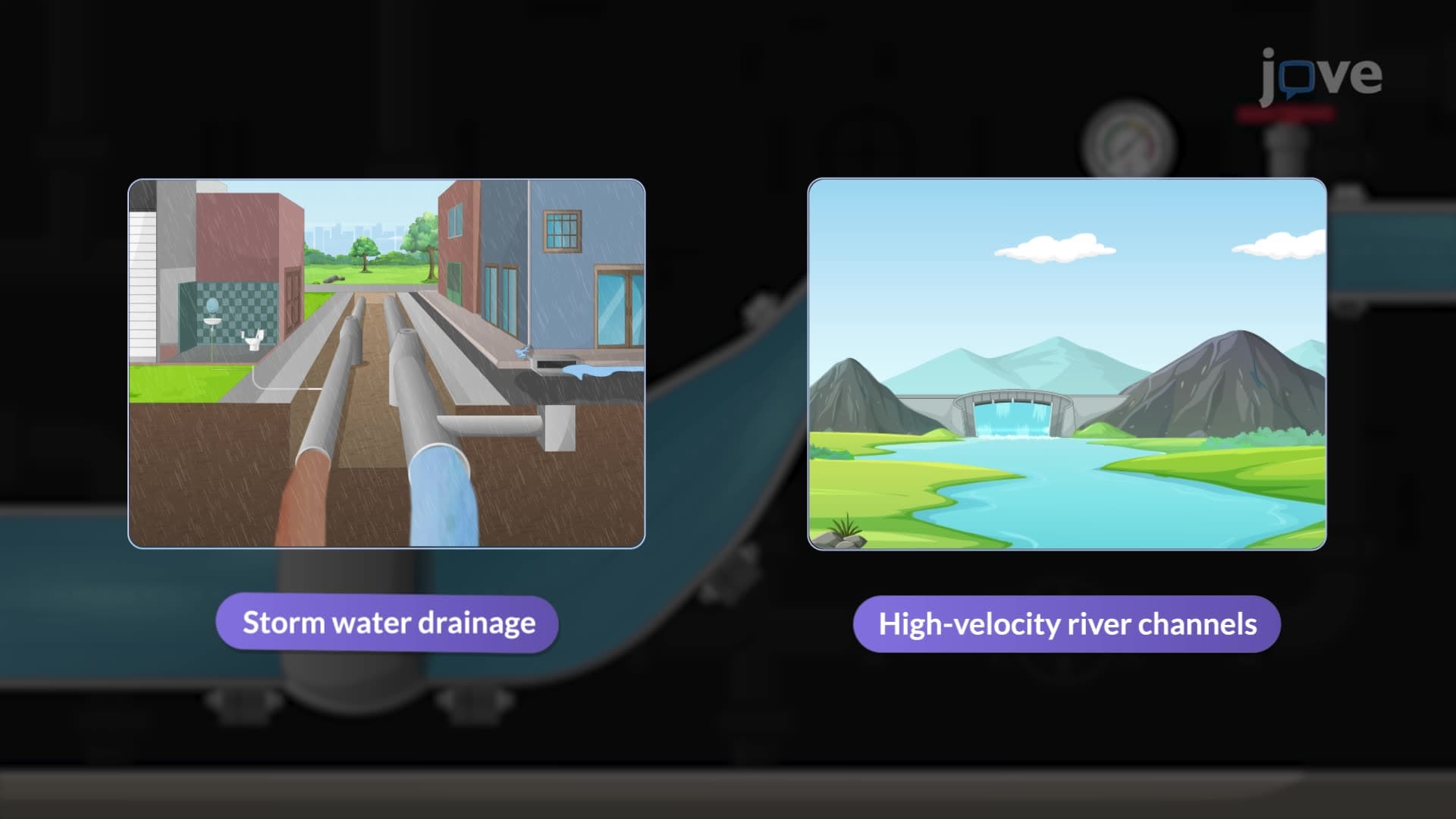
4. Static, Stagnation, Dynamic and Total Pressure
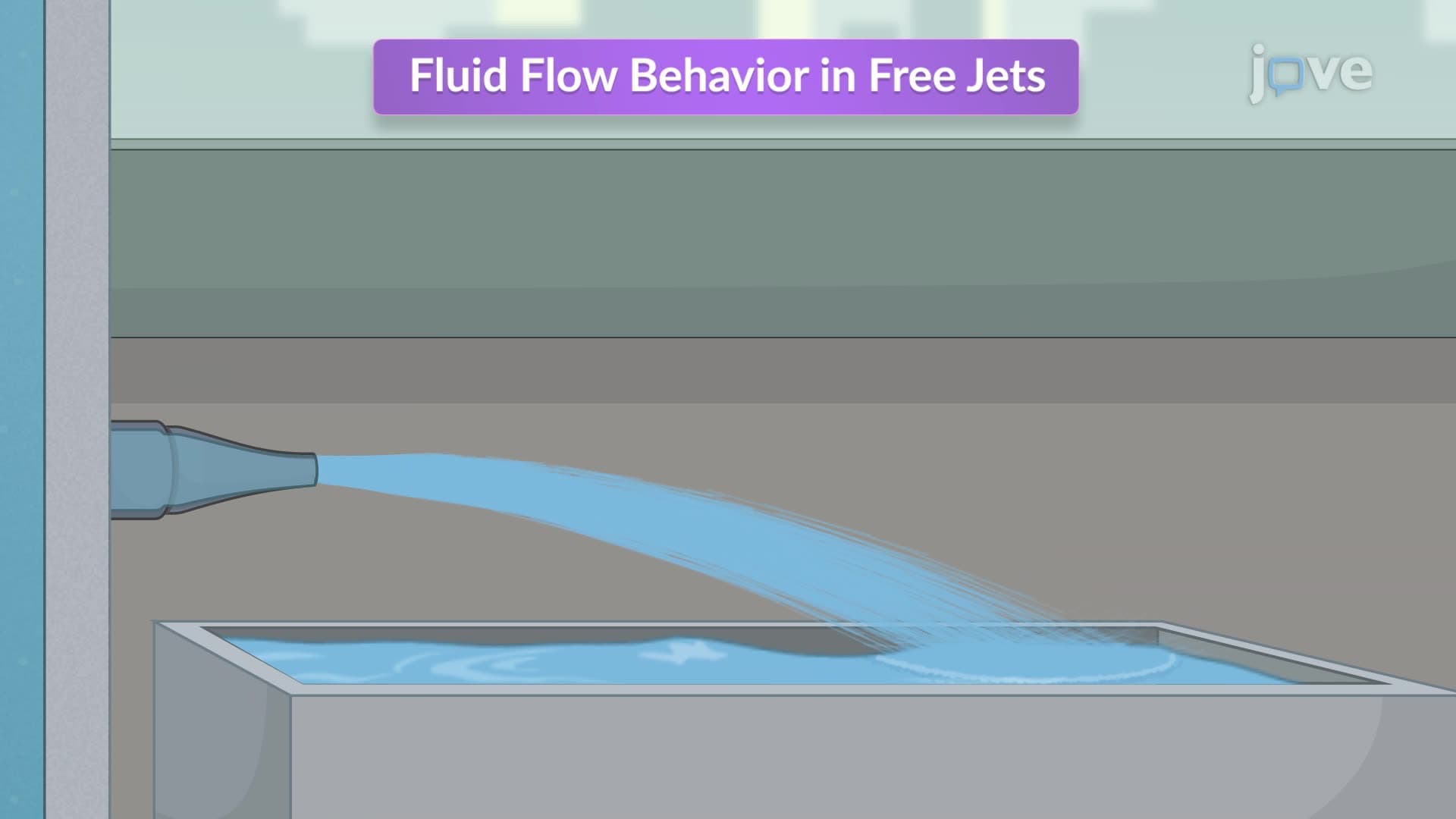
5. Free Jet
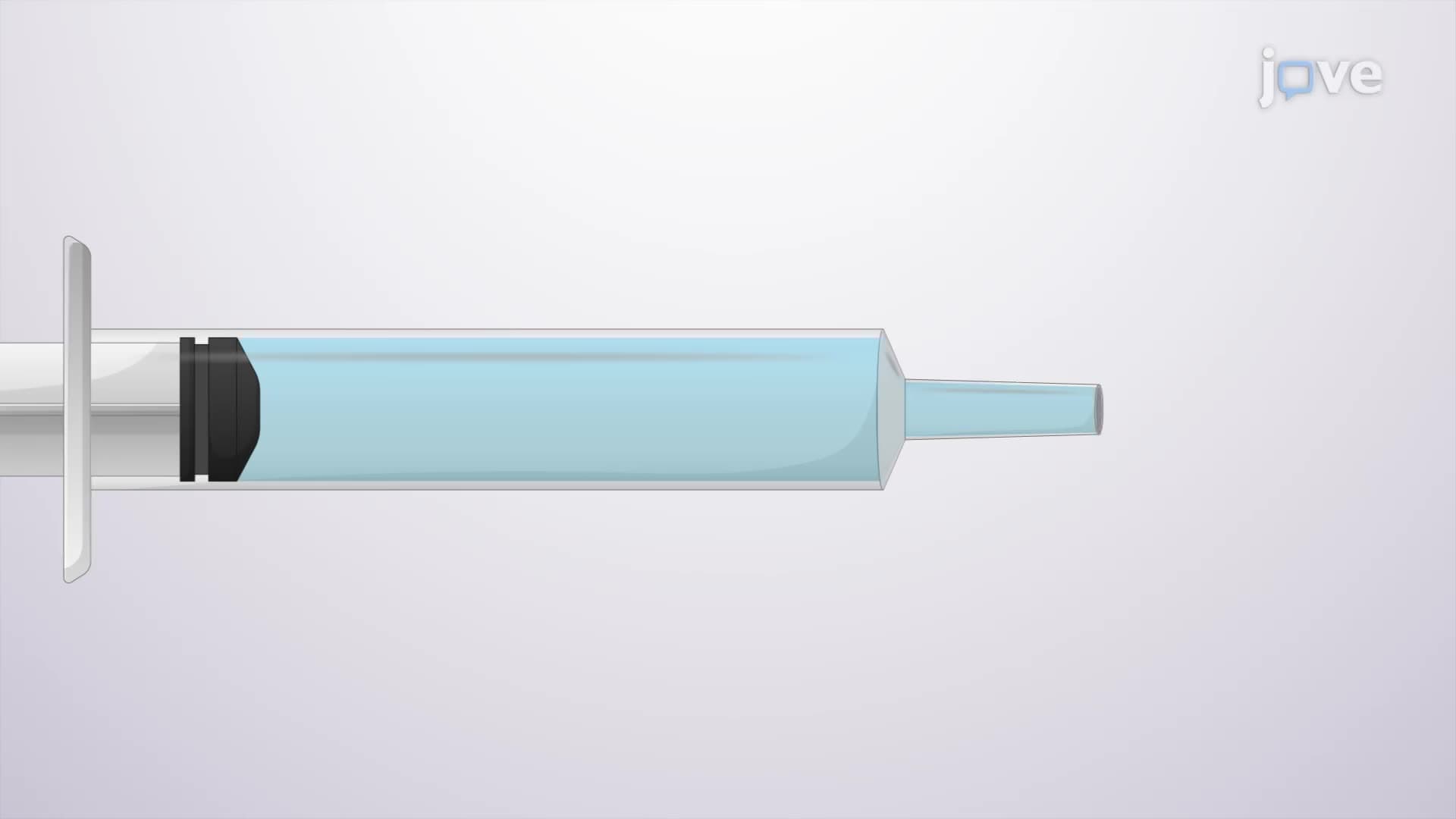
6. Continuity Equation
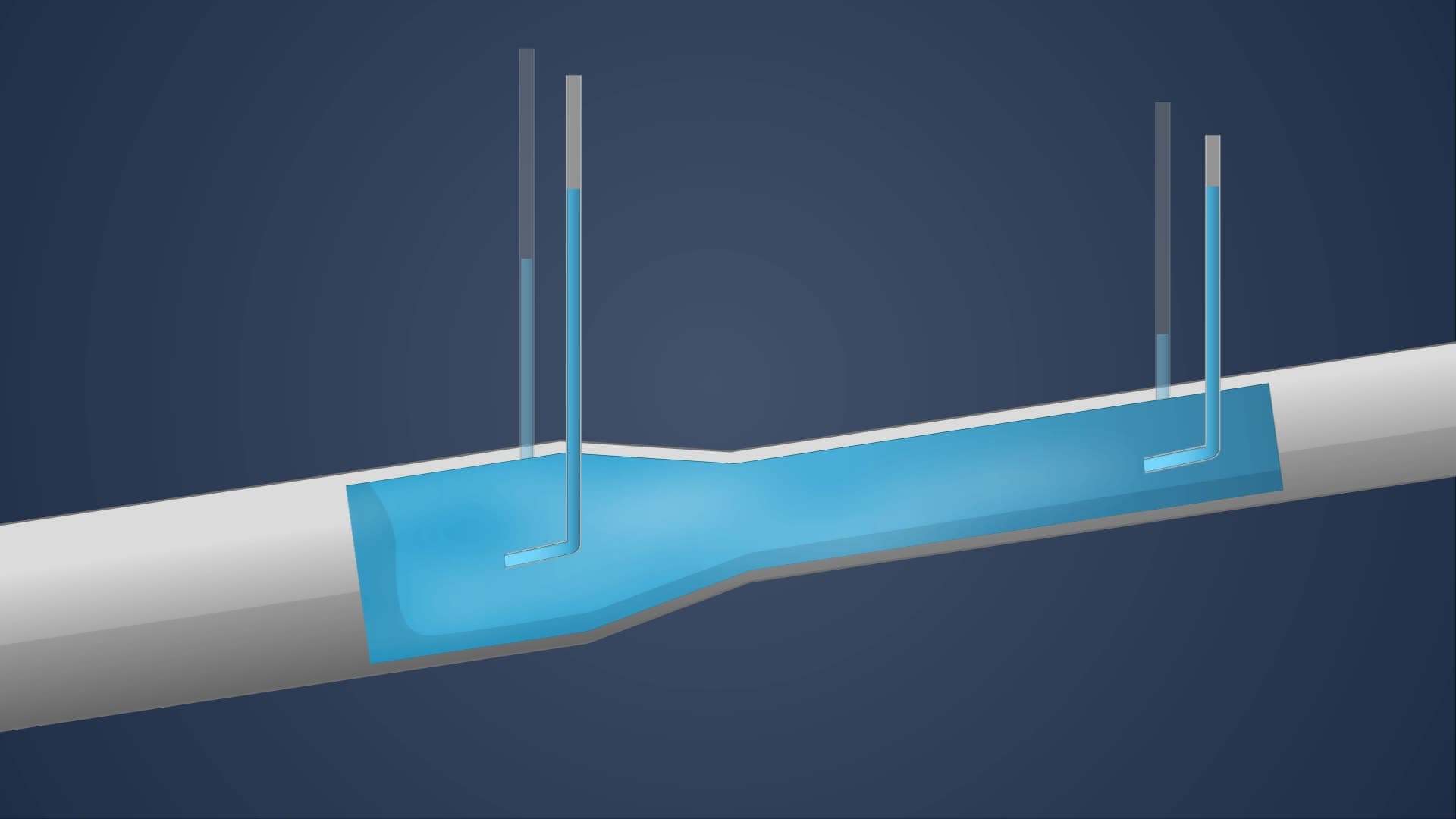
7. Energy Line and Hydraulic Gradient Line
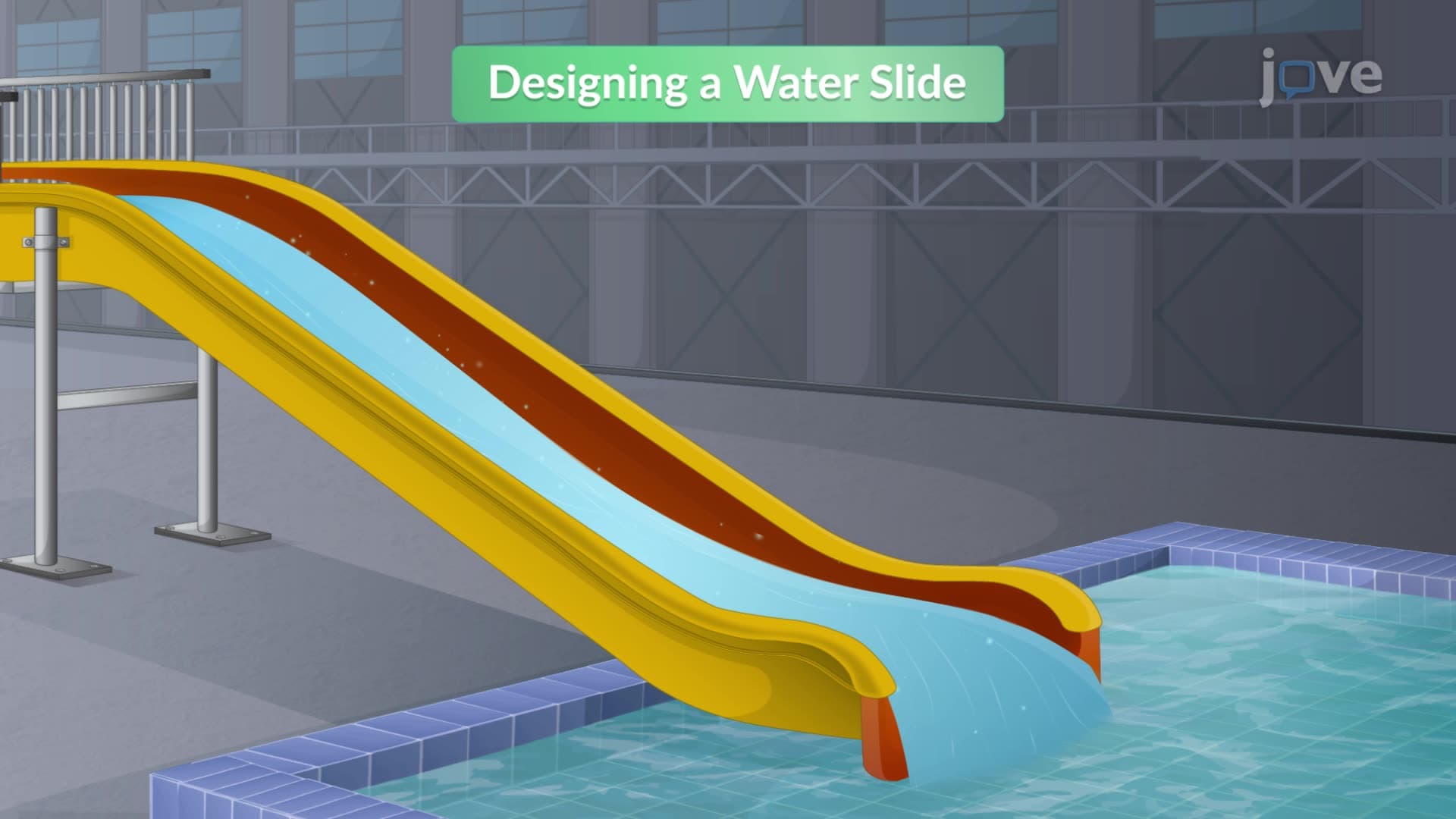
8. Design Example: Designing Water Slide
Fluid dynamics governs the motion of fluids through pipes, channels, and open systems using fundamental principles like Bernoulli's equation and conservation of mass. This JoVE Coach course explores practical applications in U.S. infrastructure including water distribution networks, dam spillways, sewage treatment systems, and hydraulic structures. Students learn to analyze pressure variations, velocity changes, and energy transformations in real-world fluid systems.
- Understand Bernoulli's equation for streamline flow and its applications in water systems
- Analyze pressure variations in curved flow paths and pipe bends
- Apply the continuity equation to solve flow rate problems in engineering systems
- Identify different pressure types: static, dynamic, stagnation, and total pressure
- Explore free jet behavior and the vena contracta phenomenon in spillway design
- Learn energy line and hydraulic gradient line concepts for pipeline analysis
- Solve design problems using fluid dynamics principles in real engineering scenarios
- Calculate pressure differences in Venturi meters and flow measurement devices
1. Bernoulli's Equation Along Streamlines: This fundamental principle relates pressure, velocity, and elevation in flowing fluids, assuming steady, incompressible flow without friction. The equation demonstrates energy conservation as fluid moves through varying pipe diameters or elevation changes. In U.S. water distribution systems, engineers use this principle to predict pressure drops in municipal networks, ensuring adequate water pressure reaches high-rise buildings in cities like New York and Chicago. The relationship shows that as water velocity increases through narrower pipe sections, pressure decreases proportionally, making it essential for designing efficient pumping systems.
2. Pressure Variations in Curved Flow: When fluid flows along curved streamlines, centrifugal forces create pressure differences across the flow path. Higher pressure occurs on the inner curve radius, while lower pressure develops on the outer edge. This concept is crucial for designing curved highway drainage systems, river channel modifications, and pipeline bends in U.S. infrastructure projects. Engineers must account for these pressure variations when designing the curved spillways at dams like Hoover Dam, where water flows along sharply curved surfaces at high velocities, requiring careful structural analysis to prevent failure.
3. Continuity Equation and Flow Conservation: The continuity equation expresses conservation of mass in fluid systems, stating that mass flow rate remains constant in a steady flow system. This principle explains why water accelerates when flowing from larger to smaller pipe diameters, as seen in Venturi meters used throughout U.S. sewage treatment facilities. For incompressible fluids like water, the equation simplifies to show that area and velocity are inversely proportional. Municipal water engineers apply this concept when designing pipe networks for cities, ensuring adequate flow rates through varying pipe sizes from treatment plants to residential areas.
4. Static, Dynamic, and Stagnation Pressure: Total pressure in fluid systems consists of three components that help engineers analyze energy distribution. Static pressure acts perpendicular to surfaces and depends on fluid height and density, crucial for calculating forces on dam walls like those at Glen Canyon Dam. Dynamic pressure relates to fluid velocity and represents kinetic energy, important in high-speed applications such as stormwater drainage systems during flash floods in southwestern U.S. cities. Stagnation pressure occurs where fluid velocity reduces to zero, measured at dam faces and turbine blades in hydroelectric facilities throughout the Pacific Northwest.
5. Free Jets and Vena Contracta: Free jets demonstrate how fluid exits nozzles and flows into open air, converting potential energy to kinetic energy. The phenomenon creates the vena contracta, where the jet narrows just outside the nozzle opening due to fluid inertia. Different nozzle designs affect the contraction coefficient, influencing flow patterns in spillway systems at U.S. dams. Engineers designing fountain systems in public spaces, agricultural irrigation sprinklers in California's Central Valley, and fire suppression systems must understand this behavior to predict actual flow rates and optimize nozzle performance for specific applications.
6. Energy and Hydraulic Gradient Lines: These graphical representations help visualize energy distribution in pipeline systems, with the energy line showing total energy and the hydraulic gradient line representing pressure plus elevation energy. The difference between these lines equals velocity head, always making the energy line higher during flow conditions. Understanding these concepts prevents cavitation problems in water supply systems and helps design siphon systems used in water treatment plants across the United States. Engineers monitoring the Trans-Alaska Pipeline use these principles to detect leaks, prevent water hammer effects, and ensure adequate pressure throughout the system's 800-mile length.
Frequently Asked Questions
Bernoulli's equation assumes steady flow, incompressible fluid, and negligible viscosity. These conditions closely approximate water flow in large pipes, spillways, and open channels where friction effects are minimal compared to pressure and velocity changes, making it valuable for preliminary engineering designs.
AP Physics exams typically test Bernoulli's principle through problems involving fluid speed changes in varying pipe diameters or pressure differences in Venturi tubes. MCAT questions often apply these concepts to blood flow in arteries or respiratory system mechanics, requiring students to identify how pressure and velocity relate in biological systems.
Both express conservation principles, but fluid continuity conserves mass (ρAv = constant), while electromagnetic continuity conserves electric charge (∇·J = -∂ρ/∂t). Fluid continuity is simpler for incompressible liquids, where only area and velocity matter, unlike the more complex electromagnetic version involving current density and charge distributions.
Curved flow creates pressure differences that can cause structural stress, cavitation, or flow separation. In real applications like water treatment plant piping, highway drainage systems, or dam spillways, ignoring these effects can lead to pipe failure, reduced efficiency, or dangerous flow conditions requiring expensive repairs.
These graphical tools help engineers visualize where problems might occur in pipeline systems. When the hydraulic gradient line drops below the pipe elevation, negative pressure develops, potentially causing cavitation or structural collapse. Municipal water engineers use these concepts to design pump stations and prevent system failures.
Students often struggle with choosing appropriate equations for specific situations and visualizing three-dimensional flow patterns from two-dimensional diagrams. The key is practicing with real-world scenarios and understanding the physical meaning behind mathematical relationships rather than memorizing formulas.
Focus on understanding energy conservation principles first, then practice applying Bernoulli's equation to different scenarios. Draw diagrams showing pressure, velocity, and elevation changes. Work through problems involving familiar systems like water fountains, swimming pools, or garden hoses to build intuition before tackling complex engineering applications.
Fluid dynamics principles appear in mechanical engineering (pumps, turbines), civil engineering (water supply, drainage), environmental engineering (treatment systems), and biomedical engineering (blood flow, respiratory systems). Understanding these fundamentals provides the foundation for advanced courses in heat transfer, aerodynamics, and hydraulic system design.
This microcourse includes 8 concept videos that walk you through the building blocks of Civil Engineering. Each video is short, about 1 minute, so you can cover a full topic during a coffee break or between classes. The full sequence starts with Bernoulli's Equation for Flow Along a Streamline and ends with Design Example: Designing Water Slide.
The playlist moves from big-picture ideas to the precise vocabulary used in Civil Engineering. Early videos introduce Bernoulli's Equation for Flow Along a Streamline, Bernoulli's Equation for Flow Normal to a Streamline, and Bernoulli's Equation: Problem Solving. The middle of the series focuses on Free Jet, Continuity Equation, and Energy Line and Hydraulic Gradient Line. The final stretch covers Design Example: Designing Water Slide.
The natural next step is Fluid Kinematics. From there, you can move to Finite Control Volume Analysis, Differential Analysis of Fluid Flow, and Dimensional Analysis, Similitude, and Modeling. Once you finish those, the full Civil Engineering curriculum of 30 microcourses on JoVE Coach opens up, taking you from foundational concepts to advanced systems.
Related Subjects
 Electrical Engineering 33 micro-courses›Mechanical Engineering 28 micro-courses›