- Civil Engineering
- Fluid Kinematics
Micro-courses:30

Fluid Kinematics
1. Eulerian and Lagrangian Flow Descriptions

2. Introduction to Types of Flows


3. Streamlines, Streaklines, and Pathlines
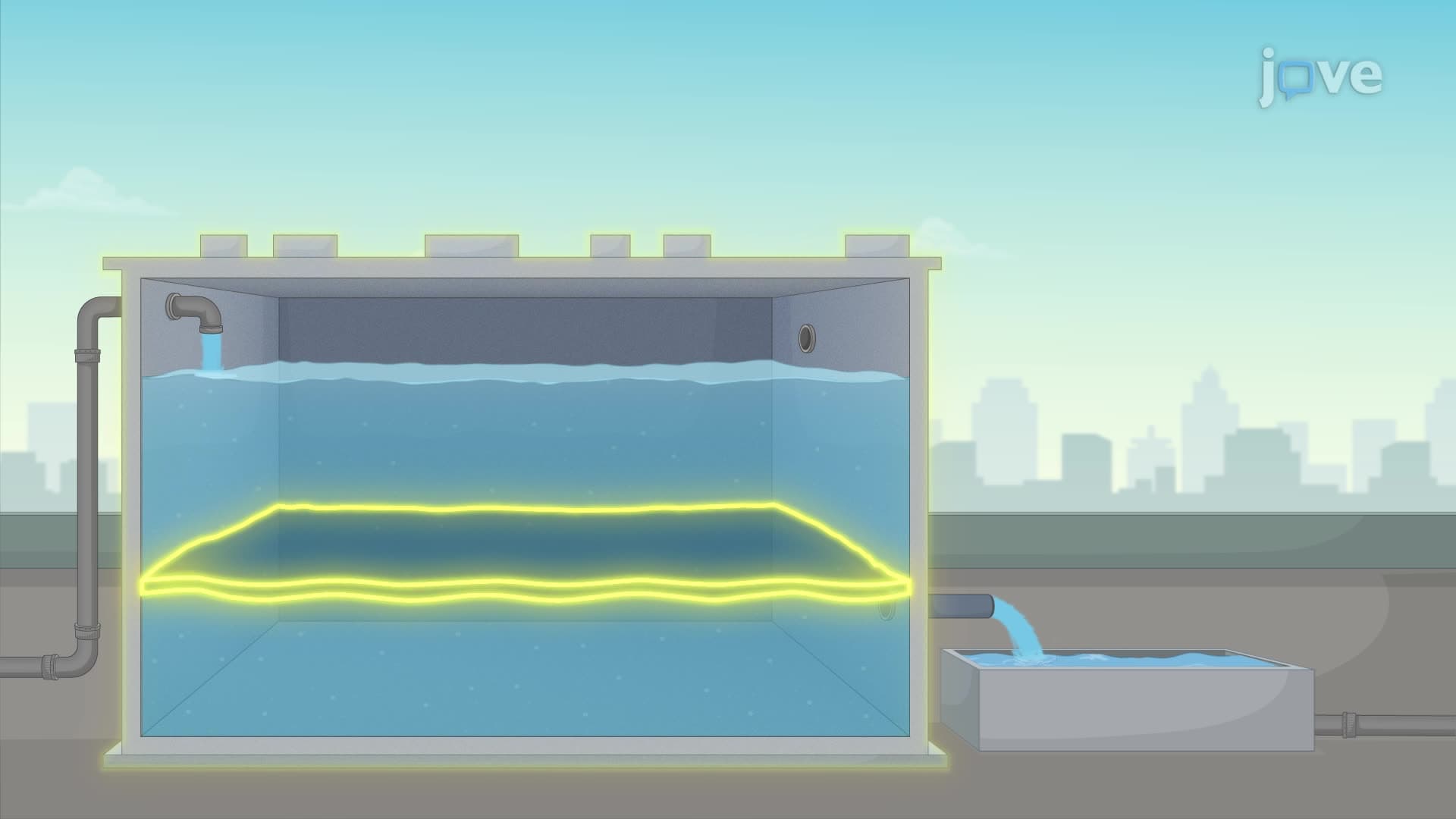
4. Control Volume and System Representations
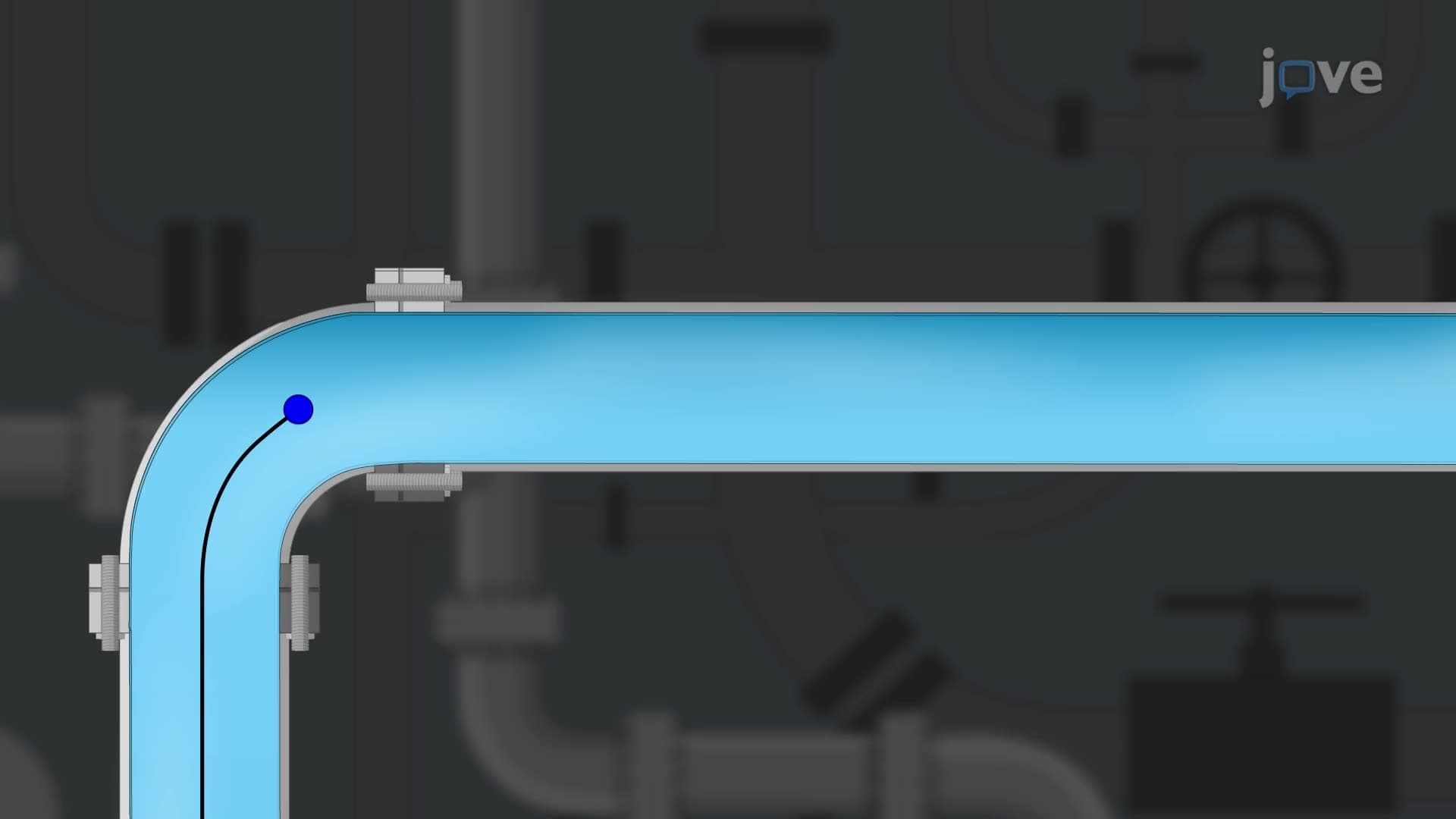
5. Velocity and Acceleration in Steady and Unsteady Flow
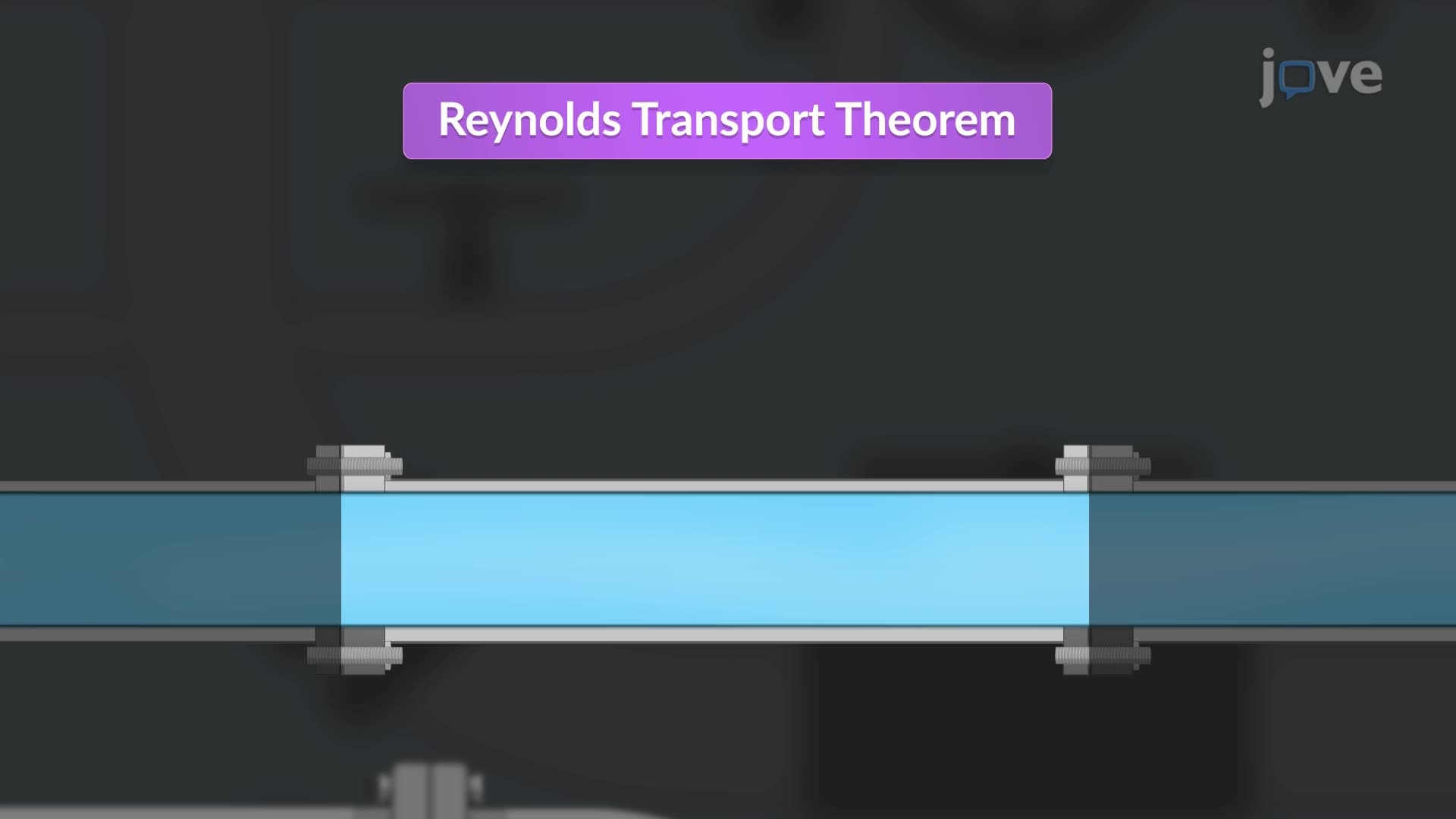
6. Reynolds Transport Theorem
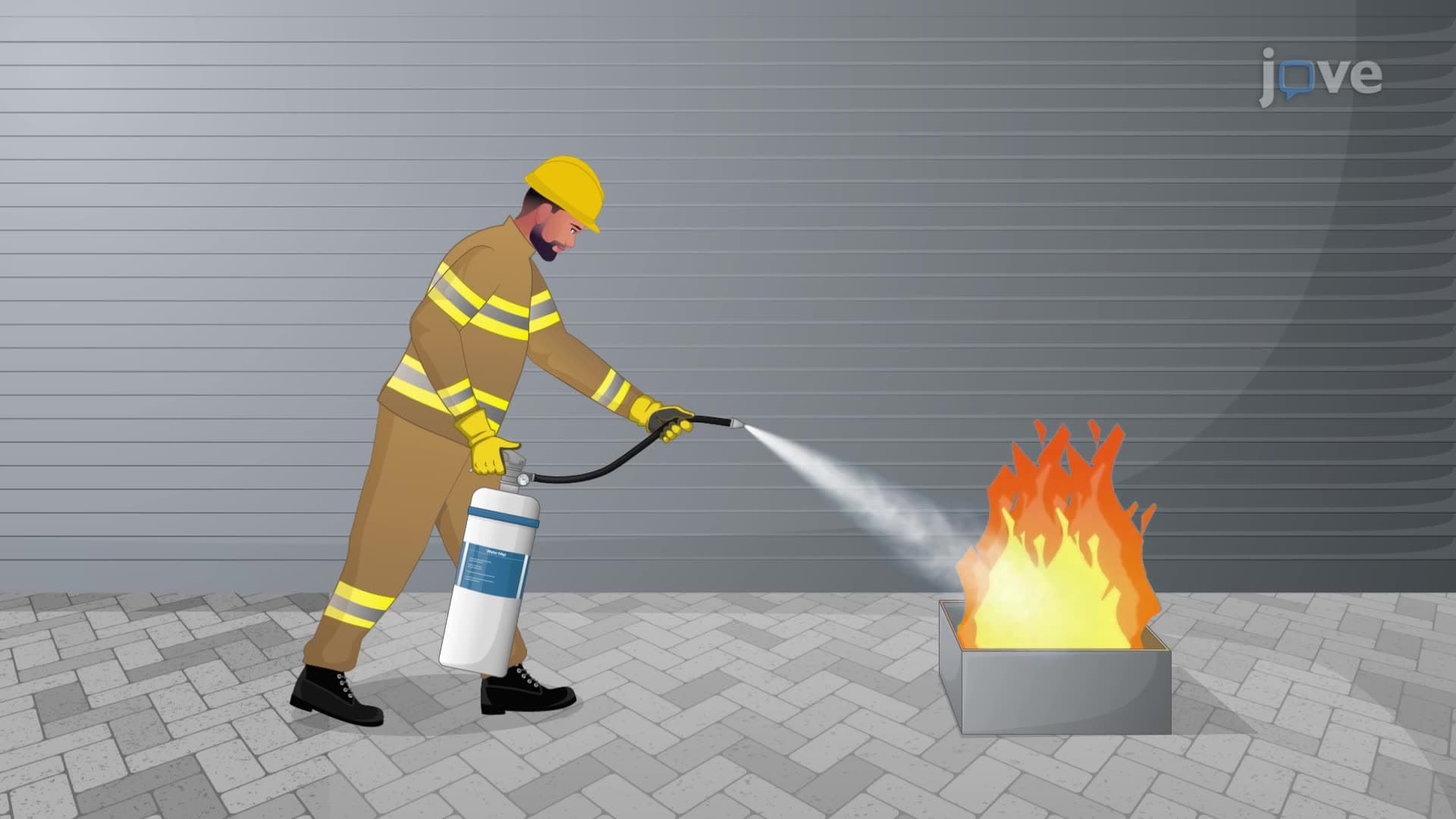
7. Design Example: Flow Through a Fire Extinguisher
Fluid kinematics examines the description of fluid motion without considering the forces that cause it. This comprehensive course explores flow velocity fields and fundamental methods for describing fluid motion, including Eulerian and Lagrangian approaches. Through real-world applications like municipal water systems and environmental pollutant tracking, students master essential concepts using JoVE Coach's interactive learning platform.
- Understand the fundamental differences between Eulerian and Lagrangian flow descriptions
- Learn to classify flows based on dimensionality and temporal behavior
- Identify streamlines, streaklines, and pathlines in various flow scenarios
- Explore control volume and system representations for fluid analysis
- Analyze velocity and acceleration fields in steady and unsteady flows
- Apply Reynolds Transport Theorem to relate system and control volume perspectives
- Understand practical applications through engineering design examples
1. Eulerian vs. Lagrangian Flow Descriptions The Eulerian method analyzes fluid properties at fixed spatial locations, like monitoring air quality sensors positioned around industrial facilities in California's Central Valley. This approach proves invaluable for studying airflow patterns around NASA's space shuttles during launch or analyzing water flow through New York City's aqueduct system. Conversely, the Lagrangian method tracks individual fluid particles, similar to following oil spill particles in the Gulf of Mexico after offshore drilling incidents. Environmental engineers use this approach to predict how agricultural runoff spreads through the Mississippi River system, enabling better water quality management downstream.
2. Flow Classification and Dimensionality Fluid flows are categorized by spatial dimensions and temporal characteristics. One-dimensional flow occurs in pipeline systems transporting natural gas across Alaska, where properties vary only along the pipe length. Two-dimensional flow appears in irrigation channels throughout California's agricultural regions, while three-dimensional flow characterizes complex atmospheric patterns around Chicago's skyscrapers. Steady flows maintain constant properties over time, like water flowing through municipal treatment plants, while unsteady flows exhibit time-dependent behavior, such as storm surge patterns during Atlantic hurricanes affecting Florida's coastline.
3. Streamlines, Streaklines, and Pathlines These visualization tools help engineers understand complex flow patterns in practical applications. Streamlines represent instantaneous flow direction, crucial for designing efficient wind turbine blade geometries across Texas wind farms. Streaklines show particle paths from specific injection points, useful for studying smoke dispersion from industrial stacks in Ohio's manufacturing corridor. Pathlines trace individual particle trajectories, essential for tracking debris movement during flood events in Louisiana's bayou systems. Understanding these concepts enables better design of hydraulic structures and environmental monitoring systems throughout American infrastructure.
4. Control Volume and System Analysis Control volume analysis focuses on specific spatial regions, like studying water flow through hydroelectric turbines at Hoover Dam. This approach simplifies complex problems by examining mass, momentum, and energy conservation within defined boundaries. System analysis tracks specific fluid masses, comparable to monitoring a water parcel as it travels from Colorado's Rocky Mountains through the Colorado River system to Arizona. Engineers combine both approaches when designing water treatment facilities, using control volumes for equipment sizing and system analysis for understanding residence time distribution in treatment processes.
5. Velocity Fields and Acceleration The flow velocity field describes how fluid speed and direction vary throughout space and time. Material derivatives capture how fluid properties change following particle motion, essential for understanding pollutant concentration changes in groundwater systems beneath industrial sites in Michigan. In steady flows, local acceleration vanishes, simplifying analysis of municipal water distribution networks. Unsteady flows require considering both temporal and spatial velocity changes, critical for designing stormwater management systems in urban areas like Seattle, where rainfall patterns create time-dependent flow conditions in drainage networks.
6. Reynolds Transport Theorem This fundamental principle connects system and control volume perspectives, enabling engineers to apply conservation laws effectively. The theorem proves essential for analyzing mass conservation in oil refineries along Texas's Gulf Coast, where multiple process streams interact within complex piping networks. It helps determine momentum changes in aircraft engines manufactured by Boeing in Washington state, relating thrust generation to control volume analysis. Energy applications include studying heat transfer in power plant cooling systems across the Tennessee Valley, where thermal management requires understanding both system behavior and control volume energy balances.
Frequently Asked Questions
Eulerian description works best for analyzing flow around fixed structures like bridges over the Mississippi River or air conditioning systems in buildings. Lagrangian description suits tracking specific substances, such as following radioactive tracers in medical imaging or monitoring oil spill cleanup efforts in coastal waters.
In steady flow, all three coincide perfectly. During unsteady conditions like hurricane storm surge, streamlines show instantaneous flow direction, streaklines reveal where particles from specific locations have traveled, and pathlines show actual particle trajectories. This distinction becomes crucial for emergency response planning along hurricane-prone coastlines.
Focus on understanding flow velocity fields in biological systems, continuity equation applications in blood flow, and basic streamline concepts for respiratory airflow. The MCAT emphasizes conceptual understanding rather than complex mathematical derivations, particularly regarding fluid motion in circulatory and respiratory systems.
Reynolds Transport Theorem extends conservation laws (mass, momentum, energy) to fluid systems, similar to how Newton's laws apply to solid objects. It bridges the gap between particle mechanics and continuum fluid behavior, providing the mathematical foundation for applying familiar conservation principles to flowing fluids.
Environmental engineers track groundwater contamination, aerospace engineers design aircraft wing surfaces, biomedical engineers analyze blood flow patterns, meteorologists predict weather systems, and petroleum engineers optimize oil extraction processes. These concepts form the foundation for any career involving fluid flow analysis.
The main challenge involves visualizing three-dimensional flow patterns and understanding the mathematical relationship between different reference frames. Practice with flow visualization software, work through multiple examples comparing Eulerian and Lagrangian viewpoints, and focus on connecting mathematical concepts to physical intuition through real-world examples.
Start with simple one-dimensional examples before progressing to complex three-dimensional cases. Practice deriving material derivatives step-by-step, focusing on physical meaning rather than memorizing formulas. Use dimensional analysis to check your work and connect mathematical expressions to physical processes like particle acceleration in fluid streams.
This microcourse includes 7 concept videos that walk you through the building blocks of Civil Engineering. Each video is short, about 1 minute, so you can cover a full topic during a coffee break or between classes. The full sequence starts with Eulerian and Lagrangian Flow Descriptions and ends with Design Example: Flow Through a Fire Extinguisher.
The playlist moves from big-picture ideas to the precise vocabulary used in Civil Engineering. Early videos introduce Eulerian and Lagrangian Flow Descriptions, Introduction to Types of Flows, and Streamlines, Streaklines, and Pathlines. The middle of the series focuses on Velocity and Acceleration in Steady and Unsteady Flow, Reynolds Transport Theorem, and Design Example: Flow Through a Fire Extinguisher. The final stretch covers Design Example: Flow Through a Fire Extinguisher.
The natural next step is Finite Control Volume Analysis. From there, you can move to Differential Analysis of Fluid Flow, Dimensional Analysis, Similitude, and Modeling, and Flow in Pipes. Once you finish those, the full Civil Engineering curriculum of 30 microcourses on JoVE Coach opens up, taking you from foundational concepts to advanced systems.
Related Subjects
 Electrical Engineering 33 micro-courses›Mechanical Engineering 28 micro-courses›