- Civil Engineering
- Angles and Directions
Micro-courses:30

Angles and Directions
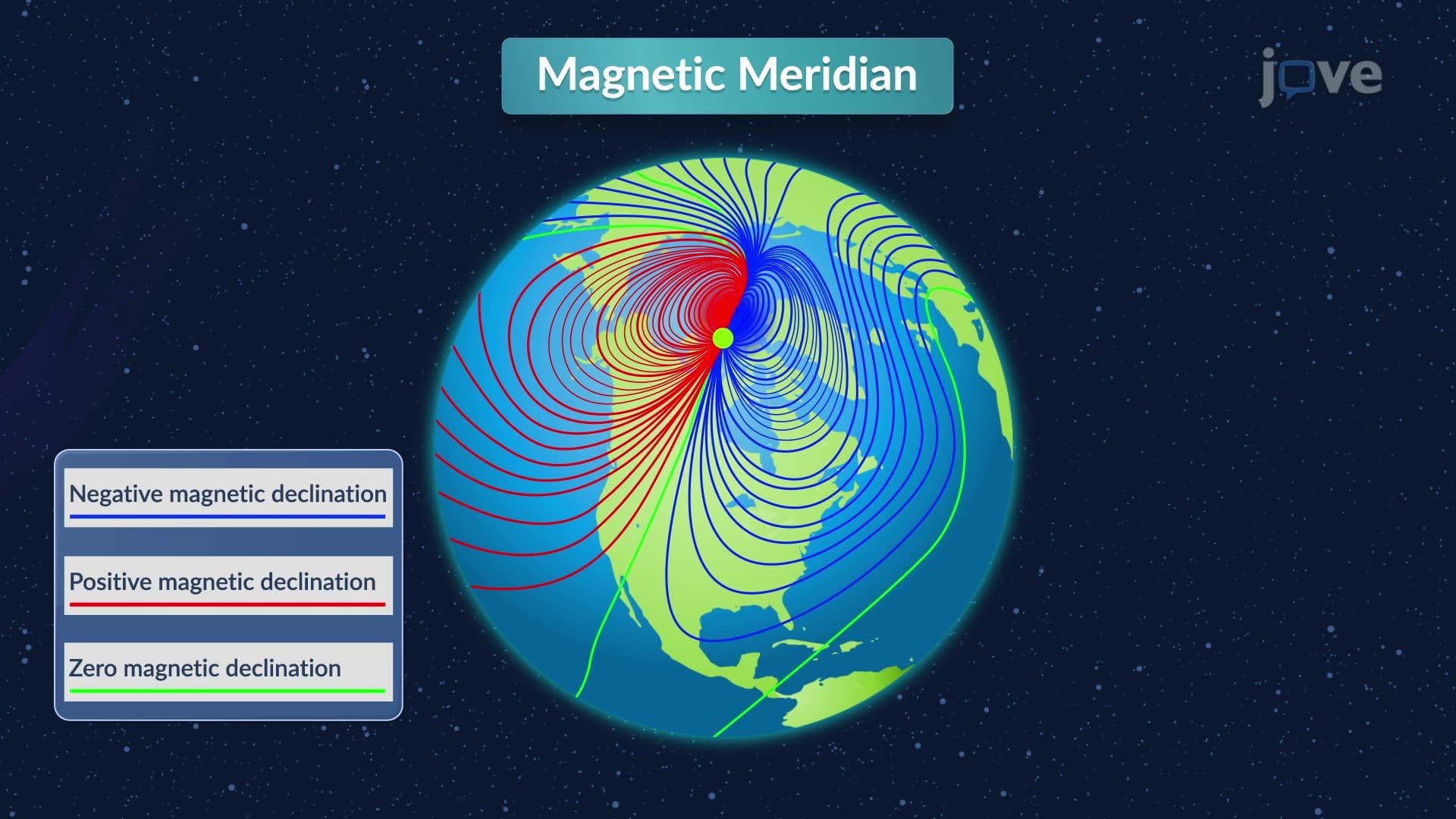
1. Meridians
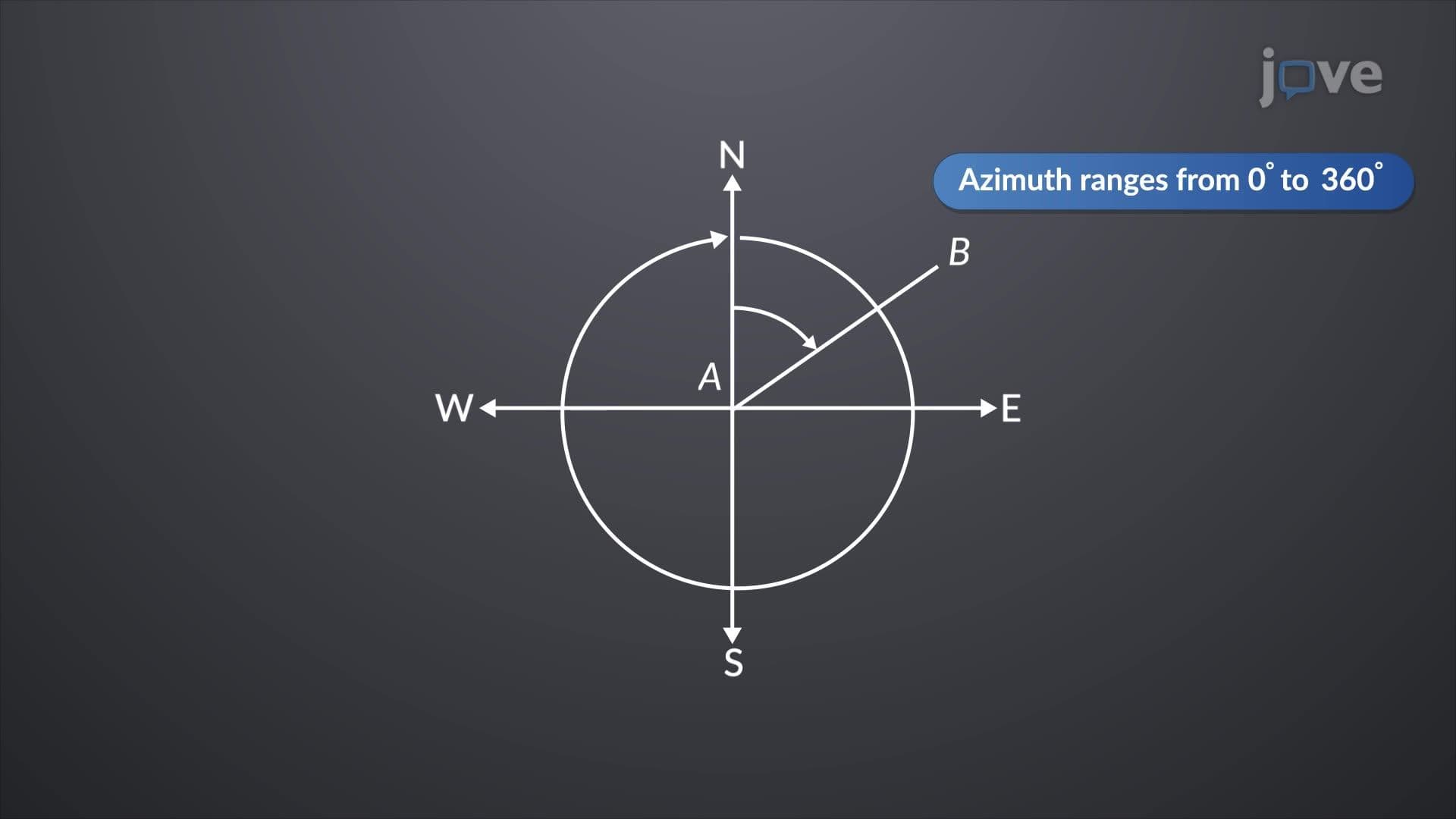
2. Azimuths and Bearings
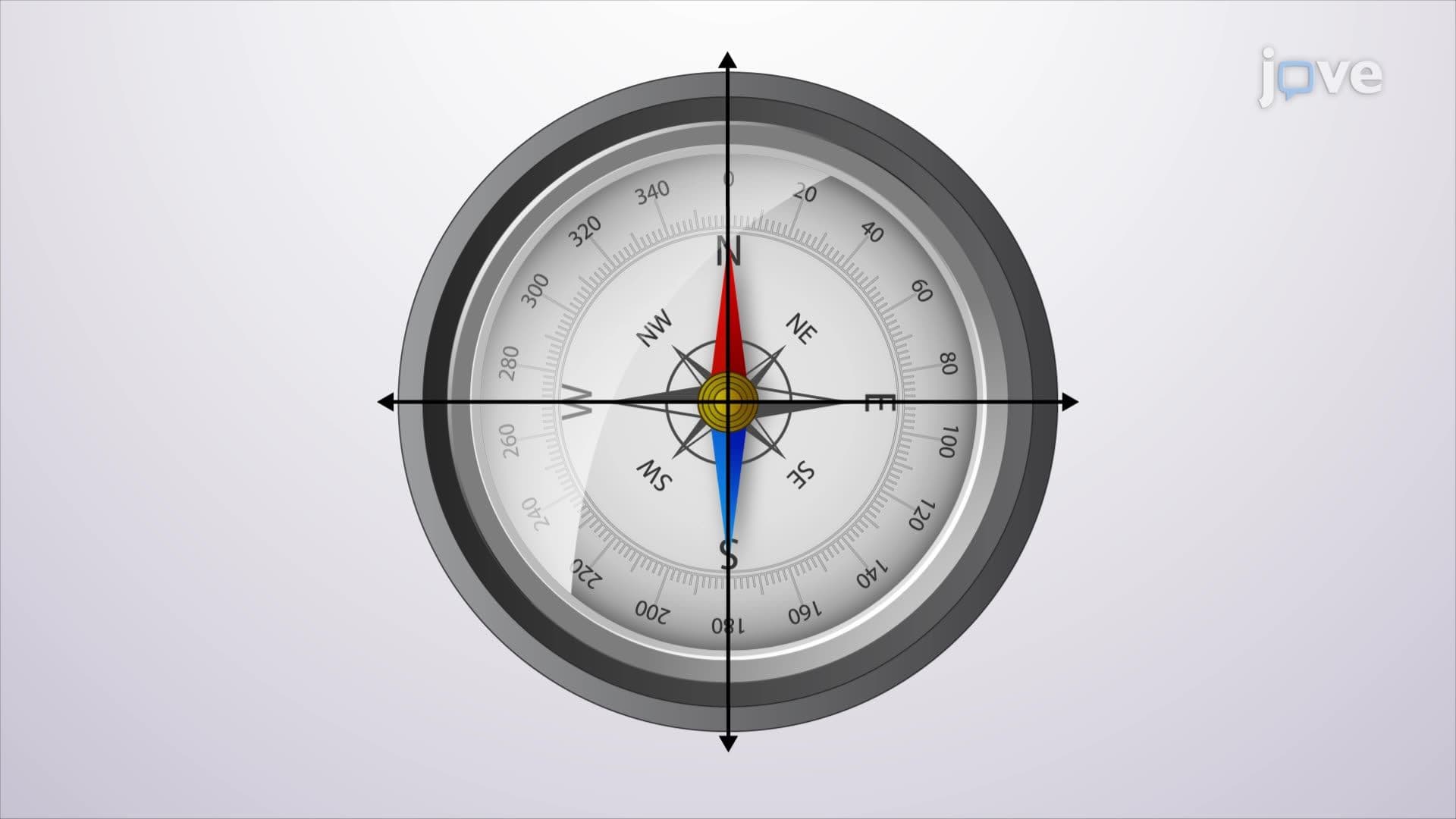
3. Compass
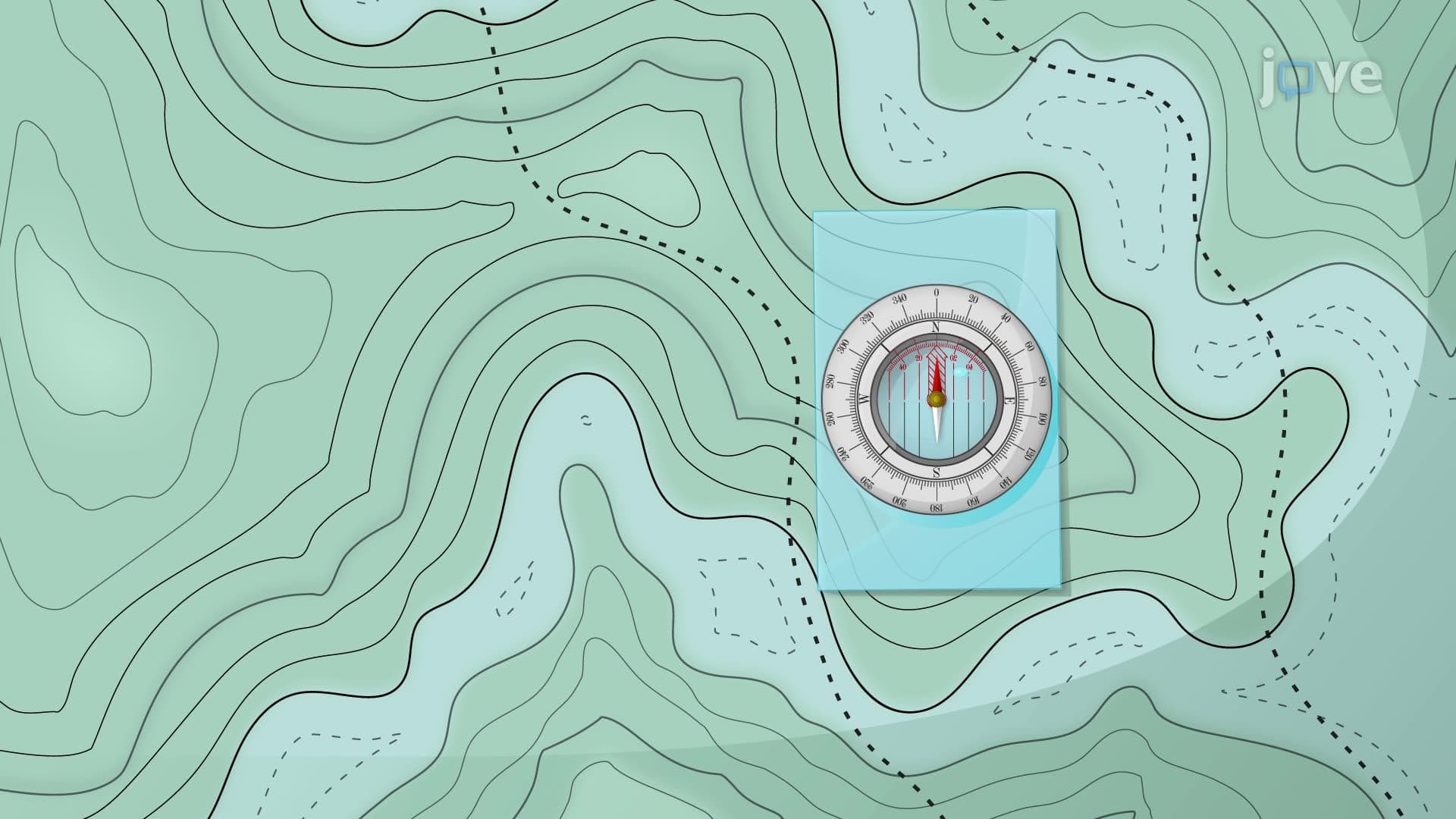
4. Magnetic Declination

5. Local Attraction
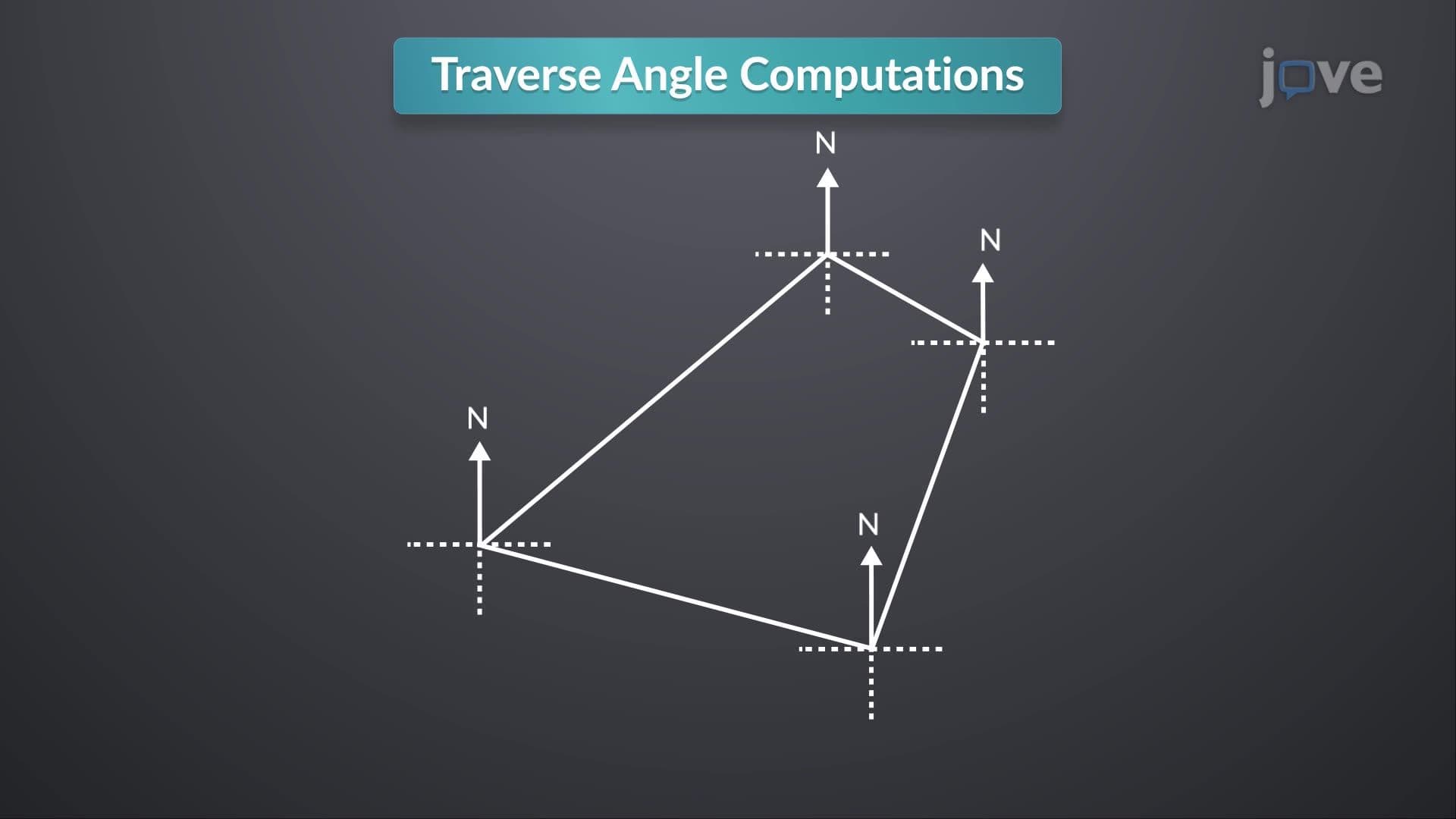
6. Design Example: Traverse Angle Computations
Understanding angles and directions is fundamental to surveying and navigation across the United States. This comprehensive course covers meridian systems, bearing azimuth surveying concepts, compass operations, and angular measurement in surveying applications. Students explore how surveyors establish reference lines, calculate directional measurements, and account for magnetic variations that affect precision in land surveying projects from California's Central Valley to Florida's Everglades, with JoVE Coach guidance throughout.
- Understand the four types of meridians used in US surveying operations and their practical applications
- Learn to calculate azimuths and bearings for precise directional measurements in land surveys
- Identify compass components and their role in magnetic navigation systems
- Explore magnetic declination effects on compass readings across different US regions
- Analyze local attraction sources that can distort compass measurements in urban and rural environments
- Apply traverse angle computation methods to solve real surveying problems
- Understand the relationship between true north, magnetic north, and grid north systems
- Learn to convert between azimuth and bearing measurement systems effectively
1. Meridian Reference Systems Meridians serve as essential reference lines for directional measurements in US surveying projects. Astronomic meridians align with Earth's rotational axis, providing consistent reference points for large-scale surveys like the Public Land Survey System used across western states. Magnetic meridians follow compass needle orientation but vary with location and time. Assumed meridians use arbitrary directions for local projects, while grid meridians create parallel reference systems for regional mapping. Understanding these systems helps surveyors choose appropriate references for projects ranging from small residential lots in suburban Denver to extensive ranch surveys across Montana's plains.
2. Azimuth and Bearing Calculations Azimuth measurements represent clockwise angles from north, ranging from 0° to 360°, commonly used in modern surveying equipment and GPS systems. Bearings express direction using quadrant notation with angles never exceeding 90°, traditional in property deed descriptions throughout rural America. Converting between systems requires understanding directional relationships: a line with azimuth 055° equals bearing N55°E. Back azimuths differ by exactly 180° from forward measurements, critical for verifying survey accuracy. These concepts apply directly to property boundary surveys, highway construction projects, and municipal infrastructure development across US communities.
3. Compass Operations and Magnetic Navigation The surveyor's compass historically guided American westward expansion and remains relevant for understanding magnetic navigation principles. Earth's magnetic field, generated by liquid outer core currents, creates magnetic north distinct from true north. Compass needles require careful balancing and protection from interference to maintain accuracy. Modern applications include backup navigation systems, preliminary survey reconnaissance, and educational demonstrations of magnetic principles. Understanding compass limitations helps students appreciate GPS technology advantages while recognizing magnetic navigation's continued importance in emergency situations and remote area exploration throughout American wilderness regions.
4. Magnetic Declination Variations Magnetic declination represents angular difference between true north and magnetic north, varying significantly across the United States. Western regions like Washington State experience eastern declination up to 20°, while eastern areas like Maine show western declination. This variation affects compass accuracy and requires correction calculations for precise surveying work. Secular variation causes declination changes over 150-year cycles, necessitating updated declination values for legal survey work. Annual and daily variations exist but typically remain negligible for most applications. Online declination calculators provide current values essential for updating historical survey records and conducting accurate fieldwork.
5. Local Attraction Detection and Correction Local attraction occurs when nearby magnetic objects distort compass readings, creating measurement errors in surveying projects. Common sources include steel construction materials in urban environments, underground utilities, vehicles, and natural iron ore deposits found throughout regions like Minnesota's Iron Range. Detection involves comparing forward and back bearings of survey lines—differences exceeding normal 180° variance indicate magnetic interference. Correction requires identifying contaminated observation points and relocating measurements to magnetically clean areas. This principle ensures reliable compass surveys essential for property boundary determination, construction layout, and navigation applications throughout diverse American landscapes.
Frequently Asked Questions
Azimuth measures clockwise angles from north (0°-360°), while bearing uses quadrant notation with angles never exceeding 90°. Azimuth 055° equals bearing N55°E. Modern GPS and surveying instruments typically display azimuth values, while property deeds often use bearing notation.
Magnetic declination varies significantly nationwide—western states like California show eastern declination (magnetic north lies east of true north), while eastern states like Florida experience western declination. Values range from 0° to over 20°, requiring location-specific corrections for accurate navigation.
Standardized tests typically focus on azimuth concepts due to their connection with coordinate geometry and trigonometry. Students should understand azimuth-to-bearing conversions and be able to calculate angles between directional lines using both systems.
Local attraction results from nearby magnetic objects like steel buildings, vehicles, power lines, or underground utilities creating localized magnetic fields. Even small items like watches or belt buckles can affect readings. Detection involves comparing forward and back bearings of survey lines.
Survey requirements determine meridian choice: astronomic meridians provide long-term stability for large projects, magnetic meridians offer field convenience, assumed meridians simplify local work, and grid meridians support regional mapping systems. Each serves specific accuracy and practical needs.
GPS technology provides precise coordinate positions, but understanding traditional directional concepts remains essential for interpreting survey data, property descriptions, and navigation principles. Many GPS displays include compass functions that still require declination corrections.
Practice converting between azimuth and bearing systems using quadrant diagrams. Memorize the relationship that back azimuths differ by 180°. Work through traverse problems step-by-step, checking that internal angles sum to (n-2)×180° for closed polygons. Use real survey examples from your local area.
Land surveyors, civil engineers, cartographers, GPS technicians, construction managers, and military personnel regularly apply these concepts. Understanding directional measurements proves valuable in fields ranging from urban planning to outdoor recreation leadership.
This microcourse includes 6 concept videos that walk you through the building blocks of Civil Engineering. Each video is short, about 1 minute, so you can cover a full topic during a coffee break or between classes. The full sequence starts with Meridians and ends with Design Example: Traverse Angle Computations.
The playlist moves from big-picture ideas to the precise vocabulary used in Civil Engineering. Early videos introduce Meridians, Azimuths and Bearings, and Compass. The middle of the series focuses on Local Attraction and Design Example: Traverse Angle Computations. The final stretch covers Design Example: Traverse Angle Computations.
The natural next step is Traverse and Topographic Surveying. From there, you can move to Horizontal and Vertical Curves, Global Positioning System (GPS), and Geographic Information Systems (GIS). Once you finish those, the full Civil Engineering curriculum of 30 microcourses on JoVE Coach opens up, taking you from foundational concepts to advanced systems.
Related Subjects
 Electrical Engineering 33 micro-courses›Mechanical Engineering 28 micro-courses›