Loading subject page…

- Civil Engineering
- Fluid Kinematics
- Reynolds Transport Theorem
Micro-course: Fluid Kinematics
8,195 views
Learn key concepts and earn your certificate.






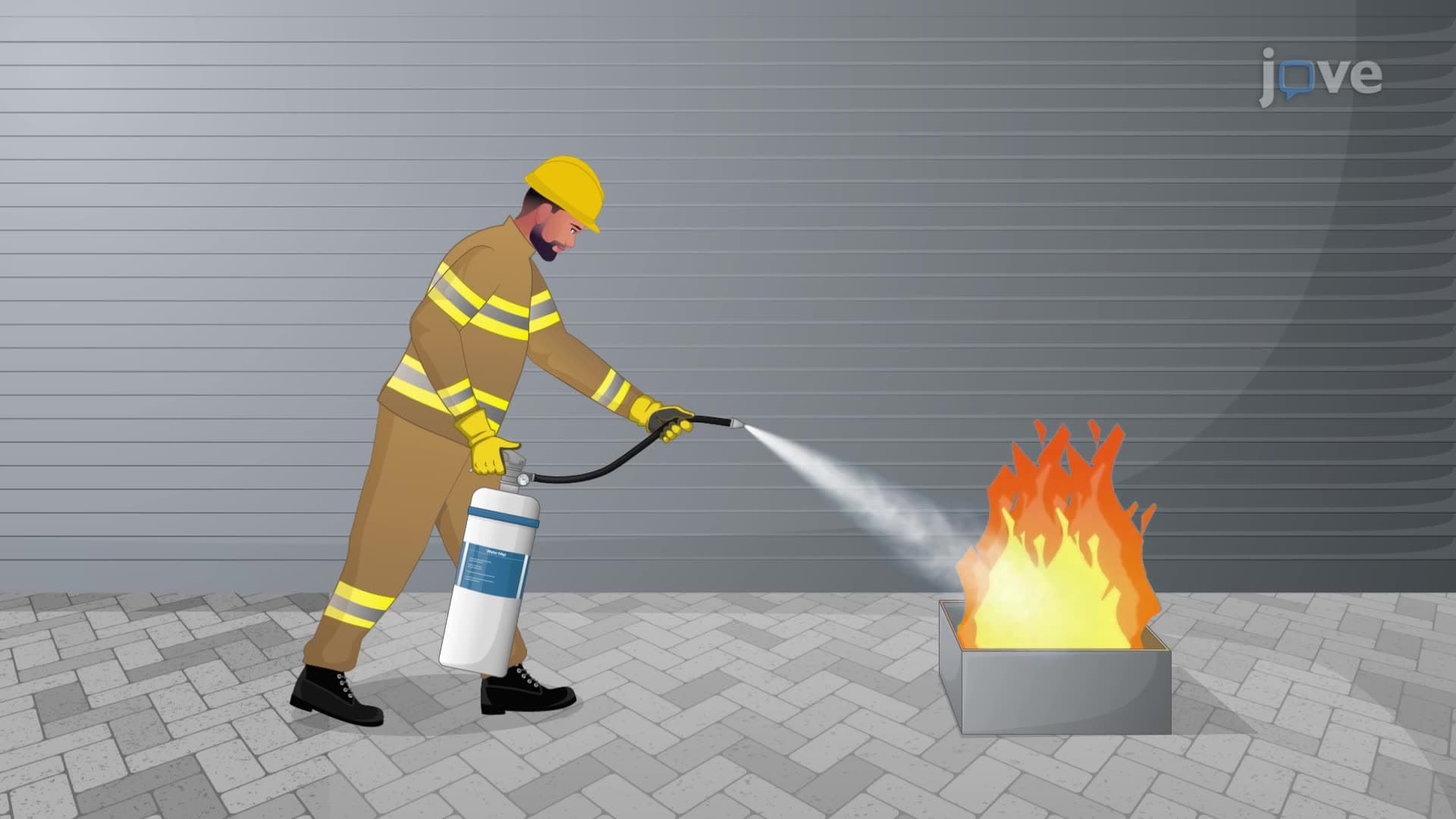
Reynolds Transport Theorem


00:00
01:24
Video Summary: What Is Reynolds Transport Theorem
Ever wonder how NASA engineers track fuel consumption in rocket engines during launch? The design example flow through a rocket nozzle requires understanding Reynolds Transport Theorem, which connects how fluid properties change in moving systems versus fixed control volumes. This fundamental principle helps engineers at companies like Boeing analyze everything from jet engine performance to oil pipeline efficiency. What is Reynolds Transport Theorem becomes crucial when designing any system where fluid flows across boundaries while properties like mass and energy must be conserved. Watch the full video on JoVE Coach to master this concept with expert-led visuals and step-by-step explanations.
- Understand What is Reynolds Transport Theorem and its role in connecting system-based and control volume-based fluid analysis approaches
- Identify the difference between extensive properties (mass, momentum, energy) and intensive properties (velocity, temperature, pressure) in fluid systems
- Analyze how the time rate of change of extensive properties relates to accumulation within control volumes and net flux across control surfaces
- Apply Reynolds Transport Theorem to solve engineering problems involving fluid flow through pipes, nozzles, and other devices
- Compare system perspective (following fluid particles) versus control volume perspective (fixed observation region) in fluid mechanics
- Evaluate when control volume boundaries and system boundaries overlap and how this affects property calculations
- Recognize real-world applications in aerospace, automotive, and process engineering design scenarios
- Explore the mathematical relationship between material derivative and control volume formulations
Understanding What is Reynolds Transport Theorem
Reynolds Transport Theorem serves as the bridge between two fundamental approaches in fluid mechanics: the Lagrangian (system) approach that follows individual fluid particles, and the Eulerian (control volume) approach that observes fluid behavior at fixed locations. Named after Osborne Reynolds, this theorem becomes essential when analyzing design example flow through a complex system where boundaries move or fluid crosses control surfaces.
Mathematical Foundation and Physical Meaning
The theorem mathematically states that the time rate of change of any extensive property in a system equals the sum of: (1) the accumulation of that property within a control volume, and (2) the net flux of the property across the control surface. This design example flow through a tutorial concept can be expressed as:
dN(sys)/dt = ∂/∂t ∫(CV) ρη dV + ∫(CS) ρη(V·n) dA
Where N represents the extensive property, η is the corresponding intensive property per unit mass, ρ is density, V is velocity vector, and n is the outward unit normal vector.
Real-World Applications in US Engineering
Understanding how design example flow through a works becomes critical in numerous US industries. At General Electric's jet engine facilities in Ohio, engineers use this theorem to analyze fuel-air mixing in combustion chambers. Similarly, ExxonMobil petroleum engineers apply these principles when designing oil refineries in Texas, ensuring mass and energy conservation across processing units.
The theorem proves invaluable in AP Physics C courses and college-level fluid mechanics, where students must transition from simple particle mechanics to continuous fluid systems. Design example flow basics appear in MCAT physics sections, particularly in passages about blood flow and respiratory systems.
Advanced Applications and Exam Relevance
For college engineering students, this design example flow through a concept appears frequently in thermodynamics and fluid mechanics exams. At institutions like MIT, Stanford, and UC Berkeley, professors emphasize how the theorem enables analysis of turbomachinery, heat exchangers, and propulsion systems.
The design example flow through a study guide approach should focus on identifying when to use system versus control volume analysis. System analysis works well for closed systems with moving boundaries, while control volume analysis suits steady-flow processes with fluid crossing boundaries. Understanding design example flow through a requires recognizing that both approaches must yield identical results for the same physical situation.
Modern applications extend to computational fluid dynamics (CFD) software used by companies like Tesla for battery cooling systems and SpaceX for rocket engine optimization, making this theorem fundamental to contemporary engineering practice.
Frequently Asked Questions
Reynolds Transport Theorem connects how fluid properties change when following moving fluid particles versus observing them at fixed locations. It's essential because real engineering systems often require both perspectives - you might need to track fuel consumption in a moving aircraft while also monitoring conditions at specific points in the engine. This theorem ensures both approaches give consistent results.
On the MCAT, this concept appears in fluid mechanics passages about blood circulation and respiratory systems, testing your understanding of mass conservation. AP Physics C exams focus on applying the theorem to simple flow problems, often involving pipes or nozzles. You'll need to identify whether to use system or control volume analysis based on problem setup.
The main difficulty lies in choosing the right analysis approach and properly setting up the mathematical expressions. Students often struggle with vector notation and determining control surface orientations. Practice problems involving rocket nozzles, pipe networks, or turbomachinery help build intuition for when boundaries move versus when they're fixed.
Aerospace engineers at Boeing use it for jet engine design, particularly analyzing fuel-air mixing and exhaust flow. Chemical engineers at companies like DuPont apply it to reactor design and separation processes. Even biomedical engineers use these principles when designing artificial hearts or analyzing blood flow in medical devices.
You need comfort with multivariable calculus, particularly partial derivatives and vector calculus concepts like divergence. However, many engineering applications use simplified forms where the complex mathematics reduces to basic algebra. Focus first on understanding the physical meaning before tackling the mathematical derivations.
Progress to the continuity equation (mass conservation), momentum equations (Newton's second law for fluids), and energy equations in fluid systems. These applications of Reynolds Transport Theorem form the foundation for advanced topics like computational fluid dynamics and turbomachinery design that appear in graduate engineering programs.
Practice identifying problem types: steady versus unsteady flow, moving versus fixed control volumes, and which extensive properties matter most. Work through problems involving common geometries like pipes, nozzles, and tanks. Create summary sheets showing when to use system analysis versus control volume analysis for different scenarios.
Related Micro-courses

9 Concepts

10 Concepts
