21 Concepts
14 Concepts
11 Concepts
11 Concepts
16 Concepts
8 Concepts
18 Concepts
12 Concepts
6 Concepts
12 Concepts
6 Concepts
5 Concepts
6 Concepts
9 Concepts
8 Concepts
8 Concepts
7 Concepts
9 Concepts
10 Concepts
8 Concepts
13 Concepts
5 Concepts
11 Concepts
10 Concepts
7 Concepts
6 Concepts
9 Concepts
10 Concepts
6 Concepts
9 Concepts
Dimensional analysis is a fundamental engineering method for solving complex fluid mechanics problems by converting physical quantities into dimensionless groups. This comprehensive course covers the Buckingham Pi theorem, dimensionless parameters like Reynolds and Froude numbers, and practical modeling applications including hydraulic structures, dam spillways, and aircraft design. Master these techniques used extensively in US engineering practice with JoVE Coach.
1. Fundamentals of Dimensional Analysis Dimensional analysis forms the foundation for understanding physical relationships in engineering systems. Every physical quantity can be expressed using base dimensions of mass (M), length (L), and time (T), or derived combinations. For example, velocity has dimensions of LT⁻¹, while force has dimensions of MLT⁻². This systematic approach ensures equations are dimensionally consistent and helps engineers remember complex formulas. Consider how the volume of a cylinder (πr²h) maintains dimensional consistency with L³, where π is dimensionless, r² contributes L², and h contributes L¹.
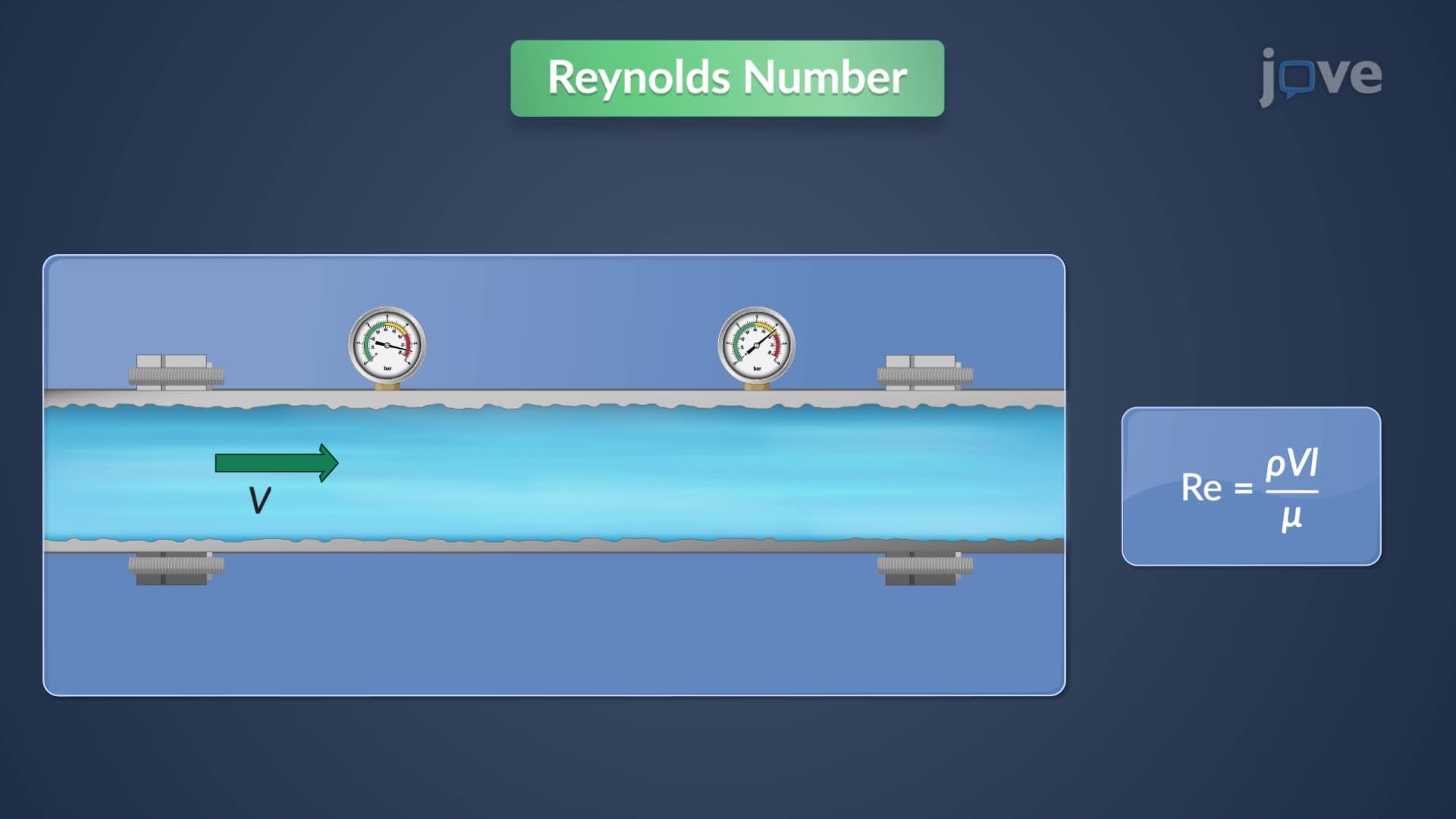
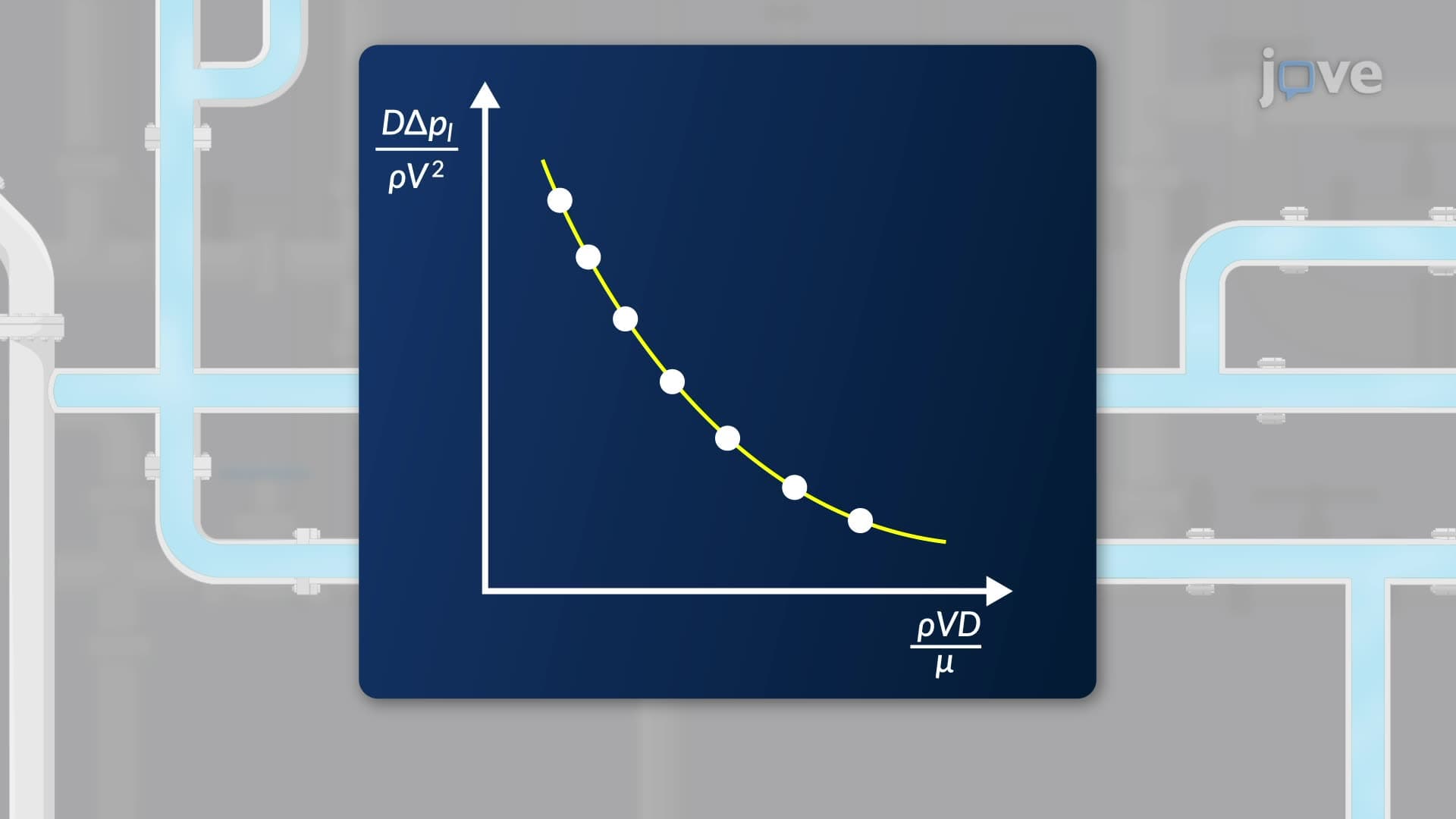
2. The Buckingham Pi Theorem Applications The Buckingham Pi theorem provides a systematic method for reducing complex engineering problems into dimensionless groups. When analyzing pipe flow with diameter D, velocity V, density ρ, and viscosity μ, this theorem determines that four variables minus three fundamental dimensions yields one Pi term: the Reynolds number (ρVD/μ). This dimensionless group characterizes whether flow is laminar or turbulent, critical for designing water distribution systems, oil pipelines, and HVAC systems throughout US infrastructure projects.
3. Critical Dimensionless Groups in Fluid Mechanics Engineering analysis relies heavily on key dimensionless numbers that characterize different physical phenomena. The Reynolds number (Re = ρVD/μ) indicates flow regime transitions at Re ≈ 2300 for pipe flow. The Froude number (Fr = V/√(gL)) governs free-surface flows in rivers and spillways. The Mach number (Ma = V/c) becomes crucial in supersonic aircraft design and wind tunnel testing. These parameters allow engineers to predict flow behavior across different scales and conditions in applications from municipal water systems to aerospace engineering.
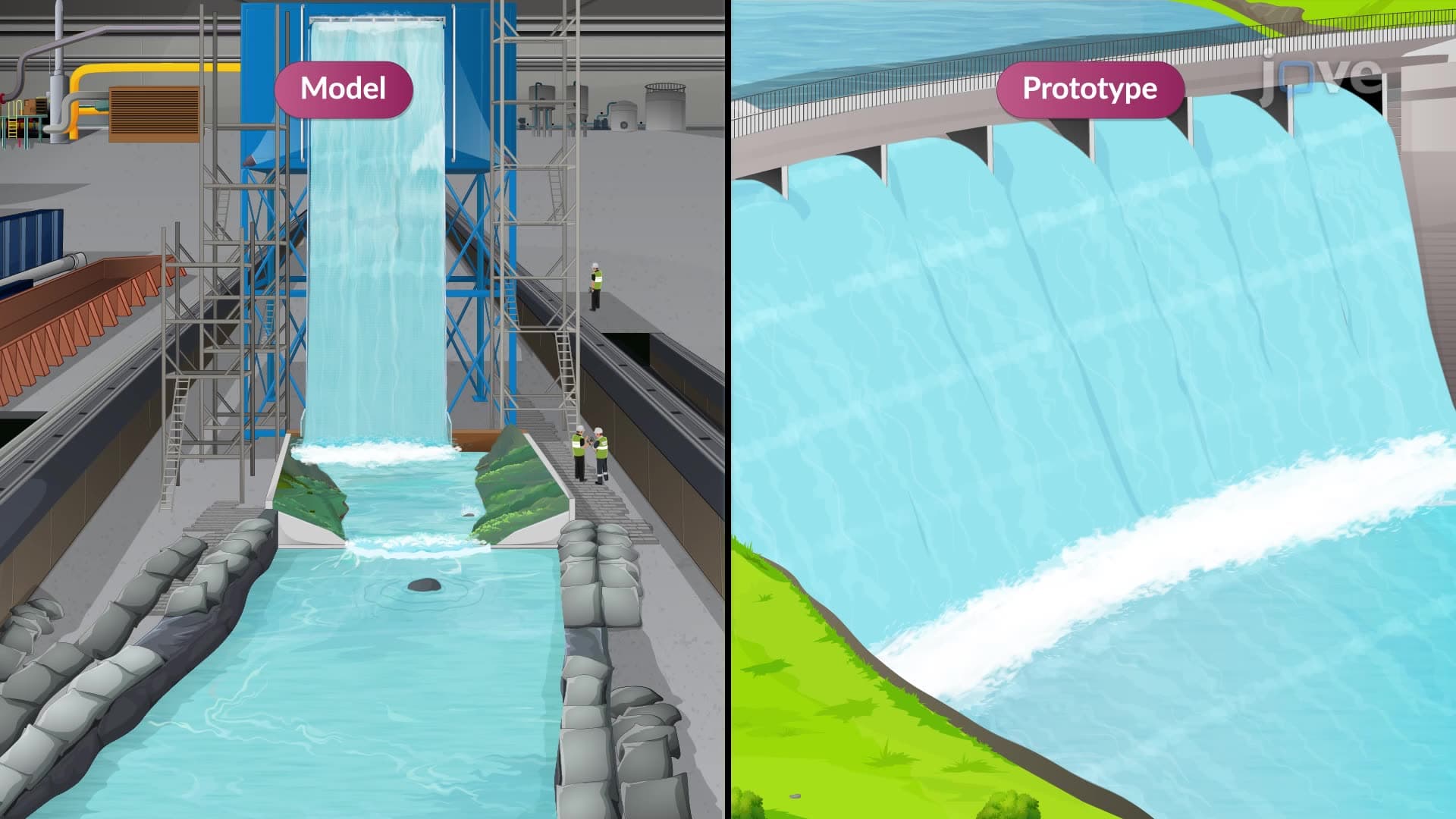
4. Model-Prototype Similitude and Scaling Laws Physical modeling requires maintaining similitude between scaled models and full-size prototypes through geometric, kinematic, and dynamic similarity. A 1:15 scale dam spillway model must preserve flow patterns while scaling discharge, velocity, and time according to established relationships. When prototype discharge is 120 m³/s, the model operates at 0.138 m³/s, with time scaled by the square root of the length ratio. This approach enables cost-effective testing of major US infrastructure projects like Hoover Dam or spillway modifications before full-scale construction.
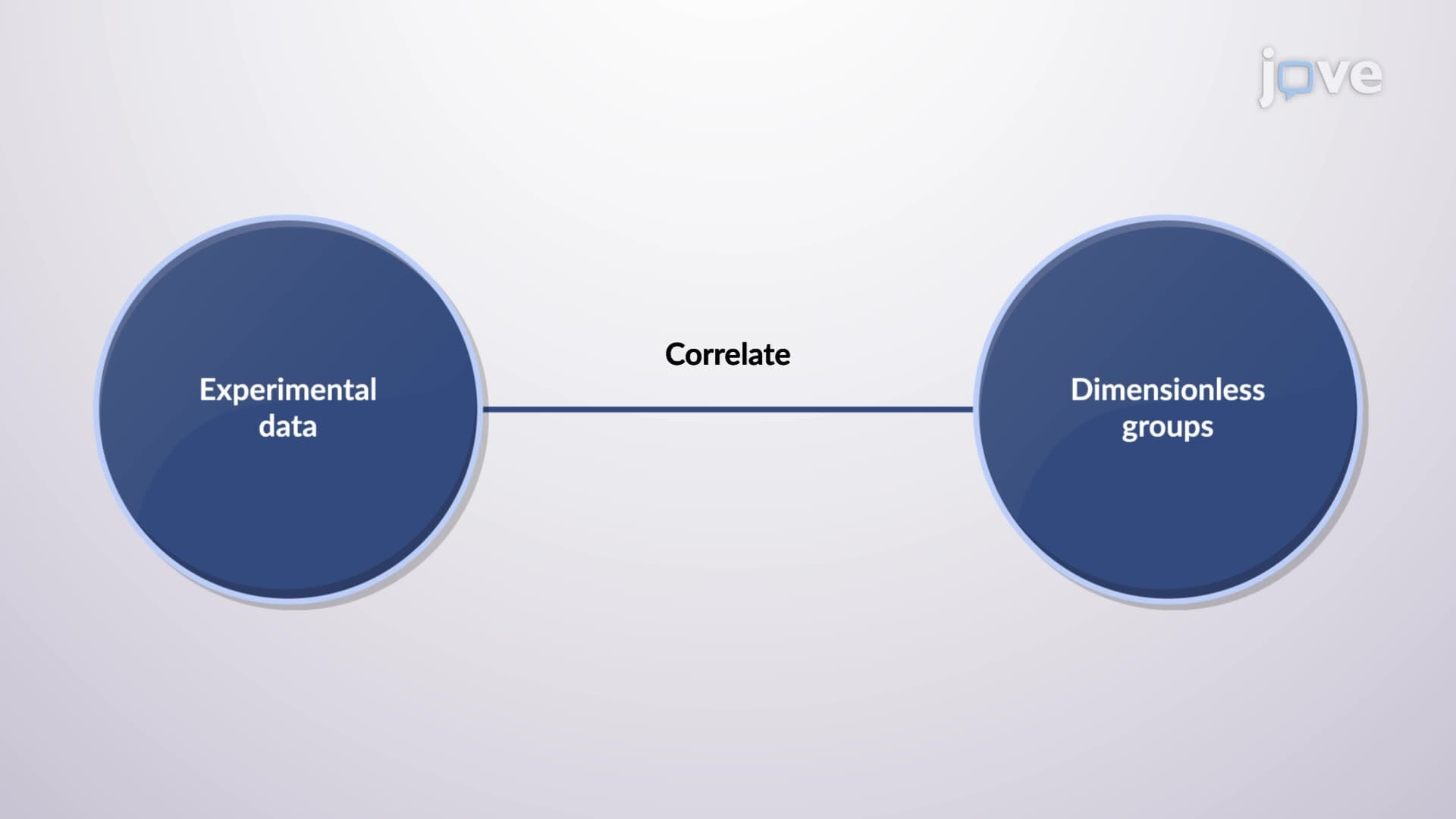
5. Experimental Data Correlation and Model Studies Dimensional analysis guides efficient experimental programs by identifying the minimum number of tests needed to characterize system behavior. For a sphere falling through viscous fluid, drag force depends on diameter, velocity, and fluid viscosity, requiring only one Pi term for complete characterization. River models use Froude number similarity with geometric distortions to study flood control and navigation improvements. Bridge pier scour studies employ Reynolds number scaling to predict erosion patterns around foundations in major waterways like the Mississippi River system.