Loading…
Loading video…

10,011 views

Ever wondered why Disney's Summit Plummet water slide at Blizzard Beach maintains thrilling speeds without becoming dangerous? Understanding eulerian and lagrangian flow descriptions is crucial for engineers designing safe water attractions across America's theme parks. These fundamental fluid mechanics concepts help predict how water behaves at different points along a slide's path versus tracking individual water particles through time. The Design Example Designing Water Slide Explained demonstrates how engineers apply these principles to calculate optimal slide heights and ensure visitor safety. Watch the full video on JoVE Coach to master this concept with expert-led visuals and step-by-step explanations.
The eulerian and lagrangian flow descriptions represent two fundamental ways engineers analyze fluid motion, each offering unique insights into how water behaves in complex systems like theme park attractions. These complementary approaches form the backbone of modern fluid mechanics education and are essential for students preparing for AP Physics, college-level engineering courses, and professional engineering exams.
The Eulerian flow description treats fluid motion from a fixed reference frame, focusing on what happens at specific locations rather than following individual fluid particles. In our water slide example, an Eulerian analysis would involve placing sensors at predetermined points along the slide—perhaps at the 5-meter, 15-meter, and 25-meter marks—to measure water velocity, pressure, and flow rate at these fixed locations.
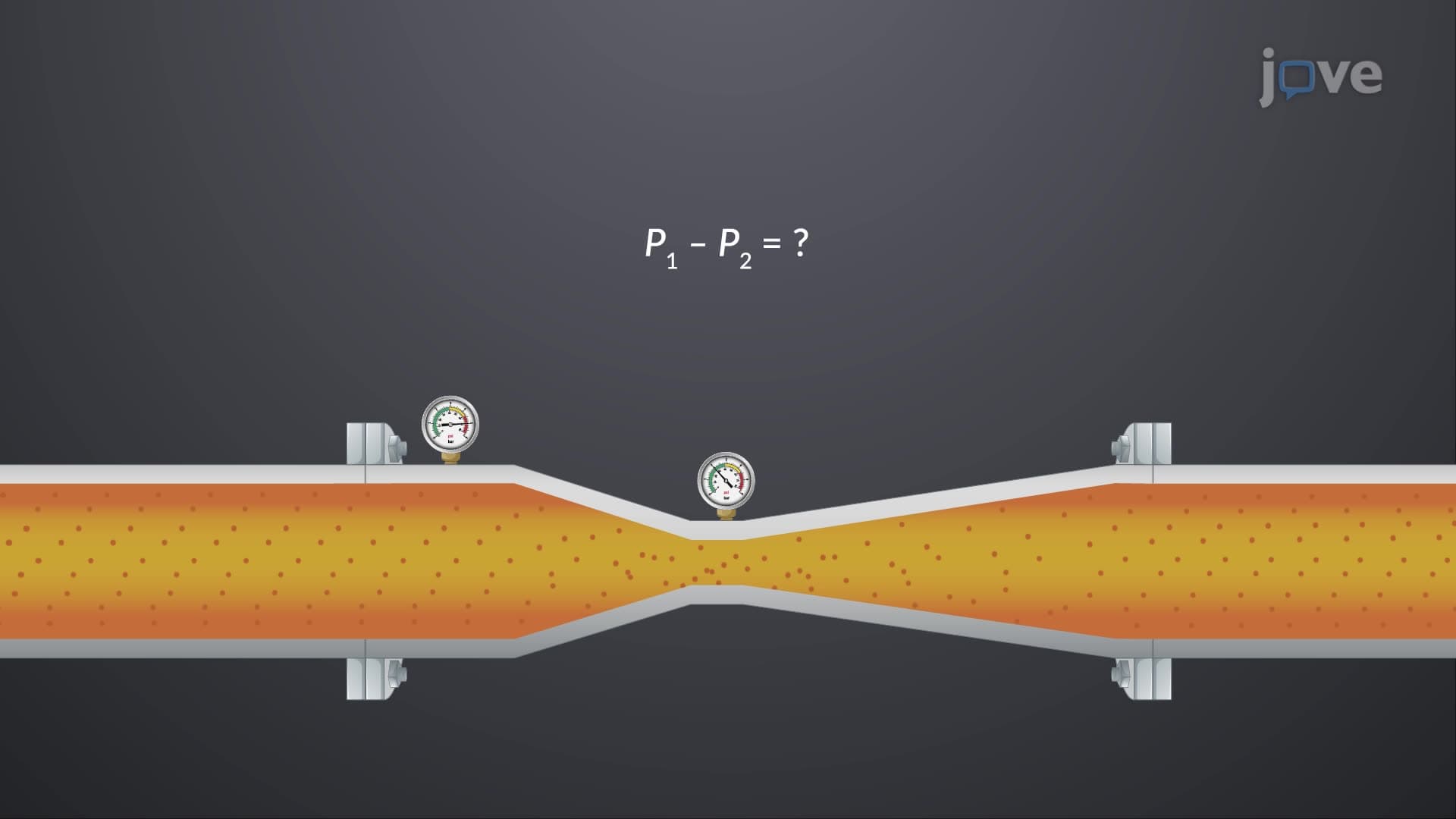
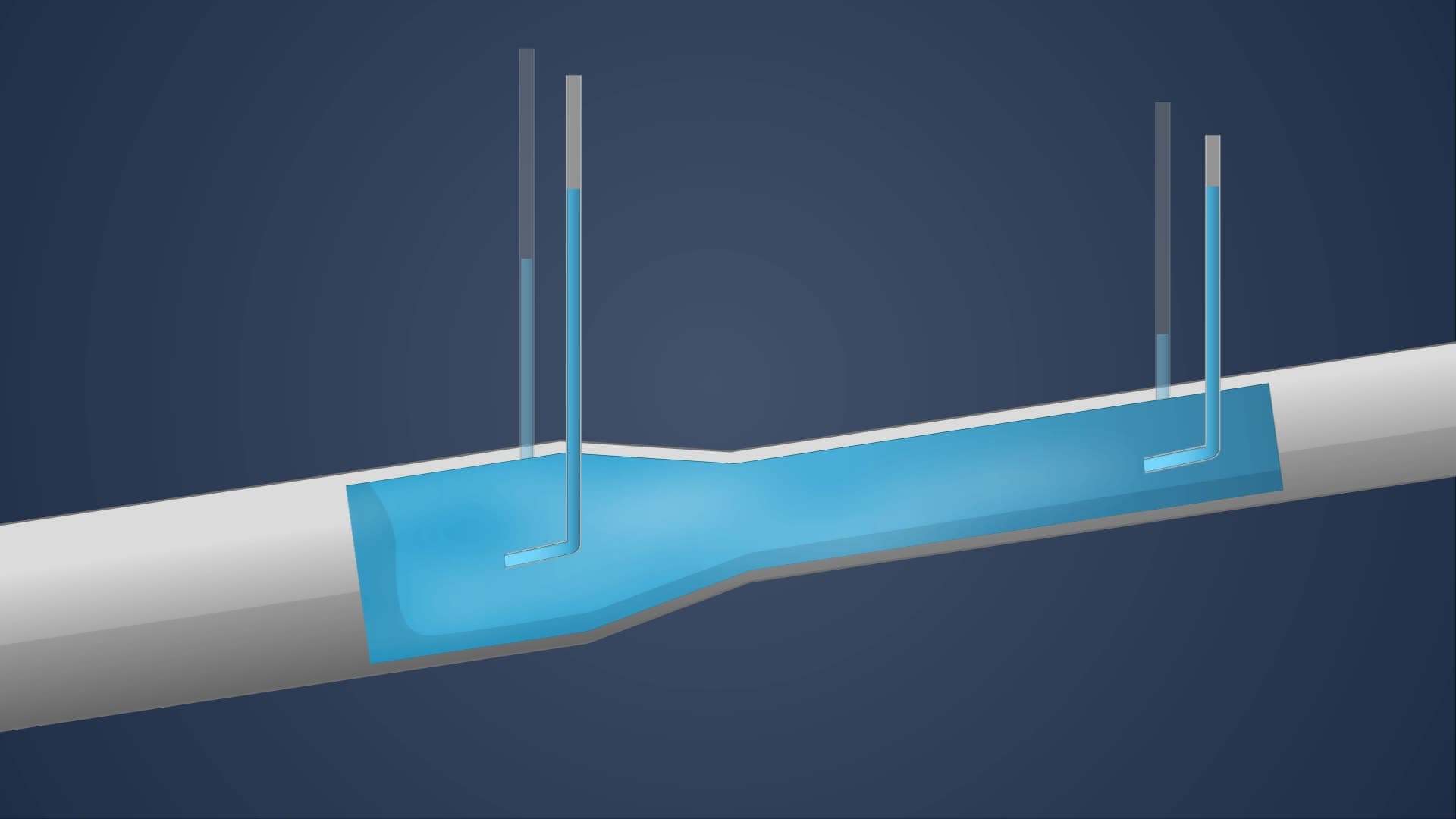
This approach proves invaluable for engineers designing Six Flags or Cedar Point water attractions because it provides steady-state information about flow conditions. When applying Bernoulli's equation using the Eulerian perspective, engineers examine the relationship between pressure (P), velocity (v), and elevation (h) at specific points: P1 + (1/2)ρv1² + ρgh1 = P2 + (1/2)ρv2² + ρgh2. The Eulerian method excels in scenarios where engineers need to understand flow patterns, identify potential bottlenecks, or ensure consistent water distribution across the slide's surface.
Conversely, the Lagrangian flow description tracks individual fluid particles as they move through the system over time. Imagine attaching a tiny GPS tracker to a water droplet at the slide's entrance and following its journey to the bottom. This particle-based approach provides insights into acceleration patterns, trajectory paths, and how long it takes specific water elements to traverse the entire slide.
For water park engineers, Lagrangian analysis helps optimize rider experience by understanding the complete journey each water particle—and by extension, each rider—experiences. This method proves particularly useful when analyzing complex slide geometries with loops, turns, or elevation changes, such as those found at Great Wolf Lodge or Kalahari Resort installations.
Both flow description methods appear frequently in standardized testing environments. AP Physics C: Mechanics exams often present problems requiring students to choose between Eulerian and Lagrangian approaches based on given information. Similarly, college-level fluid mechanics courses use these concepts as foundational building blocks for more advanced topics like computational fluid dynamics and turbulence analysis.
The water slide design example demonstrates how real engineers integrate both perspectives: Eulerian methods help establish safety parameters at critical points, while Lagrangian tracking ensures smooth, enjoyable rider experiences throughout the entire journey.
Frequently Asked Questions
Eulerian and Lagrangian flow descriptions are two fundamental methods for analyzing fluid motion in engineering applications. The Eulerian approach observes fluid properties at fixed locations (like measuring water speed at the slide's midpoint), while the Lagrangian method follows individual fluid particles through their complete journey (tracking a water droplet from top to bottom). Both methods help engineers design safer, more efficient water slide systems.
These concepts frequently appear on AP Physics C exams and college midterms as problem-solving framework questions. Students must identify whether given information suits an Eulerian analysis (fixed measurement points) or Lagrangian tracking (particle motion over time). Typical problems involve choosing the appropriate method based on available data, then applying conservation principles like Bernoulli's equation using the selected framework.
Absolutely! The MCAT Physical Sciences section includes fluid mechanics questions where these flow description concepts provide crucial problem-solving strategies. Understanding when to apply Eulerian versus Lagrangian approaches helps you tackle complex passages about blood flow, respiratory mechanics, or other biological fluid systems. These foundational concepts often distinguish high-scoring students from those who struggle with fluid dynamics problems.
Disney's Imagineers use Eulerian methods to establish safety monitoring points throughout attractions like Typhoon Lagoon's slides, measuring water velocity and pressure at fixed locations to ensure consistent performance. Simultaneously, they employ Lagrangian particle tracking through computer simulations to optimize the complete rider experience, ensuring smooth transitions and appropriate acceleration patterns. This dual approach guarantees both safety compliance and guest satisfaction.
Not necessarily! While advanced applications require multivariable calculus, the fundamental concepts are accessible to high school physics students. You can understand the core differences—fixed observation points versus particle tracking—using algebra-based physics principles. Most introductory treatments focus on conceptual understanding and basic applications rather than complex mathematical derivations.
Create comparison charts highlighting when to use each method, then practice with diverse problem types from AP Physics past exams and college textbooks. Focus on identifying keywords in problems: "at a specific location" suggests Eulerian analysis, while "following a particle" indicates Lagrangian approaches. Regular practice with both computational problems and conceptual questions builds confidence for exam situations.
Progress to conservation of mass (continuity equation) and momentum conservation principles, which build directly on these flow description foundations. Advanced students should explore computational fluid dynamics applications and turbulence theory. These next-level topics frequently appear in mechanical engineering coursework and graduate school entrance exams.
Related Micro-courses


Related Subjects
 Electrical Engineering 33 micro-courses›Mechanical Engineering 28 micro-courses›