Loading…
Loading video…

10,011 views
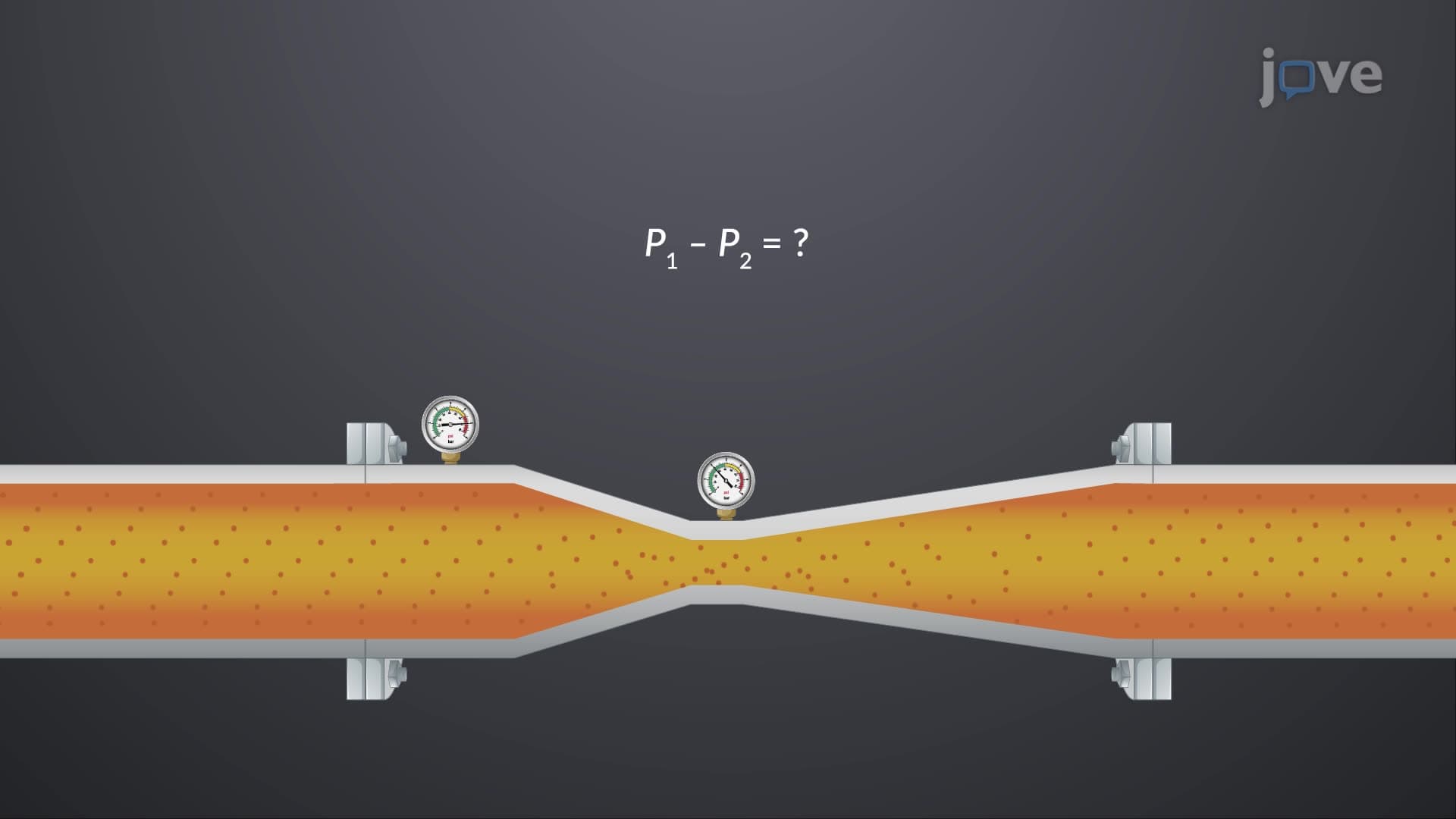
Ever wondered why airplane wings generate lift or how NASCAR engineers design faster race cars? Static stagnation dynamic and total pressure concepts are the key to understanding fluid behavior in everything from jet engines to water treatment plants. This Bernoulli's Equation Problem Solving Tutorial demonstrates these principles through a practical Venturi meter application in wastewater management systems—technology used in over 16,000 US municipal treatment facilities. Watch the full video on JoVE Coach to master this concept with expert-led visuals and step-by-step explanations.
Static stagnation dynamic and total pressure represent four distinct but interconnected pressure measurements that define fluid behavior in engineering systems. Static pressure acts perpendicular to flow direction, while dynamic pressure relates directly to fluid kinetic energy. Stagnation pressure occurs when moving fluid comes to complete rest, and total pressure combines static and dynamic components.
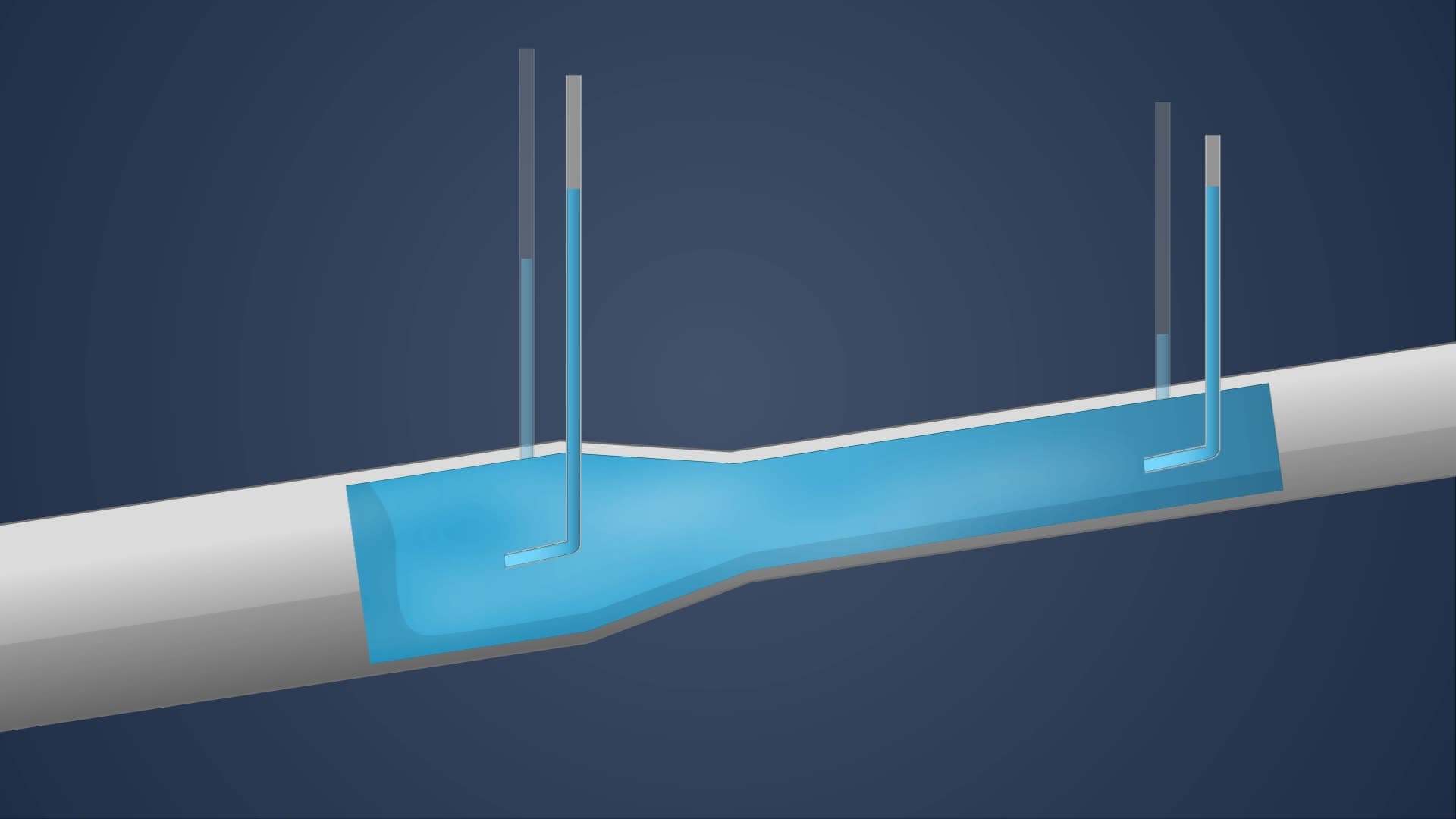
When fluid flows through varying pipe diameters—like in Venturi meters used throughout US industrial facilities—the continuity equation governs mass conservation. As cross-sectional area decreases, velocity must increase proportionally to maintain constant mass flow rate. This velocity increase creates fascinating pressure dynamics that Bernoulli's equation quantifies precisely.
The relationship follows the principle that total mechanical energy remains constant in ideal fluid flow. When kinetic energy increases (higher velocity), pressure energy must decrease correspondingly. This inverse relationship explains why NASCAR restrictor plates reduce engine power by limiting airflow velocity, and why airplane wings create lift through differential pressure zones.
Venturi meters serve critical roles in American infrastructure, from monitoring natural gas flow in Texas pipelines to measuring water consumption in California's agricultural systems. Environmental engineers rely on these devices for EPA compliance monitoring, while aerospace companies use similar principles in wind tunnel testing at facilities like NASA's Ames Research Center.
Students encounter static stagnation dynamic and total pressure concepts in AP Physics C: Mechanics, college-level fluid mechanics courses, and professional engineering licensing exams. The MCAT includes fluid dynamics questions testing Bernoulli's principle applications in cardiovascular systems. Understanding pressure differentials helps explain blood flow through arteries and veins—knowledge essential for pre-medical students.
Practice problems typically involve calculating pressure drops across pipe constrictions, determining flow rates from pressure measurements, or analyzing pump performance in hydraulic systems. Master the continuity equation first, then apply Bernoulli's equation systematically by identifying known variables and solving for unknowns step-by-step.
Frequently Asked Questions
These represent four fundamental pressure types in fluid mechanics. Static pressure acts perpendicular to flow, dynamic pressure relates to fluid kinetic energy (½ρv²), stagnation pressure occurs when fluid stops completely, and total pressure combines static and dynamic components. Understanding their relationships helps solve complex flow problems systematically.
Expect problems involving pipe flow, Venturi meters, and Pitot tubes on AP Physics C: Mechanics and college midterms. Questions typically provide flow rates, pipe dimensions, or pressure measurements, requiring you to calculate missing variables using continuity and Bernoulli equations. Practice dimensional analysis and unit conversions extensively.
Yes, the MCAT frequently includes cardiovascular applications like blood flow through stenosed arteries or respiratory mechanics. Understanding how pressure drops relate to flow constrictions helps explain medical conditions like atherosclerosis. Focus on conceptual understanding rather than complex calculations for MCAT preparation.
Major applications include natural gas pipeline monitoring in Texas and Oklahoma, municipal water systems across California, and industrial process control in chemical plants. EPA regulations require accurate flow measurements for environmental compliance, making these skills valuable for environmental engineering careers.
Absolutely not! Start with basic concepts like pressure and flow rate, then gradually build to Bernoulli's equation. Many students successfully master these topics in AP Physics courses. Focus on understanding physical principles before tackling complex mathematical derivations.
Always start by identifying given information and drawing a clear diagram. Apply continuity equation first to find velocities, then use Bernoulli's equation between two points. Practice with US-based examples like pipeline flow or aircraft design to build confidence and conceptual understanding.
For advanced students, yes! Navier-Stokes equations describe viscous fluid flow and lead to fascinating applications in aerodynamics and oceanography. However, thoroughly master Bernoulli's equation first, as it provides the foundation for more complex fluid mechanics concepts in engineering programs.
Fluid pressure relates directly to thermodynamics, wave mechanics, and electromagnetic theory. Understanding pressure helps explain sound wave propagation, weather systems, and even plasma physics applications. These connections become especially important in advanced physics courses and engineering applications.
Related Micro-courses


Related Subjects
 Electrical Engineering 33 micro-courses›Mechanical Engineering 28 micro-courses›