Loading…
Loading video…

1,284 views
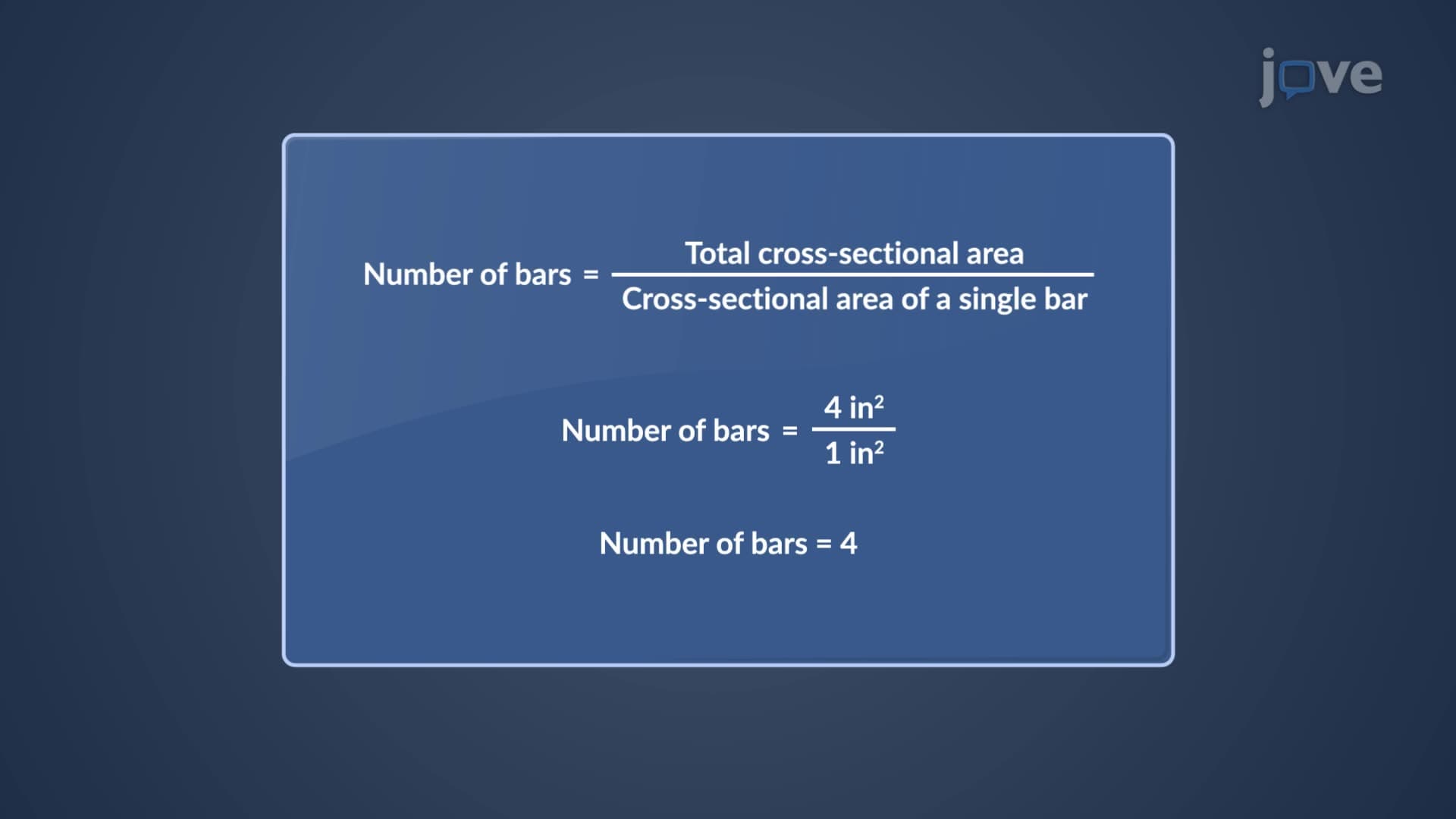
Did you know that a slight miscalculation in reinforcement distribution could compromise an entire bridge structure? Design example distributing reinforcements involves the critical engineering process of selecting and arranging steel bars within concrete structures to meet specific strength requirements. Consider the Brooklyn Bridge's concrete anchorages, where engineers must precisely calculate how many steel bars of available sizes will provide the required 4 square inches of reinforcement area. What is Design Example Distributing Reinforcements becomes essential when standard bar sizes don't perfectly match design needs, requiring engineers to round up and adjust quantities for safety. Watch the full video on JoVE Coach to master this concept with expert-led visuals and step-by-step explanations.
Design example distributing reinforcements represents a fundamental challenge in structural engineering where theoretical design requirements must be translated into practical construction solutions using available materials. This process requires engineers to bridge the gap between calculated reinforcement needs and the discrete sizes of steel bars available in the market. The concept becomes particularly crucial in major infrastructure projects like the rehabilitation of the Interstate 35W bridge in Minneapolis, where precise reinforcement distribution directly impacts public safety.
The core mathematical principle involves calculating the cross-sectional area of available reinforcement bars and determining how many bars are needed to meet or exceed design requirements. Using the standard area formula A = π × (d/2)², engineers must work with the constraint that bar quantities must be whole numbers. For instance, when design calculations call for 4 square inches of reinforcement area, and available bars provide 2.25 square inches each, the resulting 1.777 bars must be rounded to 2 bars, providing 4.5 square inches total. This 12.5% excess reinforcement represents a safety margin that engineers must account for in their designs.
American construction practices, governed by ACI (American Concrete Institute) standards, require engineers to frequently navigate these distribution challenges. Consider the construction of a typical parking garage in Chicago, where engineers might choose between #14 bars (1.693-inch diameter, 2.25 sq in area) or #11 bars (1.128-inch diameter, 1.00 sq in area). The choice affects not only material costs but also construction logistics, as smaller bars are easier to handle but require more pieces, potentially increasing labor costs. This decision-making process directly connects to concepts tested in the Fundamentals of Engineering (FE) exam and various state Professional Engineering licensing exams.
The distributing reinforcements process requires engineering judgment beyond mere mathematical calculation. Engineers must consider factors such as bar spacing requirements, concrete cover specifications, and constructability constraints. The American Association of State Highway and Transportation Officials (AASHTO) guidelines emphasize that reinforcement distribution affects not just strength but also crack control and serviceability. Students preparing for the AP Physics C: Mechanics exam or college-level statics courses will recognize how these principles connect to broader concepts of force distribution and structural equilibrium.
Frequently Asked Questions
Design example distributing reinforcements is the process of selecting and arranging steel reinforcement bars to meet specific structural design requirements using available standard bar sizes. Engineers calculate how many bars of given diameters are needed to provide the required total cross-sectional area of steel reinforcement. This process often involves rounding up quantities since exact matches between design requirements and available bar combinations are rare. The concept is fundamental to reinforced concrete design and directly impacts structural safety and construction costs.
The FE exam frequently tests reinforcement distribution calculations in its structural engineering sections. Students must demonstrate proficiency in calculating bar areas, determining required quantities, and understanding the implications of rounding up reinforcement amounts. Practice problems often involve scenarios similar to the 4 square inch requirement example, testing both mathematical skills and engineering judgment. Success requires understanding both the theoretical calculations and practical constraints of construction materials.
Key mathematical concepts include circular area calculations (A = π × r²), division and rounding principles, and percentage calculations for excess reinforcement. Students should be comfortable with unit conversions and understand how small changes in diameter significantly affect cross-sectional area. College algebra and geometry skills are sufficient for these calculations, making this topic accessible to high school students taking AP Calculus or college-level engineering courses.
Major US infrastructure projects like the San Francisco-Oakland Bay Bridge replacement required extensive reinforcement distribution calculations. Engineers working on highway overpasses, building foundations, and parking structures must regularly determine optimal combinations of available rebar sizes to meet design specifications. The process affects project timelines, material costs, and construction scheduling, making it a critical skill for practicing structural engineers working on projects from residential developments to major commercial buildings.
This concept is quite accessible to students with basic algebra and geometry skills, typically mastered by grade 10. The mathematical operations involve straightforward area calculations and simple division, making it an excellent introduction to practical engineering problem-solving. High school students can successfully work through these problems, and the concept serves as a foundation for more advanced structural engineering topics in college coursework.
Focus on practicing area calculations with different bar diameters and working through multiple scenarios with varying reinforcement requirements. Create a reference chart of common rebar sizes and their areas for quick calculations during exams. Practice rounding decisions and calculating excess reinforcement percentages to build confidence in engineering judgment. Work through problems that combine multiple bar sizes to meet requirements, as these appear frequently on engineering exams and reflect real-world complexity.
This foundational concept leads directly to more complex topics including flexural design, shear reinforcement, and seismic detailing requirements. Students who master basic reinforcement distribution will be better prepared for advanced courses in reinforced concrete design, structural analysis, and earthquake engineering. The problem-solving approach developed here applies to numerous engineering disciplines and professional practice scenarios.
Inadequate reinforcement can lead to catastrophic structural failures, while excessive reinforcement increases costs unnecessarily and may create construction difficulties. The I-35W bridge collapse in Minneapolis highlighted the importance of proper reinforcement detailing and distribution. Engineers must balance safety requirements with economic constraints, making accurate distribution calculations essential for public safety and professional liability protection.
Related Micro-courses
Related Subjects
 Electrical Engineering 33 micro-courses›Mechanical Engineering 28 micro-courses›