Loading subject page…


2,165 views
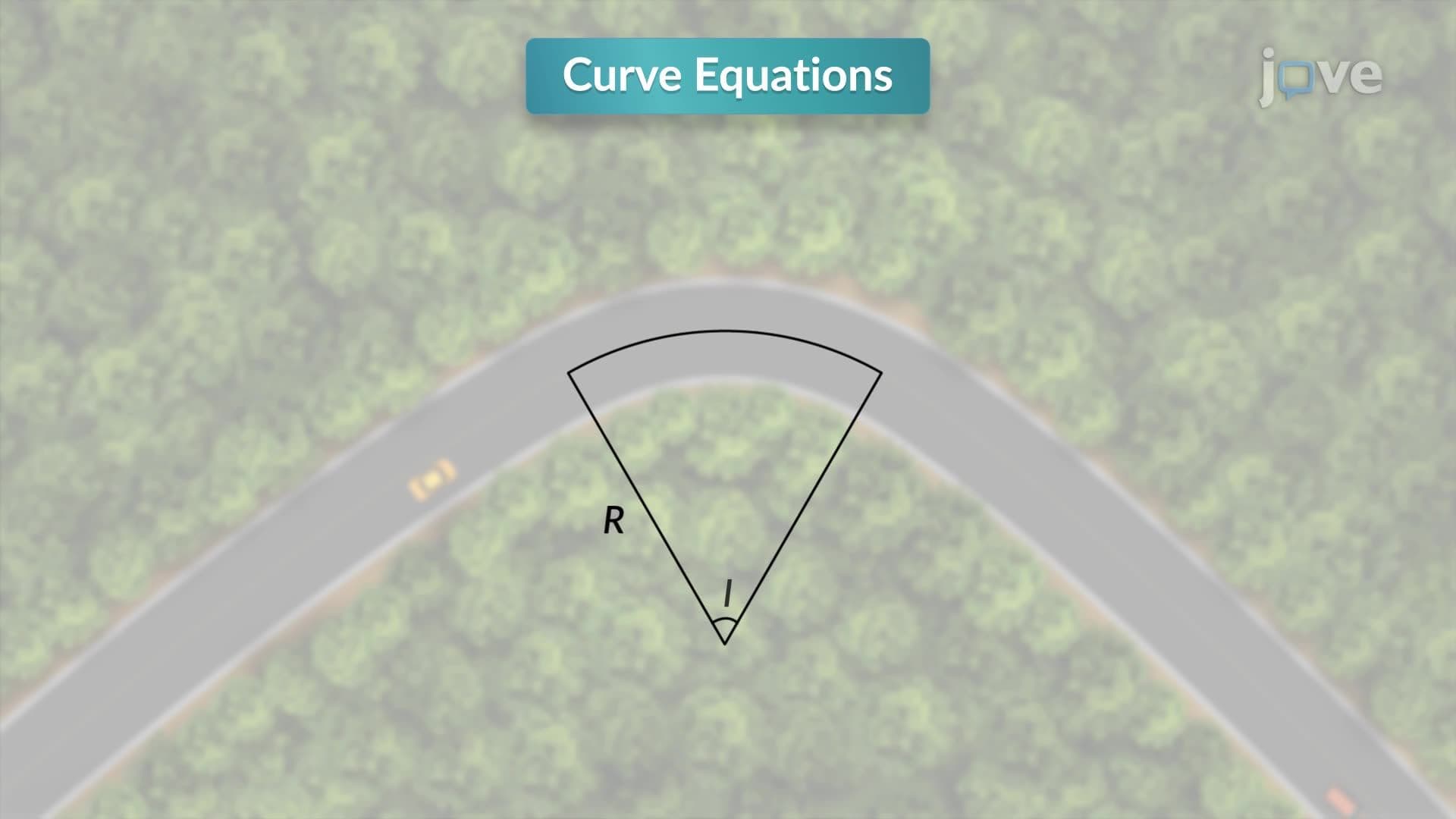

Video Summary: What are Curve Equations
Ever wonder how engineers design the smooth curves on highways like Interstate 95 to ensure safe driving at high speeds? Horizontal curve problem solving is the mathematical foundation that makes this possible, using curve equations to calculate critical measurements like tangent distance, chord length, and middle ordinate. For example, when designing the curved on-ramps at Los Angeles International Airport, engineers must precisely determine these geometric relationships to ensure aircraft can navigate safely. What are curve equations becomes essential knowledge for understanding how geometric principles govern real-world transportation design. Watch the full video on JoVE Coach to master this concept with expert-led visuals and step-by-step explanations.
What are curve equations? They represent the mathematical relationships that define the geometry of curved paths in engineering design, particularly in transportation infrastructure. These equations are fundamental to horizontal curve problem solving, enabling engineers to calculate precise measurements for safe and efficient curved roadways, railway tracks, and airport runways.
The horizontal curve problem solving definition encompasses the systematic approach to determining geometric properties of curves using mathematical relationships between radius, central angle, and various curve measurements. This process is essential for creating safe transportation infrastructure that meets federal highway standards and engineering specifications.
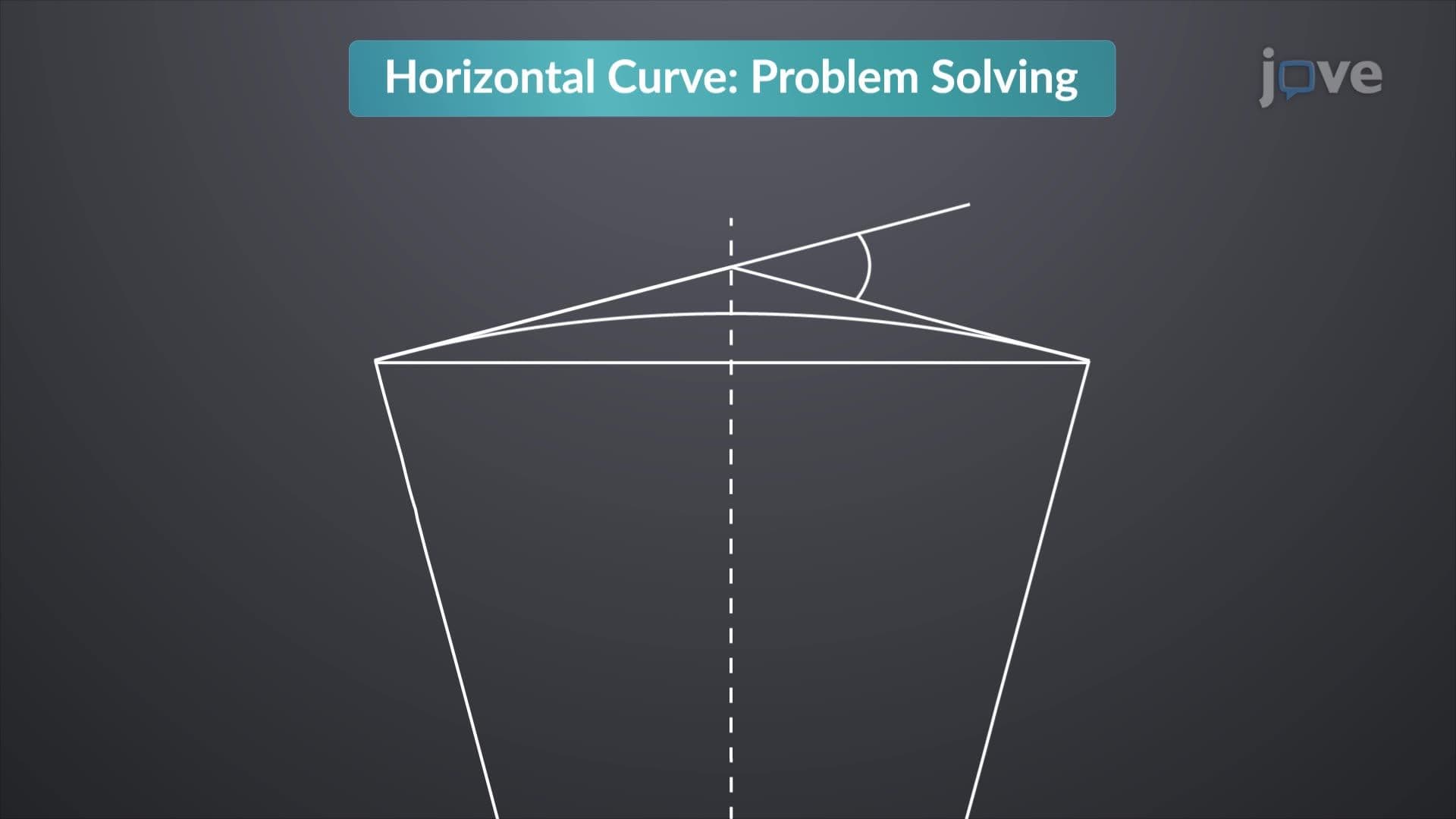
Tangent distance represents the linear distance from the point where two straight road sections would intersect to either the beginning or end of the horizontal curve. In horizontal curve problem solving, this measurement is crucial for determining sight distance and ensuring drivers have adequate visibility around curves. The calculation involves trigonometric relationships where tangent distance equals the radius multiplied by the tangent of half the central angle.
For instance, when designing curves on US Route 66 reconstructions, engineers must calculate tangent distances to ensure proper sight lines for vehicles traveling at posted speed limits. This application demonstrates how understanding horizontal curve problem solving in detail directly impacts public safety.
The chord length calculation forms a cornerstone of horizontal curve problem basics, representing the straight-line distance between the curve's endpoints. Engineers visualize this as the base of an isosceles triangle where the curve's center forms the apex and the two radii form equal sides. The chord length equals twice the radius multiplied by the sine of half the central angle.
This geometric relationship proves essential in construction layout, where contractors need precise measurements for earthwork and paving operations. The horizontal curve problem solving concept becomes particularly relevant in AP Calculus and college engineering courses, where students learn to apply these principles to solve complex geometric problems.
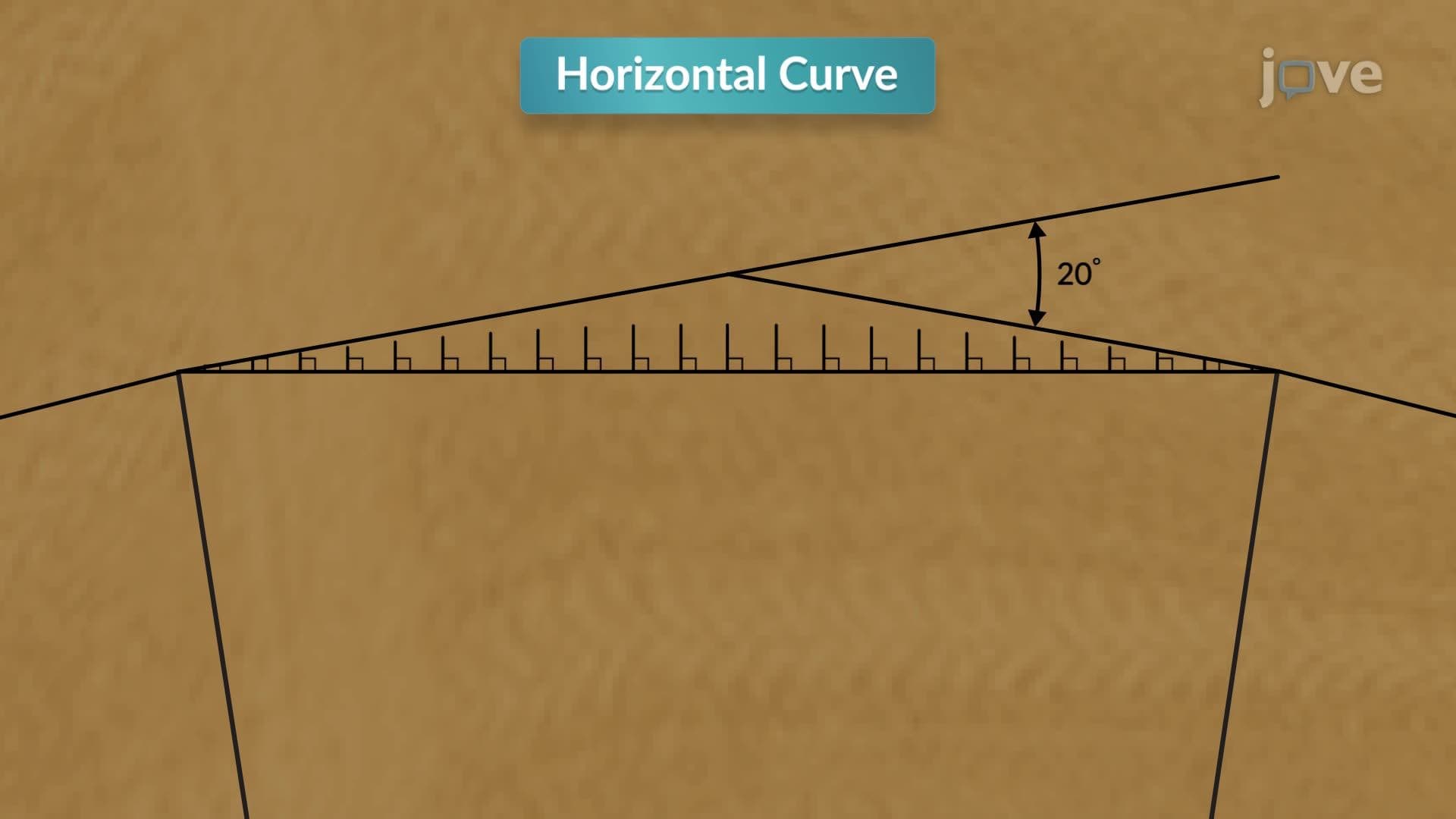
Middle ordinate measures the maximum perpendicular distance from the chord to the curve, representing the curve's "depth" or maximum offset. This parameter is critical for determining the amount of earthwork required in highway construction projects. The calculation involves subtracting the cosine of half the central angle from unity, then multiplying by the radius.
Arc length, representing the actual curved distance traveled, equals the radius multiplied by the central angle in radians. This measurement is essential for calculating pavement quantities and establishing accurate milepost markers on curved highway sections. Students preparing for engineering entrance exams like the Fundamentals of Engineering (FE) exam frequently encounter these calculations in transportation engineering problems.
Related Micro-courses