Loading subject page…


2,165 views

Video Summary: What are Horizontal Curves
Ever wonder why Interstate 80 through the Sierra Nevada doesn't just go straight up and over mountains? The degree of curvature and radius determines how safely vehicles can navigate turns without skidding off the road. Civil engineers designing California's mountain highways must carefully calculate horizontal curves to ensure trucks can maintain reasonable speeds around bends. These curves represent the smooth transition zones between straight road segments, with their curvature measured by specific geometric relationships. Watch the full video on JoVE Coach to master this concept with expert-led visuals and step-by-step explanations.
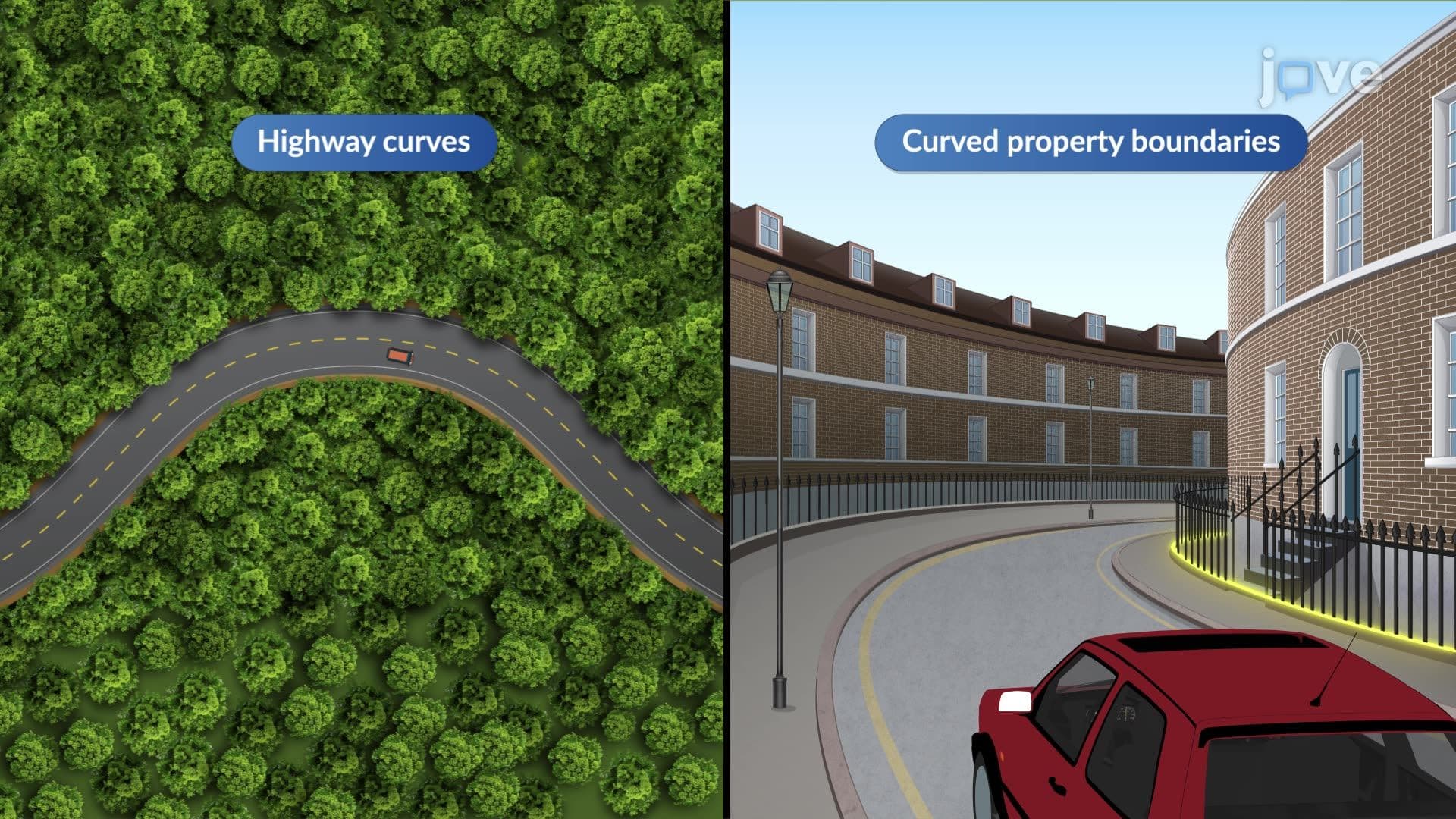
Horizontal curves form the backbone of safe transportation infrastructure across America's 4 million miles of roadways. These carefully engineered geometric elements allow vehicles to change direction smoothly while maintaining structural integrity and passenger safety. Unlike the abrupt direction changes that would occur with angular intersections, horizontal curves provide gradual transitions that work with vehicle dynamics rather than against them.
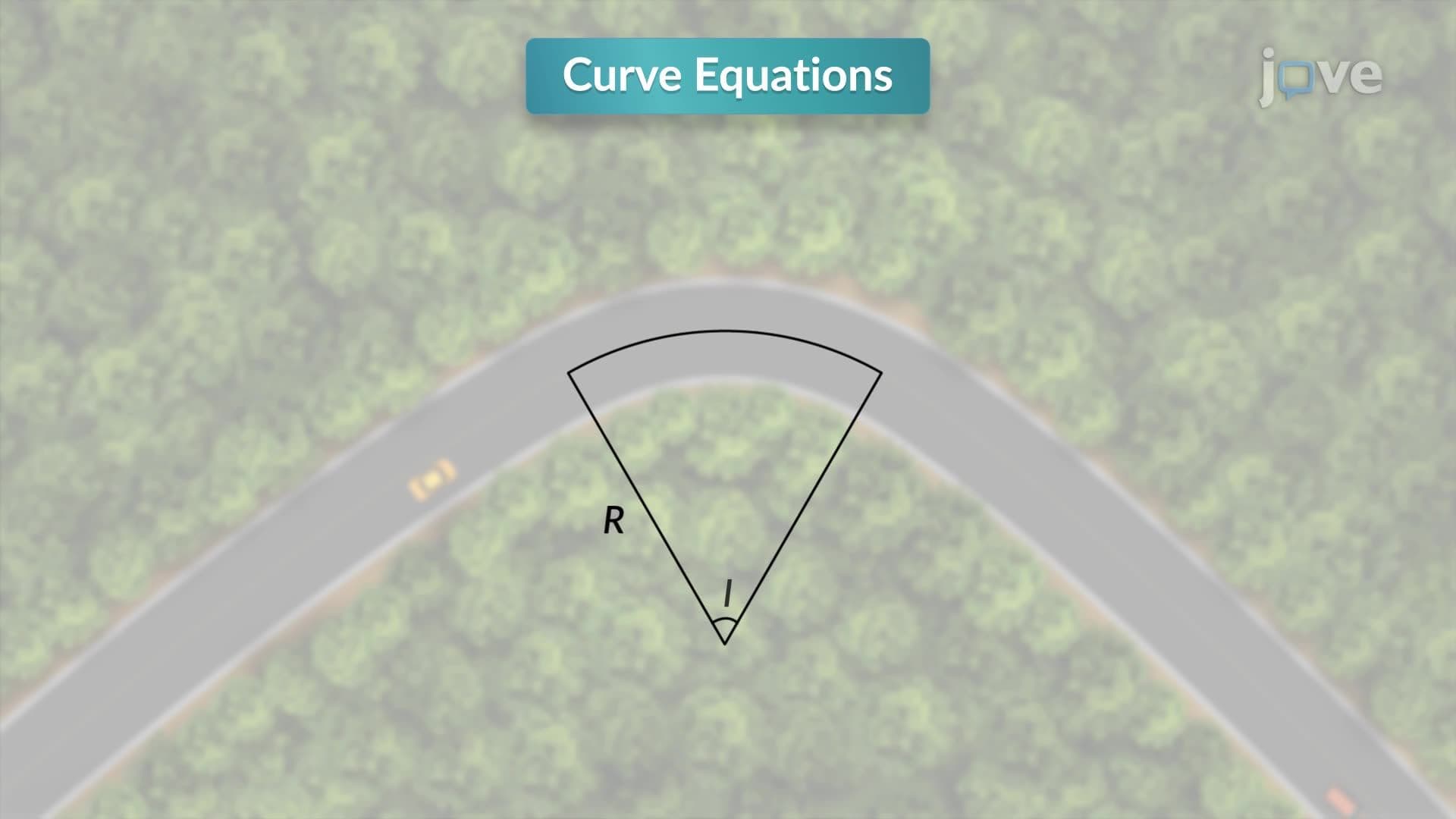
The degree of curvature and radius share an inverse mathematical relationship that determines a curve's sharpness. Degree of curvature represents the central angle subtended by a 100-foot arc length, while radius measures the distance from the curve's center to any point on the arc. As radius increases, degree of curvature decreases, creating gentler turns suitable for higher speeds. For example, Interstate highways typically use curves with radii exceeding 2,000 feet, allowing safe travel at 70+ mph, while urban arterials might employ 200-foot radii requiring reduced speeds.
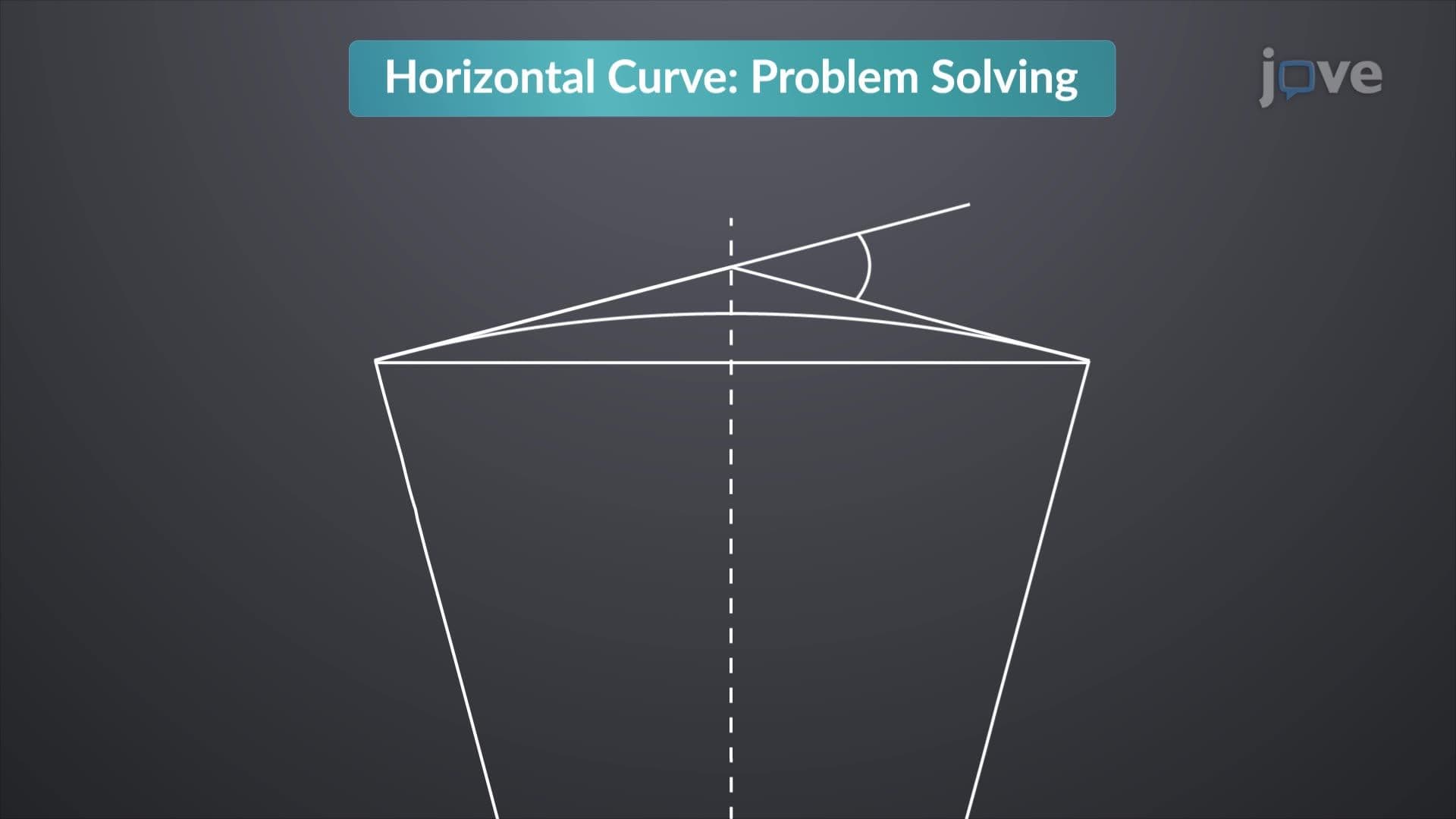
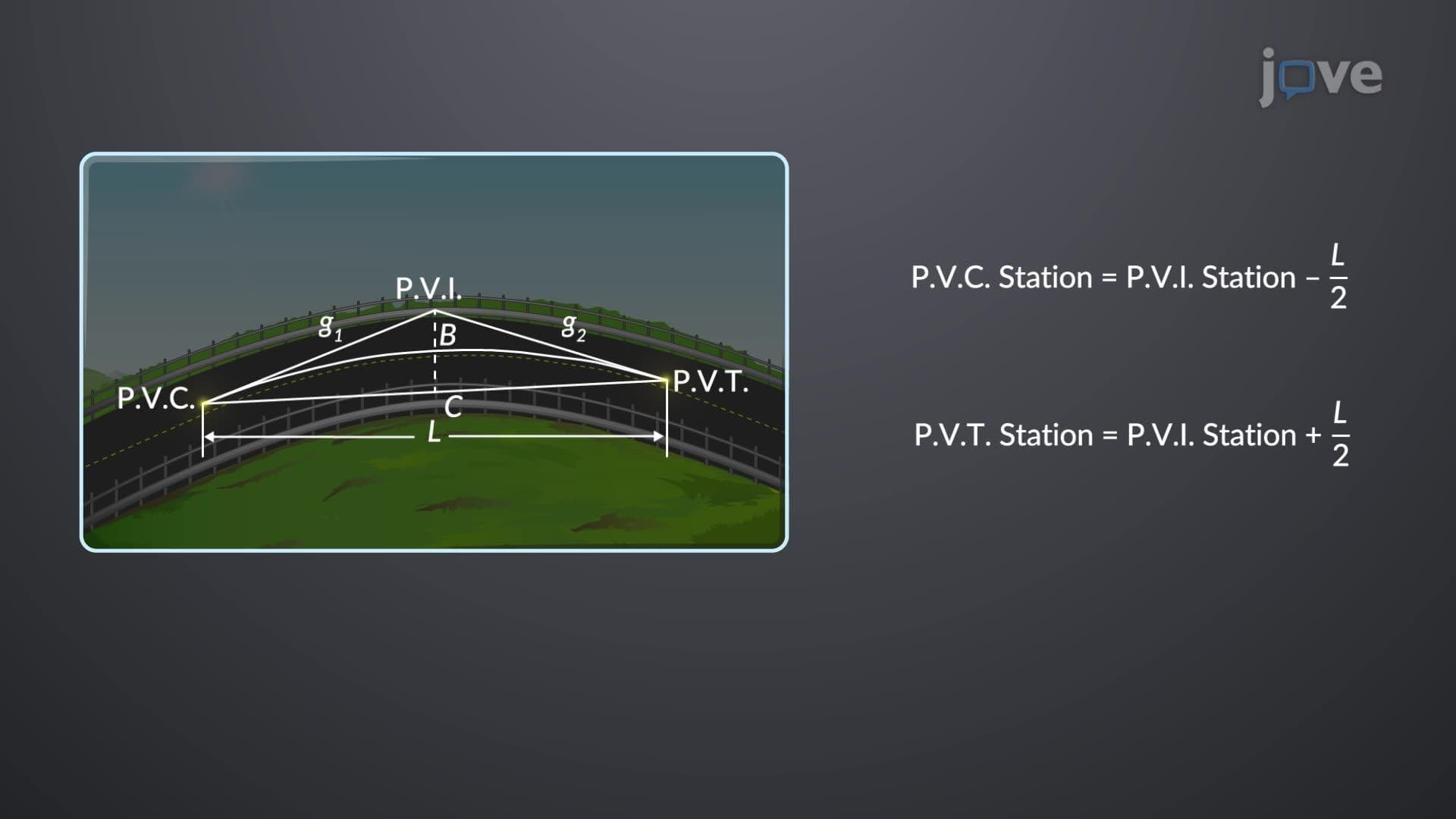
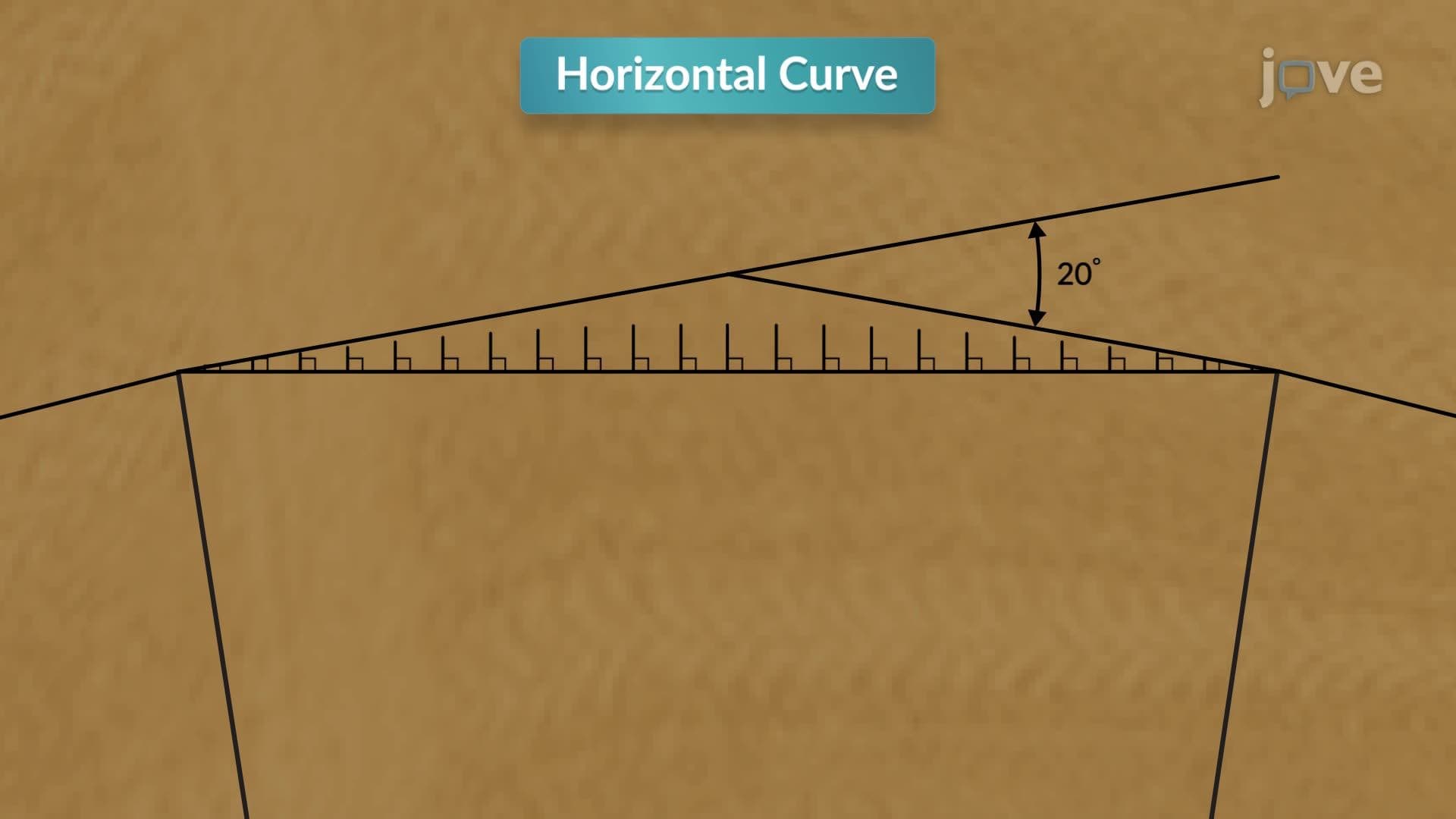
Every horizontal curve contains specific geometric points that engineers must precisely locate. The Point of Curvature (P.C.) marks where the straight tangent begins curving, while the Point of Tangency (P.T.) indicates the return to straight alignment. The Point of Intersection (P.I.) represents where the two tangent lines would meet if extended. These elements, combined with intersection angle (I), tangent distance (T), and external distance (E), provide the mathematical framework for curve design calculations commonly tested in AP Physics, college-level statics courses, and Professional Engineering examinations.
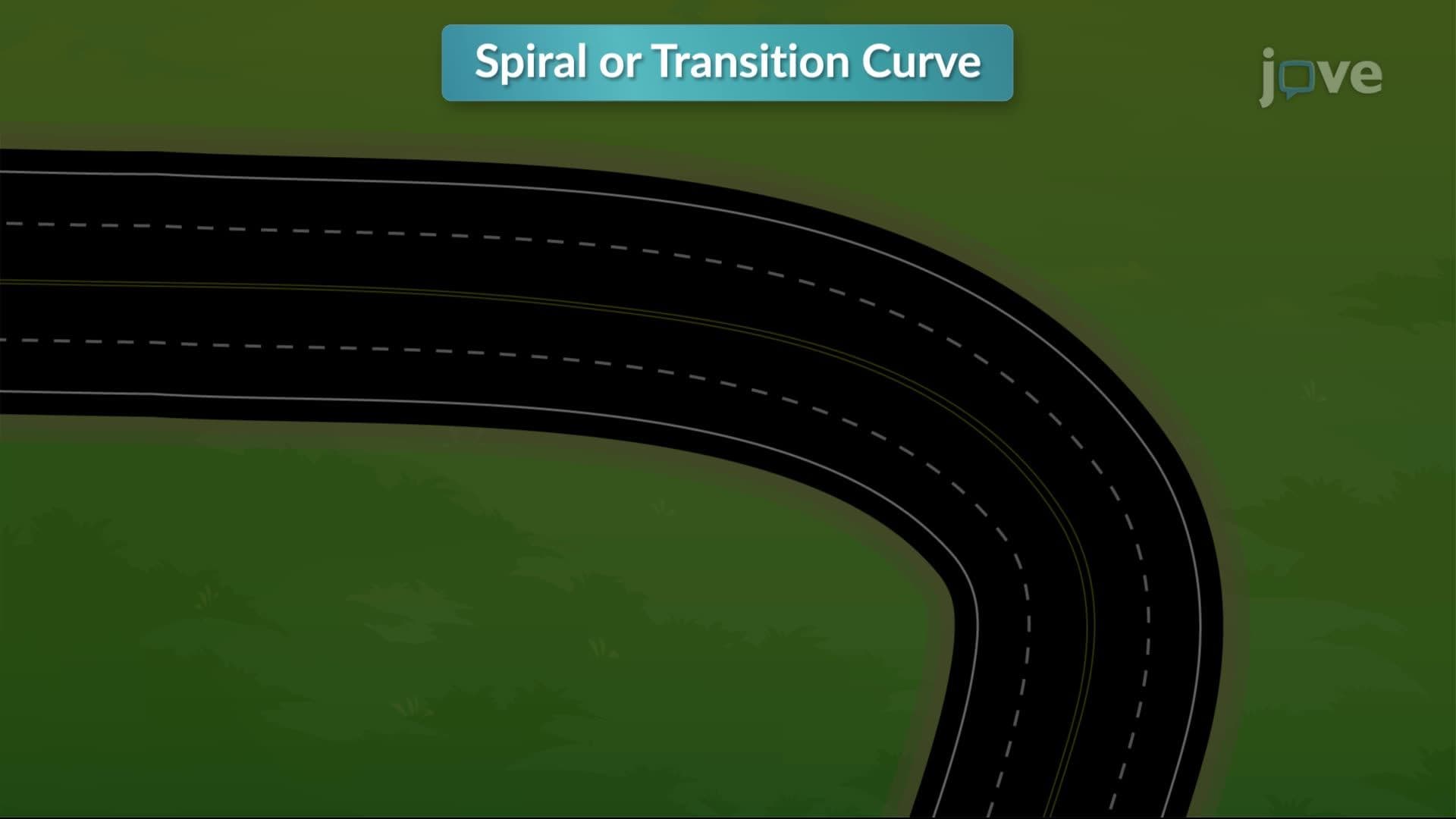
Beyond simple circular curves, transportation engineers employ compound curves combining multiple radii, reverse curves creating S-shaped alignments, and spiral transition curves with continuously changing curvature. The San Francisco-Oakland Bay Bridge eastern span utilizes compound curves to navigate around Yerba Buena Island, while spiral curves help vehicles gradually adjust to tighter turning radii on highway off-ramps. These sophisticated designs minimize lateral acceleration forces that could cause vehicle instability or passenger discomfort, principles that appear frequently in SAT Subject Tests and undergraduate civil engineering coursework.
Related Micro-courses