Loading subject page…


9,771 views


Video Summary: Energy Conservation in Control Volumes
Ever wonder how engineers at General Electric design jet turbines that safely channel thousands of pounds of hot gas per second? The application energy equation governs these complex fluid systems by tracking energy flow through control volumes. This fundamental principle combines the first law of thermodynamics with fluid mechanics, accounting for stored energy, heat transfer, shaft work from rotating components, and pressure forces at boundaries. Watch the full video on JoVE Coach to master this concept with expert-led visuals and step-by-step explanations.
Energy conservation in control volumes represents a cornerstone principle in fluid mechanics and thermodynamics, extending the familiar first law of thermodynamics to systems where mass flows across boundaries. Unlike closed systems where mass remains constant, control volumes allow engineers to analyze complex fluid machinery like the turbines powering Boeing 777 engines or the pumps circulating coolant through nuclear reactors at Vogtle Electric Generating Plant in Georgia.
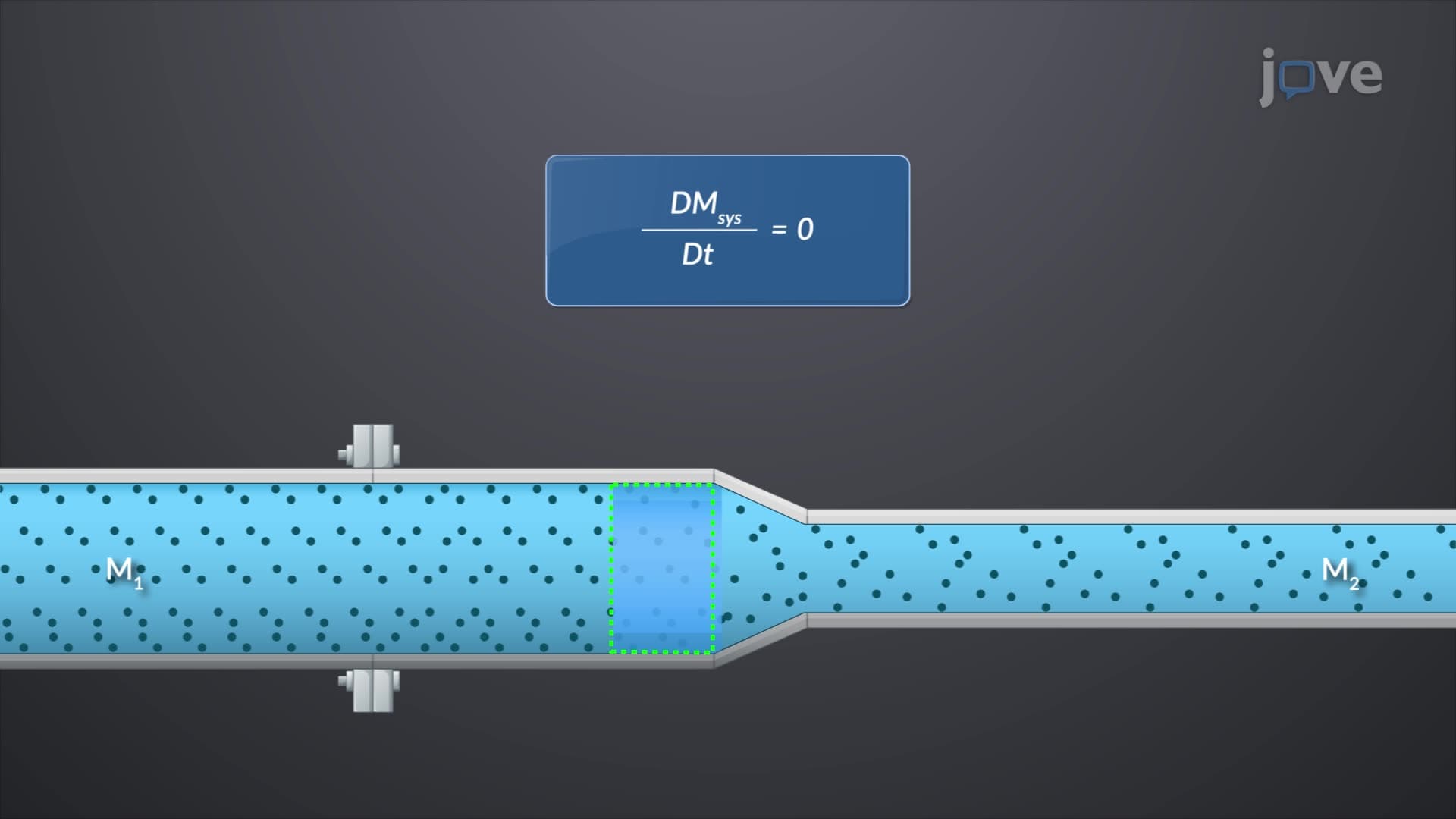
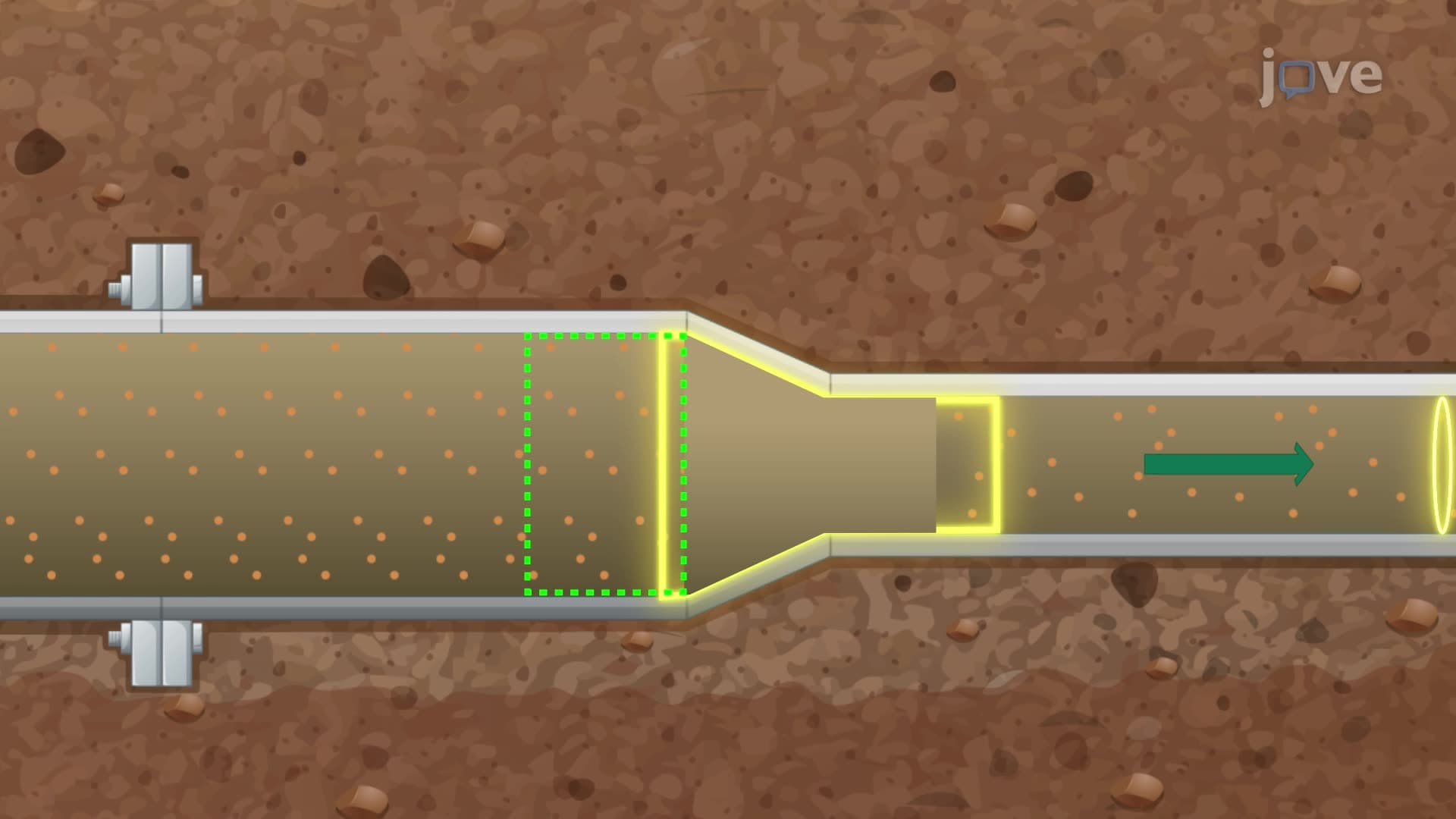
The application energy equation builds upon three fundamental components working together. First, the Reynolds Transport Theorem bridges the gap between system analysis (following a specific mass of fluid) and control volume analysis (examining a fixed region in space). This mathematical tool proves essential when studying fluid flow through devices where tracking individual fluid particles becomes impractical.
Second, energy storage within the control volume changes over time, particularly in transient operations like startup procedures for gas turbines at Calpine Corporation's power plants. This stored energy includes internal energy related to temperature and kinetic energy from fluid motion.
The application energy equation definition encompasses four distinct energy transfer modes. Heat transfer occurs through conduction, convection, and radiation-critical in designing cooling systems for data centers like those operated by Microsoft in Virginia. Shaft work represents mechanical energy exchange through rotating components, exemplified by the Francis turbines at Grand Coulee Dam converting water pressure into electrical power.
Pressure work, often overlooked in introductory courses, accounts for energy required to push fluid across control volume boundaries. This mechanism proves crucial in analyzing high-pressure systems like those found in SpaceX rocket engines, where combustion gases expand through precisely designed nozzles.
Understanding what is application energy equation in detail prepares students for advanced coursework and professional practice. On AP Physics exams, students encounter simplified versions focusing on mechanical energy conservation. College-level thermodynamics courses (like those at MIT or Stanford) require mastery of complete energy equations including all heat and work terms.
Professional engineers apply these principles daily-from designing HVAC systems for skyscrapers in Manhattan to optimizing efficiency in natural gas processing facilities along the Gulf Coast. The equation's versatility spans industries, making it essential knowledge for aspiring mechanical, aerospace, and chemical engineers pursuing careers with companies like General Motors, ExxonMobil, or NASA.
Related Micro-courses