Loading subject page…


9,771 views

Video Summary: Linear Momentum Conservation in Control Volumes
The application linear momentum equation explains why a fire hose kicks back with tremendous force when water rushes out at high velocity-the same principle NASA engineers use to calculate rocket thrust. Linear momentum conservation in control volumes provides the mathematical framework for analyzing fluid systems where mass continuously enters and exits defined boundaries, such as turbine engines in Boeing 747 aircraft. This fundamental concept bridges Newton's second law with fluid mechanics through the Reynolds transport theorem. Watch the full video on JoVE Coach to master this concept with expert-led visuals and step-by-step explanations.
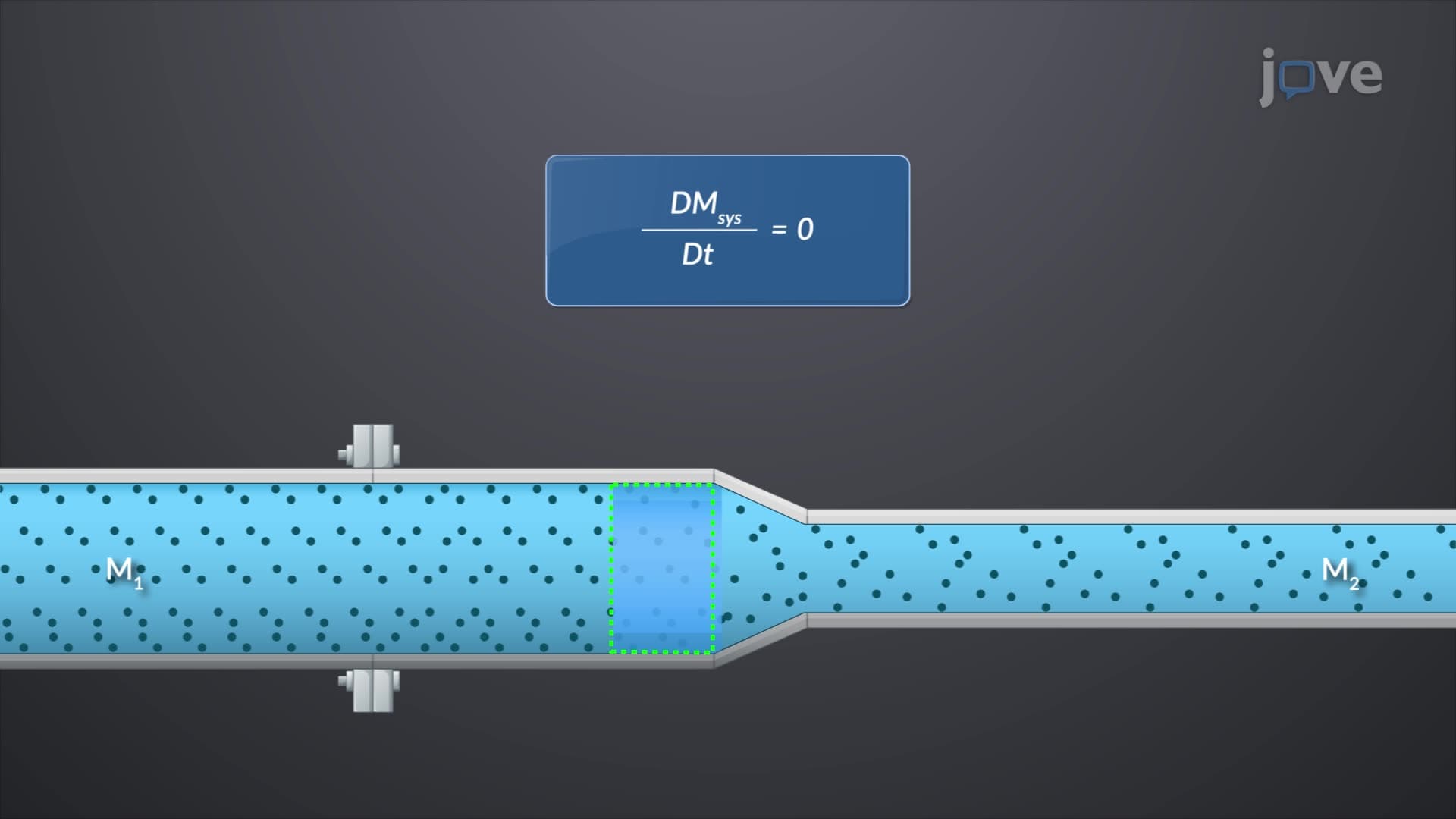
The application linear momentum equation serves as a cornerstone in fluid mechanics, extending Newton's second law to analyze systems where fluid continuously flows through defined boundaries. Unlike solid mechanics where mass remains constant, fluid systems require special consideration for mass entering and leaving the analysis region-termed the control volume.
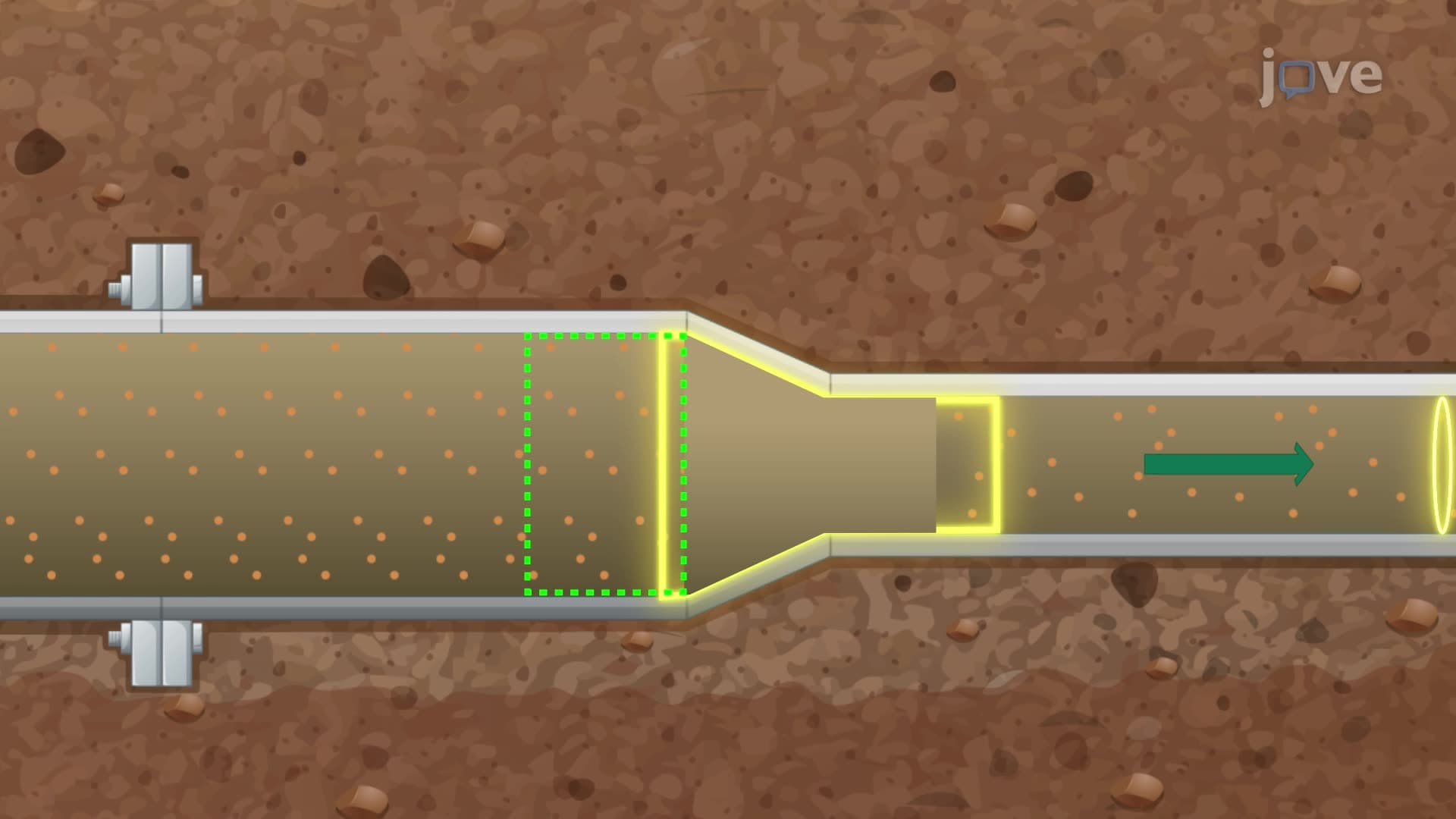
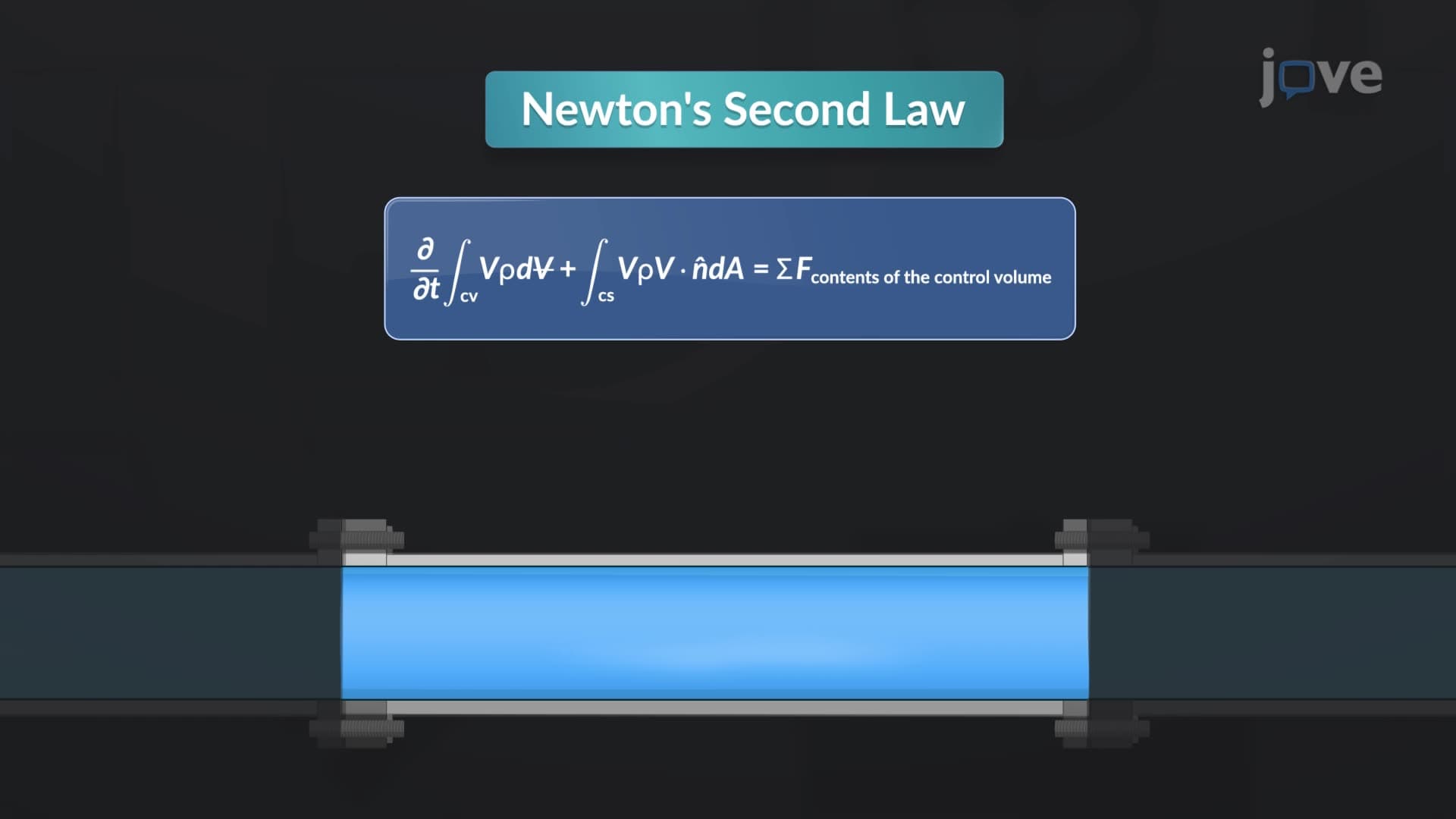
The Reynolds transport theorem provides the mathematical bridge between Lagrangian (following fluid particles) and Eulerian (fixed observation point) approaches. When analyzing the application linear momentum equation definition, engineers recognize two distinct momentum contributions: the time rate of momentum change stored within the control volume, plus the net momentum flux crossing the control surface boundaries.
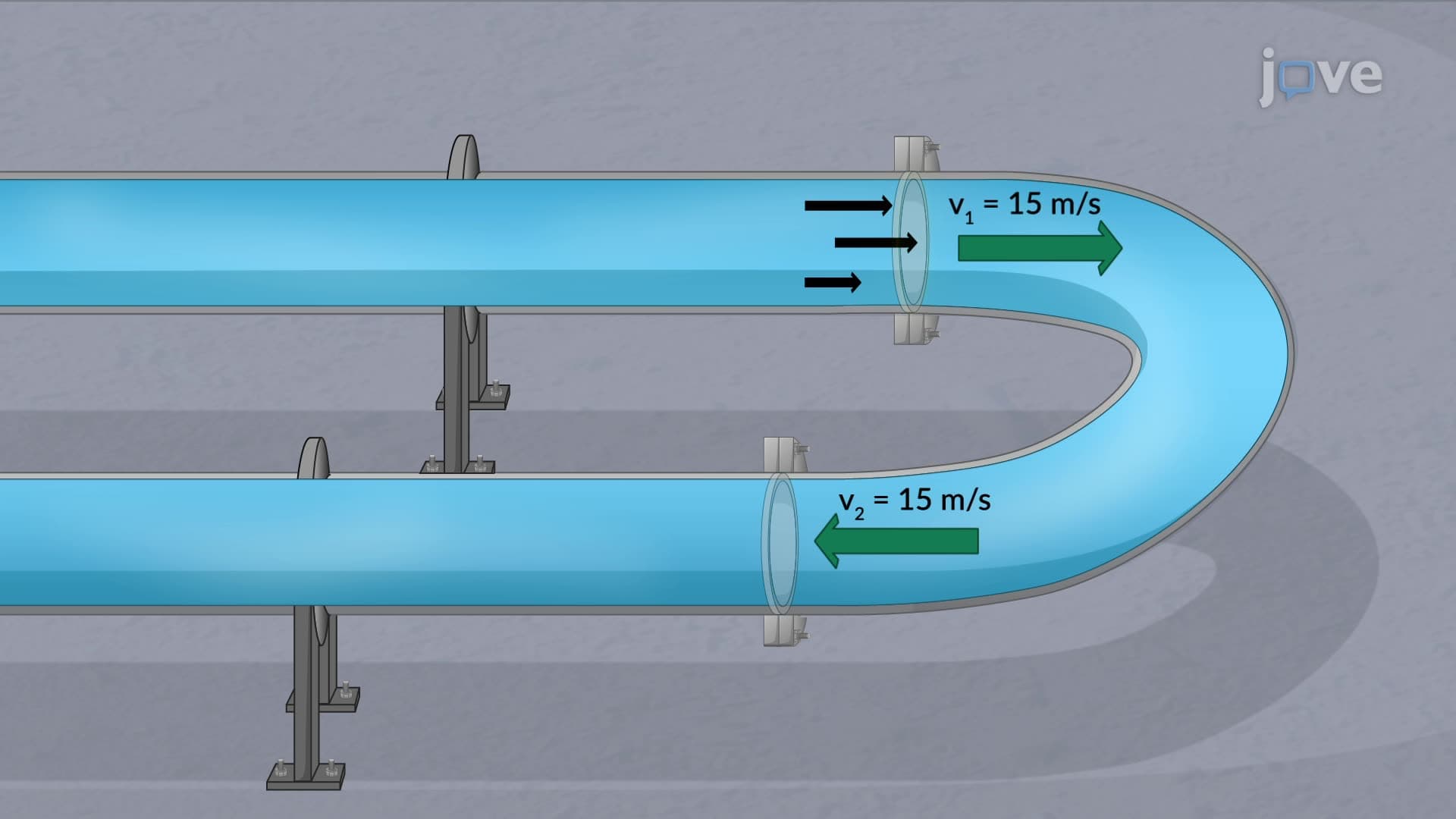
This concept proves essential for AP Physics C students and college engineering majors studying fluid mechanics. The equation takes the form: Sum of Forces = (Rate of momentum change within CV) + (Net momentum outflow rate). Each term carries physical significance-external forces drive momentum changes, while momentum naturally flows with mass across boundaries.
The understanding application linear momentum equation becomes crucial in analyzing propulsion systems. Consider SpaceX Falcon 9 rockets: exhaust gases exit at high velocity through the nozzle (control surface), creating momentum outflow that generates upward thrust force. Similarly, General Electric turbofan engines demonstrate this principle-air enters the intake, accelerates through compression and combustion stages, then exits as high-velocity exhaust.
Hydraulic systems showcase another application. Pelton wheel turbines at Hoover Dam utilize high-pressure water jets striking curved buckets. Engineers apply momentum equations to calculate the torque generated, optimizing blade geometry for maximum power extraction. The application linear momentum equation concept helps predict performance across varying flow conditions.
Students preparing for SAT Subject Tests, AP Physics C, or college fluid mechanics courses should master control volume selection techniques. Successful problem-solving requires identifying appropriate boundaries, cataloging all external forces (pressure, weight, wall reactions), and accounting for momentum transport across surfaces.
The application linear momentum basics emphasize that momentum conservation simplifies complex flow analysis. Rather than tracking individual fluid particles, engineers analyze bulk flow properties at control surfaces. This approach proves invaluable for designing everything from aircraft engines to irrigation pumps, making it a high-yield topic for MCAT physics sections and engineering licensure exams.
Related Micro-courses