Loading subject page…


9,771 views

Video Summary: Mass Conservation in Moving Nondeforming Control Volumes
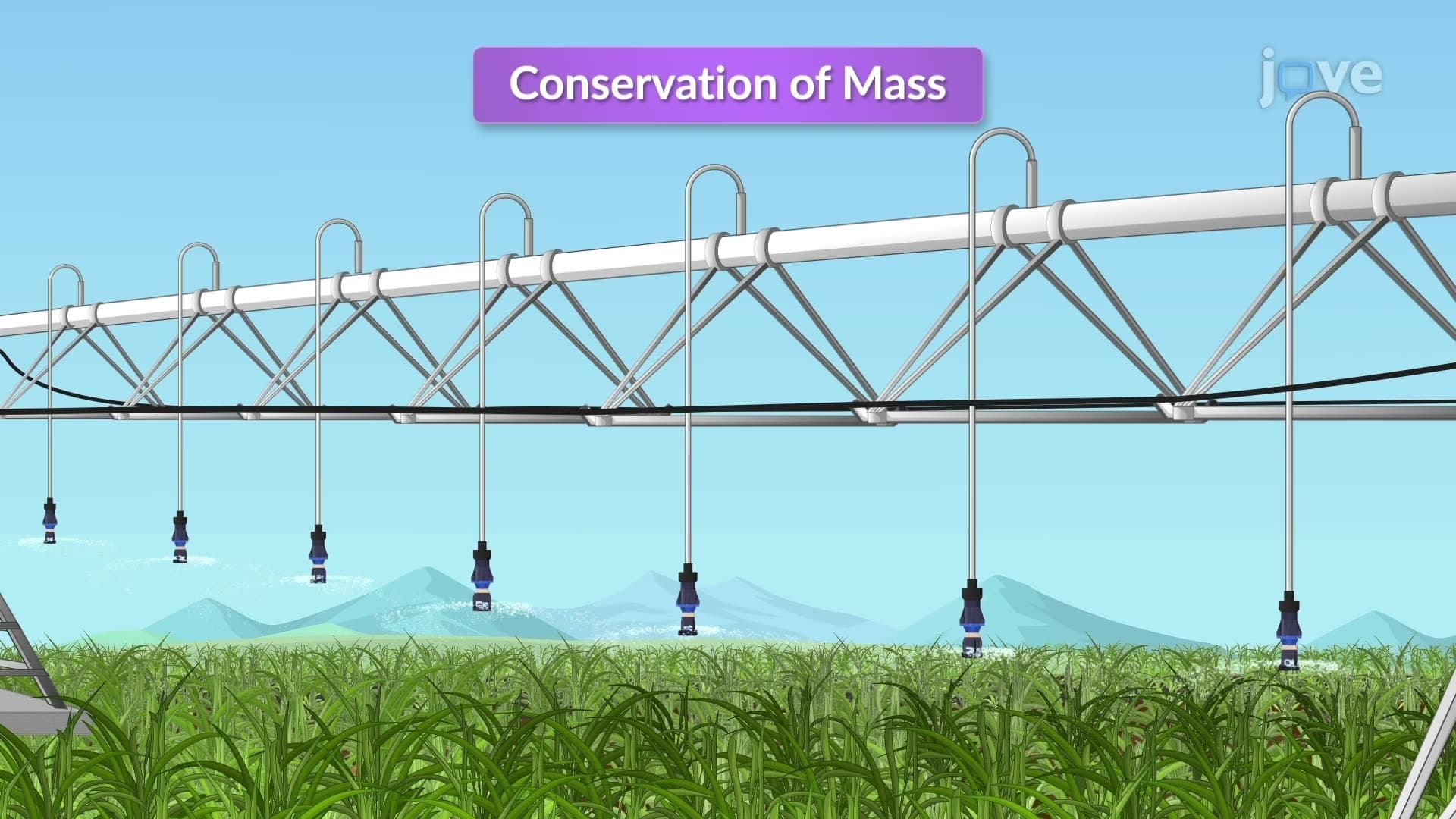
Ever wonder how NASA engineers calculate fuel flow in rotating spacecraft thrusters or how Boeing designs jet engine turbines? Linear momentum conservation in control volumes governs these complex systems where fluids move through rotating machinery. Agricultural sprinkler systems demonstrate mass conservation in moving nondeforming control volumes, where water flows steadily through rotating nozzles while maintaining perfect mass balance between inlet and outlet flows. This principle applies to everything from car turbochargers to wind turbines across American industries. Watch the full video on JoVE Coach to master this concept with expert-led visuals and step-by-step explanations.
Mass conservation in moving nondeforming control volumes represents a fundamental principle governing fluid systems where the control volume itself moves or rotates while maintaining its shape. Unlike stationary control volumes, these systems require careful consideration of relative motion between the fluid and the moving boundaries. This concept proves essential for analyzing rotating machinery, from irrigation sprinklers to jet engines used throughout American industry.
When analyzing moving control volumes, engineers must distinguish between absolute velocity (measured relative to a fixed reference frame) and relative velocity (measured relative to the moving control volume). For a rotating sprinkler system, the absolute velocity of water equals the vector sum of the relative velocity (water speed relative to the nozzle) plus the velocity of the rotating nozzle itself. This relationship becomes crucial when calculating mass flow rates and determining optimal operating conditions.
Students preparing for AP Physics C: Mechanics or college-level fluid mechanics courses frequently encounter problems involving these velocity relationships. The key insight lies in choosing the appropriate reference frame-sometimes analyzing from the rotating frame simplifies calculations, while other times the stationary frame proves more convenient.
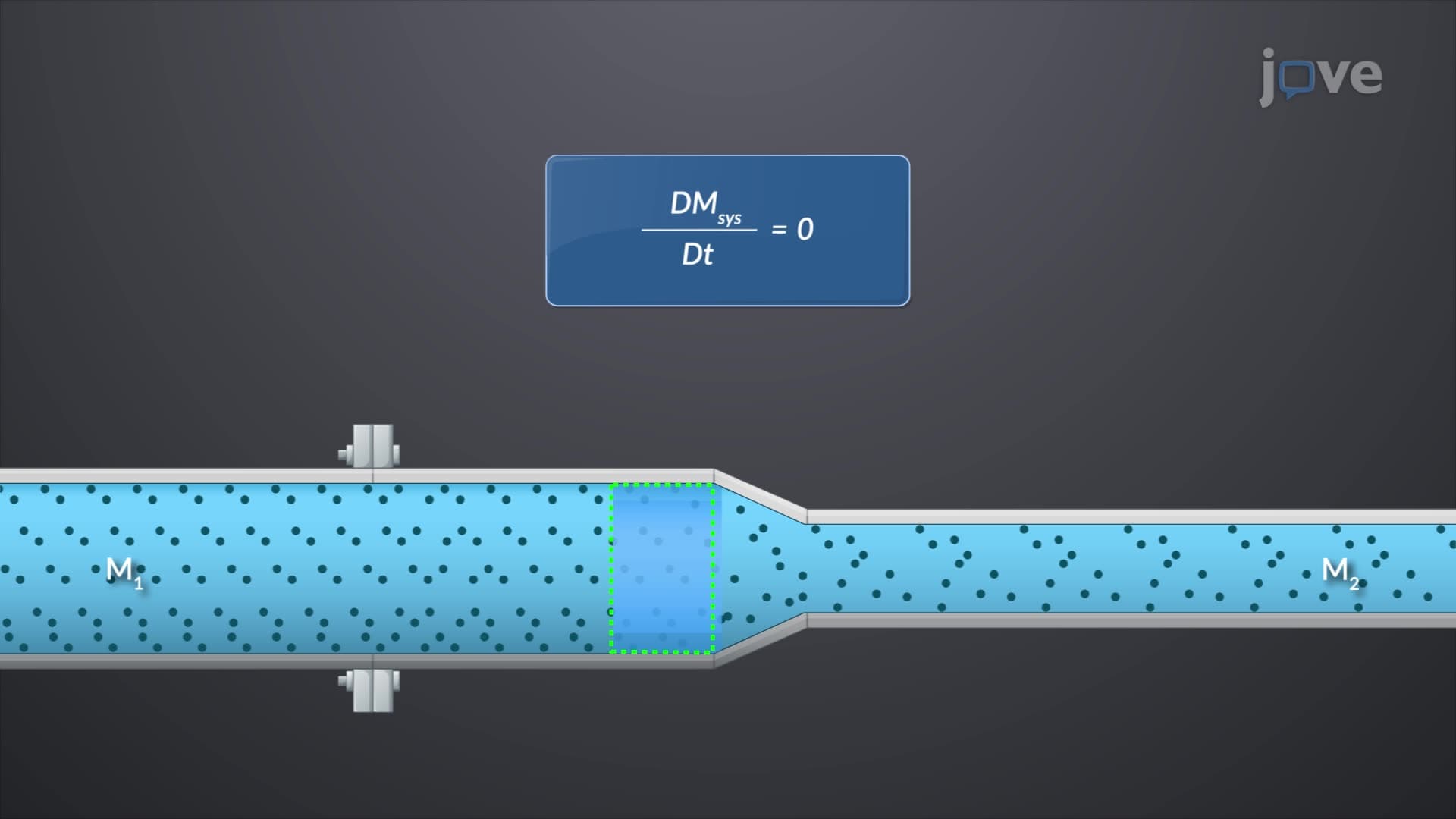
For steady flow in moving control volumes, the conservation of mass requires that mass inflow equals mass outflow, regardless of the control volume's motion. In mathematical terms: ρ(inlet) × A(inlet) × V(inlet,relative) = ρ(outlet) × A(outlet) × V(outlet,relative), where velocities are measured relative to the moving control volume boundaries.
This principle applies directly to American agricultural systems, where center-pivot irrigation systems covering thousands of acres rely on precise mass balance calculations. Engineers designing these systems must account for varying rotation speeds and nozzle configurations to ensure uniform water distribution across entire fields.
Real-world applications extend far beyond agriculture. General Electric designs aircraft engines using these principles, ensuring proper fuel-air mixing in rotating combustion chambers. Similarly, Caterpillar incorporates moving control volume analysis in hydraulic system design for construction equipment. The aerospace industry particularly values this concept-SpaceX engineers apply these principles when designing attitude control thrusters for spacecraft, where propellant must flow through rotating nozzles to provide precise directional control.
Students studying for the Fundamentals of Engineering (FE) exam will encounter multiple problems involving moving control volumes, particularly in the fluid mechanics and thermodynamics sections. Understanding how rotation affects mass conservation provides the foundation for more advanced topics like angular momentum conservation and turbomachinery analysis.
Related Micro-courses