Loading video…


 9 Concepts
 9.8K views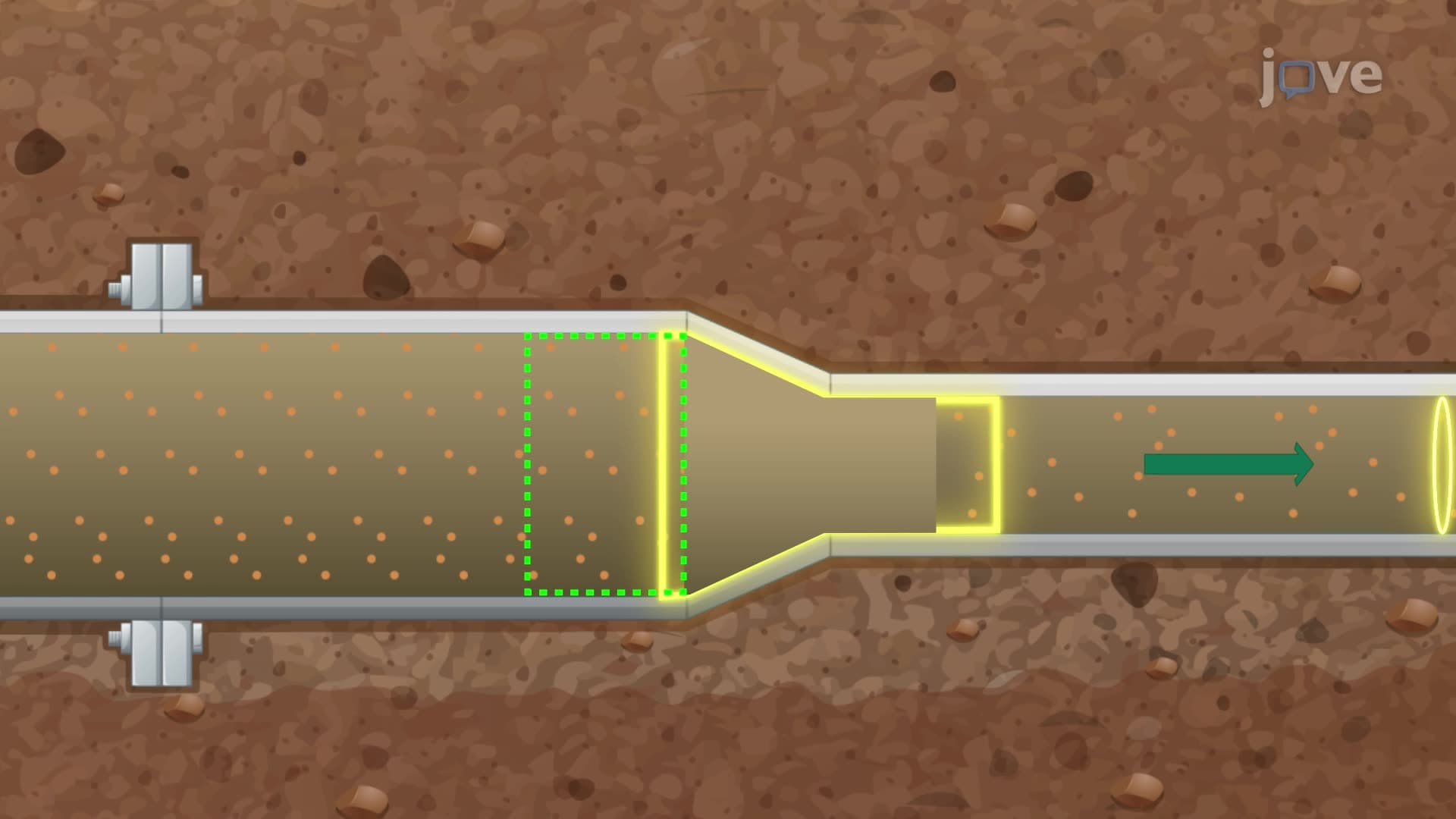

Video Summary: Mass Conservation in Stationary Nondeforming Control Volumes
Did you know that the same principle governing water flow through your home's plumbing also explains how NASA engineers design rocket fuel systems? Mass conservation in stationary nondeforming control volumes ensures that mass flowing into any fixed system equals mass flowing out, preventing accumulation or loss. Consider a municipal water treatment plant in California, where engineers apply this fundamental principle to optimize flow rates through filtration chambers. Watch the full video on JoVE Coach to master this concept with expert-led visuals and step-by-step explanations.
Mass conservation represents one of the most fundamental principles in fluid mechanics and engineering. When applied to stationary nondeforming control volumes, this principle states that mass cannot be created or destroyed within a fixed region of space. This concept forms the foundation for analyzing countless engineering systems, from the water pipes in your school to the sophisticated ventilation systems in NASA's Kennedy Space Center.
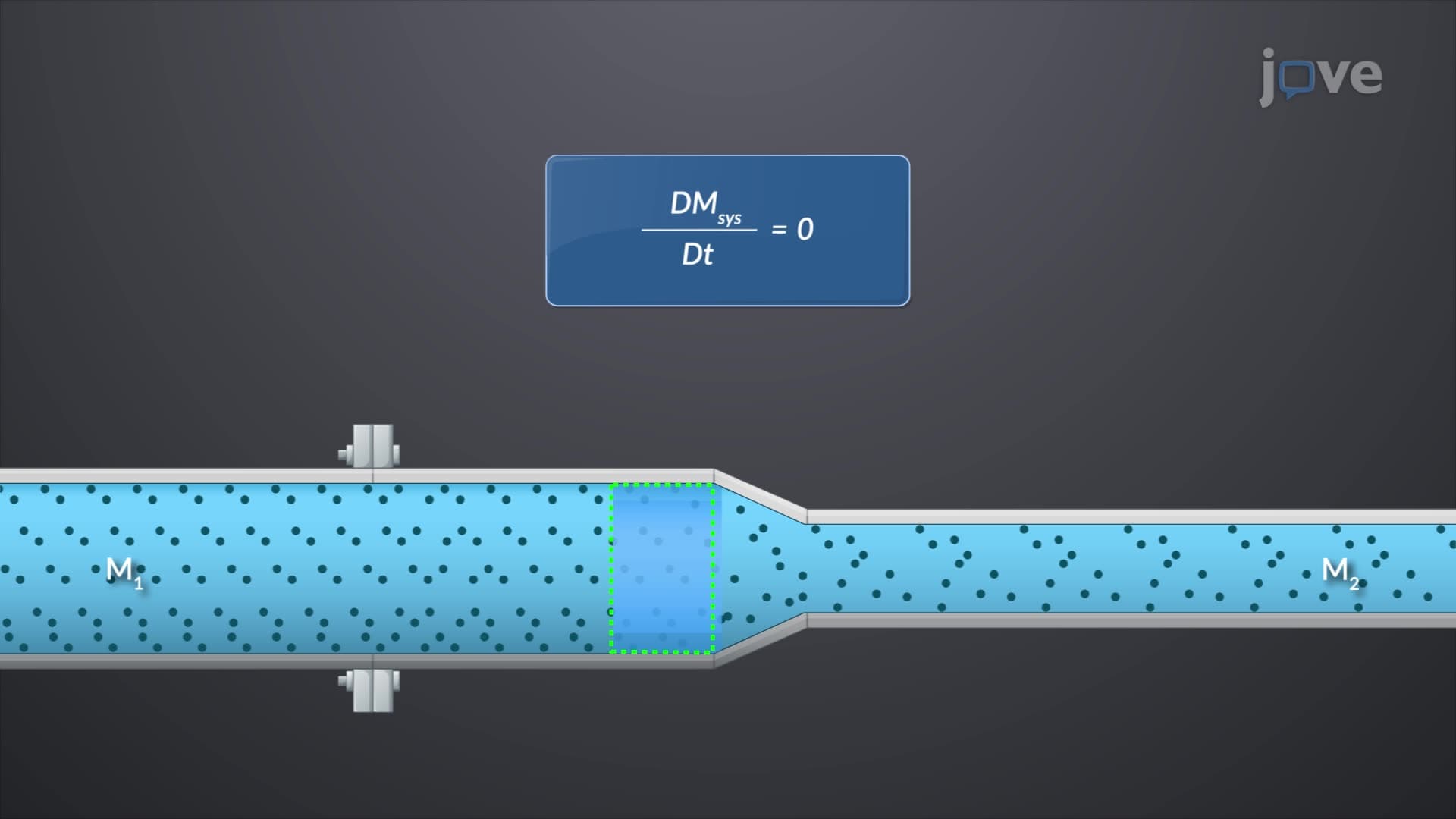
The mathematical expression of this principle, known as the continuity equation, demonstrates that for steady flow through any fixed control volume: mass flow rate in equals mass flow rate out. This relationship proves essential for AP Physics C students and college engineering majors studying fluid mechanics.
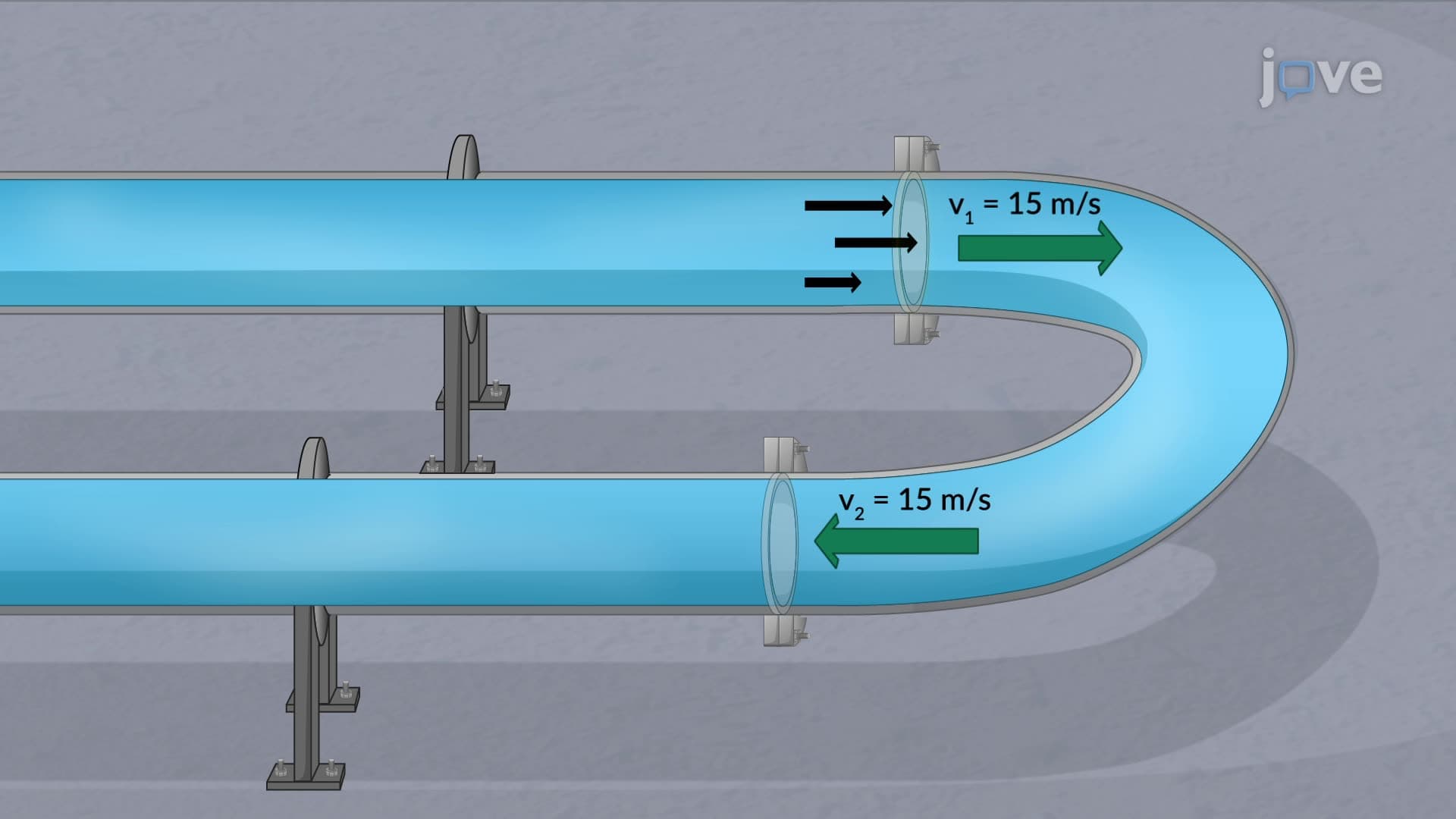
Consider the Los Angeles Department of Water and Power's distribution network, where engineers apply mass conservation principles daily. When water flows from large transmission mains into smaller distribution pipes, the velocity must increase to maintain constant mass flow rate. This explains why water pressure increases when you partially cover a garden hose opening with your thumb.
Industrial applications extend to HVAC systems in buildings like the Willis Tower in Chicago, where air distribution through ductwork follows identical mass conservation principles. Process engineers at chemical plants across Texas use these concepts to design reactor vessels and separation units, ensuring material balances that prevent costly losses or dangerous accumulations.
The continuity equation for steady flow takes the form: ρ₁A₁V₁ = ρ₂A₂V₂, where ρ represents density, A represents cross-sectional area, and V represents velocity. For incompressible fluids like water, density remains constant, simplifying the equation to A₁V₁ = A₂V₂.
Students preparing for the MCAT or engineering coursework frequently encounter problems requiring this relationship. A typical scenario involves calculating velocity changes in converging or diverging pipes, such as those found in municipal water treatment facilities or industrial cooling systems.
When approaching mass conservation problems, successful students first identify the control volume boundaries, then determine whether flow conditions are steady and whether the fluid can be considered incompressible. These decisions directly impact which form of the continuity equation applies. Engineering students at institutions like MIT and Stanford learn to sketch control volumes clearly, making complex problems more manageable during midterm examinations.
Related Micro-courses