Loading…
Loading video…

3,003 views

Ever wonder how your car's cruise control maintains exactly 65 mph on the highway, or how smart thermostats keep your home at the perfect temperature? Phase lead and phase lag controllers work together in PID systems to achieve this precise control. A PID controller combines proportional, integral, and derivative components to eliminate the individual weaknesses of PD and PI controllers—like how NASA uses PID systems to maintain satellite positioning with incredible accuracy. Watch the full video on JoVE Coach to master this concept with expert-led visuals and step-by-step explanations.
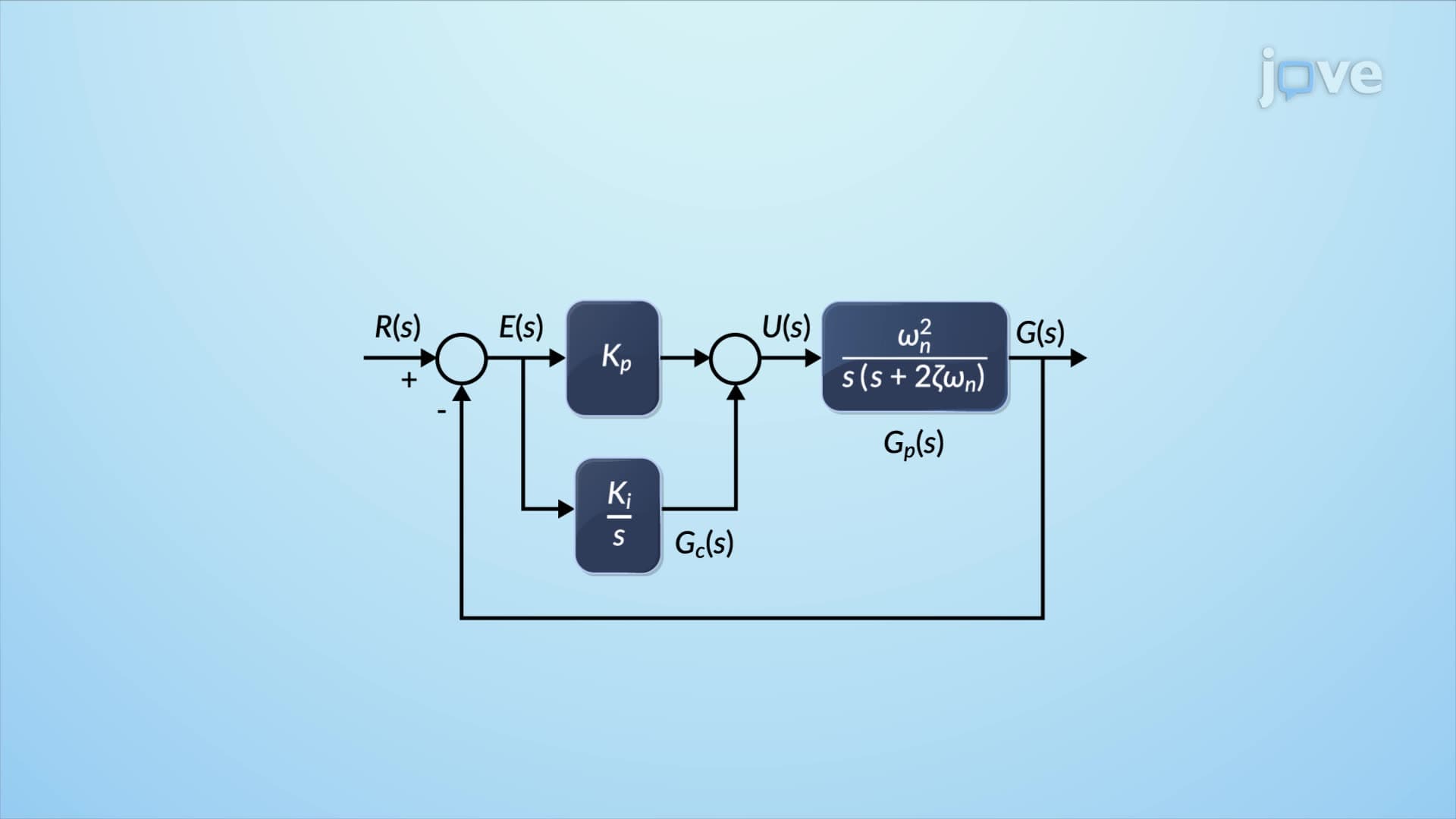
A PID controller represents one of the most widely implemented control strategies in engineering, combining three distinct control actions: Proportional (P), Integral (I), and Derivative (D). Unlike simpler control schemes, PID controllers address multiple performance objectives simultaneously. The proportional component provides immediate response to current error, the integral component eliminates steady-state error over time, and the derivative component anticipates future error trends to improve stability.
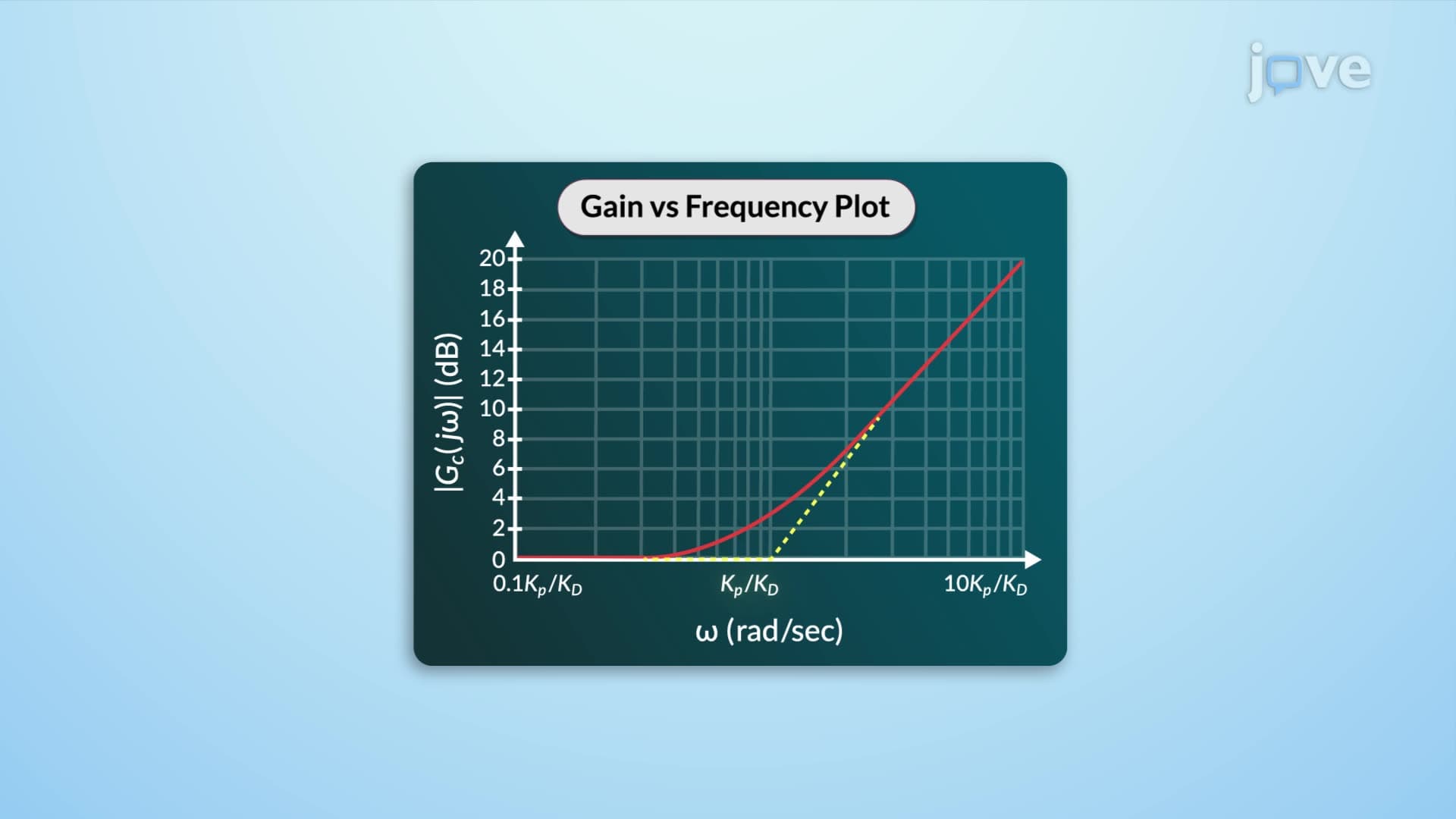
Phase lead and phase lag controllers form the theoretical foundation for understanding PID behavior in the frequency domain. Phase lead controllers (similar to PD action) introduce positive phase shift, improving transient response and stability margins but potentially amplifying high-frequency noise. Phase lag controllers (analogous to PI action) provide negative phase shift, enhancing steady-state accuracy and disturbance rejection while potentially reducing system bandwidth. The phase lead and phase lag controllers tutorial approach helps students visualize how these complementary effects balance in PID implementation.
The systematic design process begins by conceptualizing the PID as cascaded PI and PD blocks. Engineers first activate only the PD component, selecting derivative gain to achieve target stability margins—typically 45-60 degrees phase margin for robust performance. This understanding phase lead and phase lag controllers approach ensures adequate damping without excessive overshoot. Subsequently, integral and proportional gains are tuned to meet steady-state requirements while maintaining the established stability characteristics.
PID controllers dominate industrial applications from Boeing aircraft autopilot systems to Coca-Cola bottling plant temperature control. Students encounter PID concepts in AP Physics courses, college-level control systems classes, and engineering fundamentals. The phase lead and phase lag controllers study guide methodology appears frequently in MCAT physics sections and engineering graduate school entrance exams, where understanding controller stability and performance trade-offs demonstrates systems thinking capability.
Frequently Asked Questions
A PID controller is a feedback control system that uses three control actions—proportional, integral, and derivative—to minimize error between desired and actual system outputs. It continuously calculates corrections based on current error (P), accumulated past errors (I), and predicted future errors (D). This combination provides both fast response and accurate steady-state performance.
Phase lead controllers provide the derivative-like action that improves transient response and stability, while phase lag controllers offer integral-like action for steady-state accuracy. PID controllers essentially combine these phase compensation techniques to balance speed, stability, and precision in a single control strategy.
These exams typically focus on feedback control principles, stability concepts, and system response characteristics rather than detailed PID mathematics. Students should understand proportional response, steady-state error elimination, and how derivative action affects system damping for physics applications.
Control Systems Engineering (typically junior/senior level), Classical Control Theory, and Process Control courses provide comprehensive PID coverage. Many Mechanical, Electrical, and Chemical Engineering programs include PID design in their required curriculum, often with MATLAB/Simulink laboratory components.
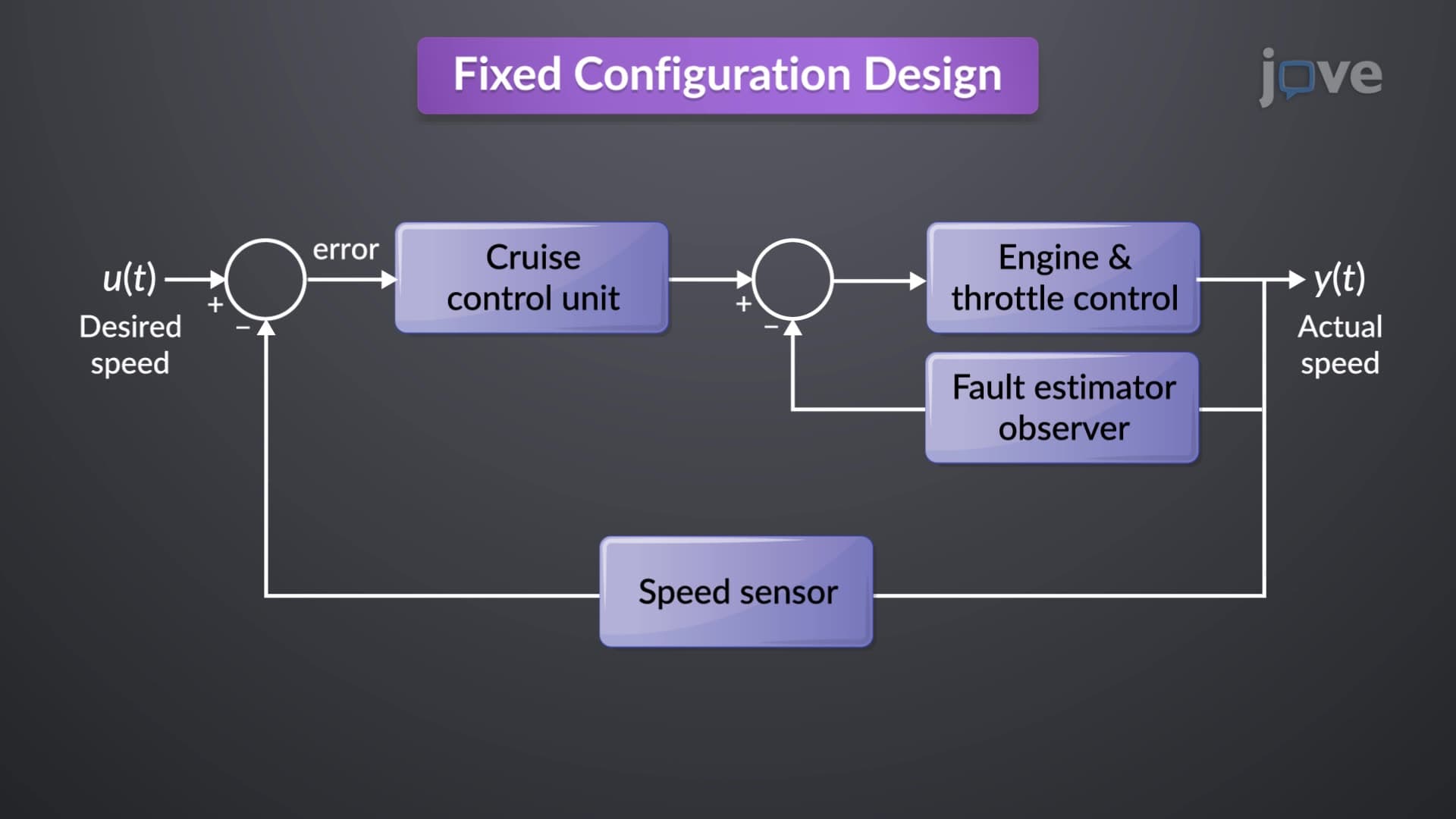
PID controllers regulate temperature in home HVAC systems, maintain speed in automotive cruise control, control water level in washing machines, and manage elevator positioning. Tesla's Autopilot system uses advanced PID-like algorithms for steering and speed control on US highways.
While PID design involves calculus concepts (derivatives and integrals), understanding basic PID functionality only requires algebra and graphical interpretation skills. High school students can grasp proportional response, error accumulation, and rate of change concepts without complex mathematical derivations.
Focus on understanding each component's physical meaning rather than memorizing equations. Practice sketching step responses, identifying overshoot and settling time, and explaining how changing each gain affects system behavior. Use block diagrams to visualize signal flow and control actions.
Advanced topics include state-space control, digital control systems, adaptive control, and robust control design. Many students also explore specific applications like motor control, process control, or robotics where PID serves as the foundation for more sophisticated control strategies.
Related Micro-courses


Related Subjects
 Civil Engineering 30 micro-courses›Mechanical Engineering 28 micro-courses›