Loading…
Loading video…

6,129 views
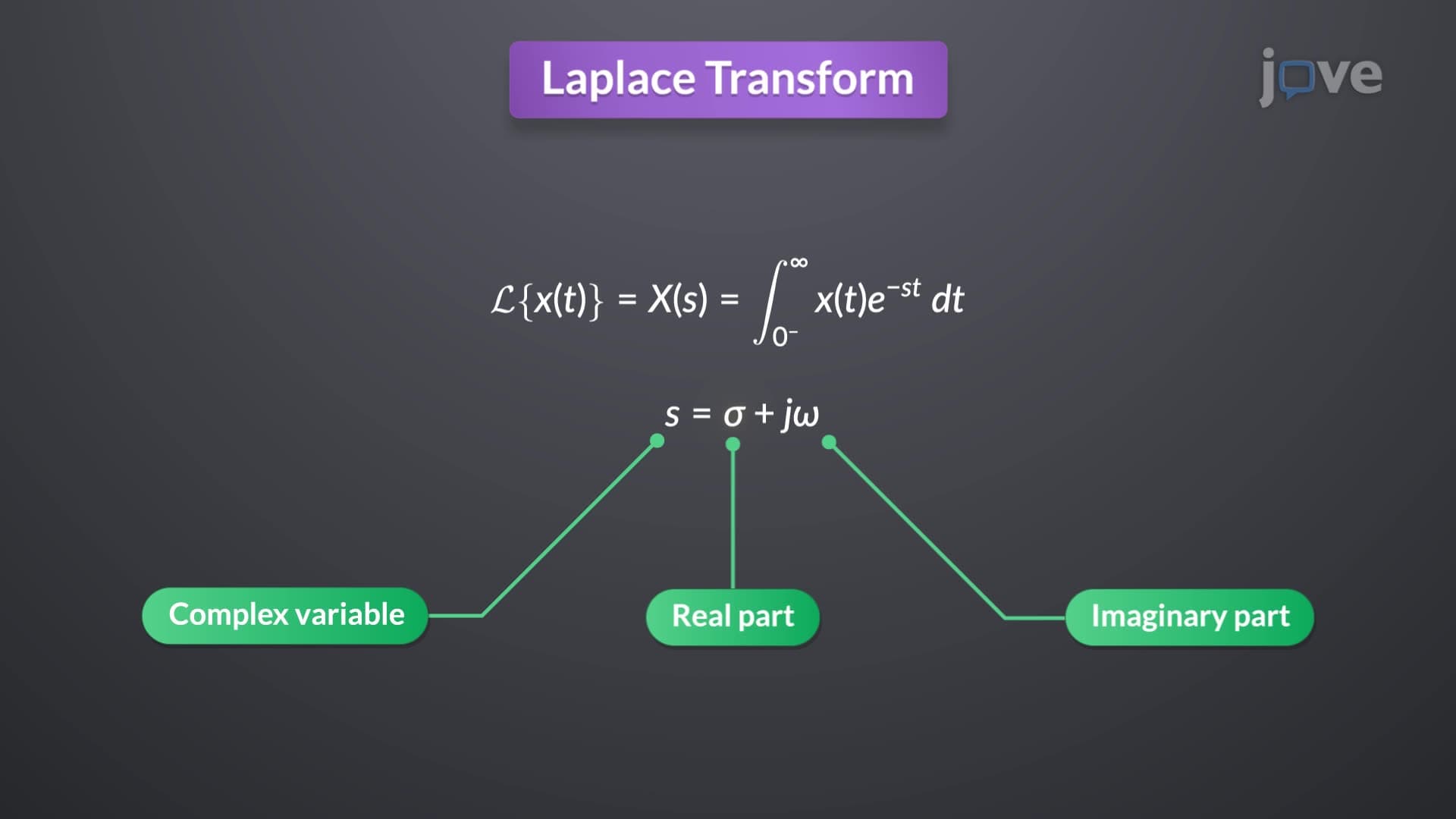
Ever wondered how NASA engineers predict rocket trajectories or how your smartphone processes digital signals? The properties of laplace transform ii are the mathematical backbone behind these calculations. These fundamental properties—linearity, scaling, time-shifting, and frequency-shifting—transform complex time-domain functions into manageable frequency-domain expressions, much like how Tesla's autopilot system processes real-time sensor data. Watch the full video on JoVE Coach to master this concept with expert-led visuals and step-by-step explanations.
The Laplace transform serves as a powerful mathematical bridge between time-domain and frequency-domain analysis, particularly crucial in engineering disciplines taught across US universities from MIT to Stanford. These properties form the foundation for advanced courses in differential equations, control theory, and signal processing—subjects that appear on the AP Calculus BC exam and in undergraduate engineering curricula nationwide.
The linearity property demonstrates that L{af(t) + bg(t)} = aF(s) + bG(s), where a and b are constants. This property proves invaluable when analyzing complex systems like the electrical grid infrastructure managed by companies such as General Electric. When engineers need to analyze multiple sinusoidal voltage sources operating simultaneously, they can transform each source individually, apply their respective scaling factors, and combine the results—dramatically simplifying what would otherwise be an intractable differential equation problem.
The scaling property reveals that L{f(at)} = (1/a)F(s/a), affecting both amplitude and frequency characteristics. Unlike simple multiplication, this property fundamentally alters the s-variable itself. Consider how Qualcomm engineers design 5G communication systems: when signal frequencies are scaled for different carrier bands, the entire frequency response shifts proportionally, requiring careful consideration of this property's implications.
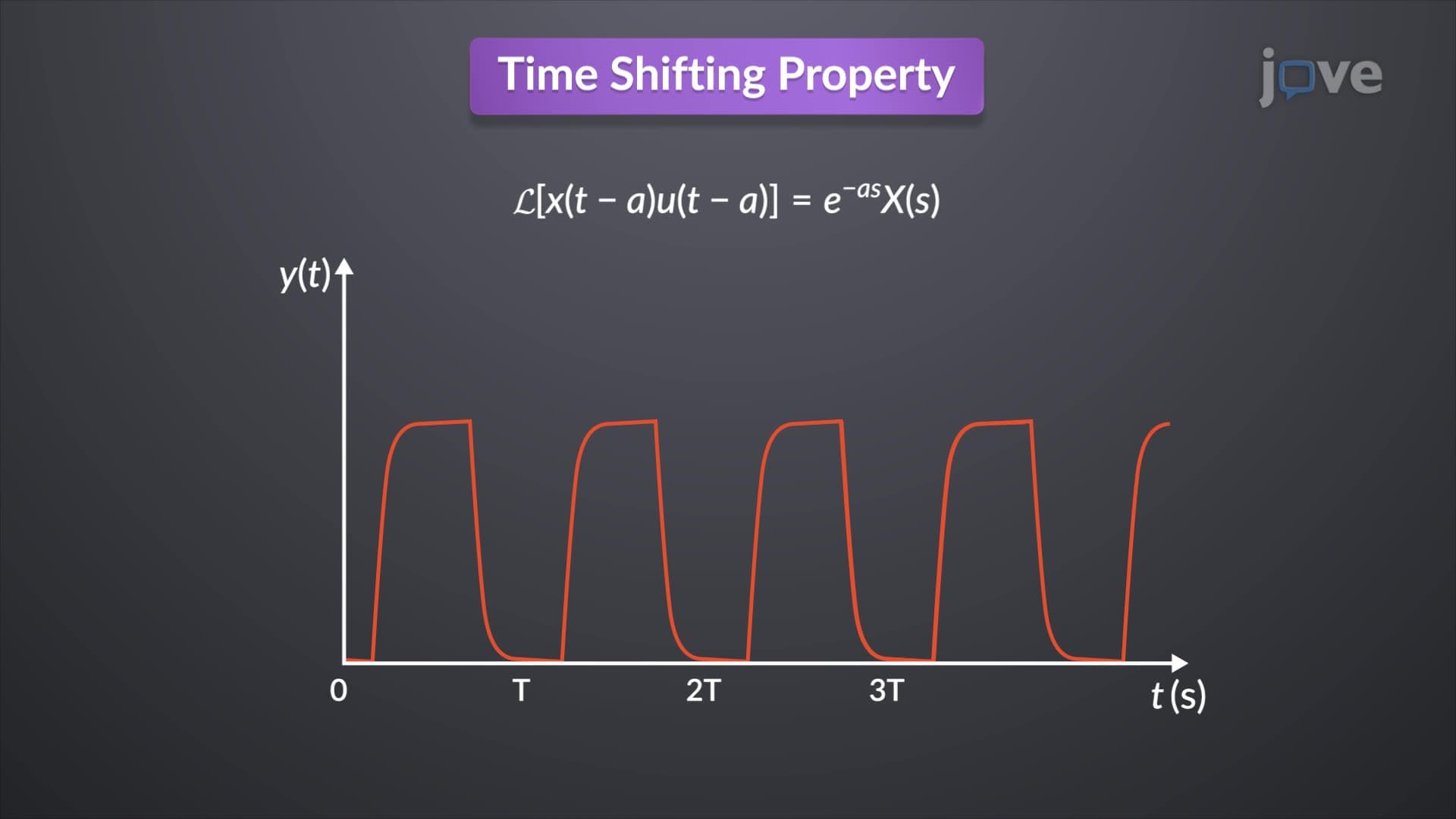
Time-shifting introduces the relationship L{f(t-a)u(t-a)} = e^(-as)F(s), where u(t) represents the unit step function. This property becomes essential when analyzing delayed systems, such as the automatic braking systems in Ford vehicles, where sensor input delays must be mathematically accounted for in control system design.
The frequency-shifting property, expressed as L{e^(at)f(t)} = F(s-a), finds extensive application in modulation techniques used by companies like Verizon and AT&T. When radio signals are modulated onto carrier frequencies, this property helps engineers predict and control the resulting frequency spectrum.
These properties collectively enable students to tackle complex problems on standardized tests and in coursework, from AP Physics C mechanics problems involving damped oscillations to undergraduate control systems analysis required for ABET-accredited engineering programs.
Frequently Asked Questions
The Properties of Laplace Transform I include linearity, scaling, time-shifting, and frequency-shifting—four mathematical rules that simplify converting time-domain functions into frequency-domain expressions. These properties are fundamental because they allow engineers to solve complex differential equations algebraically rather than through calculus. They're essential for understanding control systems, signal processing, and circuit analysis taught in US engineering programs and tested on exams like the Fundamentals of Engineering (FE) exam.
While the full Laplace transform isn't typically covered in AP Calculus BC, the underlying concepts of linearity and function transformation appear in questions about series convergence and differential equations. College placement exams for engineering programs often include basic Laplace transform problems that test understanding of these properties. Students encounter more comprehensive coverage in Differential Equations courses (typically Math 340 or similar) at universities nationwide.
Focus on understanding the conceptual meaning behind each property rather than memorizing formulas. Practice applying linearity to break down complex functions, and work through time-shifting problems systematically. The MCAT Physical Sciences section occasionally includes transform concepts in physics problems, while the GRE Subject Test in Mathematics covers these properties more extensively.
Boeing engineers apply these properties when analyzing aircraft stability and control systems, particularly in fly-by-wire technology found in the 787 Dreamliner. The time-shifting property helps model control surface delays, while frequency-shifting analysis ensures passenger comfort by predicting how engine vibrations propagate through the aircraft structure. These applications demonstrate how theoretical mathematics directly impacts passenger safety and aircraft performance.
High school students with strong Algebra II and basic calculus knowledge can understand these properties conceptually. While full mastery requires differential equations coursework, the fundamental ideas—like how scaling affects graphs or how delays create phase shifts—build on concepts from Precalculus and AP Calculus AB. Many successful students first encounter these properties in AP Physics C courses when studying oscillatory motion.
Create a property reference sheet with the mathematical relationship, a simple example, and one real-world application for each property. Practice problems progressively: start with single-property applications, then combine properties in multi-step problems. Form study groups to work through textbook problems from authors like Kreyszig or Boyce & DiPrima, commonly used in US undergraduate programs.
Progress to inverse Laplace transforms, then convolution theorem and transfer functions—topics essential for control systems engineering. Students interested in electrical engineering should explore circuit analysis applications, while mechanical engineering students benefit from studying vibration analysis. These advanced topics appear in upper-division courses like Control Systems (typically numbered 400-level) at most US universities.
While digital systems primarily use Z-transforms (the discrete equivalent), the underlying mathematical principles remain identical. Apple's audio processing algorithms in AirPods and Google's speech recognition systems both rely on frequency-domain analysis that directly extends from these Laplace transform properties. Understanding continuous-time properties provides the foundation for mastering discrete-time signal processing techniques used throughout the tech industry.
Related Micro-courses
Related Subjects
 Civil Engineering 30 micro-courses›Mechanical Engineering 28 micro-courses›