- Electrical Engineering
- Sampling
Micro-courses:33

Sampling
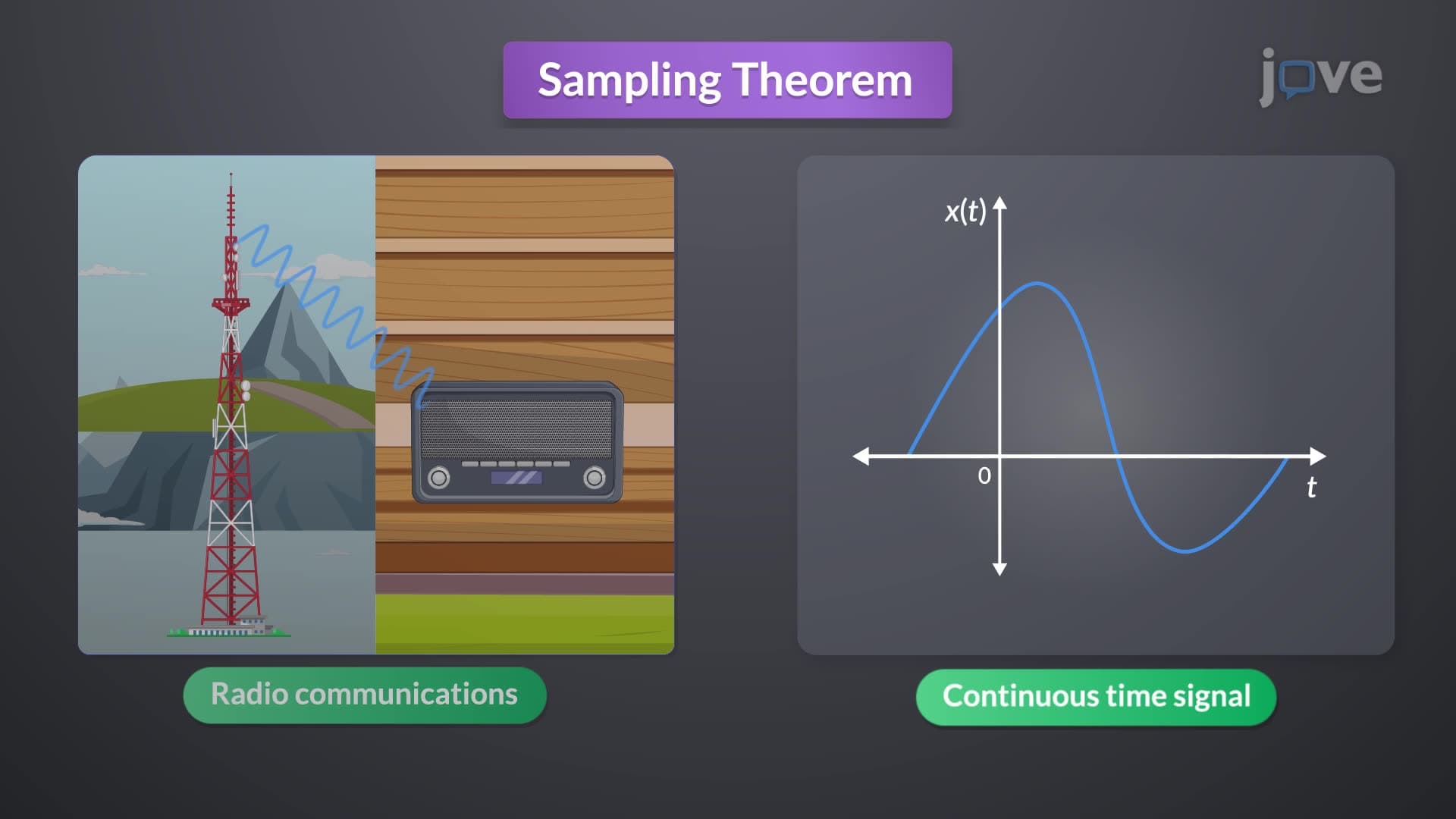
1. Sampling Theorem
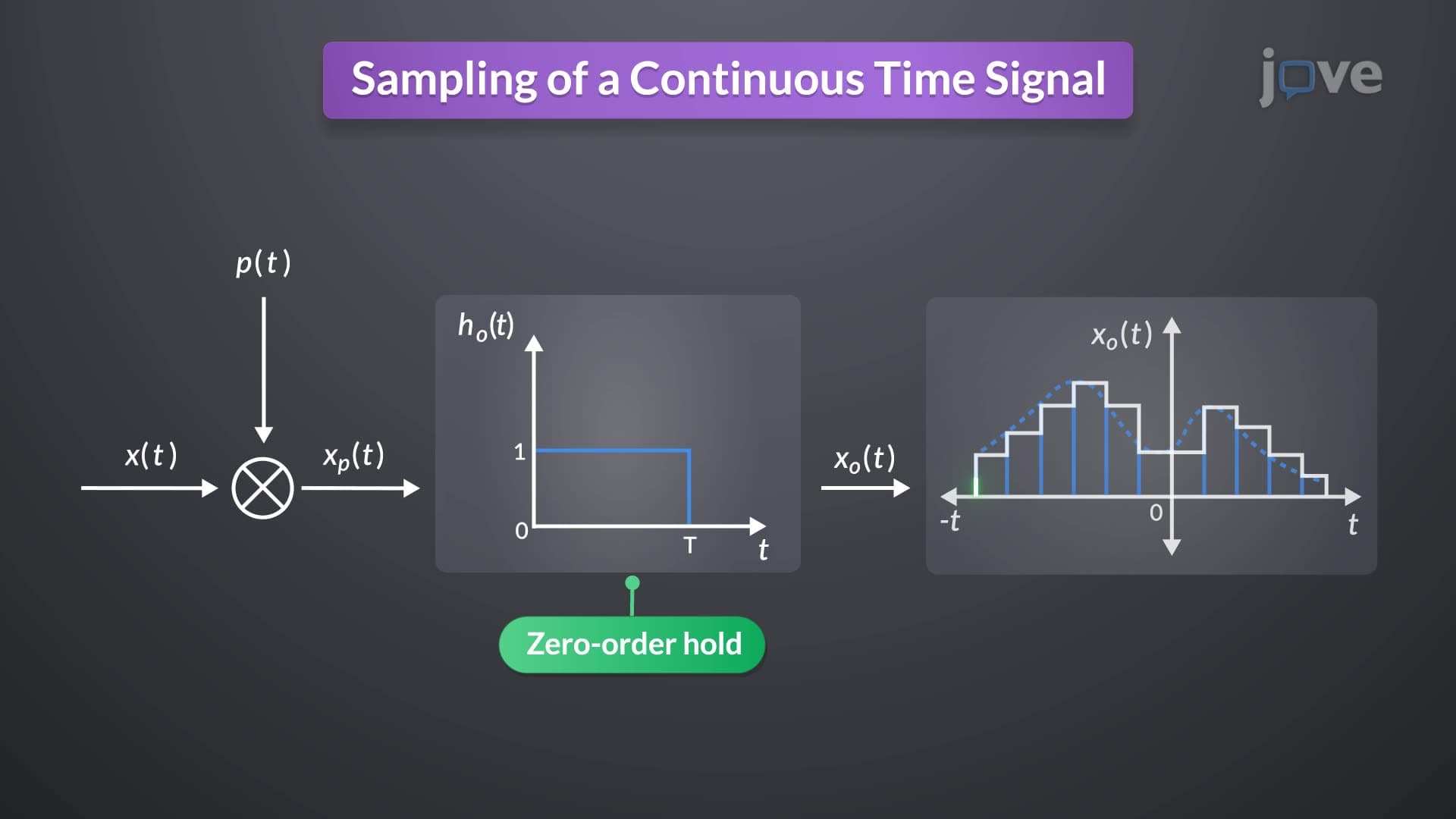
2. Sampling Continuous Time Signal
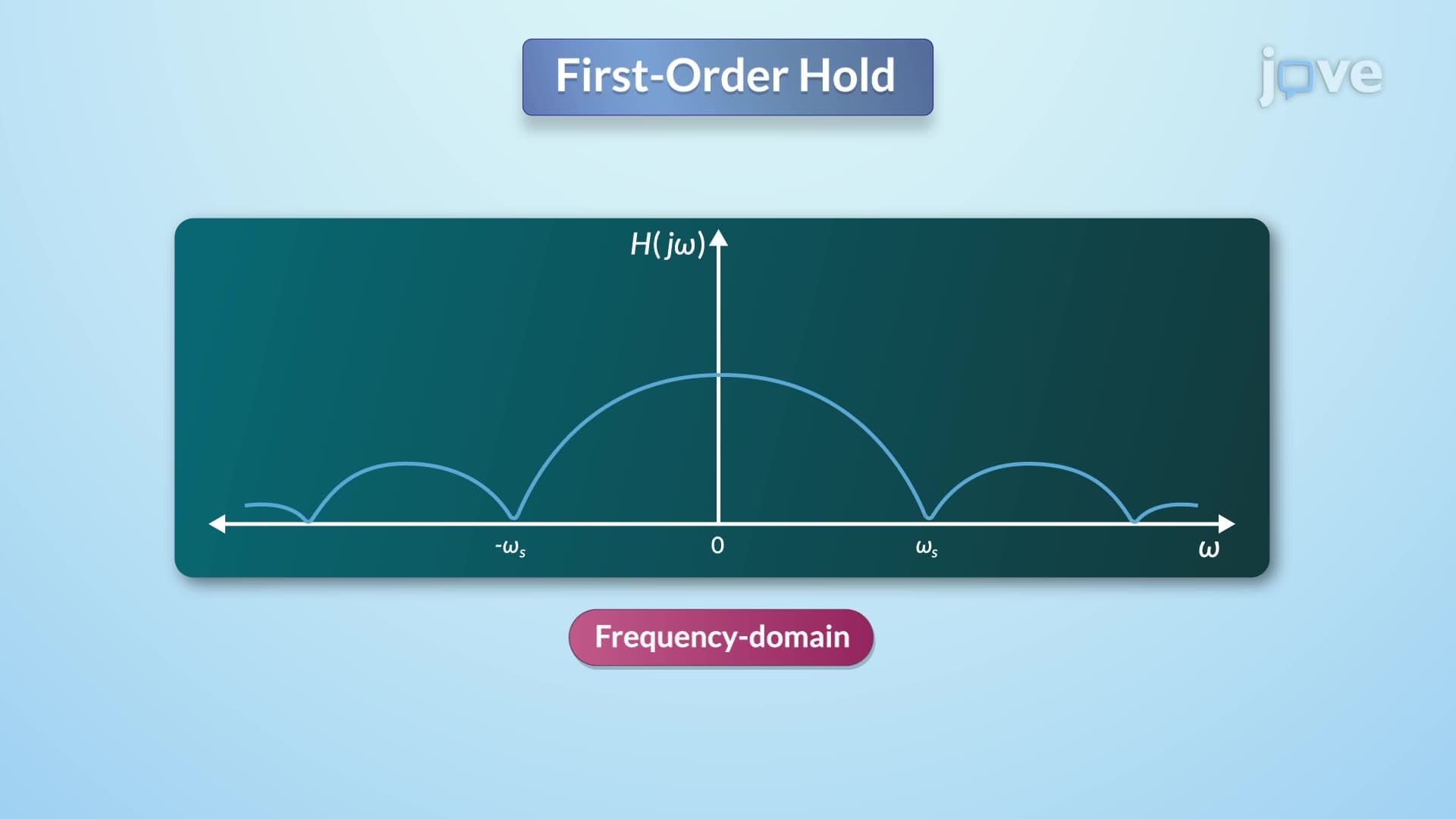
3. Reconstruction of Signal using Interpolation

4. Aliasing
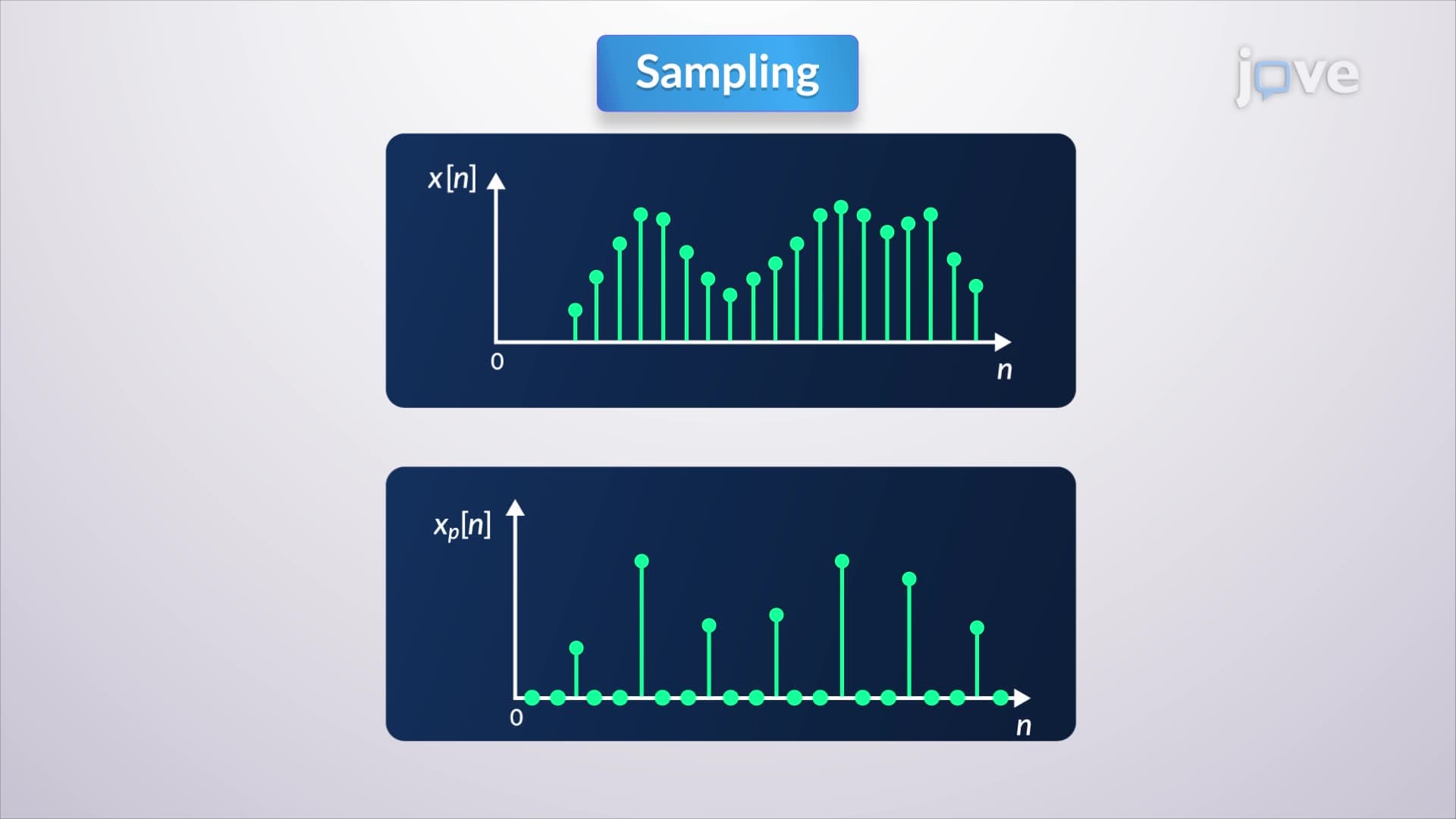
5. Downsampling
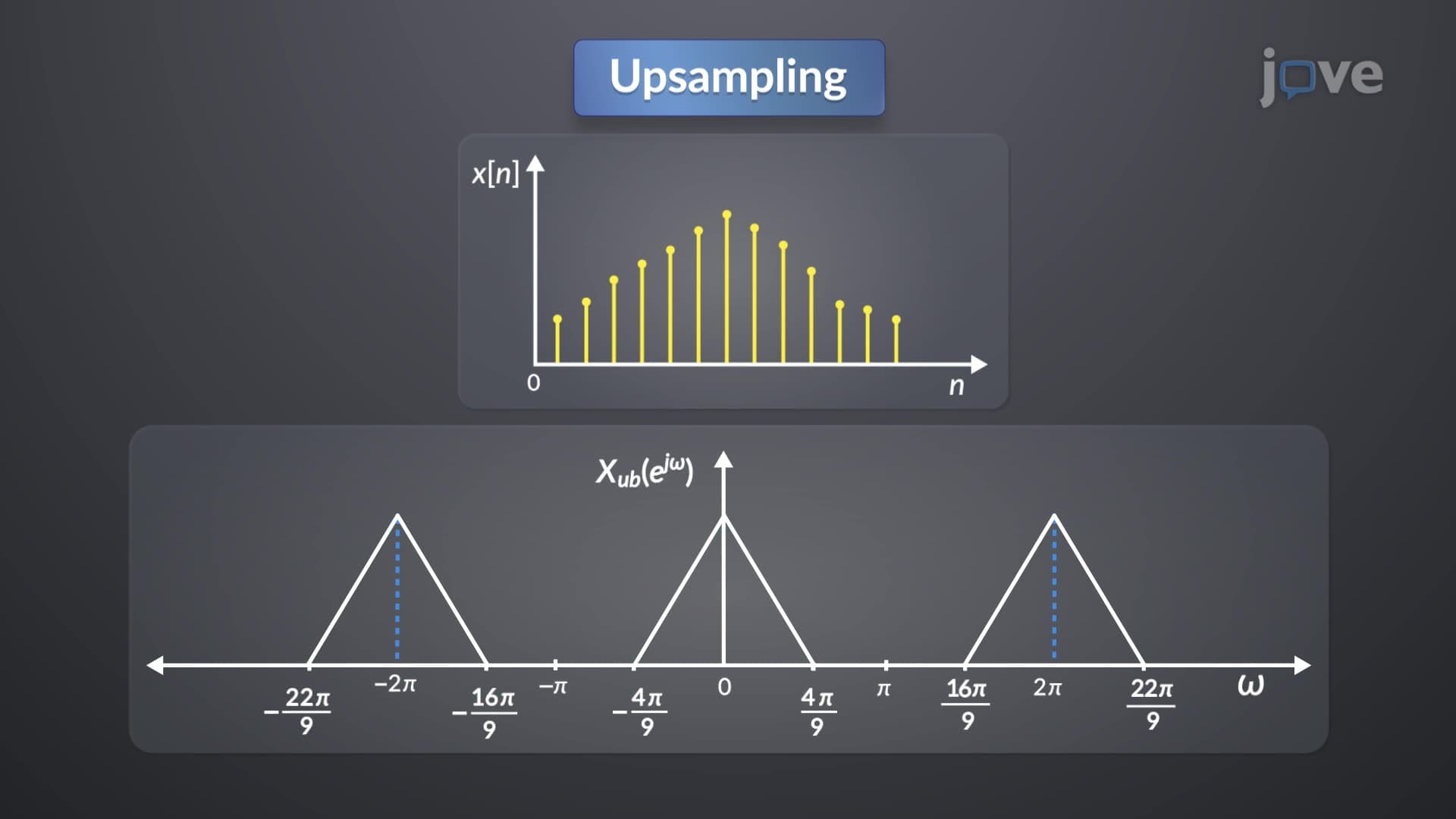
6. Upsampling

7. Bandpass Sampling
Sampling is the fundamental process of converting continuous-time analog signals into discrete-time digital signals, essential for all modern digital communication systems. From smartphone audio recording to medical ECG monitors used in US hospitals, sampling enables digital processing of real-world analog signals. This comprehensive course explores the Nyquist theorem, aliasing prevention, and reconstruction techniques critical for understanding how ADC (Analog-to-Digital Converter) and DAC (Digital-to-Analog Converter) systems work in practice. JoVE Coach provides interactive learning tools to master these signal processing concepts.
- Understand the fundamental sampling theorem and its mathematical foundation for signal processing
- Learn the critical Nyquist rate requirements for proper analog-to-digital conversion
- Identify aliasing effects and how they distort reconstructed signals in real systems
- Explore reconstruction techniques using interpolation methods for signal recovery
- Analyze downsampling and upsampling operations in digital signal processing applications
- Apply bandpass sampling principles to efficiently sample narrowband communication signals
- Understand zero-order hold and linear interpolation methods used in DAC systems
- Evaluate sampling rate requirements for avoiding information loss in practical systems
1. Sampling Theorem and Nyquist Rate Fundamentals The sampling theorem establishes that perfect reconstruction of continuous signals requires sampling at least twice the highest frequency component. For a signal containing frequencies up to 4 kHz (like human speech), the minimum sampling rate must be 8 kHz. This Nyquist rate prevents information loss during analog-to-digital conversion. US telecommunications systems like cellular networks rely on this principle - GSM systems sample voice signals at 8 kHz to capture the 300-3400 Hz speech bandwidth. Understanding this relationship is crucial for designing any digital communication system, from smartphone audio processing to high-speed internet data transmission.
2. Aliasing Effects and Prevention Strategies When sampling rates fall below the Nyquist frequency, aliasing distorts the reconstructed signal by creating false frequency components. Consider sampling a 1.2 kHz sine wave at only 1 kHz - the reconstructed signal appears as 0.2 kHz due to aliasing. US radar systems prevent this by using anti-aliasing filters before ADC conversion. Medical equipment like ECG machines in American hospitals employ careful filter design to avoid aliasing artifacts that could mislead diagnosis. Digital oscilloscopes used in US engineering labs automatically adjust sampling rates to prevent aliasing when measuring high-frequency signals, ensuring accurate waveform representation.
3. Signal Reconstruction and Interpolation Methods Perfect signal reconstruction requires convolving sampled data with a sinc function, though practical systems use simpler methods. Zero-order hold maintains each sample value constant until the next sample, creating stepped waveforms seen in early digital audio systems. Linear interpolation connects samples with straight lines, producing smoother outputs used in CD players and digital music streaming. US audio equipment manufacturers balance reconstruction quality with processing complexity - high-end audio systems may use sophisticated interpolation, while basic devices use zero-order hold. Understanding these trade-offs helps explain why premium audio equipment sounds better than basic systems.
4. Upsampling and Downsampling Operations Digital systems often change sampling rates through upsampling (increasing rate) and downsampling (reducing rate) operations. Upsampling inserts zeros between samples then filters the result, while downsampling selects every Nth sample after anti-aliasing filtering. US digital television broadcasting uses these techniques - HD video might be downsampled for mobile streaming to reduce bandwidth requirements. Smartphone cameras upsample lower-resolution sensors to create higher-resolution images. Modern software-defined radio systems in US military and civilian applications rely heavily on sample rate conversion to process signals at optimal rates for different processing stages.
5. Bandpass Sampling for Narrowband Signals Bandpass sampling enables efficient sampling of narrowband signals at rates lower than twice the highest frequency. Instead of sampling at twice the highest frequency, systems can sample at rates related to the signal's bandwidth and center frequency. US AM radio receivers use this principle - a 1 MHz AM signal with 10 kHz bandwidth doesn't require 2 MHz sampling. Cellular base stations employ bandpass sampling to efficiently process multiple narrow frequency bands simultaneously. This technique reduces ADC requirements and processing load in US communications infrastructure, from satellite communication ground stations to wireless network equipment.
Frequently Asked Questions
Sampling below the Nyquist rate causes aliasing, where high-frequency components appear as lower frequencies in the reconstructed signal. In audio systems, this creates harsh, unnatural sounds - like when old video game systems produced characteristic "digital" audio artifacts. Medical equipment suffering from aliasing could misrepresent patient vital signs, potentially leading to misdiagnosis.
Sampling directly connects to wave properties and Fourier analysis covered in AP Physics. The Nyquist theorem is based on frequency domain analysis using Fourier transforms, which decompose signals into sinusoidal components. Understanding sampling helps explain how digital oscilloscopes work in physics labs and connects wave theory to practical electronic systems you'll encounter in advanced coursework.
Standardized tests typically focus on fundamental frequency relationships and basic digital signal concepts. You might see questions about minimum sampling rates for given signal frequencies, identifying aliasing conditions, or explaining why CD audio uses 44.1 kHz sampling for 20 kHz maximum audio frequencies. Understanding the 2:1 Nyquist ratio is essential for these applications.
Modern smartphones use ADCs sampling at rates like 44.1 kHz or 48 kHz for audio recording, well above the ~20 kHz human hearing limit. The phone's digital signal processor applies anti-aliasing filters before sampling and reconstruction filters during playback. High-end audio apps might offer higher sampling rates like 96 kHz or 192 kHz for audiophile users, though the benefits above 44.1 kHz are debated among audio engineers.
Sampling theory involves complex mathematical concepts like Fourier transforms, convolution, and frequency domain analysis. Start with understanding the basic 2:1 Nyquist ratio conceptually, then gradually build understanding of frequency domain representations. Visual tools and simulation software help make abstract mathematical concepts more concrete - many students find plotting frequency spectra helpful for understanding aliasing effects.
Focus on connecting mathematical theory to practical examples you encounter daily. Practice calculating Nyquist rates for various signals, simulate aliasing effects using software tools, and examine real system specifications like audio equipment or oscilloscopes. Create visual aids showing frequency domain effects of different sampling rates. Work through problems progressively, starting with simple sinusoidal signals before tackling complex waveforms.
Master the fundamental sampling theorem and Nyquist rate calculations first, as these appear throughout electrical engineering curricula. Understanding aliasing prevention is crucial for laboratory work and design courses. Reconstruction methods become important in advanced signal processing and communications courses. Bandpass sampling is more specialized but valuable for students interested in wireless communications or software-defined radio applications.
Sampling principles apply broadly across engineering fields. Mechanical engineers use sampling in vibration analysis and control systems. Biomedical engineers apply sampling to medical imaging and physiological signal processing. Civil engineers use sampling concepts in structural monitoring systems. Computer engineers implement sampling in digital audio/video processing and data acquisition systems. Understanding these fundamentals provides a strong foundation for interdisciplinary applications.
This microcourse includes 7 concept videos that walk you through the building blocks of Electrical Engineering. Each video is short, about 1 minute, so you can cover a full topic during a coffee break or between classes. The full sequence starts with Sampling Theorem and ends with Bandpass Sampling.
The playlist moves from big-picture ideas to the precise vocabulary used in Electrical Engineering. Early videos introduce Sampling Theorem, Sampling Continuous Time Signal, and Reconstruction of Signal using Interpolation. The middle of the series focuses on Downsampling, Upsampling, and Bandpass Sampling. The final stretch covers Bandpass Sampling.
The natural next step is z-Transform. From there, you can move to Introduction to Control Systems, Modeling in Time and Frequency Domain, and Diagrams and Signal Flow Graphs. Once you finish those, the full Electrical Engineering curriculum of 33 microcourses on JoVE Coach opens up, taking you from foundational concepts to advanced systems.
Related Subjects
 Civil Engineering 30 micro-courses›Mechanical Engineering 28 micro-courses›