- Electrical Engineering
- Introduction to Control Systems
Micro-courses:33

Introduction to Control Systems
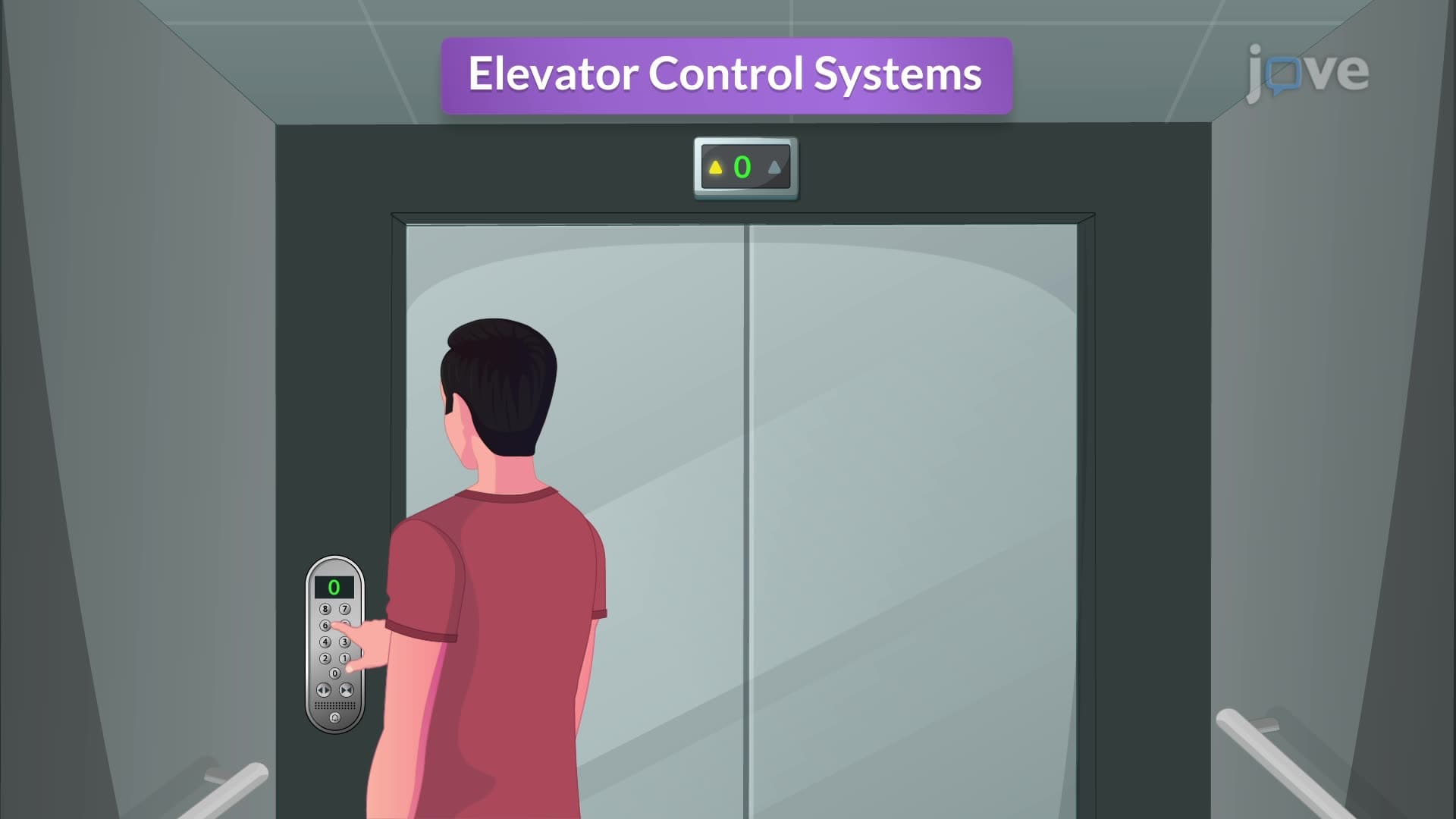
1. Control Systems
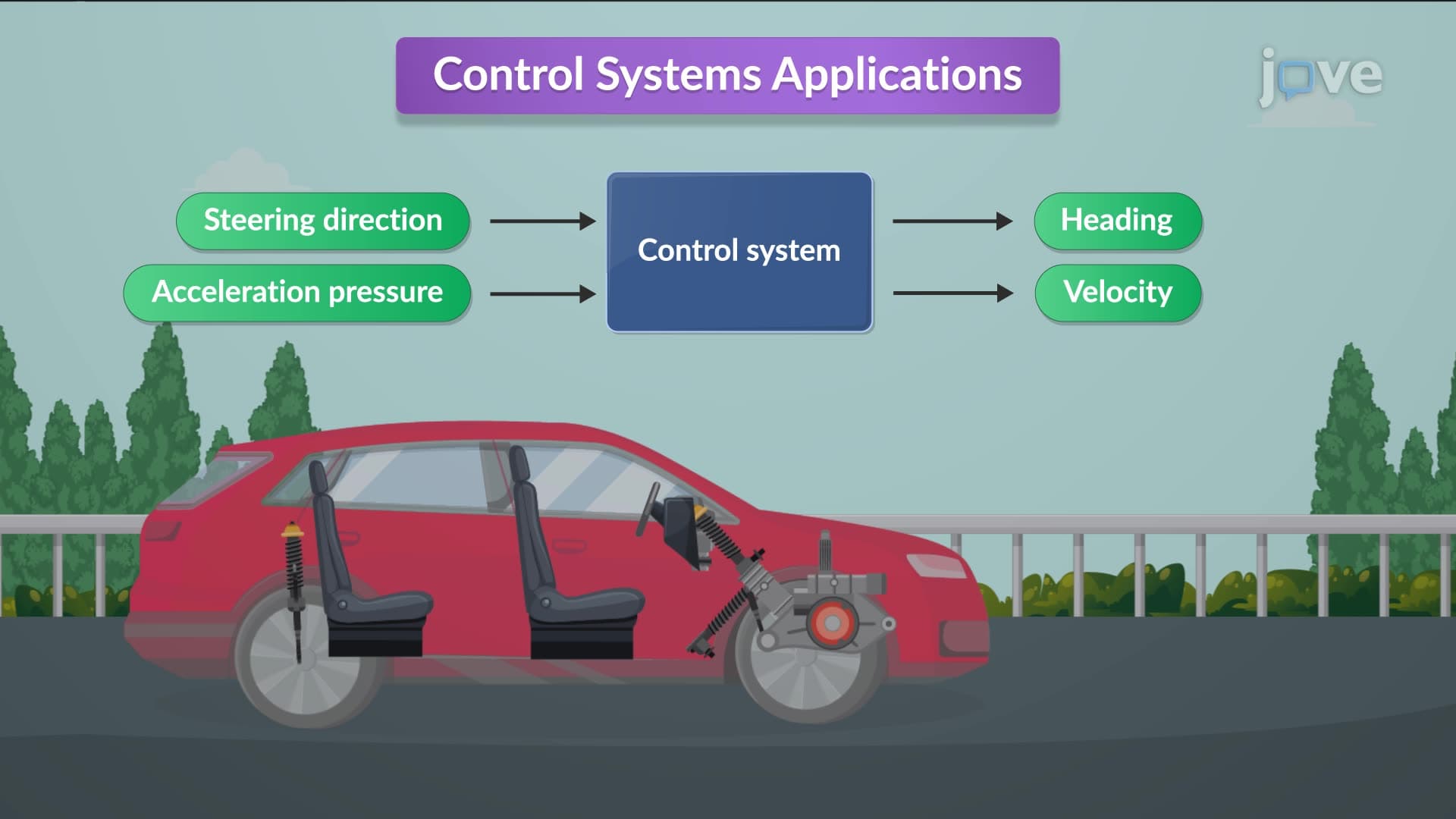
2. Control Systems: Applications

3. Open and closed-loop control systems

4. Effects of feedback
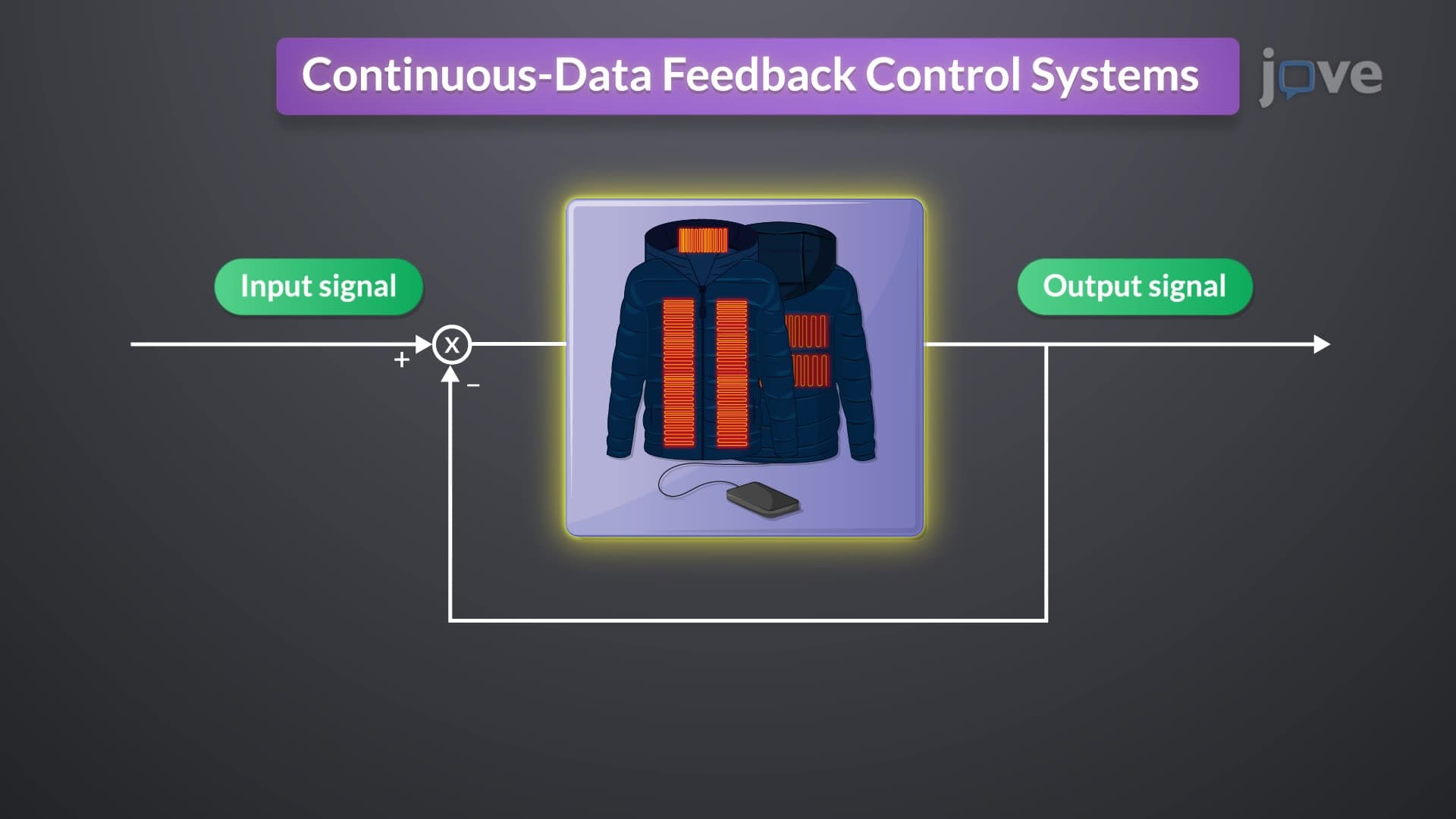
5. Feedback control systems
This introduction to control systems provides foundational knowledge of how automated systems regulate and control processes across diverse applications. From elevator operation and car steering to space shuttle navigation and industrial manufacturing, control systems form the backbone of modern technology. Students explore both open and closed loop systems, learning how feedback mechanisms enhance performance and stability. Through practical examples like thermostat control and automotive cruise control, this JoVE Coach course demonstrates essential control system principles used throughout engineering disciplines.
- Understand the fundamental components and terminology of control systems engineering
- Identify the differences between open-loop and closed-loop control configurations
- Explore how feedback control systems improve accuracy and reduce steady-state error
- Analyze the effects of feedback on system stability, gain, and disturbance rejection
- Learn to classify control systems as linear/nonlinear and continuous/discrete-data types
- Apply control system concepts to real-world applications in automotive and aerospace industries
- Examine how plants, controllers, and sensors work together in feedback control systems
- Understand transient response characteristics and performance measurement criteria
1. Control System Fundamentals and Components Control systems consist of interconnected subsystems that produce specific outputs from given inputs, utilizing plants (physical objects being controlled), controllers (decision-making elements), and sensors for measurement. In an elevator system, pressing a floor button provides input to the controller, which directs the motor (plant) to move the car to the desired location. Performance is evaluated through transient response (how quickly the system reacts to changes) and steady-state error (difference between desired and actual final output). Understanding these basic building blocks helps students recognize control systems in everyday applications from household appliances to industrial machinery.
2. Open-Loop vs Closed-Loop System Architectures Open-loop systems operate without feedback, executing predetermined actions regardless of output performance, like a washing machine running for a fixed time cycle without checking if clothes are actually clean. Closed-loop systems incorporate feedback loops that compare actual output to desired output, automatically making corrections when differences occur. A home thermostat exemplifies closed-loop operation by continuously measuring room temperature and adjusting heating or cooling to maintain the setpoint. While open-loop systems are simpler and less expensive, closed-loop systems provide superior accuracy and disturbance rejection through their feedback mechanisms.
3. Feedback Control System Benefits and Characteristics Feedback control systems excel at maintaining desired performance by comparing actual output with reference inputs and making automatic corrections to minimize error. In automotive cruise control, the system continuously monitors vehicle speed and adjusts throttle position to maintain the set speed despite hills, wind resistance, or load changes. Feedback enables systems to reject disturbances, improve accuracy, and adapt to changing conditions. However, these benefits come with increased complexity, higher costs, and potential stability challenges. Students learn that feedback can both stabilize unstable systems and potentially destabilize stable ones if not properly designed.
4. Effects of Feedback on System Performance Feedback significantly impacts multiple system characteristics including gain, stability, bandwidth, and sensitivity to parameter variations. The overall system gain is modified by the factor (1 + GH), where G represents forward path gain and H represents feedback gain. In audio amplifier systems, negative feedback reduces distortion and improves frequency response, while positive feedback can create oscillations or instability. Feedback also enhances a system's ability to reject external disturbances - for example, power steering systems use feedback to maintain steering accuracy despite road surface irregularities or wind gusts affecting the vehicle.
5. Control System Classifications and Signal Types Control systems are classified along multiple dimensions: linear versus nonlinear behavior, time-invariant versus time-varying parameters, and continuous versus discrete-data signals. Linear systems follow superposition principles and are easier to analyze mathematically, while nonlinear systems like on-off controllers in HVAC systems provide practical advantages despite analytical complexity. Time-invariant systems maintain constant parameters, unlike guided missiles where mass decreases as fuel burns during flight. Continuous-data systems process analog signals continuously over time, while discrete-data systems work with sampled or digital signals, offering improved noise immunity and computational flexibility in modern digital control applications.
Frequently Asked Questions
Open-loop systems execute predetermined actions without measuring or responding to their output, like a microwave timer that runs for a set time regardless of food temperature. Closed-loop systems use feedback to continuously compare actual output with desired output and make automatic corrections, like a thermostat that measures room temperature and adjusts heating accordingly.
Feedback provides critical benefits including automatic error correction, disturbance rejection, and improved accuracy that often outweigh the added complexity. For example, without feedback, a car's cruise control couldn't maintain constant speed when encountering hills or headwinds. Feedback allows systems to adapt and self-correct, making them much more reliable in real-world applications.
Control systems concepts appear in AP Physics C mechanics and electricity topics, particularly in circuits with feedback elements and mechanical systems with automatic regulation. Understanding control principles helps with analyzing oscillatory systems, feedback circuits, and energy regulation problems that commonly appear on the exam.
Focus on basic control system terminology, block diagrams, open vs closed-loop configurations, and simple feedback analysis. Many entrance exams test understanding of system stability concepts, transient response characteristics, and practical applications in automotive or manufacturing systems rather than complex mathematical analysis.
Control systems span all engineering disciplines - mechanical engineers design automotive cruise control and robotic systems, aerospace engineers create flight control systems, chemical engineers develop process control for manufacturing, and biomedical engineers design artificial organ control systems. The principles are universal across engineering fields.
Control systems build on fundamental math and physics concepts you already know, making the initial learning curve manageable. The challenge often lies in visualizing how feedback affects system behavior and understanding stability concepts. Starting with practical examples like thermostats and car systems helps make abstract concepts more concrete.
Connect every concept to real-world examples you encounter daily - thermostats, car systems, elevators, and appliances. Practice drawing block diagrams to visualize system components and signal flow. Work through numerical examples of calculating steady-state error and transient response. Understanding the "why" behind feedback benefits makes the mathematical details much more meaningful.
This microcourse includes 5 concept videos that walk you through the building blocks of Electrical Engineering. Each video is short, about 1 minute, so you can cover a full topic during a coffee break or between classes. The full sequence starts with Control Systems and ends with Feedback control systems.
The playlist moves from big-picture ideas to the precise vocabulary used in Electrical Engineering. Early videos introduce Control Systems, Control Systems: Applications, and Open and closed-loop control systems. The middle of the series focuses on Feedback control systems. The final stretch covers Feedback control systems.
The natural next step is Modeling in Time and Frequency Domain. From there, you can move to Diagrams and Signal Flow Graphs, Transient and Steady-state Response Analysis, and Root-Locus Method. Once you finish those, the full Electrical Engineering curriculum of 33 microcourses on JoVE Coach opens up, taking you from foundational concepts to advanced systems.
Related Subjects
 Civil Engineering 30 micro-courses›Mechanical Engineering 28 micro-courses›