- Electrical Engineering
- Linear Time Invariant Systems
Micro-courses:33

Linear Time- Invariant Systems
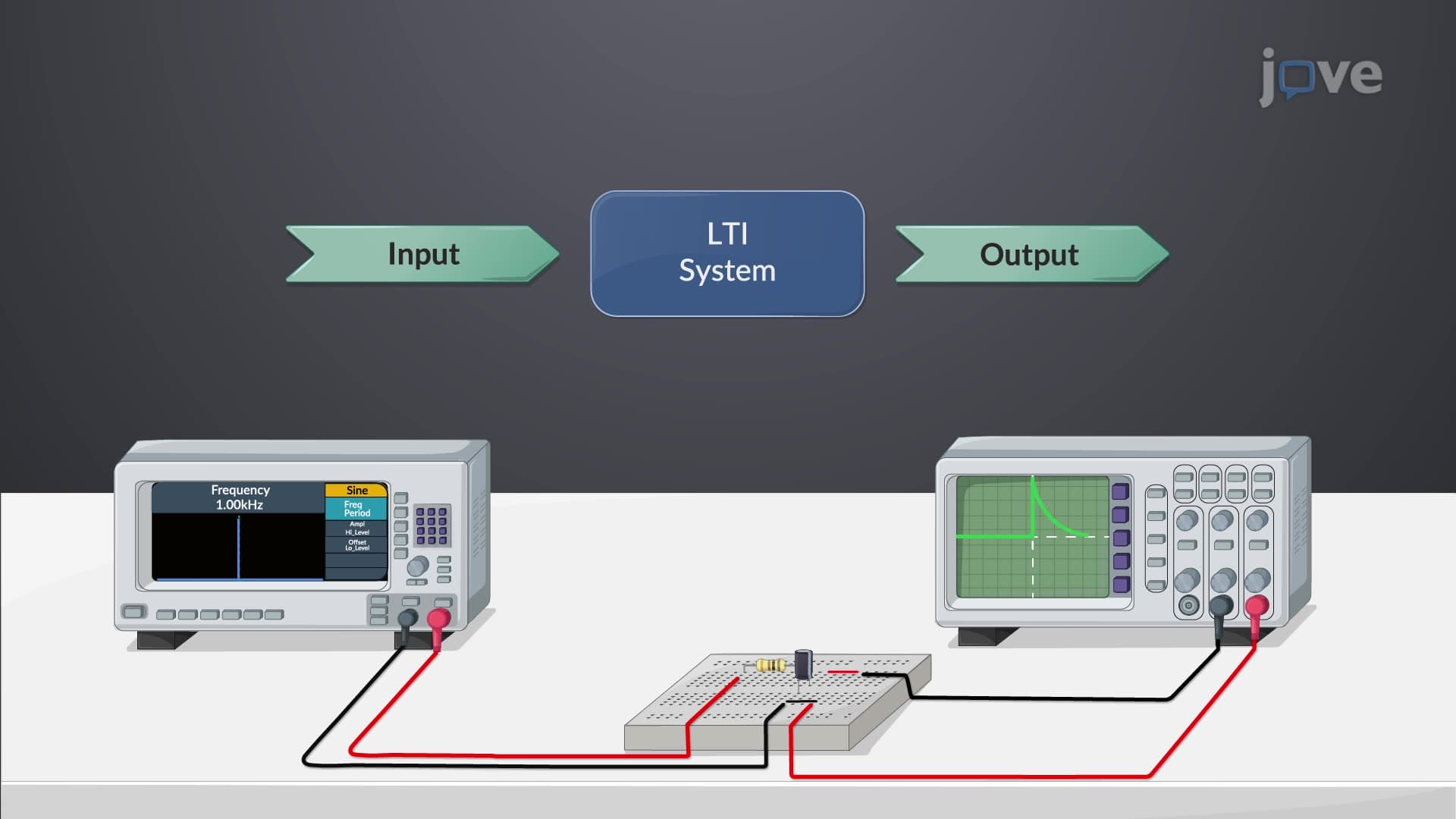
1. Linear time-invariant Systems
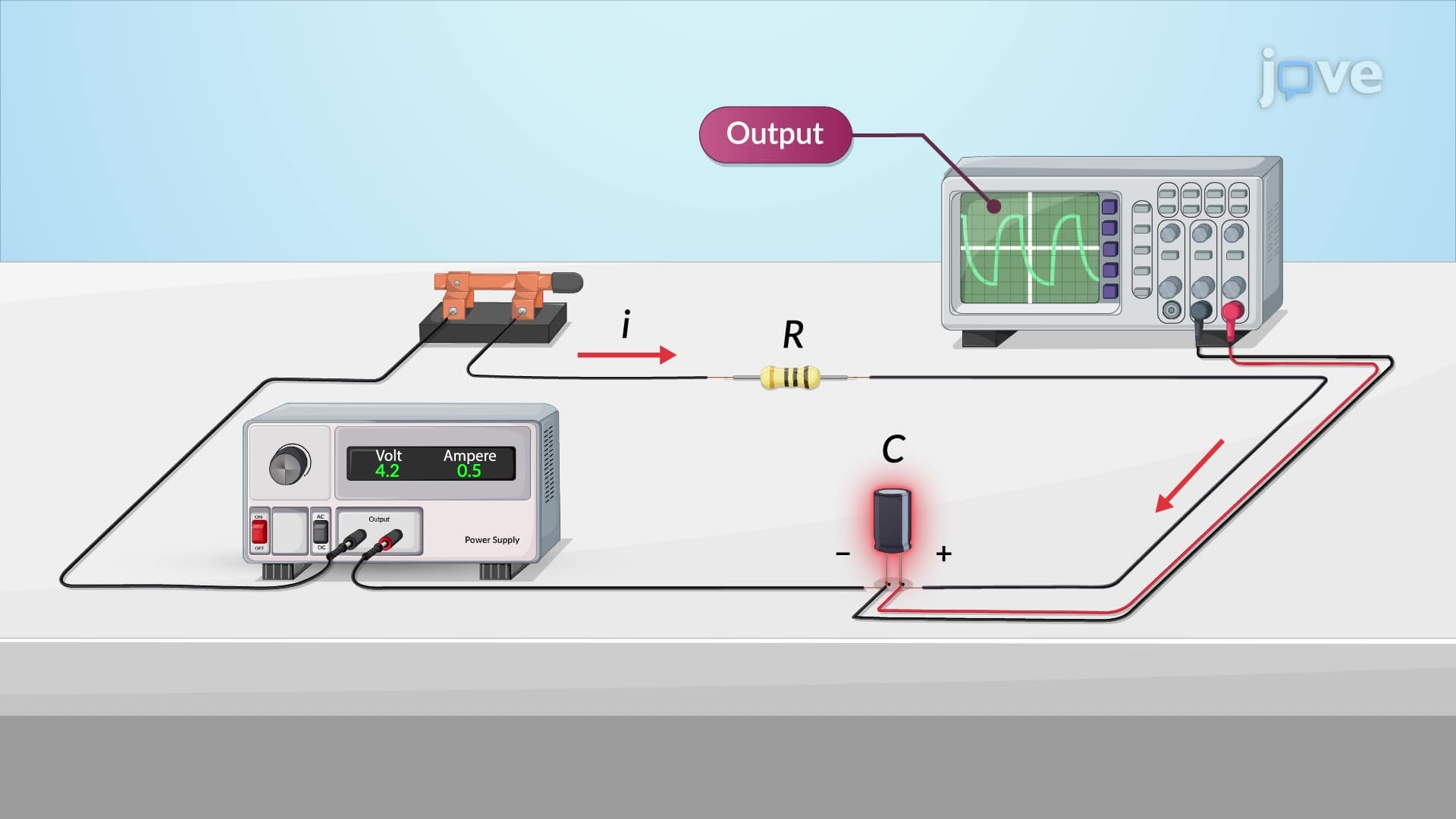
2. Impulse Response
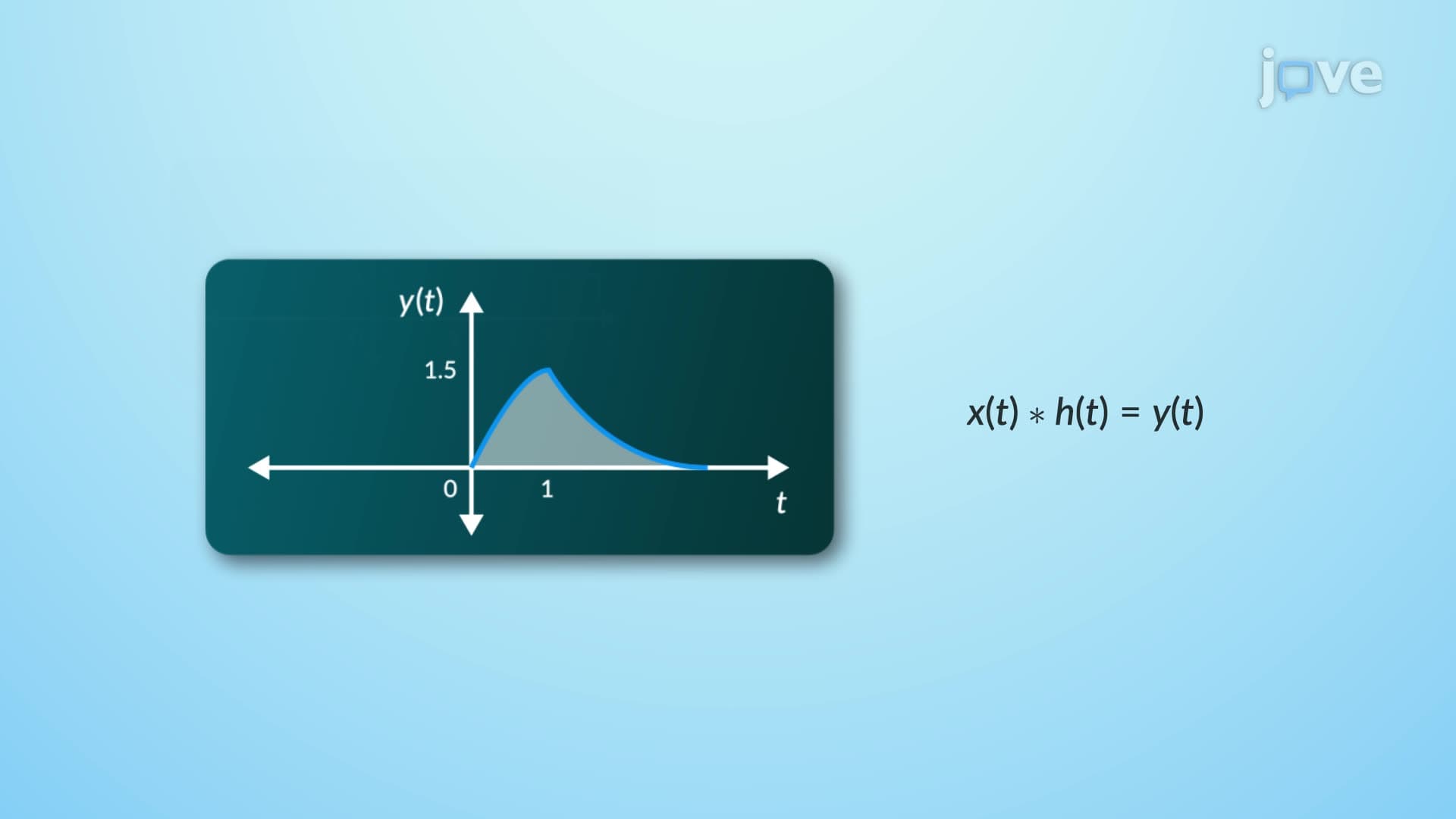
3. Convolution: Math, Graphics, and Discrete Signals
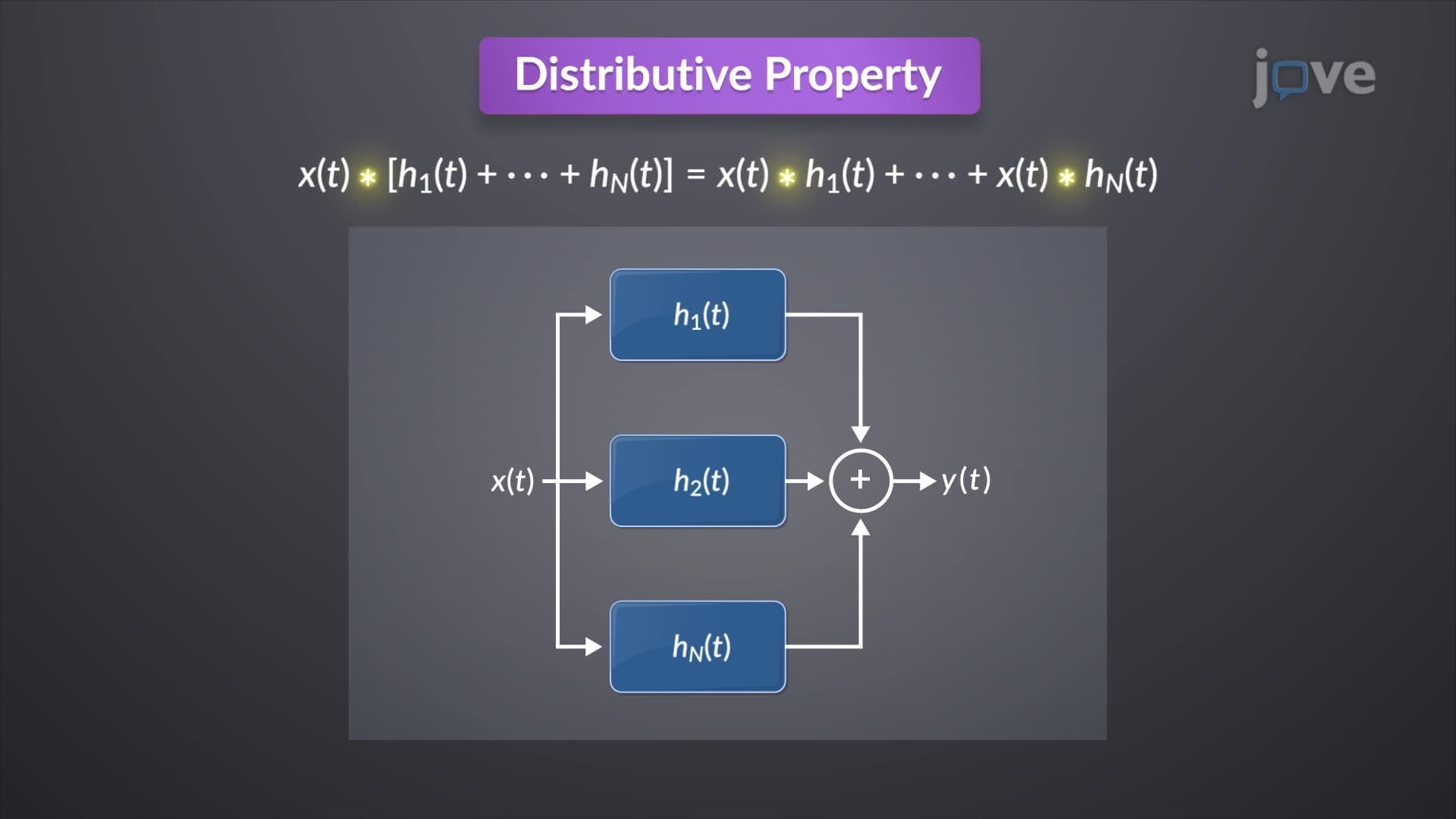
4. Convolution Properties I
5. Convolution Properties II
6. Deconvolution
7. BIBO stability of continuous and discrete -time systems
LTI systems form the foundation of signal processing and control engineering, exhibiting both linearity and time-invariance properties. These systems, commonly found in electrical circuits, audio processing equipment, and communication networks across American industries, can be completely characterized by their impulse response. Through JoVE Coach's comprehensive approach, students master convolution techniques and BIBO stability analysis essential for engineering applications.
- Understand the fundamental properties of linearity and time-invariance in system analysis
- Learn to calculate impulse responses for continuous and discrete-time LTI systems
- Apply convolution techniques to determine system outputs for arbitrary inputs
- Analyze convolution properties including commutativity, associativity, and distributivity
- Explore graphical convolution methods for visual system analysis
- Identify deconvolution techniques for inverse filtering applications
- Evaluate BIBO stability criteria for both continuous and discrete-time systems
- Apply LTI system concepts to real-world engineering problems in US industries
1. Superposition and LTI System Properties Linear time-invariant systems demonstrate both homogeneity and additivity, collectively known as the superposition principle. These systems maintain constant behavior over time, meaning a delayed input produces an identically delayed output. Common examples include RC circuits in American automotive systems, audio amplifiers in consumer electronics, and digital filters in telecommunications equipment used by companies like Qualcomm and Intel. The mathematical representation typically involves linear constant coefficient differential equations (LCCDEs), which model electrical circuits with ideal components found in power grids across the United States.
2. Impulse Response and System Characterization The impulse response completely characterizes an LTI system's behavior, representing the system's output when subjected to a unit impulse input. In practical American applications, this concept appears in audio engineering where speaker systems are tested using impulse signals, and in seismic monitoring equipment used by the U.S. Geological Survey. For an RC circuit commonly found in American household electronics, the impulse response exhibits an exponential decay pattern with a time constant τ = RC. This response provides the blueprint for predicting system behavior with any arbitrary input signal.
3. Convolution Theory and Applications Convolution mathematically describes how LTI systems process input signals, expressed as y(t) = x(t) * h(t), where * denotes convolution. This operation is fundamental in American industries ranging from medical imaging equipment manufactured by companies like GE Healthcare to digital signal processing chips designed by Texas Instruments. The convolution integral involves four key steps: folding, shifting, multiplication, and integration. Discrete-time convolution uses summation instead of integration, commonly implemented in digital audio workstations used in American recording studios and smartphone audio processing chips.
4. Convolution Properties and System Analysis Key convolution properties simplify complex system analysis in engineering applications. The commutative property allows interchanging input and impulse response, while associative property enables series system combination - crucial for designing multi-stage amplifiers in American broadcasting equipment. The distributive property helps analyze parallel system configurations found in stereo audio systems. Time-shift properties are essential for understanding delay effects in American satellite communication systems and GPS technology. These properties reduce computational complexity in real-time processing applications used by companies like Apple and Google.
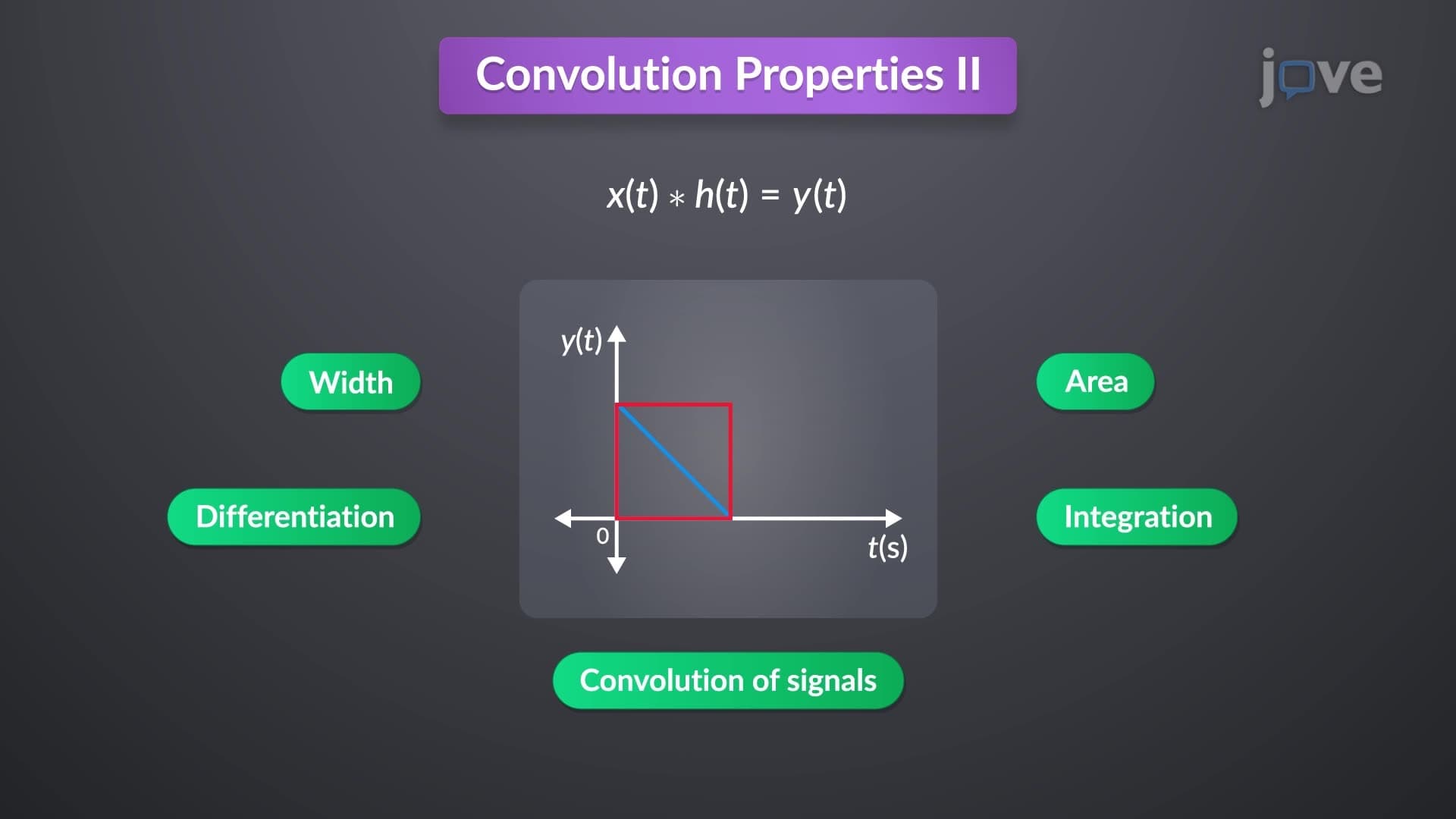
5. Advanced Convolution Properties Width, area, differentiation, and integration properties provide powerful analysis tools. The width property states that convolving signals with durations T₁ and T₂ produces output duration T₁ + T₂, applicable to pulse-shaping in American radar systems. Area property ensures the convolution's area equals the product of individual signal areas, important for energy conservation in power systems. Differentiation and integration properties relate derivatives and integrals of convolved signals, essential for analyzing feedback control systems in American manufacturing plants and automotive cruise control systems designed by Ford and General Motors.
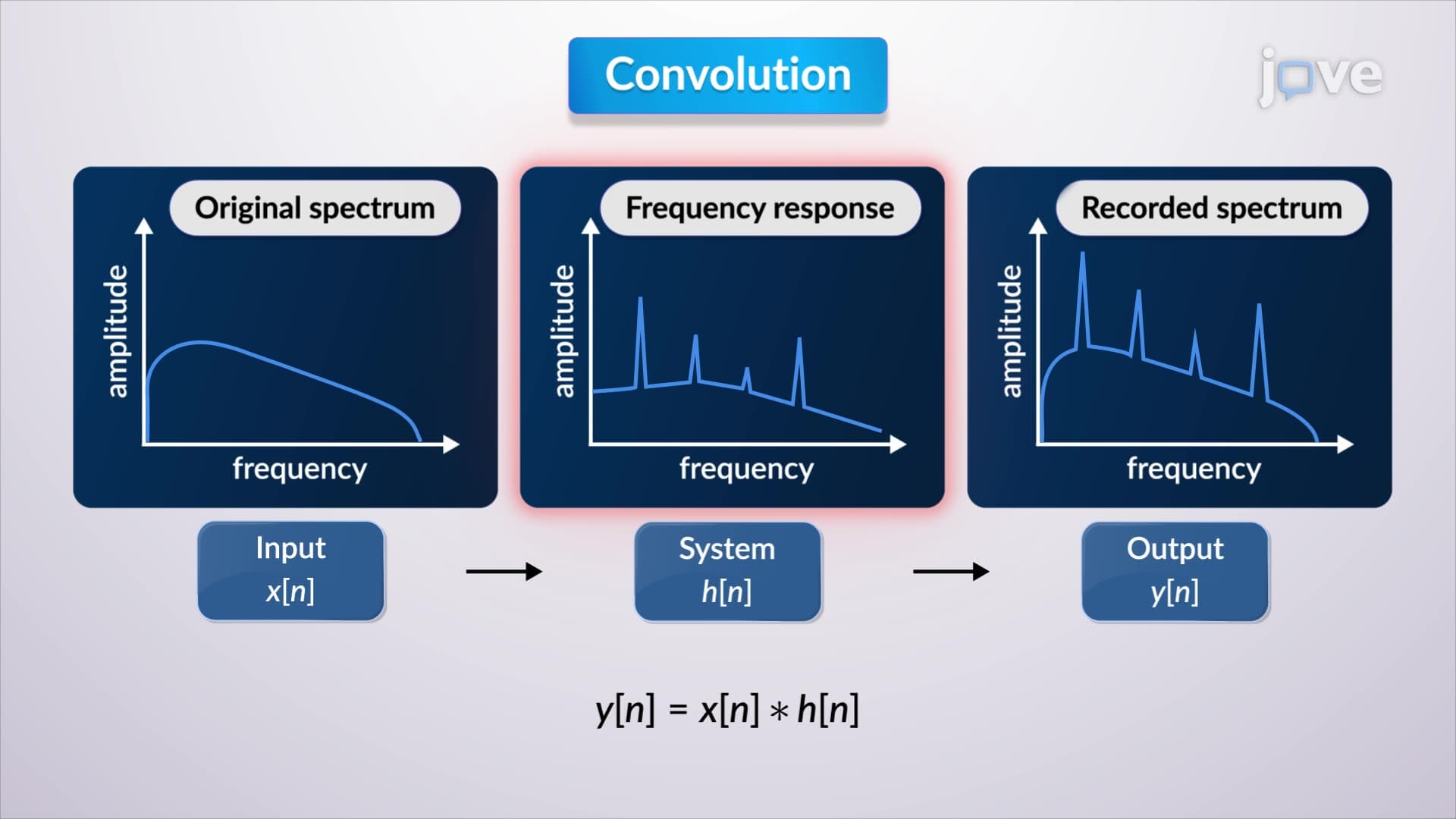
6. Deconvolution and Inverse Filtering Deconvolution recovers original signals from convolved outputs, essential for applications like image restoration in American medical imaging and seismic data processing for oil exploration companies like ExxonMobil. Two primary methods exist: polynomial division treating sequences as polynomial coefficients, and recursive algorithms for computational efficiency. These techniques are crucial in American industries including satellite communications, where signals must be recovered from noisy channels, and in forensic audio analysis used by law enforcement agencies. The choice of method depends on computational resources and real-time processing requirements.
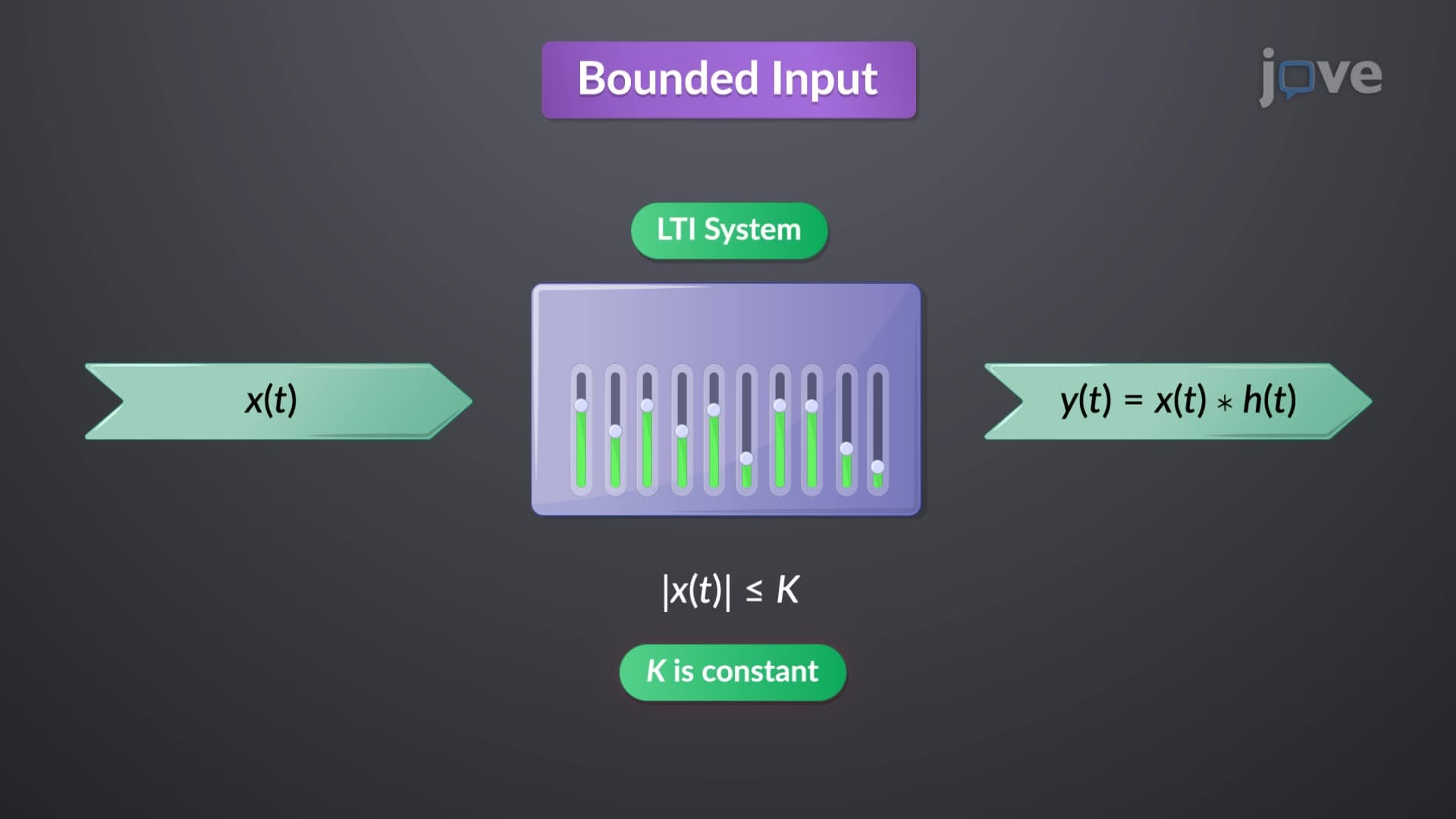
7. BIBO Stability Analysis Bounded-Input Bounded-Output (BIBO) stability ensures that bounded inputs always produce bounded outputs, critical for safe operation of American power grid systems and aircraft control systems designed by Boeing and Lockheed Martin. For continuous-time systems, BIBO stability requires absolutely integrable impulse responses: ∫|h(t)|dt < ∞. Discrete-time systems need absolutely summable impulse responses: Σ|h[n]| < ∞. This concept is vital for designing stable feedback systems in American manufacturing automation, ensuring that small disturbances don't cause system failure in applications ranging from chemical processing plants to autonomous vehicle control systems.
Frequently Asked Questions
Test linearity by verifying superposition: if inputs x₁(t) and x₂(t) produce outputs y₁(t) and y₂(t), then input ax₁(t) + bx₂(t) must produce output ay₁(t) + by₂(t). For time-invariance, verify that delaying the input by time T₀ delays the output by the same amount. Systems with constant coefficients in their differential equations are typically LTI.
Regular multiplication combines signals point-by-point at each time instant, while convolution accounts for the system's memory by integrating the product of the input and time-reversed impulse response over all time. Convolution represents how past inputs continue to influence current outputs through the system's impulse response, making it essential for analyzing systems with energy storage elements like capacitors and inductors.
AP Physics C extensively covers RC and RL circuits, which are classic LTI systems. Understanding impulse response helps solve transient analysis problems, while convolution concepts aid in analyzing circuits with complex input waveforms. BIBO stability relates to circuit safety and proper operation, topics frequently tested in both the Electricity and Magnetism sections.
Focus on commutative (xh = hx), associative ((xh₁)h₂ = x(h₁h₂)), and time-shift properties for AP exams. The width property (duration of convolution equals sum of input durations) often appears in SAT Subject Test Mathematics Level 2. Area property (area of convolution equals product of areas) is crucial for energy calculations in physics applications.
Follow the systematic four-step process: (1) Fold one signal by reflecting it about the y-axis, (2) Shift the folded signal by parameter t, (3) Multiply the shifted signal with the other signal at each position, (4) Integrate (or sum for discrete signals) the product. Practice with simple rectangular and triangular pulses before attempting complex waveforms commonly found in AP Physics problems.
Deconvolution is inherently more sensitive to noise than convolution, making it mathematically challenging. Start with the polynomial division method for discrete signals, treating signal values as polynomial coefficients. Practice long division techniques from algebra, then apply them to signal sequences. The recursive algorithm method requires strong programming skills but offers computational advantages for longer sequences.
LTI systems are everywhere in American technology: audio equalizers in music production (Nashville recording industry), image processing in medical MRI scanners (manufactured by companies like Siemens USA), digital filters in smartphone cameras (Apple, Google), vibration analysis in automotive testing (Detroit automotive industry), and signal processing in 5G telecommunications infrastructure (Verizon, AT&T networks).
Start with simple RC circuits to build intuition, then progress to more complex systems. Practice graphical convolution extensively using graph paper to visualize folding and shifting operations. Work through numerous impulse response calculations, focusing on exponential and sinusoidal responses. Use online tools to verify convolution results, but always solve problems by hand first to develop analytical skills essential for exams.
This microcourse includes 7 concept videos that walk you through the building blocks of Electrical Engineering. Each video is short, about 1 minute, so you can cover a full topic during a coffee break or between classes. The full sequence starts with Linear time-invariant Systems and ends with BIBO stability of continuous and discrete -time systems.
The playlist moves from big-picture ideas to the precise vocabulary used in Electrical Engineering. Early videos introduce Linear time-invariant Systems, Impulse Response, and Convolution: Math, Graphics, and Discrete Signals. The middle of the series focuses on Convolution Properties II, Deconvolution, and BIBO stability of continuous and discrete -time systems. The final stretch covers BIBO stability of continuous and discrete -time systems.
The natural next step is The Laplace Transform. From there, you can move to Fourier Series, The Fourier Transform, and Sampling. Once you finish those, the full Electrical Engineering curriculum of 33 microcourses on JoVE Coach opens up, taking you from foundational concepts to advanced systems.
Related Subjects
 Civil Engineering 30 micro-courses›Mechanical Engineering 28 micro-courses›