- Electrical Engineering
- Transient Stability and System Controls
Micro-courses:33

Transient Stability and System Controls
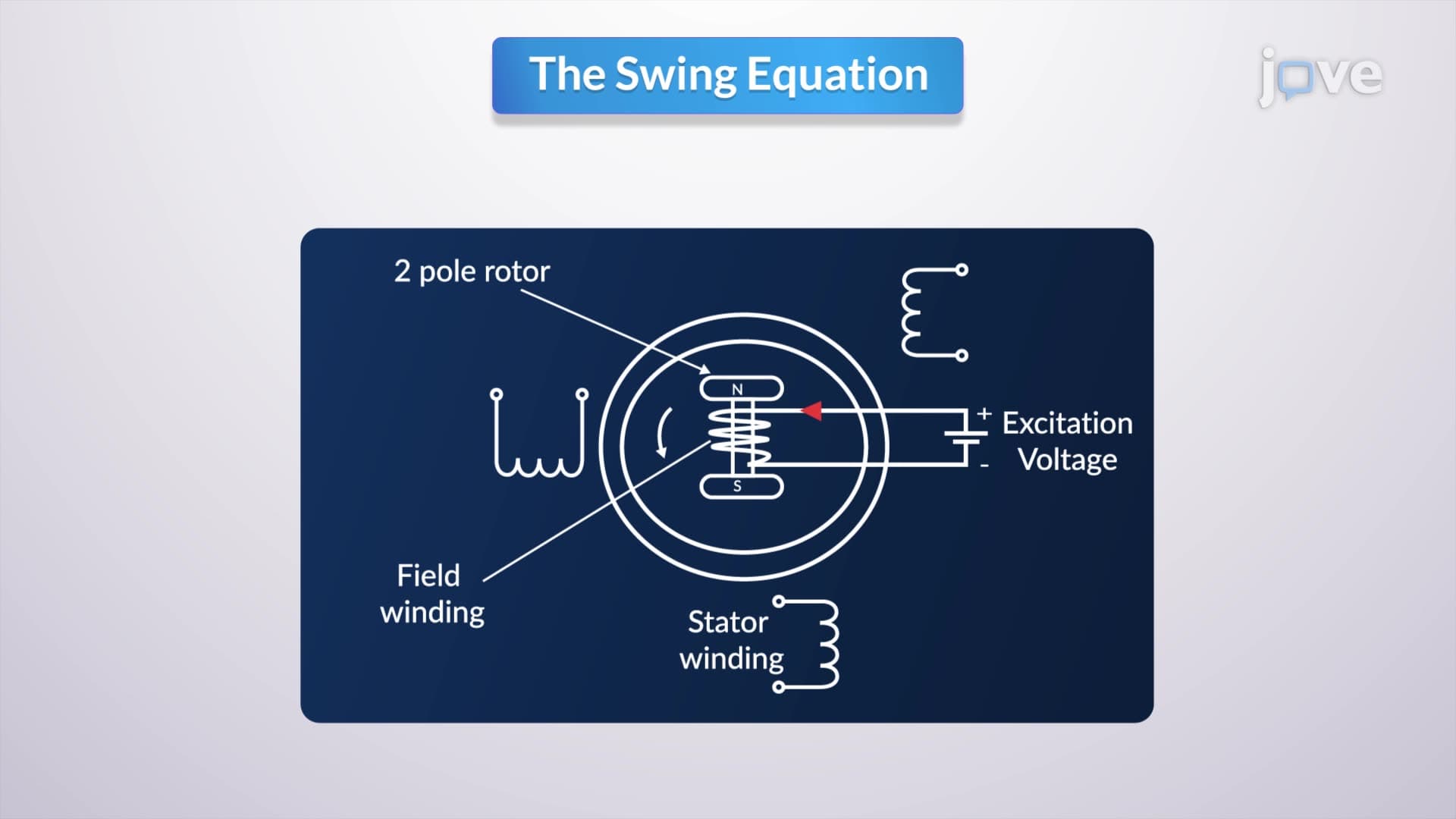
1. The Swing Equation
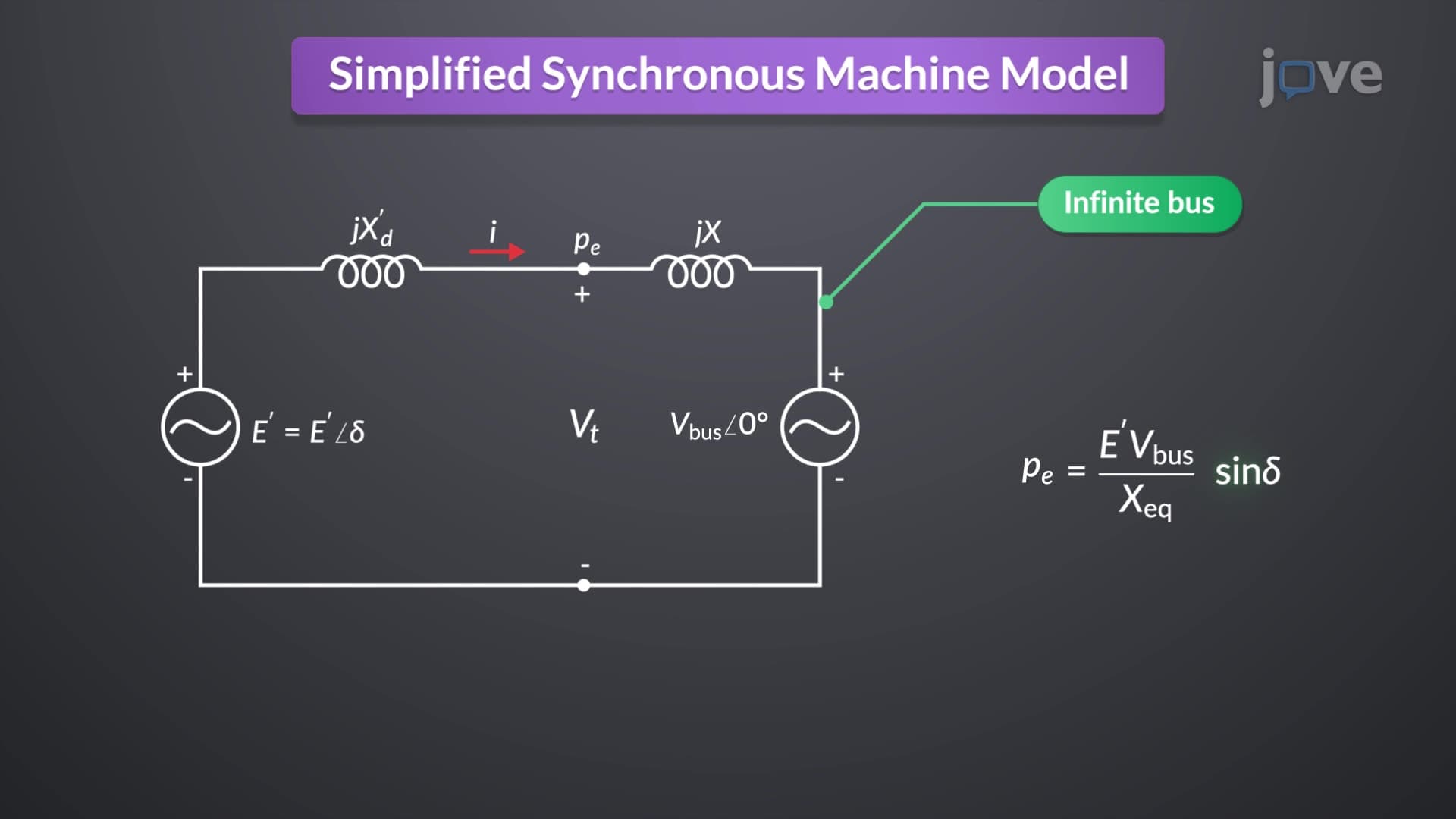
2. Simplified Synchronous Machine Model
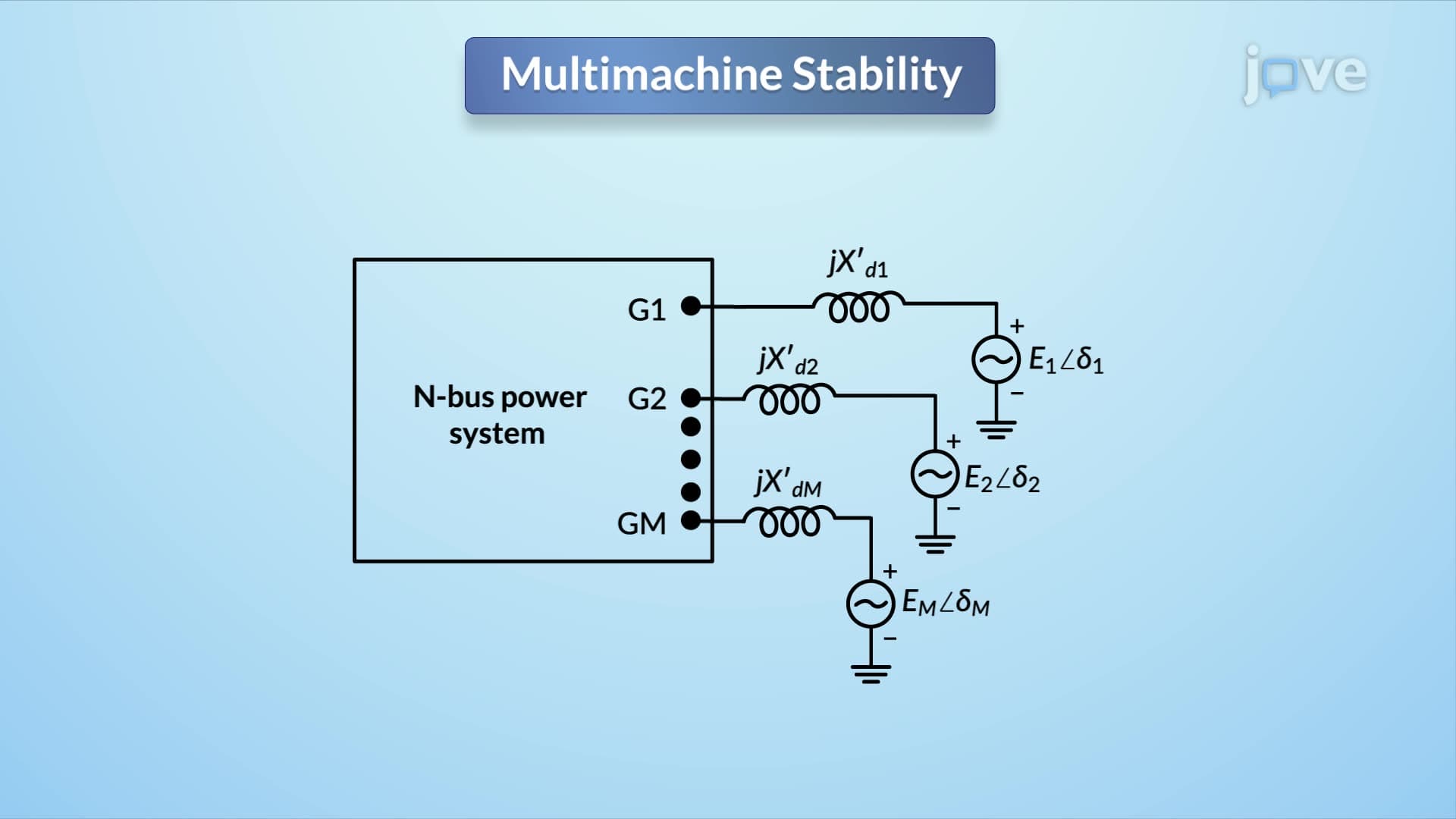
3. Multimachine Stability
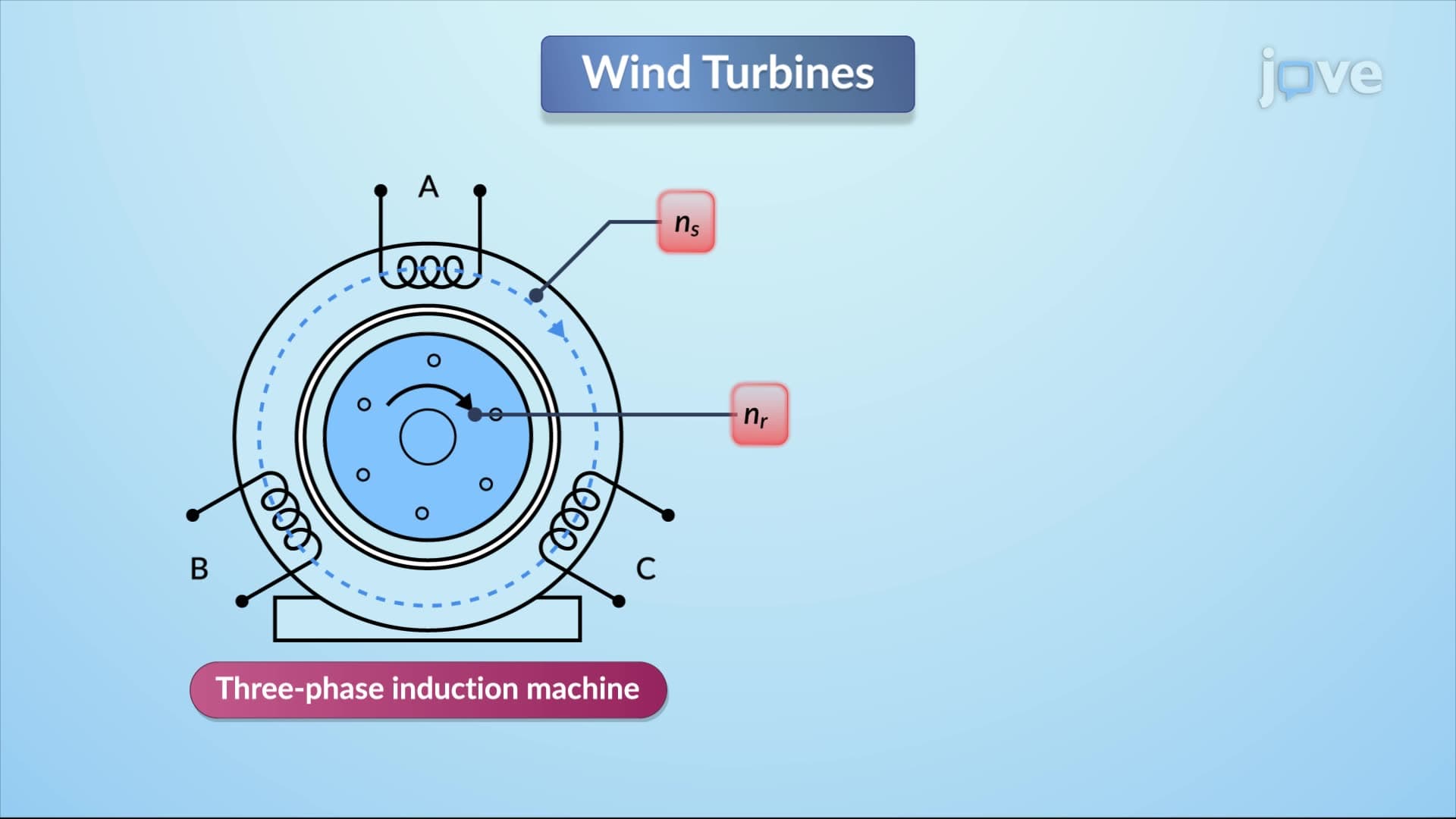
4. Wind Turbine Machine Models
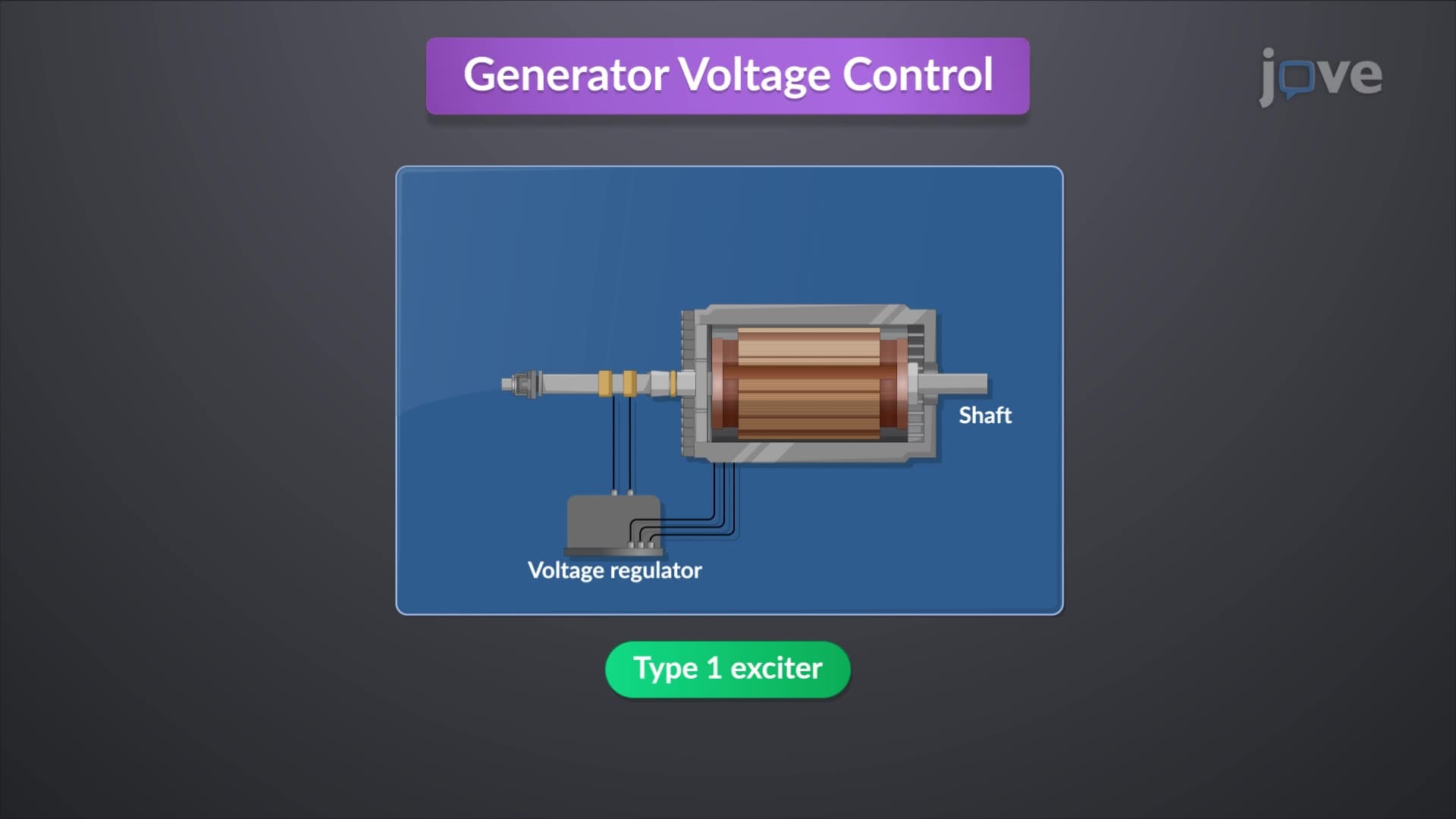
5. Generator Voltage Control
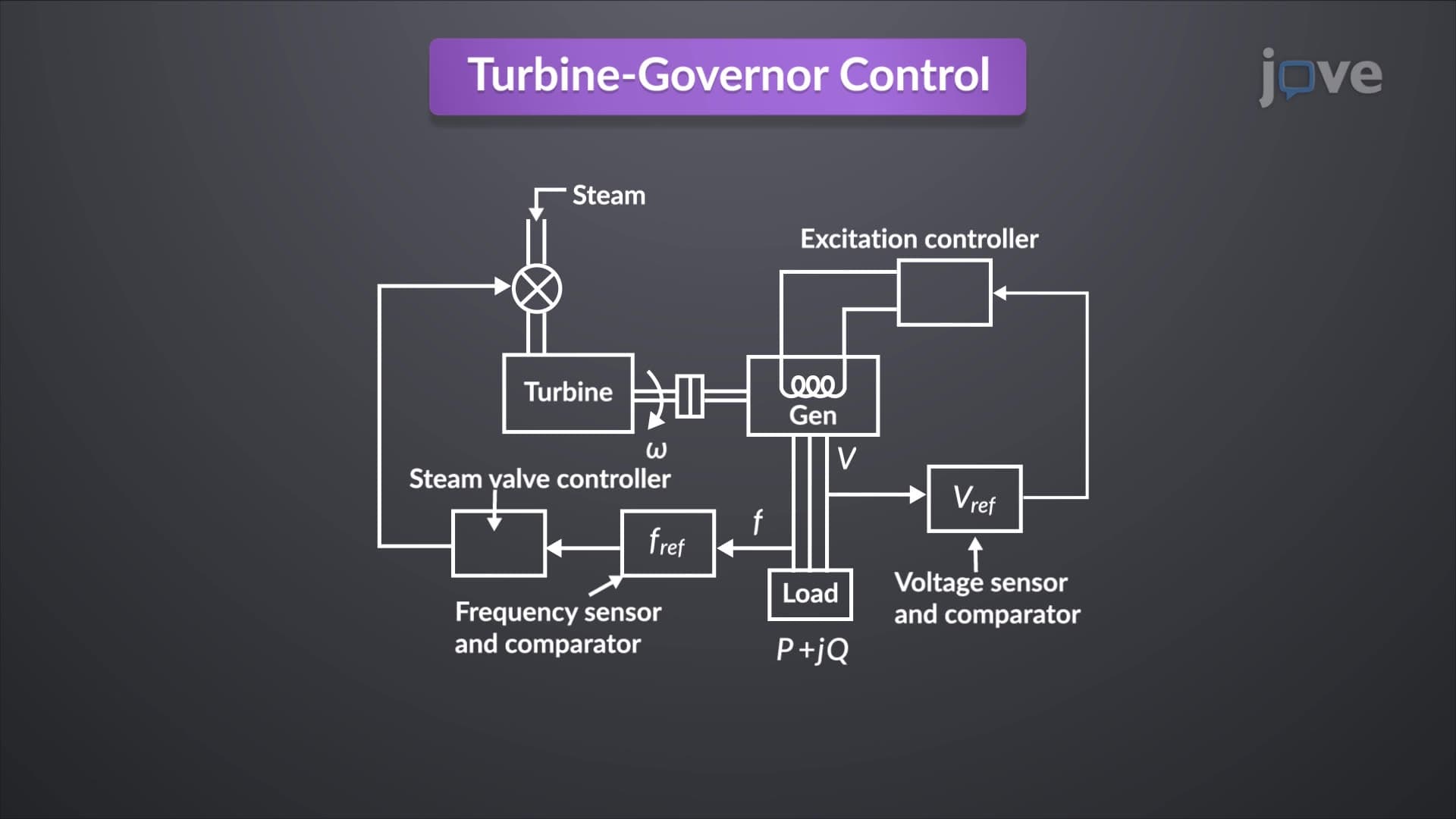
6. Turbine-Governor Control
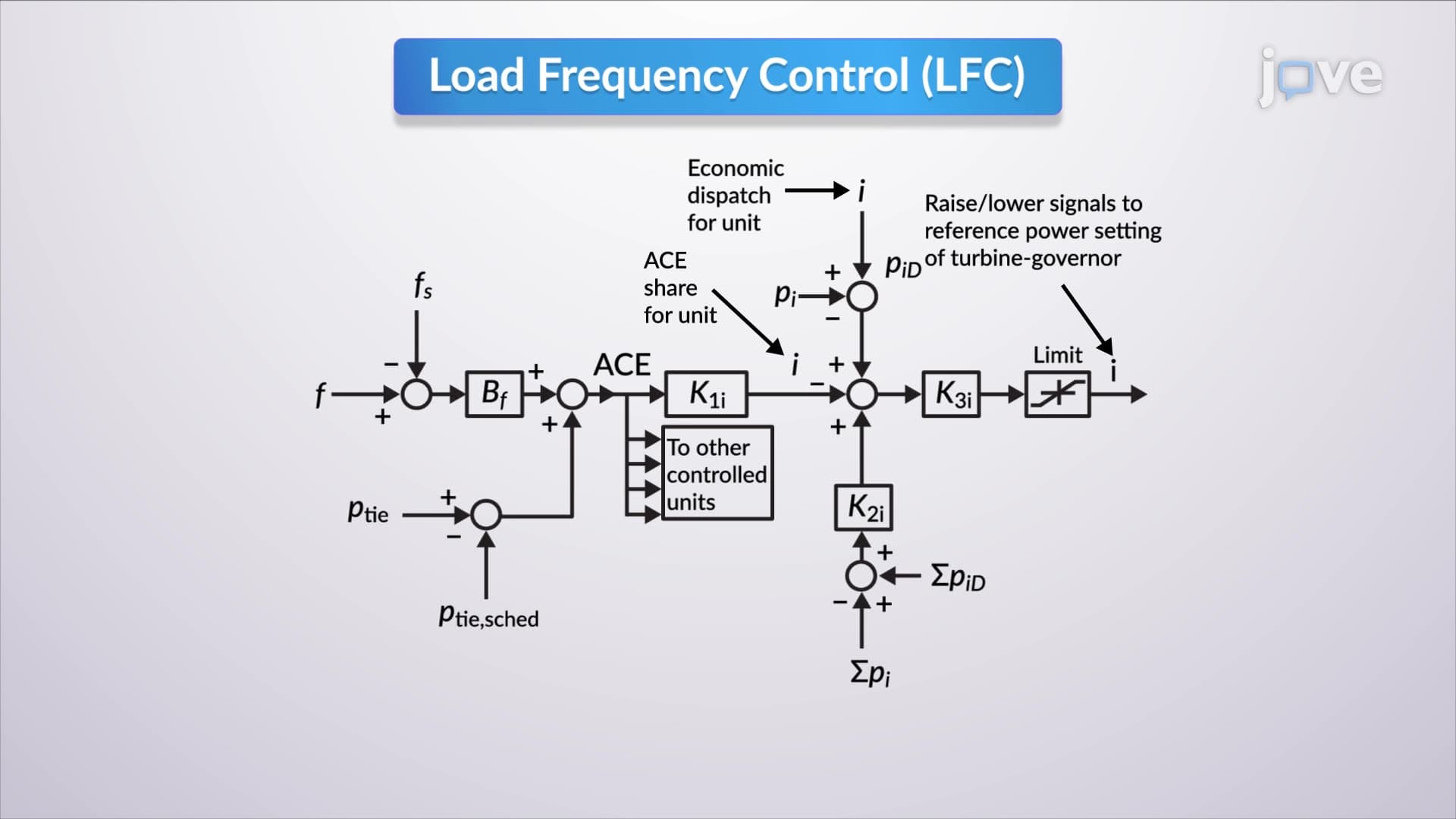
7. Load-frequency control
Transient stability analysis is fundamental to power system engineering, examining how electrical networks respond to sudden disturbances like faults or load changes. This comprehensive course explores swing equations, synchronous machine models, and control systems that maintain grid stability across US power networks. Master the mathematical frameworks and practical applications used by utilities like PG&E and Con Edison with JoVE Coach's systematic approach.
- Understand the swing equation and its role in analyzing generator rotor dynamics during system disturbances
- Learn synchronous machine modeling techniques for transient stability studies in power systems
- Identify multimachine stability analysis methods used in complex interconnected networks
- Explore wind turbine generator models and their integration challenges in modern grids
- Analyze generator voltage control systems and excitation methods for maintaining system stability
- Apply turbine-governor control principles for frequency regulation in power networks
- Understand load-frequency control mechanisms that maintain 60 Hz operation in US electrical grids
1. Swing Equation and Rotor Dynamics: The swing equation forms the mathematical foundation for understanding generator behavior during transient conditions. This nonlinear second-order differential equation describes how mechanical and electrical torques affect rotor motion, incorporating factors like moment of inertia and damping. When mechanical torque exceeds electrical torque, generators accelerate; the reverse causes deceleration. US power plants use this principle to predict generator response during grid disturbances, with utilities like TVA and Bonneville Power Administration relying on swing equation analysis for system planning and real-time operations.
2. Equal Area Criterion and Stability Assessment: The equal area criterion provides a graphical method for determining transient stability in single-machine infinite-bus systems. This technique compares accelerating and decelerating energy areas on power-angle curves to predict whether a generator will maintain synchronism after disturbances. Major US utilities employ this method for preliminary stability screening, particularly in systems with significant renewable penetration like California's grid, where rapid changes in generation require sophisticated stability assessment tools to prevent cascading failures.
3. Multimachine System Analysis: Complex power networks require numerical integration of multiple swing equations simultaneously, accounting for machine interactions through network admittance matrices. This analysis method handles realistic scenarios where multiple generators respond to disturbances, such as during the 2003 Northeast blackout. Modern stability programs used by grid operators like MISO and PJM solve hundreds of machine equations iteratively, considering network topology changes, fault clearing sequences, and protection system operations to ensure reliable grid operation.
4. Wind Turbine Integration and Modeling: Wind turbine generators present unique stability challenges due to their variable output and different control characteristics. Type 1 and 2 turbines use induction machines with slip-dependent behavior, while Type 3 doubly-fed and Type 4 full-converter systems offer enhanced control capabilities. US wind farms in states like Texas and Iowa require specialized modeling approaches to assess their impact on grid stability, particularly during low-wind conditions when conventional synchronous generators must compensate for reduced renewable output.
5. Voltage Control and Excitation Systems: Generator voltage control maintains system voltage levels through excitation system adjustments that modify field current and internal voltage magnitude. Modern static and brushless exciters respond rapidly to voltage deviations, improving transient stability margins. US power plants utilize automatic voltage regulators (AVRs) with power system stabilizers (PSS) to dampen oscillations and maintain voltage stability. High-gain excitation systems enhance fault ride-through capability, critical for meeting NERC reliability standards across interconnected US grids.
6. Frequency Control and Governor Response: Turbine-governor systems provide primary frequency control by automatically adjusting mechanical power output in response to frequency deviations from the nominal 60 Hz. The regulation constant, typically 0.05 per unit, determines governor sensitivity to frequency changes. When system load increases, stored kinetic energy in rotating machines initially supplies the difference while governors gradually increase steam or water flow. This coordinated response maintains frequency within acceptable limits, essential for timing-sensitive applications and motor-driven equipment throughout US industrial facilities.
7. Load-Frequency Control and Area Coordination: Automatic generation control (AGC) systems maintain long-term frequency stability and scheduled tie-line power flows between control areas. Area Control Error (ACE) combines frequency and tie-line deviations to determine required generation adjustments, with signals sent to participating units every 4-10 seconds. US grid operators like ERCOT and CAISO use sophisticated AGC algorithms to coordinate hundreds of generating units, ensuring reliable operation while minimizing costs. This secondary control layer corrects frequency errors that primary governor response cannot eliminate, maintaining the precise 60 Hz frequency required for synchronous motor timing and interconnected operation.
Frequently Asked Questions
Steady-state stability examines small, gradual changes in system conditions, while transient stability focuses on the system's ability to maintain synchronism after large, sudden disturbances like faults or generator trips. Transient analysis typically covers the first few seconds after a disturbance, using nonlinear differential equations to model generator rotor dynamics.
The equal area criterion graphically compares accelerating energy (area above the power-angle curve) with decelerating energy (area below the curve) after a disturbance. If the decelerating area equals or exceeds the accelerating area before the critical clearing angle, the system remains stable. This method provides quick stability assessment for single-machine systems.
The Fundamentals of Engineering (FE) exam includes basic power system concepts, while the Professional Engineering (PE) exam in electrical engineering has dedicated power system sections covering stability analysis. Many state licensing boards require knowledge of transient stability for grid-connected generation projects, and IEEE certification programs test these concepts extensively.
Wind turbines introduce variability and different dynamic characteristics compared to synchronous generators. Type 3 and 4 turbines with power electronics can provide faster control responses but may not contribute rotational inertia. This requires modified stability models and control strategies, particularly important in states with high wind penetration like Texas and Iowa.
Many industrial processes, timing devices, and synchronous motors depend on precise 60 Hz frequency. Deviations can cause timing errors in clocks, affect motor speeds, and potentially damage equipment. NERC standards require frequency to stay within narrow bands (typically ±0.1 Hz during normal operations) to ensure reliable operation of frequency-sensitive loads across the interconnected grid.
The nonlinear nature of the swing equation, coupled with complex network interactions and time-varying system conditions, creates challenging mathematical problems. Solutions require numerical integration methods and iterative techniques to handle multiple generators simultaneously. Modern stability programs solve thousands of differential equations with small time steps to maintain accuracy.
Start with single-machine systems to understand fundamental swing equation behavior and the equal area criterion. Practice with realistic power-angle curves and gradually progress to multimachine systems. Use simulation software to visualize generator responses during faults, and study actual stability events from US power systems to connect theory with practical applications.
This microcourse includes 7 concept videos that walk you through the building blocks of Electrical Engineering. Each video is short, about 1 minute, so you can cover a full topic during a coffee break or between classes. The full sequence starts with The Swing Equation and ends with Load-frequency control.
The playlist moves from big-picture ideas to the precise vocabulary used in Electrical Engineering. Early videos introduce The Swing Equation, Simplified Synchronous Machine Model, and Multimachine Stability. The middle of the series focuses on Generator Voltage Control, Turbine-Governor Control, and Load-frequency control. The final stretch covers Load-frequency control.
The natural next step is Transmission Lines: Transient Operation. From there, you can move to Power Distributions. Once you finish those, the full Electrical Engineering curriculum of 33 microcourses on JoVE Coach opens up, taking you from foundational concepts to advanced systems.
Related Subjects
 Civil Engineering 30 micro-courses›Mechanical Engineering 28 micro-courses›