Loading…
Loading video…

2,949 views
Ever wonder how your smartphone charges consistently even when millions of Americans simultaneously turn on air conditioners during summer heat waves? Traveling waves in lossless lines help explain the fundamental principles behind electrical grid stability, which Load Frequency Control manages by maintaining precise 60-Hz frequency across power networks. When Texas experienced grid failures in 2021, inadequate frequency control contributed to widespread blackouts affecting millions. Load Frequency Control prevents such disasters by automatically adjusting power generation to match demand changes. Watch the full video on JoVE Coach to master this concept with expert-led visuals and step-by-step explanations.
Load Frequency Control (LFC) represents one of the most critical automatic control systems in modern electrical power grids. This sophisticated control mechanism ensures that electricity frequency remains precisely at 60 Hz across the United States, regardless of constantly changing power demands. When you flip a light switch or plug in your laptop, LFC systems respond within seconds to maintain grid stability.
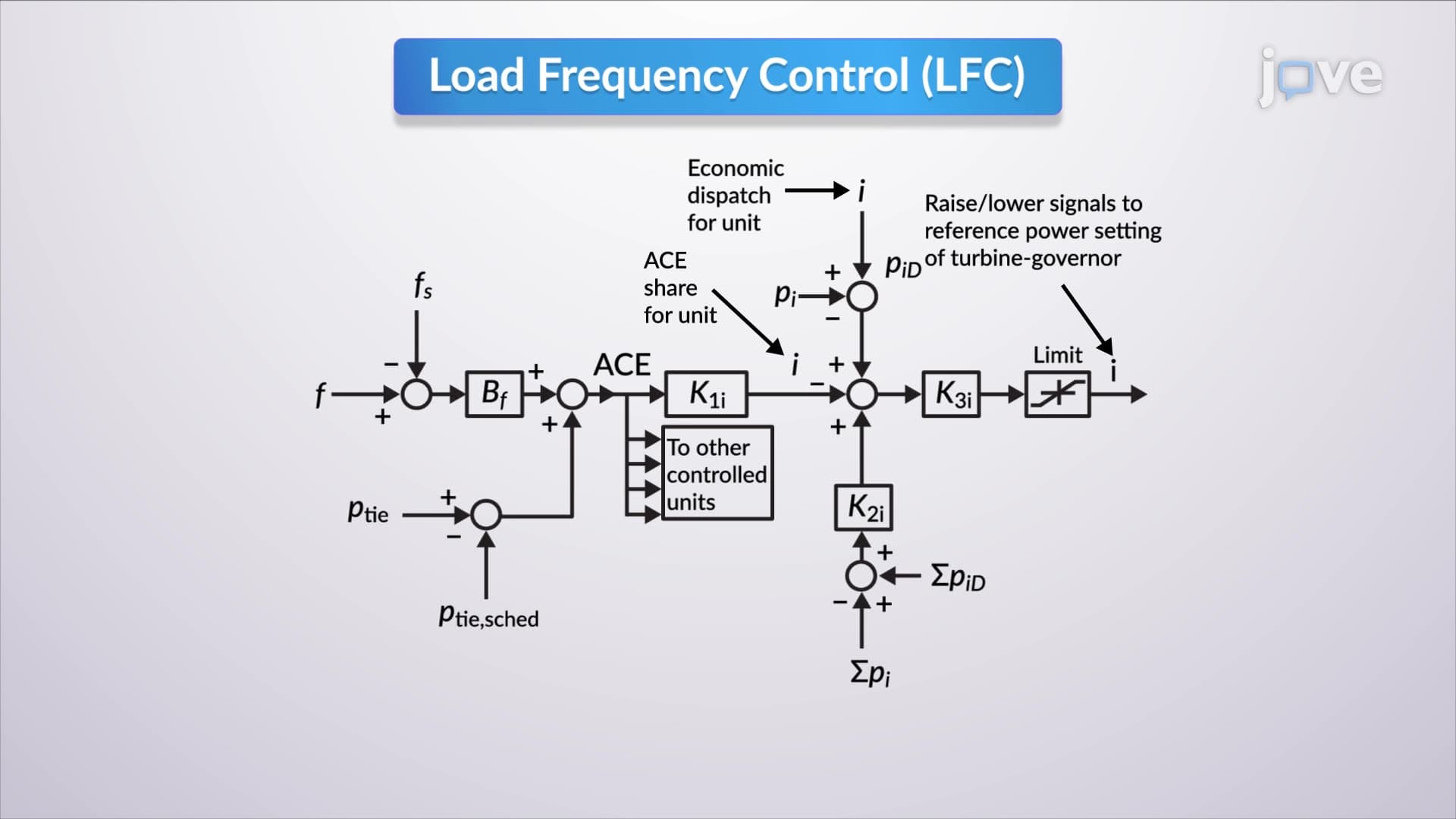
The heart of Load Frequency Control lies in Area Control Error (ACE), a mathematical calculation that combines two essential measurements: frequency deviations from 60 Hz and power flow variations across tie-lines connecting different utility regions. For example, when California experiences high air conditioning demand during heat waves, ACE calculations help coordinate power transfers from neighboring states like Oregon and Nevada. This coordination prevents frequency drops that could damage sensitive electronic equipment or cause cascading blackouts.
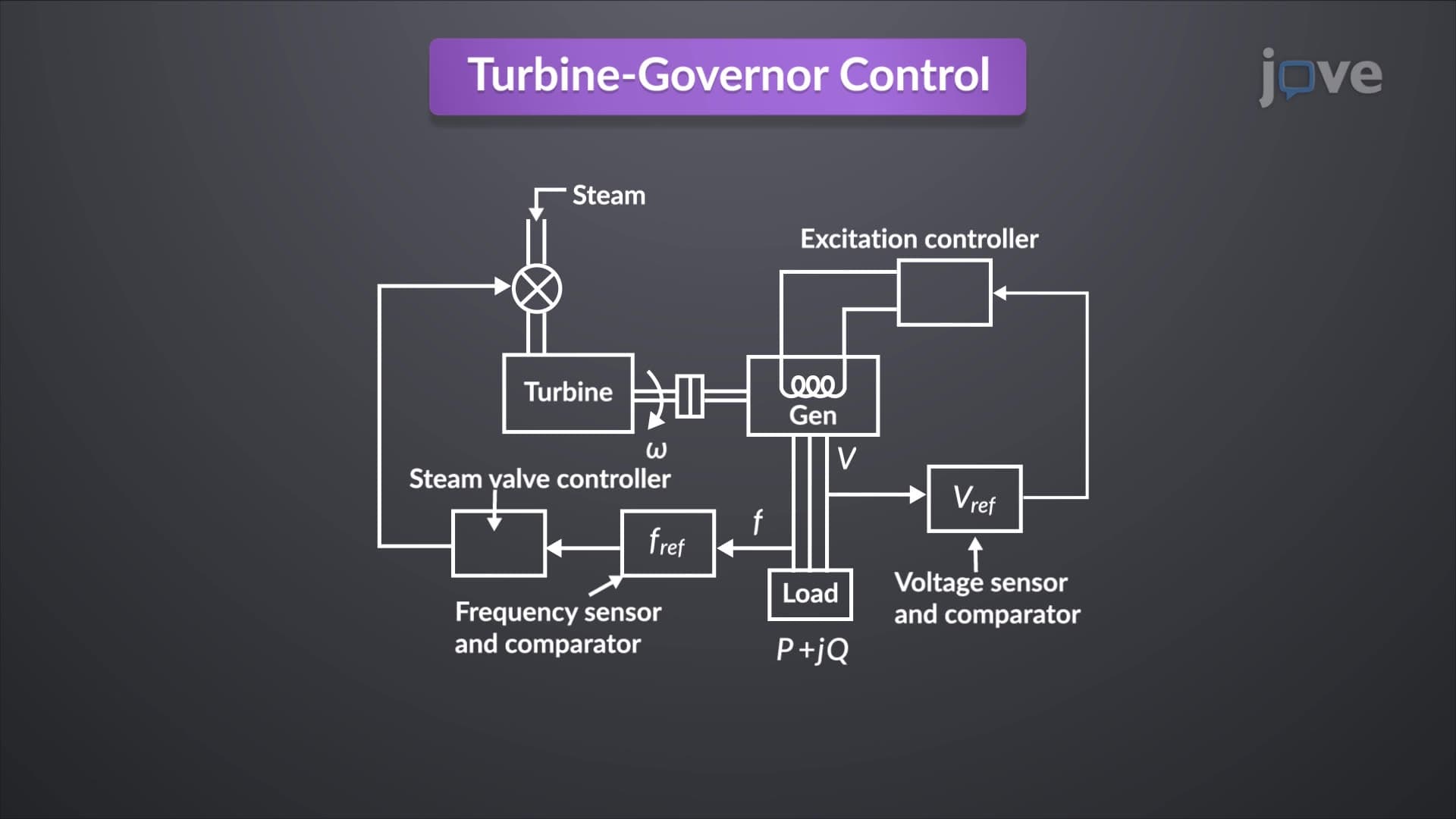
Load Frequency Control achieves its objectives through rapid adjustments to turbine governor reference settings at power plants across the grid. These adjustments occur every 2-4 seconds, making LFC one of the fastest automatic control systems in electrical engineering. Steam turbines at coal plants, gas turbines at natural gas facilities, and even hydroelectric generators receive continuous raise/lower signals based on ACE calculations. This concept frequently appears in AP Physics courses and electrical engineering exams, particularly when discussing feedback control systems.
Beyond maintaining frequency stability, Load Frequency Control integrates with economic dispatch systems to optimize power generation costs. During periods of low demand, such as late nights, LFC systems automatically reduce output from expensive "peaking" plants while maintaining output from cost-efficient baseload facilities. This economic coordination saves consumers billions of dollars annually while maintaining grid reliability. Students preparing for electrical engineering coursework or MCAT physics sections should understand how LFC balances technical requirements with economic constraints, as this represents a classic example of optimization under constraints.
Frequently Asked Questions
Load Frequency Control is an automatic control system that maintains electrical grid frequency at exactly 60 Hz by continuously adjusting power generation to match changing electricity demand. It prevents blackouts, protects electronic equipment, and ensures reliable electricity delivery to homes and businesses across the United States.
LFC problems typically focus on feedback control principles, frequency regulation calculations, and system stability analysis. Students often encounter questions about Area Control Error calculations, turbine governor responses, and the relationship between frequency deviations and power imbalances in grid networks.
MCAT questions may test understanding of electromagnetic principles underlying AC power generation, feedback mechanisms in biological and engineered systems, and mathematical relationships between frequency, power, and system responses. LFC demonstrates classic control theory applications relevant to biomedical device regulation.
LFC systems detect frequency deviations within seconds and automatically adjust power generation before small disturbances cascade into major failures. When the 2003 blackout began with transmission line failures in Ohio, inadequate frequency control contributed to the collapse spreading across eight states and parts of Canada.
Absolutely! While professional LFC design requires calculus and control theory, the basic concepts involve simple cause-and-effect relationships. Students can grasp how automatic systems balance supply and demand using feedback principles similar to home thermostats or cruise control systems.
Focus on understanding the physical relationships before memorizing equations, practice drawing block diagrams of control loops, work through numerical examples of ACE calculations, and connect LFC concepts to familiar feedback systems like temperature control or speed regulation.
Wind and solar power generation varies unpredictably, making LFC more complex as utilities must rapidly adjust conventional generators to compensate for renewable fluctuations. This represents a growing area of electrical engineering research and career opportunities.
Students should investigate economic dispatch optimization, smart grid technologies, energy storage integration, and wide-area monitoring systems. These topics build upon LFC fundamentals while addressing modern power system challenges and career opportunities.
Related Micro-courses


Related Subjects
 Civil Engineering 30 micro-courses›Mechanical Engineering 28 micro-courses›