Loading…
Loading video…

3,323 views
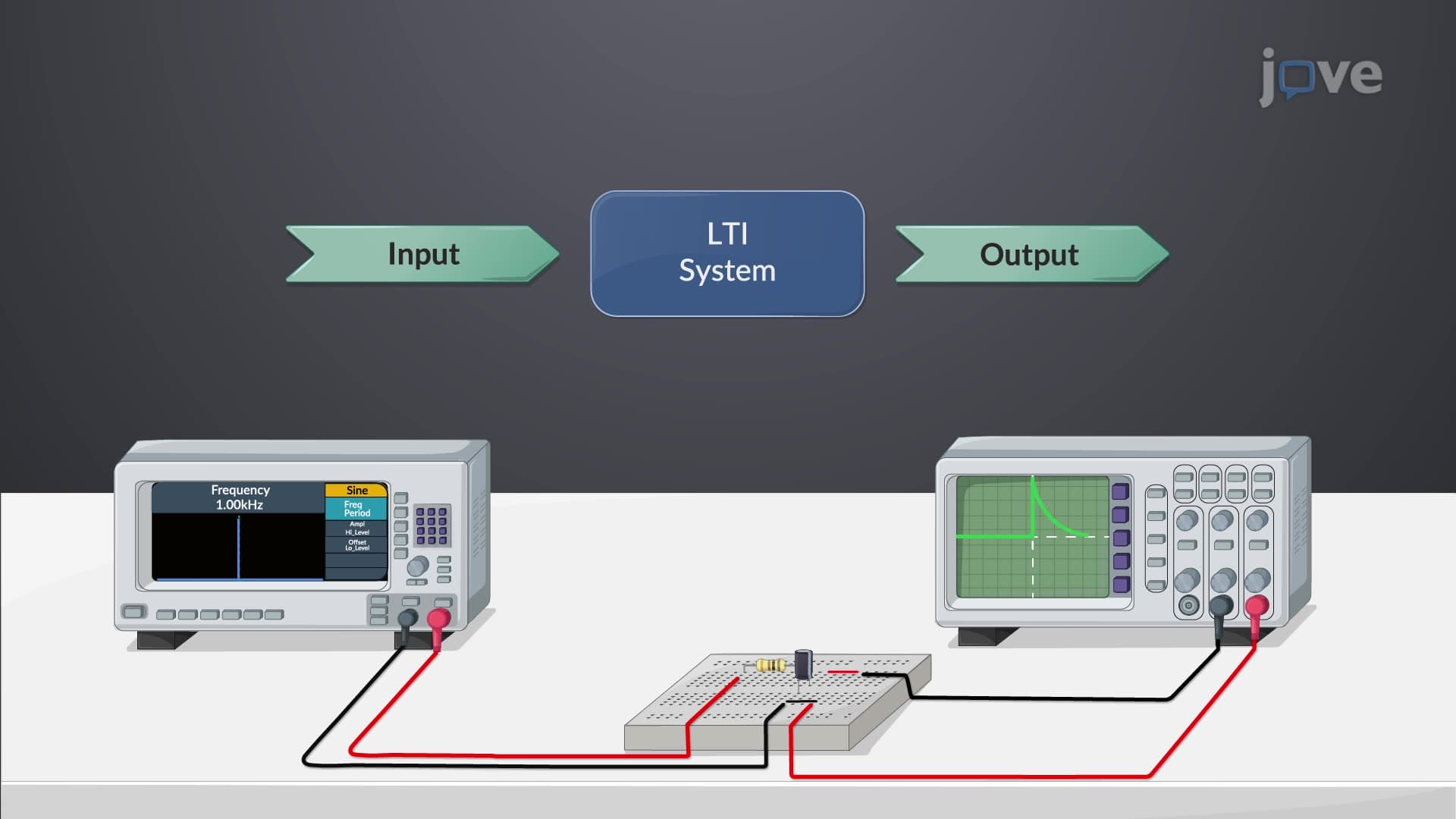
Ever wondered how noise-canceling headphones instantly filter out airplane engines while preserving your music? This signal processing magic relies on convolution properties ii, fundamental mathematical principles that govern how Linear Time-Invariant (LTI) systems process signals. From audio engineering at companies like Bose in Massachusetts to radar systems developed by MIT Lincoln Laboratory, understanding What is Convolution Properties I enables engineers to predict and optimize system behavior through mathematical shortcuts rather than complex calculations. Watch the full video on JoVE Coach to master this concept with expert-led visuals and step-by-step explanations.
Convolution properties ii represent a collection of mathematical rules that dramatically simplify signal processing calculations in engineering and physics. These properties transform what could be computationally intensive operations into elegant mathematical shortcuts, making them essential tools for anyone studying signals and systems at the high school AP level or in undergraduate engineering programs.
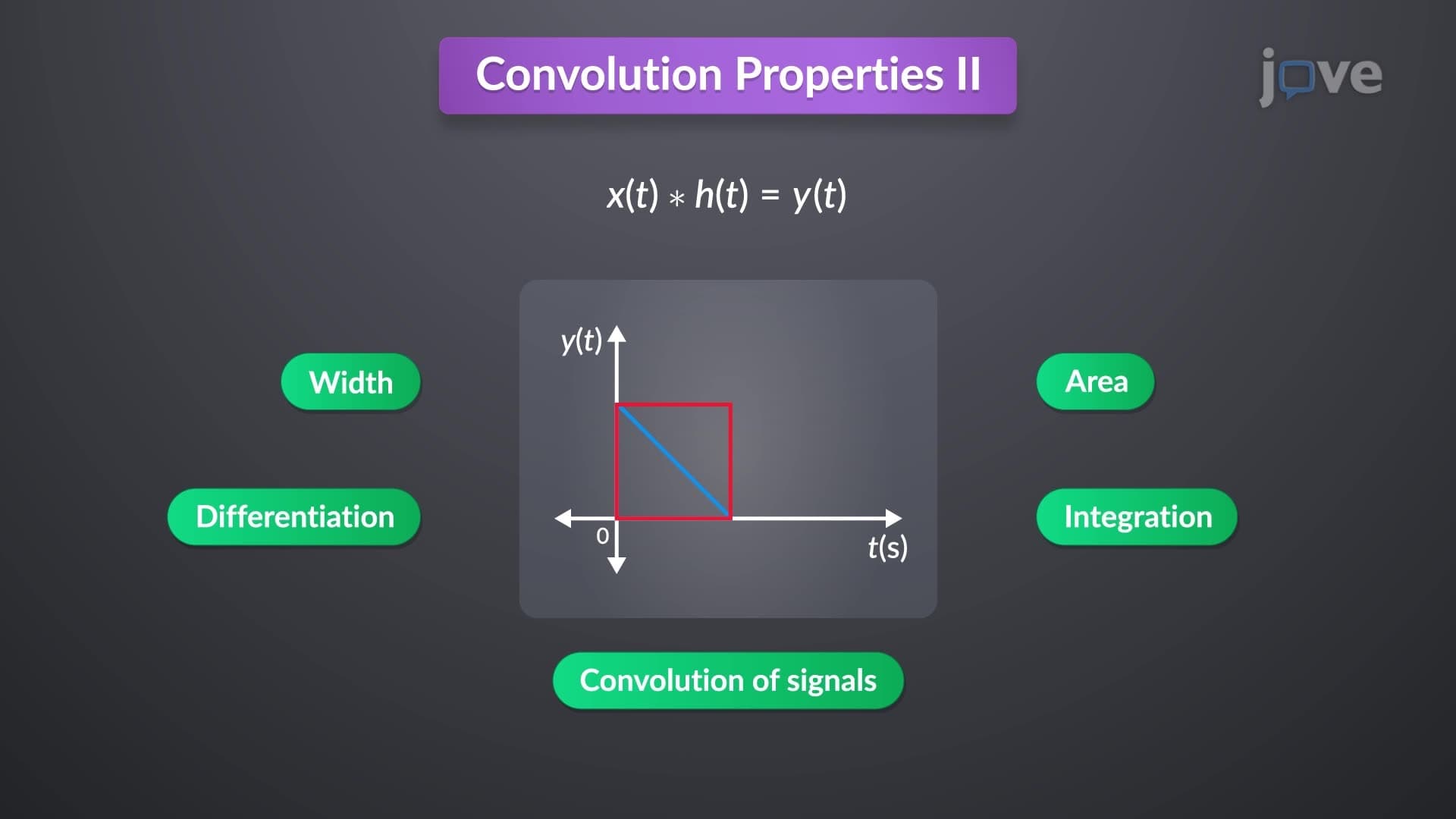
The convolution properties ii definition encompasses four primary characteristics that govern how signals interact with system responses. These properties aren't just abstract mathematical concepts—they're practical tools used daily by engineers at companies like Texas Instruments in Dallas and Qualcomm in San Diego to design everything from smartphone processors to medical imaging equipment.
The commutative property stands as perhaps the most intuitive of the convolution properties ii basics. This principle states that x(t) * h(t) = h(t) * x(t), where the asterisk represents convolution. In practical terms, whether you apply an input signal to a system's impulse response or vice versa, the mathematical result remains identical.
Consider audio equalization systems used by recording studios in Nashville. Whether engineers apply a bass boost filter to a guitar signal or conceptually apply the guitar signal to the filter, the final processed audio remains the same. This property proves invaluable during AP Physics or college-level signals courses, where students can choose the most convenient mathematical approach for solving convolution problems.
The associative property enables engineers to group convolution operations strategically: (f * g) * h = f * (g * h). This proves crucial when analyzing cascaded systems, such as the multi-stage amplifiers found in radio transmission equipment manufactured by companies like Motorola Solutions in Chicago.
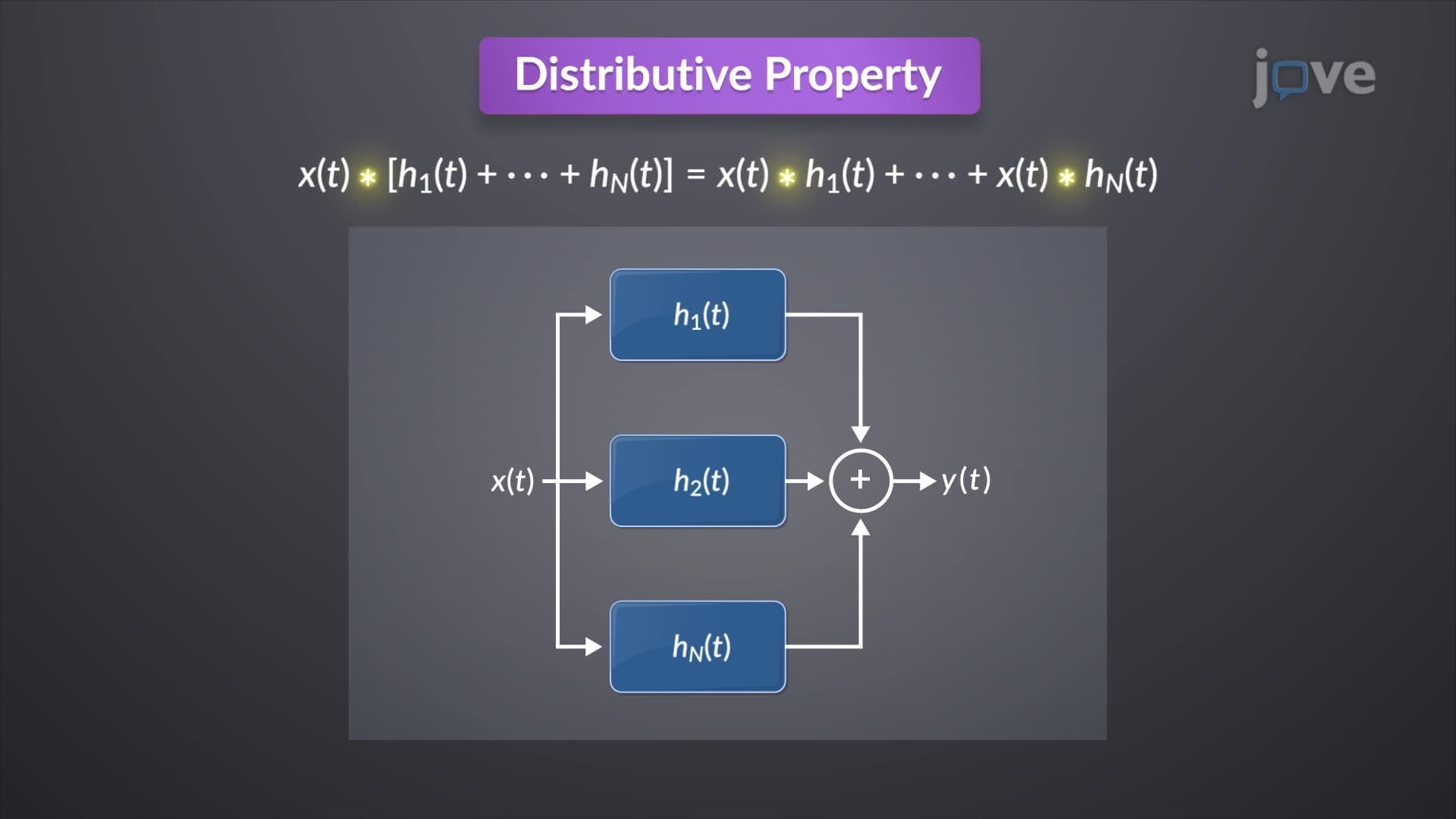
The distributive property, meanwhile, allows engineers to decompose complex systems: f * (g + h) = (f * g) + (f * h). This principle enables the breakdown of sophisticated impulse responses into simpler, more manageable components. Students preparing for the MCAT's physics section or engineering midterms frequently encounter problems requiring this decomposition strategy.
The time-shift property addresses how delays propagate through systems, stating that if input x(t) produces output y(t), then delayed input x(t-a) produces delayed output y(t-a). This concept proves essential for understanding everything from GPS satellite communication delays to the timing corrections needed in high-speed internet infrastructure.
Students studying for AP Physics C: Mechanics or preparing for engineering coursework should recognize this property as fundamental to understanding causality in physical systems. The convolution properties ii study guide approach emphasizes practicing with delayed step functions and impulse responses to build intuitive understanding of temporal relationships in signal processing.
Frequently Asked Questions
Convolution properties I are mathematical rules that simplify complex signal processing calculations by allowing engineers to manipulate convolution operations more efficiently. They're essential because they transform computationally intensive problems into manageable mathematical operations, forming the foundation for understanding how filters, amplifiers, and other electronic systems process signals in everything from smartphones to medical devices.
AP Physics C frequently tests understanding of linear systems through convolution-related problems, particularly in circuits and wave mechanics. Focus on recognizing when the commutative property allows you to swap input and system response functions, and practice identifying how the associative property helps analyze cascaded systems like RC circuits connected in series.
College exams typically emphasize the time-shift property and distributive property applications. Expect problems involving delayed signals, system stability analysis, and decomposition of complex impulse responses into simpler components. Practice with step functions, impulse responses, and graphical convolution methods commonly used in signals and systems coursework.
The MCAT physics section includes wave behavior, sound processing, and medical imaging principles that rely on convolution properties. Understanding how ultrasound machines process reflected signals or how MRI scanners analyze tissue responses requires familiarity with time-shift properties and system linearity concepts covered in convolution properties ii basics.
Engineers at companies like Bose use the distributive property to separate desired audio signals from unwanted noise by decomposing complex acoustic responses into manageable components. The commutative property allows them to test different filter designs efficiently, while time-shift properties help synchronize noise cancellation timing with incoming sound waves.
No advanced calculus is required initially. Students with solid algebra skills and basic trigonometry can grasp convolution properties ii overview concepts through graphical methods and discrete examples. Most high school students successfully learn these principles in AP Physics or pre-engineering courses before encountering the full calculus-based treatments in college.
Start with graphical convolution examples using simple rectangular and triangular functions to build intuition. Practice identifying which property applies to different problem types, then work through increasingly complex scenarios. Create summary cards listing each property's mathematical form and typical applications, focusing on pattern recognition rather than memorizing derivations.
After mastering these fundamentals, explore Fourier transforms, which provide frequency-domain perspectives on convolution operations. Z-transforms for discrete systems, Laplace transforms for continuous systems, and digital signal processing applications represent natural next steps for students pursuing engineering or applied mathematics degrees.
Related Micro-courses
Related Subjects
 Civil Engineering 30 micro-courses›Mechanical Engineering 28 micro-courses›