Loading video…


 18 Concepts
 25.9K views

Video Summary: What are Features of a Corporation
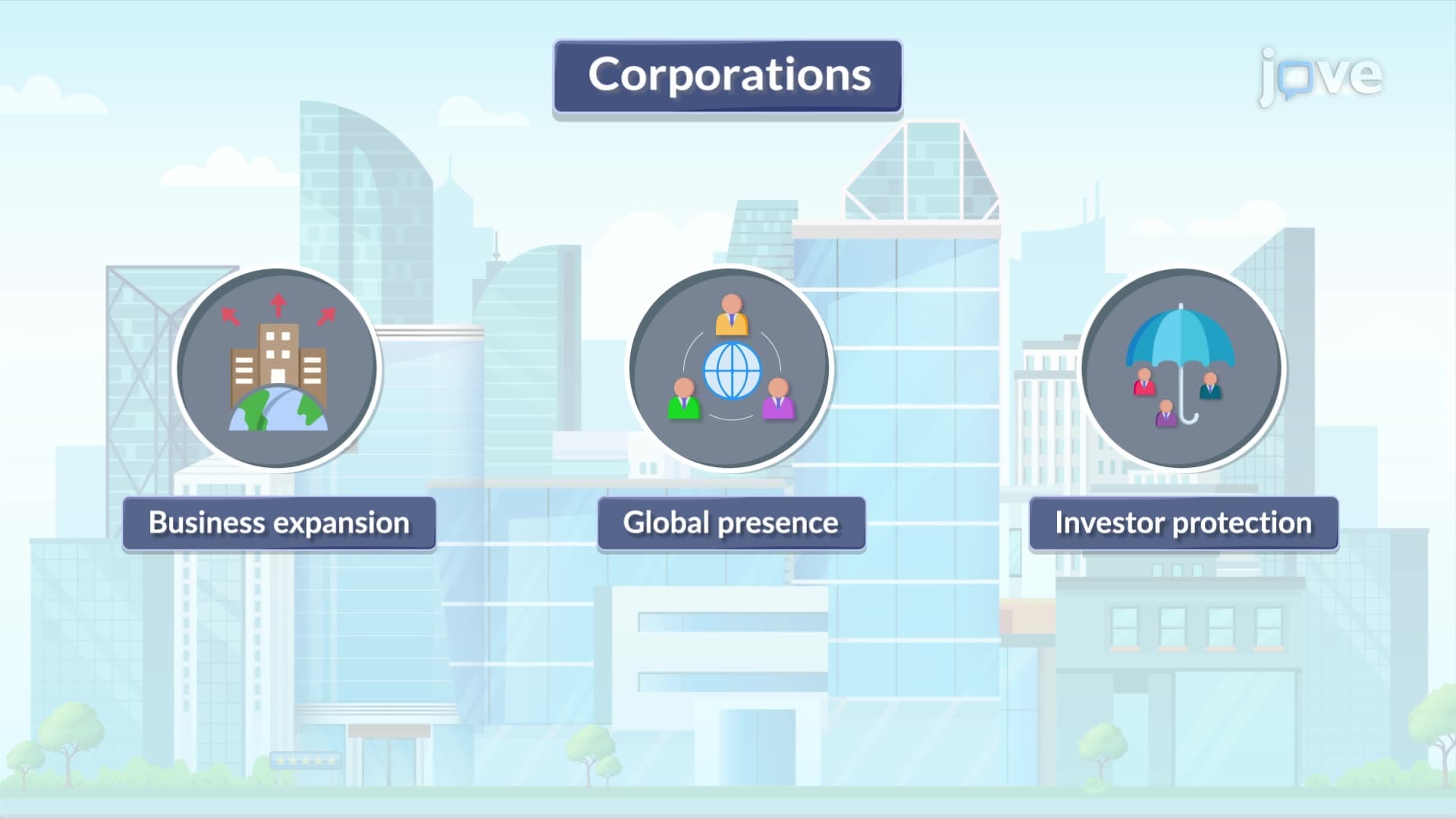
Corporate structure decisions directly impact liability exposure, capital access, and tax efficiency for business leaders. The features of a corporation provide strategic advantages that enable companies like Nike Inc. to scale globally while protecting stakeholder interests. Key characteristics include limited liability protection, perpetual existence, efficient capital raising mechanisms, and specific tax implications that shape financial strategy. Understanding these corporate features helps executives make informed decisions about entity structure, investment protection, and growth financing. Watch the full video on JoVE Coach to master this concept with expert-led visuals and step-by-step explanations.
When Amazon transitioned from a startup to a public corporation, CEO Jeff Bezos leveraged the features of a corporation to fuel unprecedented growth while managing investor risk. This strategic decision illustrates how corporate characteristics directly impact business scalability and stakeholder protection.
Limited liability stands as the cornerstone feature protecting business leaders and investors from personal financial exposure. When General Electric faced significant financial challenges in recent years, shareholders and executives maintained protection of personal assets despite corporate losses exceeding billions. This separation of personal and corporate liability enables executives to make bold strategic decisions without risking personal bankruptcy, fostering innovation and calculated risk-taking essential for competitive advantage.
Professional implications extend beyond asset protection. Limited liability facilitates talent acquisition, as top executives can join high-growth companies without fear of personal financial ruin. This feature proves particularly valuable in industries with high regulatory risk, such as pharmaceuticals or financial services, where companies like Pfizer or JPMorgan Chase operate under constant scrutiny.
Corporate perpetuity enables companies to outlive founding leadership and original shareholders, creating institutional value beyond individual contributions. Apple Inc. exemplifies this principle, continuing operations and growth trajectories despite the passing of co-founder Steve Jobs. This permanence allows for multi-decade strategic planning, infrastructure investments, and brand building that would be impossible under sole proprietorships or partnerships.
From a governance perspective, perpetuity enables smooth leadership transitions and succession planning. Board directors can implement long-term strategic initiatives spanning multiple CEO tenures, creating sustainable competitive advantages and consistent stakeholder value creation.
The ability to issue stock provides corporations with unparalleled capital raising capabilities compared to other business structures. Microsoft's ability to raise billions through equity markets has enabled massive investments in cloud computing infrastructure and artificial intelligence research, maintaining competitive positioning against rivals like Google and Amazon.
This capital access proves especially critical during economic downturns or rapid expansion phases. Corporations can raise funds without personal guarantees from leadership, enabling growth strategies that would be financially impossible for partnerships or sole proprietorships. The public markets provide liquidity for investors while giving corporations access to institutional capital for strategic acquisitions and research investments.
Related Micro-courses