Loading video…


 18 Concepts
 25.9K views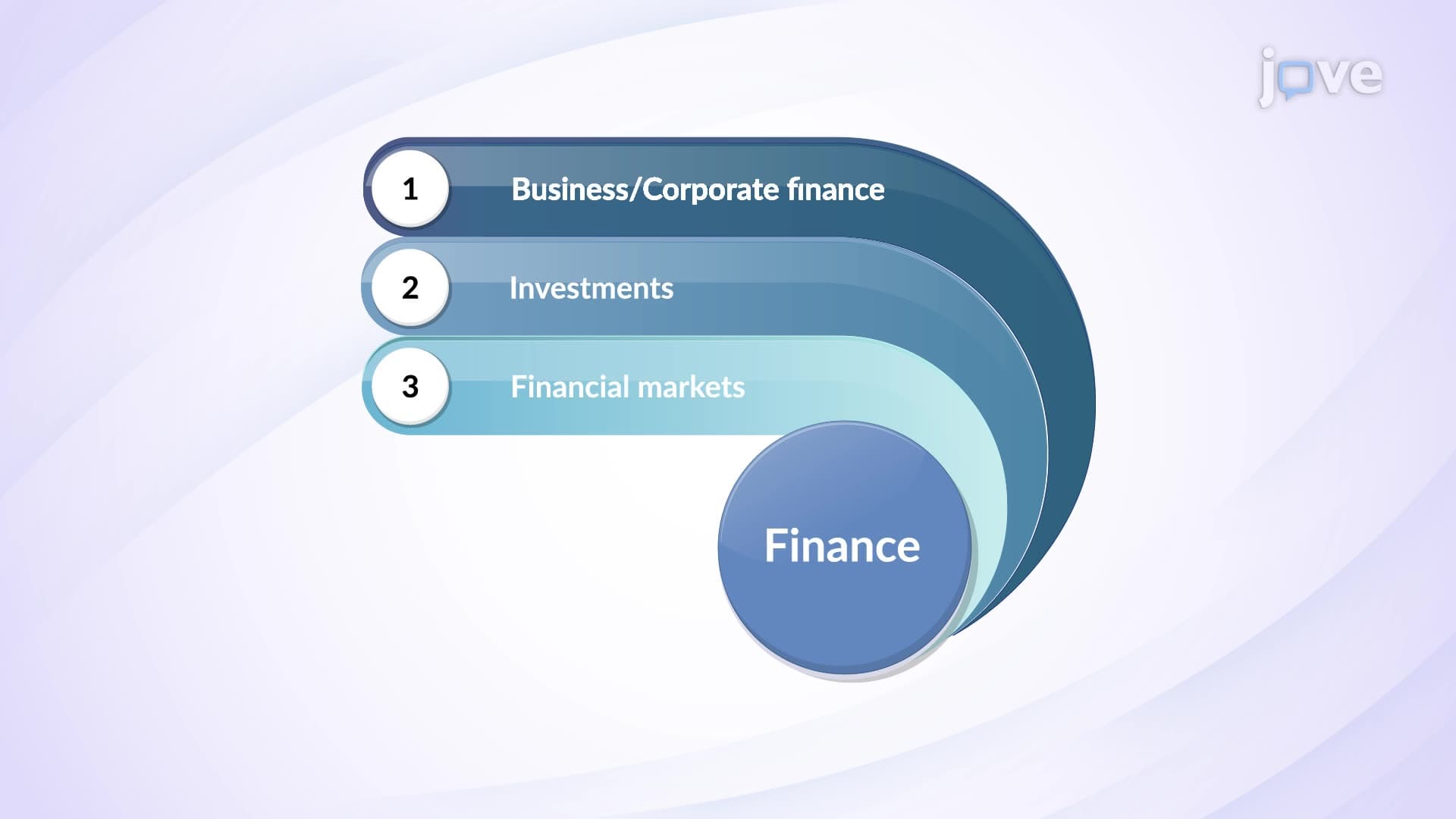

Video Summary: What Is Areas of Finance
Strategic financial management across the areas of finance determines whether companies like Amazon achieve sustainable growth or struggle with capital allocation inefficiencies. The areas of finance encompass three interconnected domains: corporate finance for internal capital decisions, investments for wealth generation, and financial markets for asset trading. Apple exemplifies masterful integration across all three areas through strategic R&D investments, disciplined capital structure, and leveraging public markets for funding. Watch the full video on JoVE Coach to master this concept with expert-led visuals and step-by-step explanations.
When Microsoft's board approved its $68.7 billion acquisition of Activision Blizzard, the decision exemplified how modern executives must navigate the interconnected areas of finance definition to drive shareholder value. This mega-deal required expertise across corporate finance for structuring, investment analysis for valuation, and financial markets knowledge for funding-demonstrating why understanding what is areas of finance in detail has become essential for business leaders.
Corporate finance serves as the decision-making engine for capital allocation within organizations. Beyond basic treasury functions, it encompasses strategic planning, mergers and acquisitions, capital structure optimization, and performance measurement. When Tesla decides to build a new Gigafactory, corporate finance teams evaluate project NPV, assess financing options, and structure deals that maximize shareholder returns while maintaining operational flexibility. This domain directly impacts P&L performance, balance sheet strength, and competitive positioning.
The investments area focuses on generating returns through strategic asset allocation and portfolio construction. For corporations, this includes managing pension funds, treasury investments, and strategic partnerships. Berkshire Hathaway exemplifies sophisticated investment management, with Warren Buffett's team deploying capital across public equities, private businesses, and alternative investments. Working professionals must understand modern portfolio theory, risk-adjusted returns, and ESG considerations that increasingly drive institutional investment decisions.
Financial markets provide the liquidity and price discovery mechanisms that enable efficient capital allocation across the economy. When Goldman Sachs facilitates an IPO or Google issues corporate bonds, they're leveraging market infrastructure to connect capital suppliers with users. Understanding market dynamics helps executives time fundraising activities, manage currency exposure, and navigate regulatory changes that affect business operations.
The most successful companies integrate all three areas of finance into cohesive strategies. Amazon's flywheel effect demonstrates this integration: corporate finance decisions about infrastructure investments support business growth, which generates cash flows for reinvestment, while public market access provides growth capital. This interconnected approach creates sustainable competitive advantages that pure-play strategies cannot match.
Related Micro-courses