Loading subject page…


25,817 views

Video Summary: What Is Sole Proprietorship
Small business formation decisions impact over 33 million entrepreneurs across the US economy annually, with sole proprietorship representing the most common business structure choice. Understanding what sole proprietorship means becomes critical when evaluating business formation options, as companies like Ben & Jerry's and Dell Technologies both started as sole proprietorships before scaling. This business structure offers complete ownership control but carries significant personal liability risks that affect asset protection and growth strategies. Watch the full video on JoVE Coach to master this concept with expert-led visuals and step-by-step explanations.
When executives evaluate business formation options, sole proprietorship represents the most straightforward path to entrepreneurship, accounting for approximately 73% of all US businesses. This structure appeals to professionals launching consulting practices, service businesses, or product companies where personal expertise drives value creation.
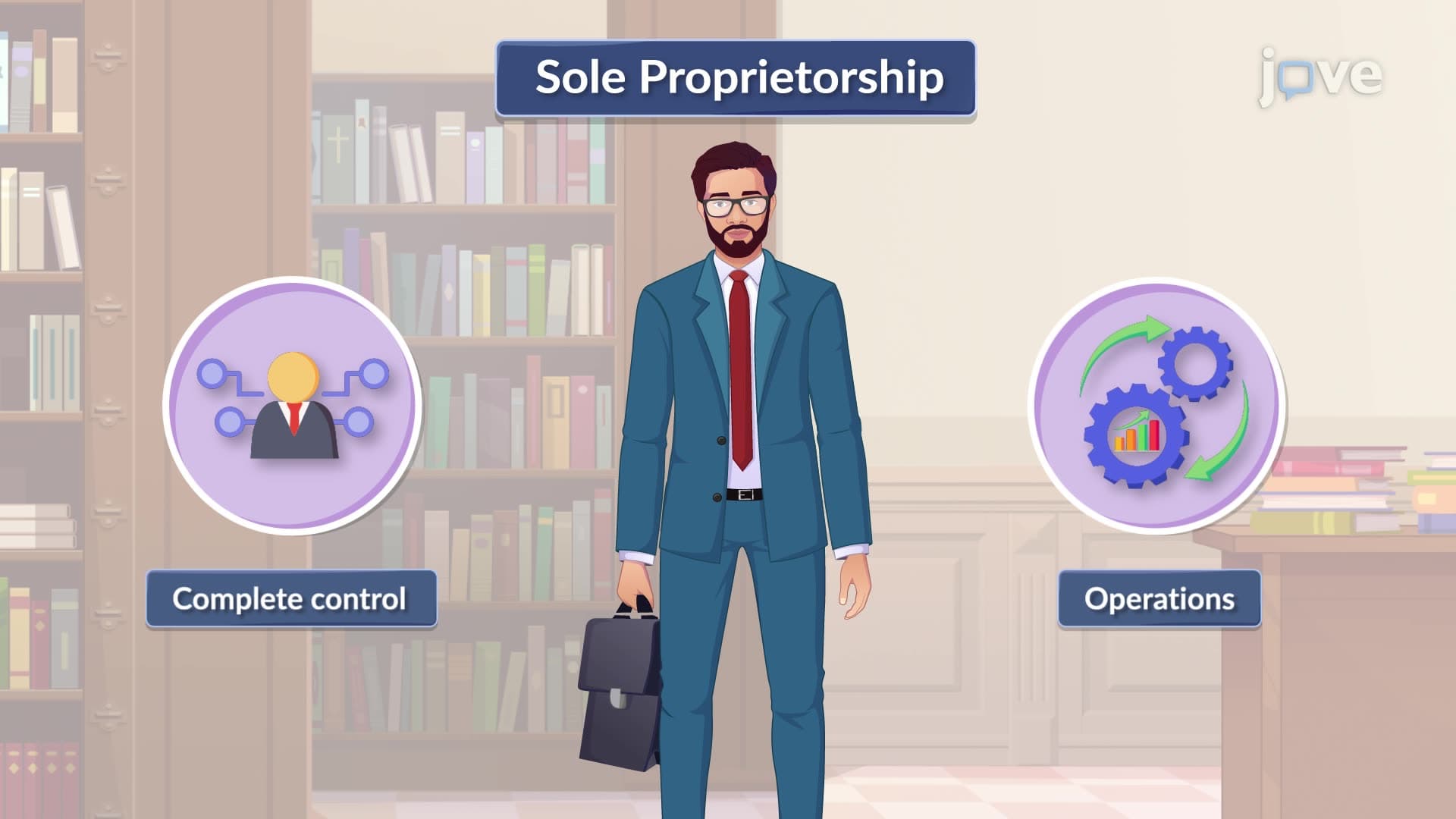
The sole proprietorship definition centers on unified ownership and management control. Unlike partnerships or corporations requiring consensus-building, sole proprietors maintain absolute decision-making authority over pricing strategies, market positioning, and operational pivots. Michael Dell exemplified this advantage when he started Dell Computer Corporation as a sole proprietorship in his University of Texas dorm room, enabling rapid response to market opportunities without board approval or partner consultation.
What sets sole proprietorship apart from corporate structures is unlimited personal liability. Business debts, legal judgments, and operational liabilities directly impact personal assets including homes, savings, and investment portfolios. This risk profile requires careful evaluation of professional liability insurance, business credit establishment, and asset protection strategies. Many successful entrepreneurs, including Martha Stewart with her initial catering business, later transitioned to corporate structures as liability exposure increased with business growth.
Sole proprietorship offers pass-through taxation, meaning business profits flow directly to personal tax returns via Schedule C. This eliminates double taxation concerns affecting C-corporations while providing access to business expense deductions including home office, equipment, and professional development costs. The simplified accounting requirements reduce administrative overhead, enabling focus on core business activities rather than complex financial reporting.
While sole proprietorship facilitates rapid market entry, it presents challenges for scaling operations and attracting investment capital. Venture capital firms and institutional investors typically require corporate structures for equity participation. Additionally, succession planning becomes complex without transferable ownership shares, making exit strategy development crucial for long-term wealth creation and business continuity planning.
Related Micro-courses