Loading subject page…

- Finance
- Mergers and Acquisitions
- Defensive Tactics
Micro-course: Mergers and Acquisitions
1,570 views
Learn key concepts and earn your certificate.









Defensive Tactics

00:00
01:30
Video Summary: What Is Defensive Tactics
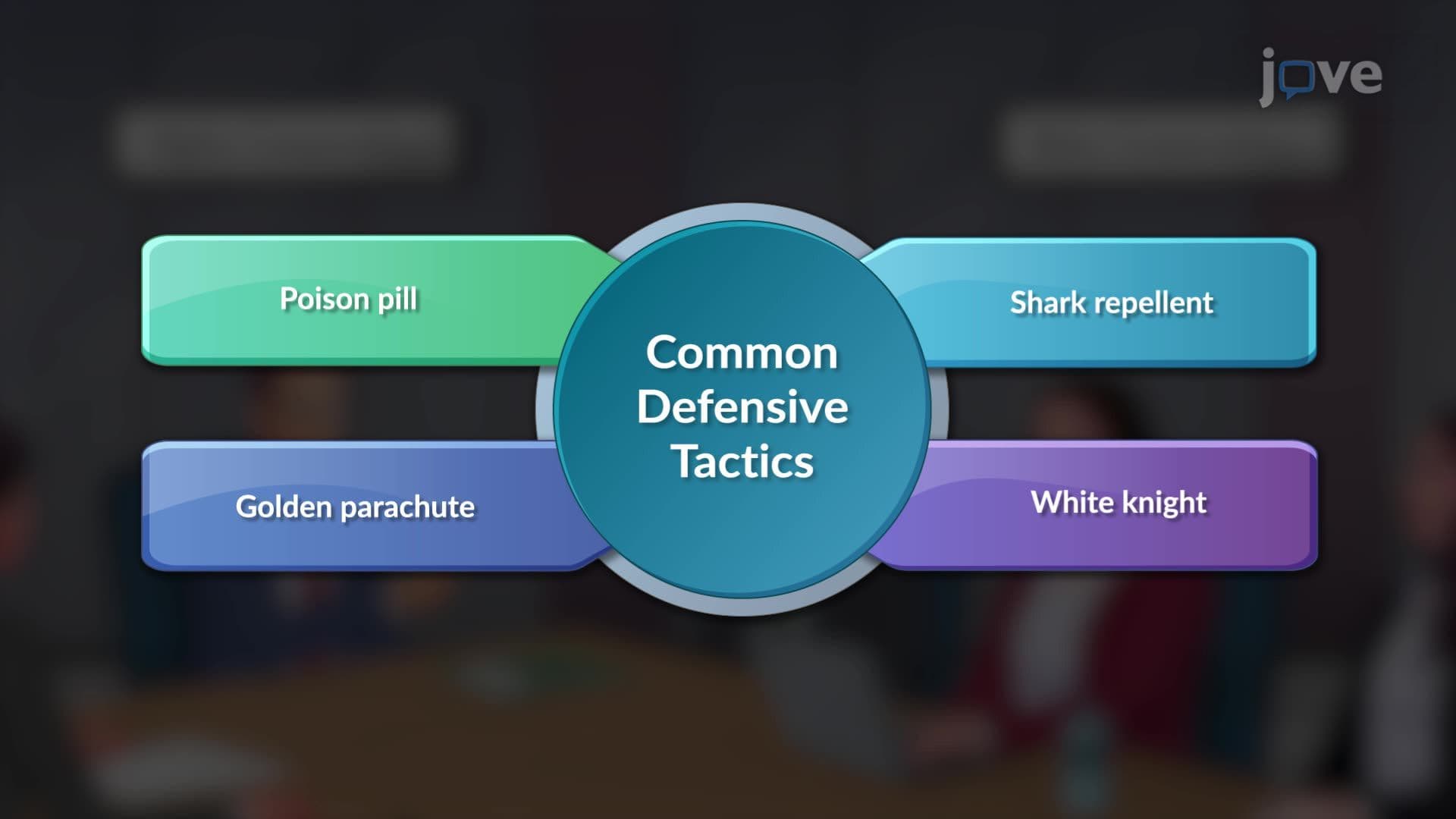
When hostile takeovers threaten corporate independence, defensive tactics become critical strategic tools that can determine a company's survival. These corporate defense mechanisms help management teams resist unwanted acquisition attempts while potentially negotiating better terms or finding alternative solutions. Four primary defensive tactics-Poison Pills, Shark Repellents, Golden Parachutes, and White Knights-form the cornerstone of anti-takeover strategies, as demonstrated when Airgas successfully deployed a poison pill to block Air Products' hostile bid in 2010. Watch the full video on JoVE Coach to master this concept with expert-led visuals and step-by-step explanations.
- Apply poison pill strategies to dilute hostile acquirer stakes through discounted shareholder stock purchase rights
- Evaluate the effectiveness of shark repellent provisions like supermajority voting requirements in corporate governance decisions
- Analyze golden parachute compensation structures as deterrent mechanisms against unwanted takeover attempts
- Implement white knight strategies to identify and secure friendly acquirers during hostile takeover situations
- Compare the strategic implications and costs of different defensive tactics for board-level decision making
- Leverage defensive tactics knowledge to advise executive teams on optimal anti-takeover positioning
- Identify market signals and timing considerations when deploying corporate defense mechanisms
- Assess the long-term shareholder value impact of implementing various defensive tactics strategies
Understanding Defensive Tactics in Corporate Strategy
In today's volatile M&A environment, where activist investors and corporate raiders can destabilize established companies overnight, defensive tactics represent essential strategic weapons in the corporate governance arsenal. These mechanisms protect management teams and shareholders from predatory acquisition attempts that may undervalue the company or disrupt long-term strategic initiatives.
The Four Pillars of Corporate Defense
Poison Pills remain the most potent weapon against hostile takeovers, allowing existing shareholders to purchase additional shares at significant discounts when an acquirer reaches a predetermined ownership threshold. This dilution strategy makes acquisitions prohibitively expensive. Netflix successfully implemented this tactic in 2012 when activist investor Carl Icahn began accumulating shares, effectively deterring his influence campaign.
Shark Repellent provisions reshape corporate bylaws to create procedural barriers against takeovers. These may include staggered board terms, supermajority voting requirements for mergers, or restrictions on special shareholder meetings. IBM has historically maintained robust shark repellent measures, requiring 80% shareholder approval for certain corporate changes.
Golden Parachutes provide substantial severance packages to executives following takeover-related departures, increasing acquisition costs while ensuring management stability during transition periods. When Salesforce faced activist pressure from Elliott Management in 2022, their existing golden parachute provisions helped maintain executive focus on operational performance rather than job security.
Strategic Implementation and Market Impact
White Knight strategies involve cultivating relationships with friendly potential acquirers who can provide favorable alternatives to hostile bids. This approach requires ongoing relationship management and strategic positioning. When Broadcom attempted to acquire Qualcomm in 2018, Qualcomm's board actively sought white knight alternatives before regulatory intervention ultimately blocked the deal.
The effectiveness of these defensive tactics depends heavily on market timing, regulatory environment, and shareholder sentiment. Companies implementing these strategies must balance protection benefits against potential negative market reactions, as some investors view defensive tactics as management entrenchment tools that may reduce shareholder value over time.
Frequently Asked Questions
Defensive tactics are strategic mechanisms companies use to resist hostile takeover attempts and maintain corporate independence. These include poison pills, shark repellents, golden parachutes, and white knight strategies that create barriers or increase costs for unwanted acquirers.
Focus on the specific threat assessment, cost-benefit analysis of each tactic, and long-term shareholder value implications. Present clear implementation timelines, regulatory requirements, and potential market reactions to help directors make informed strategic decisions.
Deploy defensive tactics when facing credible takeover threats, activist investor pressure, or when stock prices significantly undervalue the company's strategic assets. Consider market volatility, industry consolidation trends, and your company's vulnerability to hostile approaches.
Airgas successfully implemented a poison pill strategy in 2010 to block Air Products' $5.1 billion hostile takeover bid. The defense mechanism allowed Airgas to maintain independence until Air Products abandoned their acquisition attempt, demonstrating effective tactical deployment.
While legal expertise helps with implementation details, business professionals can master the strategic concepts and applications. Focus on understanding the business rationale, cost implications, and competitive advantages rather than complex legal mechanics.
Understanding defensive tactics enhances your strategic thinking capabilities and positions you for senior leadership roles in corporate development, strategic planning, or executive management where M&A decisions directly impact business outcomes.
Explore offensive acquisition strategies and due diligence processes to understand the complete M&A landscape. This knowledge helps you evaluate both sides of corporate transactions and develop comprehensive strategic recommendations.
Related Micro-courses