Loading subject page…

- Finance
- Time Value of Money
- Present Value
Micro-course: Time Value of Money
16,631 views
Learn key concepts and earn your certificate.









Present Value


00:00
01:07
Video Summary: What Is Present Value
Present value calculations determine whether Apple's $15 billion R&D investment will generate adequate returns, or if Microsoft's cloud infrastructure spending justifies future cash flows. Understanding present value enables finance professionals to evaluate investment opportunities by calculating what future money is worth in today's dollars using discount rates that reflect opportunity costs. This foundational concept drives capital allocation decisions across Fortune 500 boardrooms and startup pitch decks alike. Watch the full video on JoVE Coach to master this concept with expert-led visuals and step-by-step explanations.
- Apply present value analysis to evaluate competing capital investment proposals and justify budget allocations during quarterly planning sessions
- Assess whether long-term contracts, vendor agreements, or partnership deals create genuine economic value for your organization
- Implement discount rate selection strategies that reflect your company's cost of capital and industry risk profiles
- Analyze acquisition targets by discounting projected cash flows to determine fair market valuations and negotiation positions
- Evaluate lease-versus-buy decisions for equipment, real estate, and technology investments using present value frameworks
- Compare investment alternatives across different time horizons to optimize portfolio returns and resource allocation
- Leverage present value calculations in client presentations to demonstrate ROI and build compelling business cases
- Identify when inflation, interest rate changes, and market conditions require adjustments to your valuation models
What is Present Value in Strategic Decision-Making
When Berkshire Hathaway's Warren Buffett evaluates potential acquisitions, he doesn't just look at current earnings-he calculates what those future cash flows are worth today. This exemplifies present value analysis in action: determining the current worth of money you'll receive later, adjusted for the time value of money and opportunity costs.
Present value serves as the foundation for virtually every significant business decision involving future cash flows. Whether you're a CFO evaluating a $50 million factory expansion, a startup founder deciding between funding rounds, or a product manager justifying a new software platform, present value analysis provides the financial framework to compare apples-to-apples across different investment timelines.
The Mechanics of Present Value Calculation
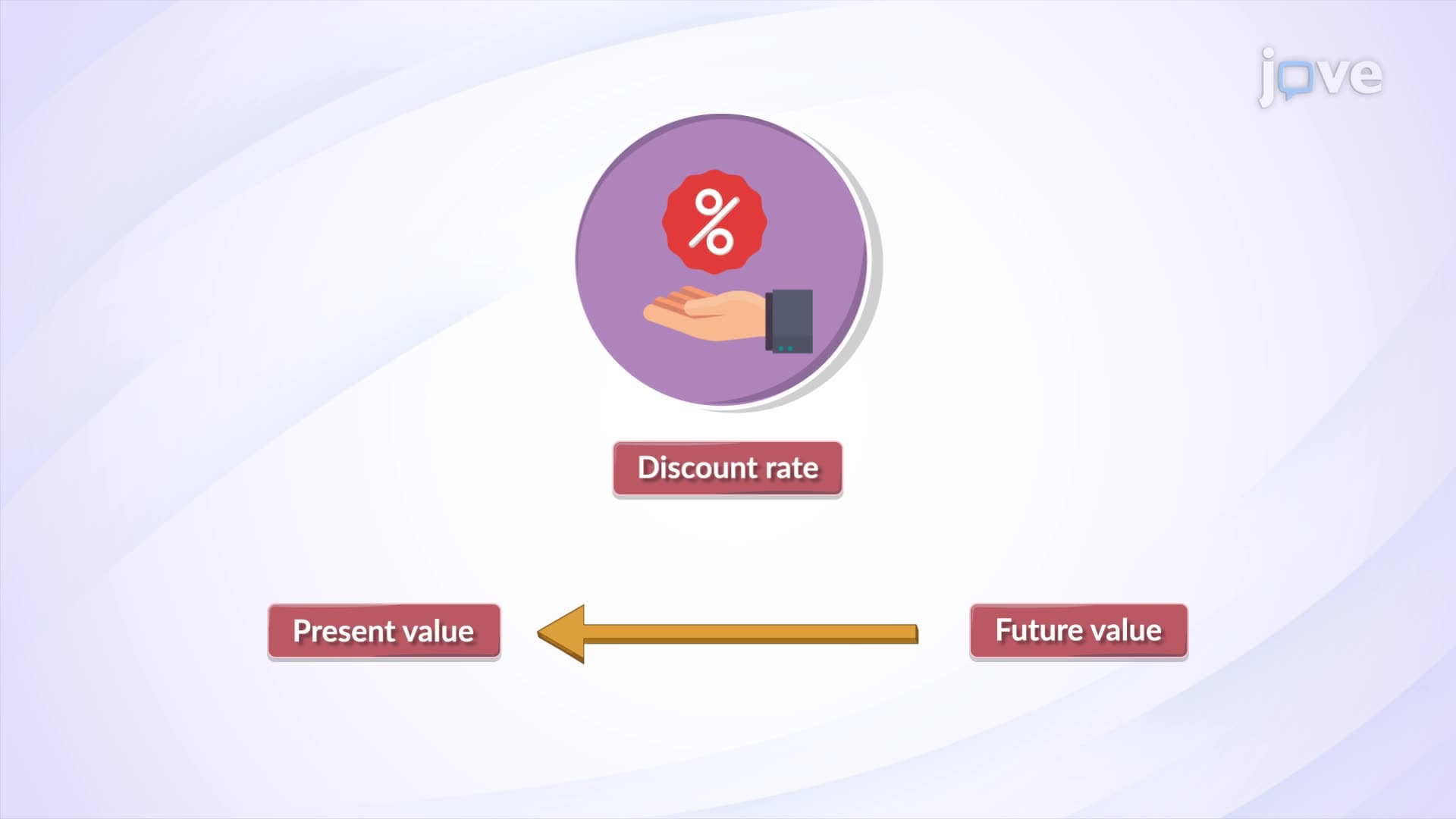
The present value formula works by discounting future cash flows using a rate that reflects both the risk-free return (typically US Treasury bonds) plus a risk premium specific to your business or industry. For technology companies like Amazon, this discount rate might be 10-12% given their growth volatility, while utilities like Consolidated Edison might use 6-8% reflecting their stable cash flows.
Consider this practical scenario: Your company can invest $100,000 today in manufacturing automation that will save $25,000 annually for five years. Using a 10% discount rate, you'd calculate each year's savings in present value terms, then sum them to determine if the total exceeds your initial investment. This analysis reveals whether the automation pays for itself after accounting for the opportunity cost of that $100,000.
Present Value in Corporate Finance Strategy
Investment banking teams at Goldman Sachs and Morgan Stanley use present value extensively in merger valuations, determining what acquirers should pay for target companies. They project five to ten years of cash flows, apply appropriate discount rates, and add terminal value calculations to arrive at enterprise valuations.
Private equity firms like Blackstone similarly rely on present value when evaluating portfolio companies. They model operational improvements, revenue growth, and cost reductions over their typical 5-7 year holding periods, discounting these projections to determine maximum purchase prices that still deliver their target returns.
Applications Across Business Functions
Marketing executives use present value to evaluate customer lifetime value, calculating what it's worth to acquire customers based on projected future purchases. Operations managers apply it to equipment replacement decisions, comparing maintenance costs against new asset investments. Even HR departments leverage present value concepts when designing compensation packages that balance current salary against future stock options or pension benefits.
Frequently Asked Questions
Present value calculates what future money is worth today, accounting for opportunity costs and investment alternatives. It enables you to compare investments with different timelines on equal footing-whether evaluating a 3-year software implementation against a 10-year facility lease. Every CFO uses this to prioritize capital allocation and maximize shareholder returns.
Use your company's weighted average cost of capital (WACC) as a starting point, typically 6-12% for established US corporations. Add risk premiums for uncertainty: stable utility companies might use 7%, while tech startups could use 15%+. Consider your industry benchmarks and current Treasury rates as baselines.
Apply it whenever comparing investments across different timeframes-equipment purchases, technology implementations, hiring decisions with training costs, or lease-versus-buy evaluations. Use it in budget planning to justify multi-year initiatives and in client proposals to demonstrate long-term value creation.
Coca-Cola applies present value when evaluating bottling plant investments, marketing campaign ROI, and acquisition opportunities in emerging markets. They discount projected cash flows from new facilities over 15-20 year periods, ensuring investments exceed their cost of capital before committing hundreds of millions to expansion projects.
No advanced degree required-just understanding of basic financial concepts and spreadsheet skills. Most professionals learn through practical application in budget planning and investment evaluation. The key is starting with simple scenarios and gradually building complexity as you gain confidence.
It positions you as a strategic thinker who makes data-driven decisions rather than gut-based choices. Finance professionals with strong present value skills often advance to CFO roles, while managers who apply it effectively get promoted to VP levels because they demonstrate clear ROI thinking that boards value.
Net present value (NPV) builds directly on present value by subtracting initial investments from discounted cash flows. Internal rate of return (IRR) and payback period analysis provide additional frameworks for investment evaluation. These three concepts form the foundation of corporate finance decision-making.
Related Micro-courses