Loading video…


 15 Concepts
 4.2K views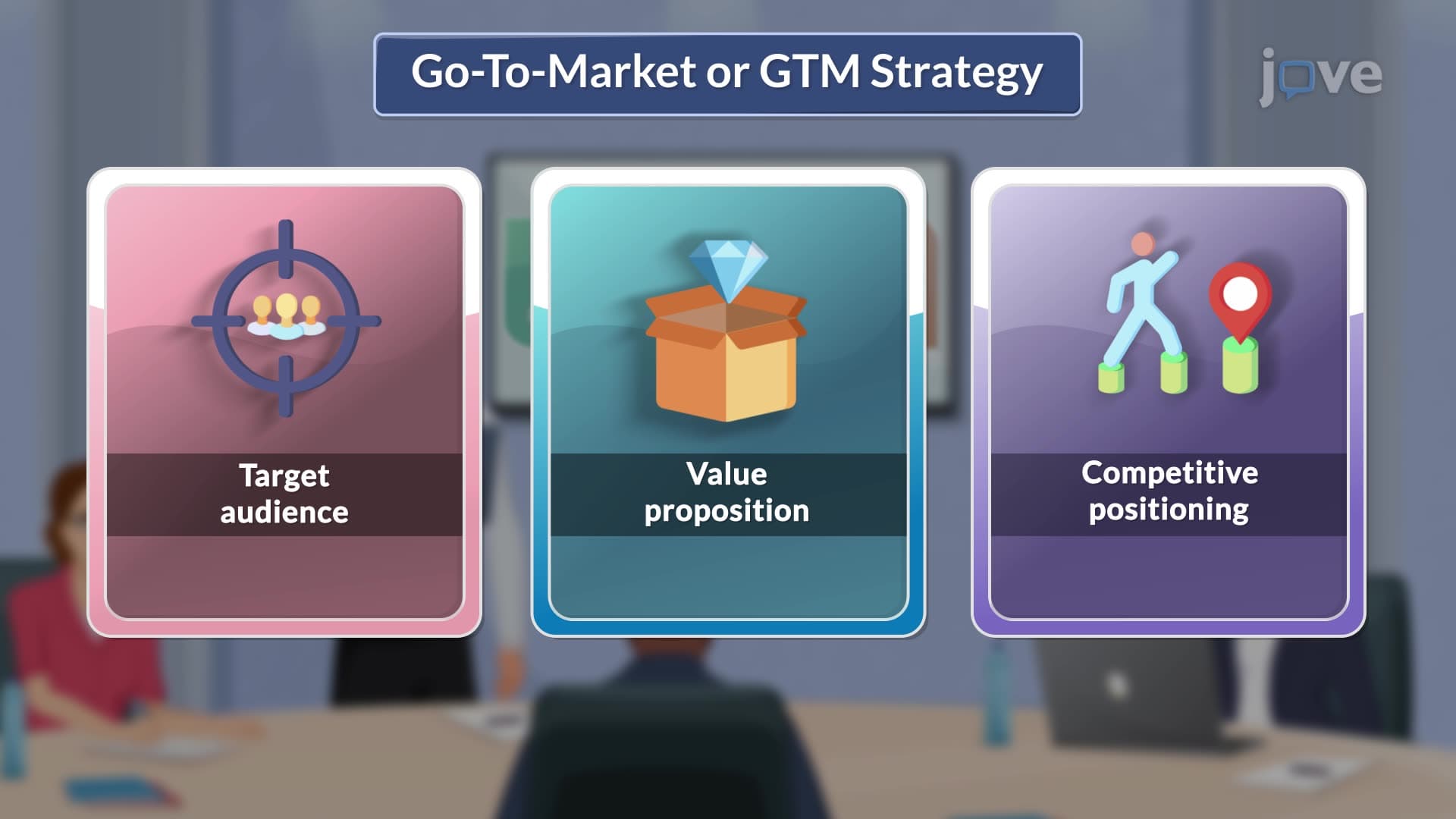

Video Summary: What Is Go to Market Strategy
When Apple launches a new iPhone or Amazon introduces a service expansion, their success hinges on a meticulously crafted go to market strategy. A go to market strategy serves as the comprehensive roadmap that transforms product development into market dominance, defining how companies reach target audiences, communicate value propositions, and secure competitive positioning. Microsoft's Teams rollout during the pandemic exemplifies how strategic market entry can capture massive market share against established competitors like Slack. Watch the full video on JoVE Coach to master this concept with expert-led visuals and step-by-step explanations.
Market leaders like Netflix and Tesla didn't achieve dominance through superior products alone-they executed flawless go to market strategies that redefined entire industries. When Tesla entered the automotive market, their GTM strategy deliberately targeted affluent early adopters rather than mass-market consumers, establishing premium positioning before scaling production. This strategic sequencing exemplifies how effective market entry creates competitive moats that sustain long-term growth.
Professional GTM development begins with rigorous market intelligence that goes beyond demographic data. Companies like Salesforce leverage psychographic segmentation and behavioral analytics to identify decision-makers within target organizations. This approach enables precision targeting that increases conversion rates while reducing customer acquisition costs. Modern GTM strategies integrate advanced analytics platforms to continuously refine audience understanding and messaging effectiveness.
The strongest go to market strategies articulate clear value propositions that address specific business pain points. When Zoom disrupted video conferencing, their GTM messaging focused on reliability and ease-of-use rather than feature complexity, directly addressing market frustrations with existing solutions. This positioning strategy enabled rapid market share capture during critical adoption periods. Professional marketers must craft value propositions that resonate with C-suite priorities: revenue growth, cost reduction, and operational efficiency.
Contemporary GTM execution requires sophisticated digital ecosystems that seamlessly connect customer touchpoints. Companies like HubSpot demonstrate how integrated CRM, marketing automation, and sales enablement tools create competitive advantages through superior customer experience. Their GTM approach leverages data analytics to optimize channel performance and sales process efficiency. Professional implementation involves selecting technology stacks that align with customer buying journeys while providing actionable insights for continuous strategy refinement.
Related Micro-courses