Loading subject page…


17,060 views

Video Summary: What are Branding Strategies
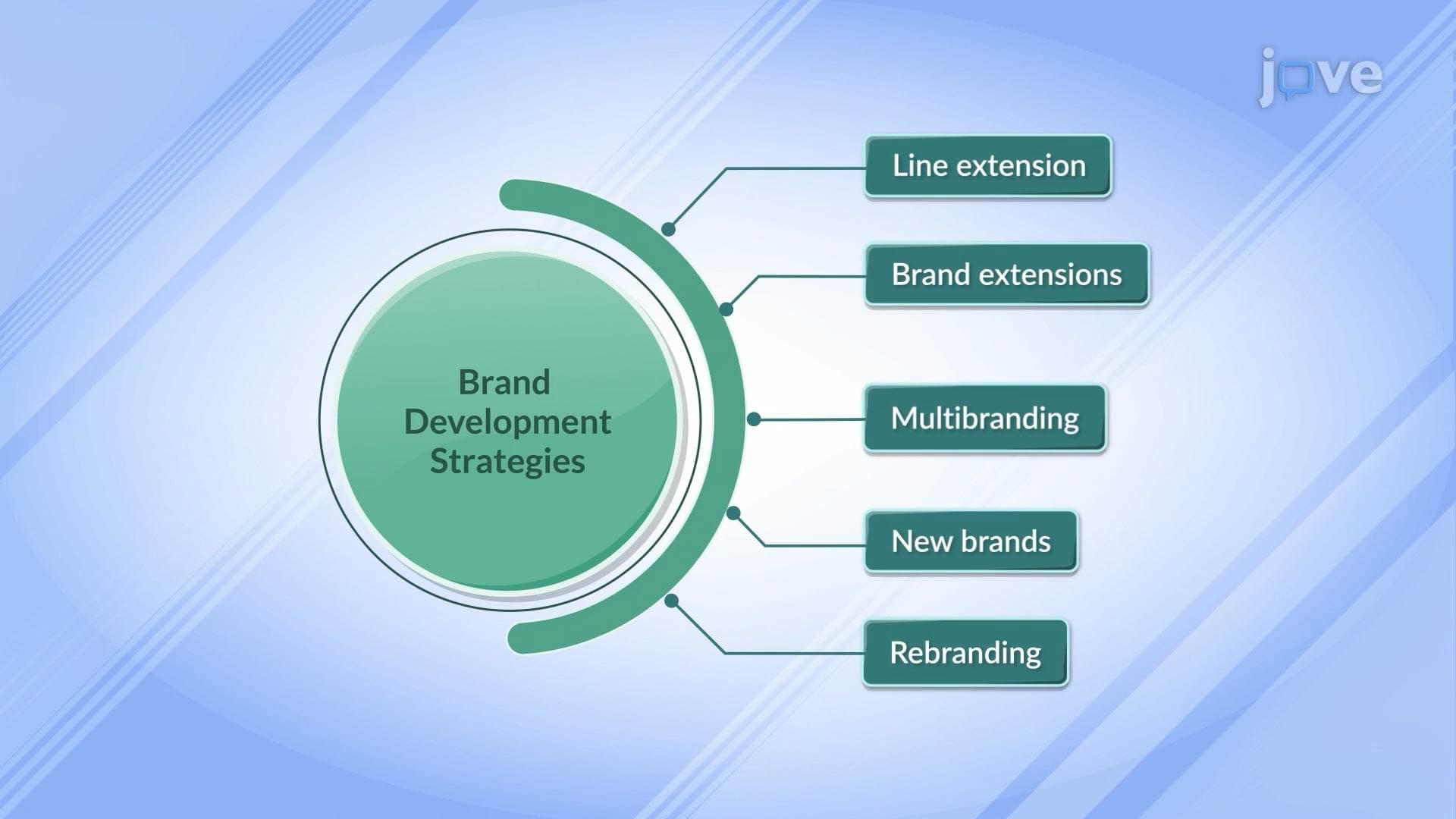
Market-leading brands like Apple and Coca-Cola leverage sophisticated branding strategies to maintain their competitive edge and drive revenue growth across diverse product portfolios. Understanding branding strategies is essential for executives making critical product expansion and positioning decisions that directly impact market share and profitability. The five core strategies-line extension, brand extension, multibranding, new brand development, and rebranding-provide frameworks for everything from portfolio management to competitive differentiation. Watch the full video on JoVE Coach to master this concept with expert-led visuals and step-by-step explanations.
When General Motors faced declining market share in the luxury segment, they didn't simply create another Chevrolet model-they maintained separate brand identities for Cadillac, Buick, and GMC to target distinct customer demographics. This exemplifies how strategic brand management drives both revenue growth and market positioning.
Successful branding strategies require understanding when to extend existing equity versus creating distinct market positions. Line extension strategies work when brand strength can support product diversification-consider how Nike leveraged its athletic credibility to expand from running shoes into basketball, soccer, and lifestyle categories. However, this approach requires careful market analysis to ensure the core brand can credibly support new offerings without diluting its primary value proposition.
Brand extension presents higher-risk, higher-reward scenarios. Amazon's evolution from online bookstore to cloud computing leader through AWS demonstrates how strong operational brands can enter entirely new B2B markets. The key lies in identifying transferable brand attributes-Amazon's reliability and scale translated effectively to enterprise services, generating billions in revenue streams.
Procter & Gamble's laundry portfolio illustrates sophisticated multibranding execution. Rather than forcing all detergent products under one brand, P&G maintains Tide for premium performance, Gain for fragrance-focused consumers, and Era for value-conscious buyers. This strategy maximizes shelf space, prevents competitor entry points, and captures diverse price sensitivity without internal cannibalization.
New brand creation becomes necessary when existing brands cannot support market expansion or when regulatory requirements demand separation. Toyota's Lexus launch targeted luxury consumers who wouldn't consider Toyota-badged premium vehicles, creating an entirely new revenue stream while protecting the parent brand's value positioning.
Rebranding represents the highest-risk strategy, requiring careful change management and stakeholder communication. Dunkin's evolution from Dunkin' Donuts reflected strategic repositioning toward beverage leadership, supported by operational changes and menu expansion that aligned brand identity with business reality.
Related Micro-courses