Loading subject page…


17,060 views

Video Summary: What Is Diffusion of Innovation
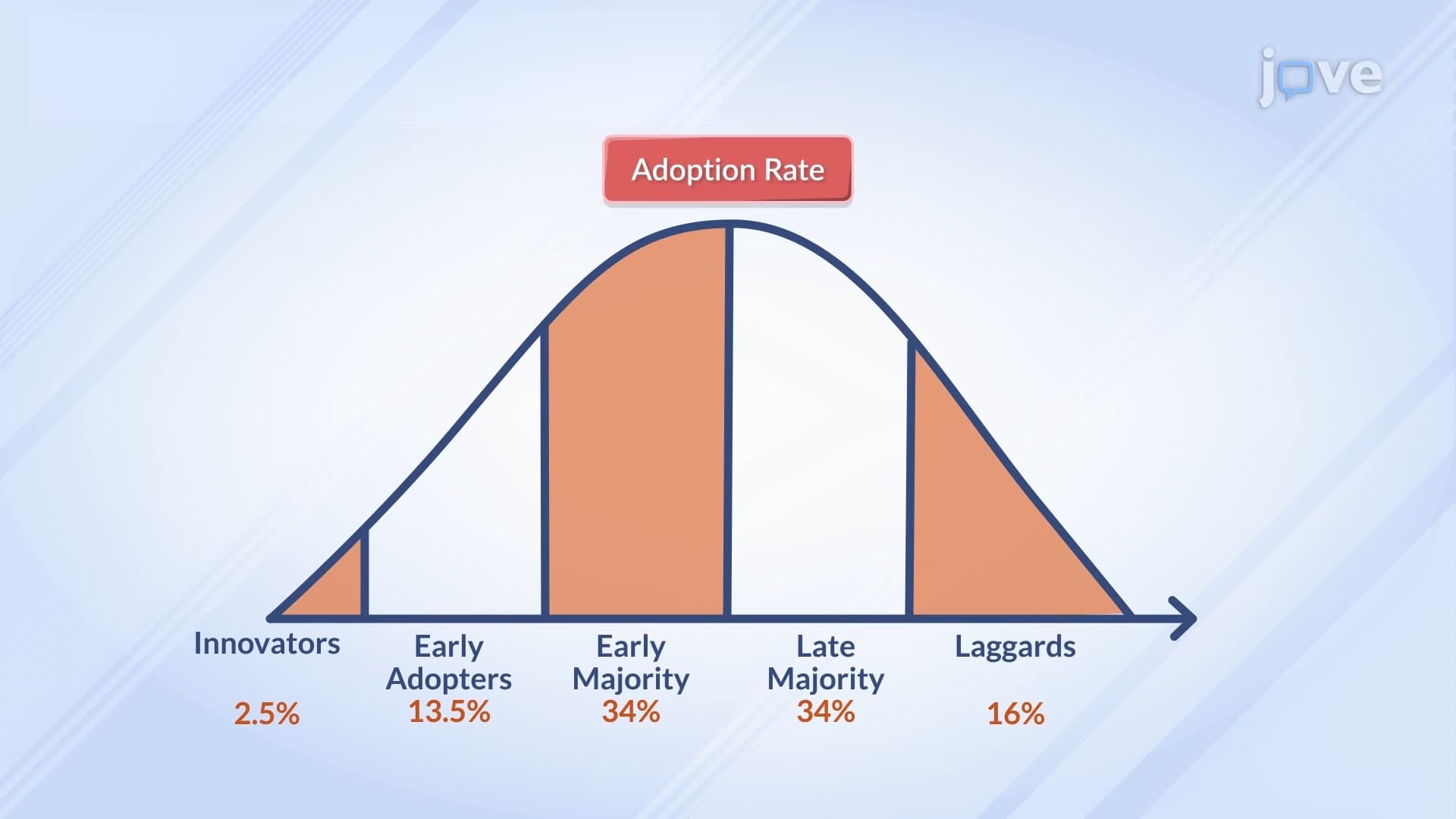
When Netflix disrupted traditional television, understanding diffusion innovation patterns became critical for media executives worldwide. The diffusion of innovation theory explains how new products and technologies spread through consumer segments at predictable rates, enabling strategic market timing and resource allocation. This framework categorizes adopters into five distinct groups-from risk-taking innovators to change-resistant laggards-each requiring tailored marketing approaches and pricing strategies. Watch the full video on JoVE Coach to master this concept with expert-led visuals and step-by-step explanations.
When Apple launched the iPhone in 2007, the company didn't expect immediate mass adoption. Instead, they leveraged diffusion of innovation principles to systematically capture market segments, starting with tech enthusiasts willing to pay premium prices before expanding to mainstream consumers. This strategic approach demonstrates how understanding adoption patterns drives sustainable growth and market dominance.
Innovators represent approximately 2.5% of the market but generate disproportionate influence through early validation. These affluent, risk-tolerant consumers provide crucial product feedback and market signals. Netflix's early DVD-by-mail subscribers exemplified this segment-educated professionals willing to abandon video stores for convenience.
Early adopters (13.5% of market) function as opinion leaders who amplify or suppress product momentum. Tesla's initial customer base included influential executives and celebrities whose endorsements legitimized electric vehicles for broader audiences. Their adoption patterns often predict mainstream success or failure.
The early majority (34%) represents the tipping point for profitability. These pragmatic consumers require social proof and peer validation before purchasing. Amazon Prime's growth accelerated when this segment recognized the service's practical benefits through word-of-mouth recommendations from early adopters.
Late majority and laggards (combined 50%) adopt products only after they become industry standards. Traditional retailers like Walmart entered e-commerce reluctantly, waiting until online shopping proved essential for competitive survival.
Product managers use diffusion patterns to sequence feature releases and pricing strategies. Technology companies often launch premium versions targeting innovators before developing mass-market alternatives. This approach maximizes revenue while building market credibility.
Marketing executives leverage adopter profiles to optimize channel strategies and messaging. Innovator-focused campaigns emphasize cutting-edge features, while late majority messaging highlights reliability and cost-effectiveness. Understanding these distinctions prevents resource waste on misaligned marketing approaches.
Related Micro-courses