Loading subject page…

- Math Fundamentals
- Exponential and Logarithmic Functions
- Exponential Equations for Modeling Growth
Micro-course: Exponential and Logarithmic Functions
445 views
Learn key concepts and earn your certificate.





Exponential Equations for Modeling Growth


00:00
02:33
Video Summary: Exponential Equations for Modeling Growth Tutorial
Did you know that under ideal conditions, a single E. coli bacterium can multiply into over 16 million bacteria in just 8 hours? Exponential equations for modeling growth help us understand and predict such rapid population changes in everything from bacterial cultures to investment portfolios. This powerful mathematical tool uses specific formulas to capture how quantities multiply rather than simply add over time, with real applications in epidemiology, finance, and environmental science across the United States. Watch the full video on JoVE Coach to master this concept with expert-led visuals and step-by-step explanations.
- Understand the fundamental principles of exponential equations for modeling growth and how they differ from linear growth patterns
- Identify the key components of exponential growth models, including initial values, growth rates, and time variables
- Apply doubling-time formulas to solve bacterial population problems and other biological growth scenarios
- Analyze the difference between discrete exponential models (using base numbers) and continuous growth models (using Euler's number e)
- Recognize when to use exponential versus other growth models based on real-world data patterns
- Evaluate growth rates expressed as percentages and convert them to decimal form for mathematical modeling
- Compare exponential growth predictions with actual population data to assess model accuracy
- Explore practical applications of exponential growth in fields like medicine, ecology, and economics
Understanding Exponential Equations For Modeling Growth Fundamentals
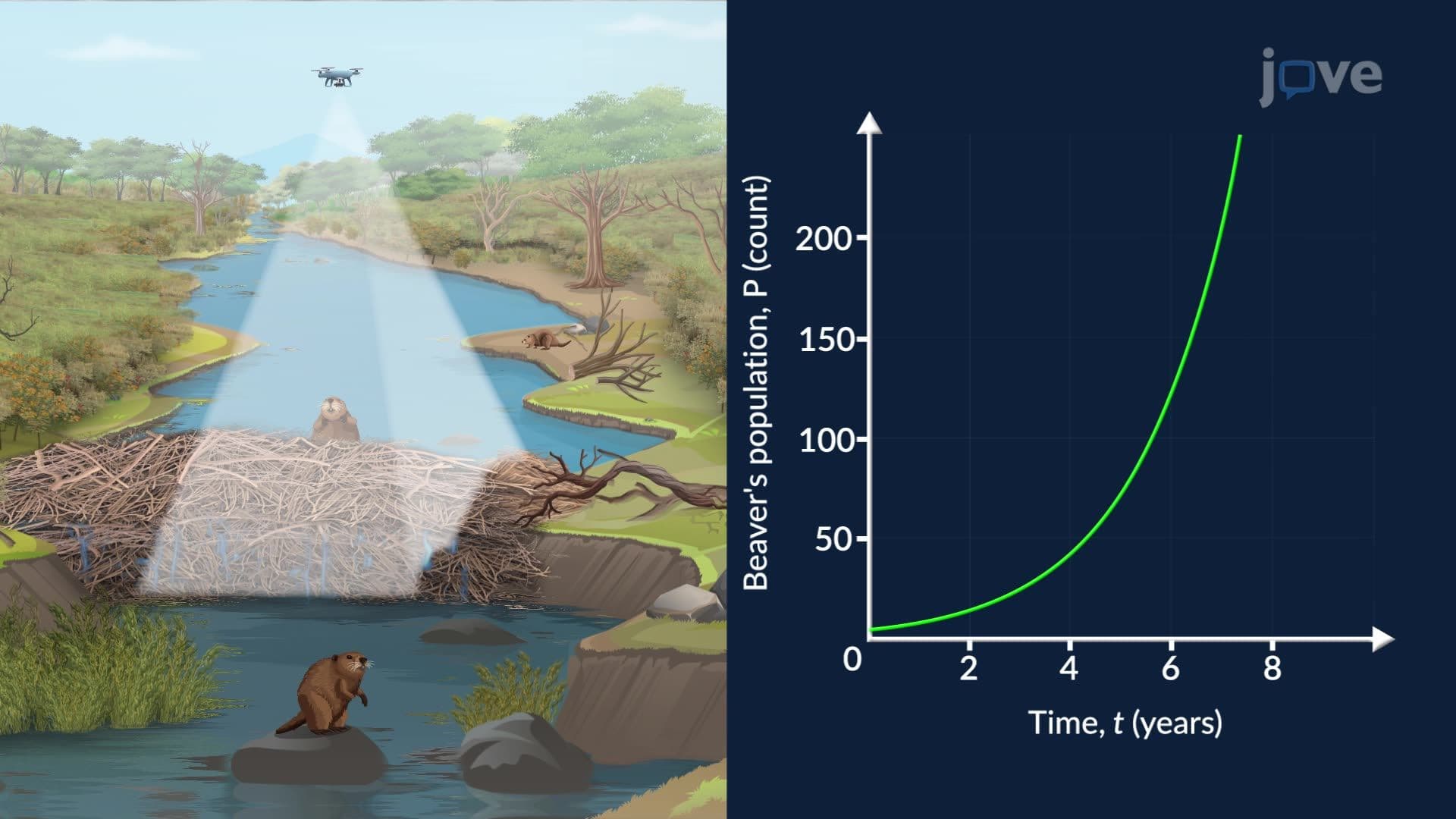
Exponential equations for modeling growth represent one of the most powerful mathematical tools for describing rapid population changes in nature, medicine, and economics. Unlike linear growth where quantities increase by a constant amount, exponential growth occurs when populations multiply by a consistent factor over regular time intervals. This mathematical concept appears frequently on AP Calculus exams, SAT Subject Tests, and college algebra courses across American universities.
Discrete vs. Continuous Exponential Models
Two primary types of exponential growth models serve different real-world applications. Discrete models use the formula P(t) = P₀ × r^(t/d), where P₀ represents the initial population, r equals the multiplication factor, t indicates elapsed time, and d represents the doubling period. For example, if a bacterial culture starts with 500 organisms and doubles every 3 hours, the population after 9 hours equals 500 × 2^(9/3) = 4,000 bacteria.
Continuous growth models employ Euler's number (e ≈ 2.718) in the formula P(t) = P₀ × e^(rt), where r represents the continuous growth rate as a decimal. A 40% hourly growth rate translates to r = 0.40 in the equation. This model better represents scenarios like compound interest in American banks or viral spread during epidemics, where growth occurs constantly rather than at discrete intervals.
Real-World Applications in American Contexts
Healthcare professionals use exponential models to track antibiotic-resistant bacterial infections in US hospitals, helping determine treatment timelines and isolation protocols. The CDC employs these equations to model disease outbreaks, as seen during COVID-19 spread analysis across American states. Environmental scientists apply exponential growth models to study invasive species populations in National Parks, while economists use them to project inflation rates and investment returns in US financial markets.
Exam Preparation and Problem-Solving Strategies
Students preparing for standardized tests should master converting between percentage and decimal growth rates, identifying appropriate time units, and recognizing when exponential models apply versus linear alternatives. Common AP Calculus problems involve determining doubling times, comparing different growth scenarios, and analyzing long-term population projections. College algebra courses emphasize graphical interpretation of exponential functions and solving for unknown variables in growth equations.
Frequently Asked Questions
Exponential equations for modeling growth describe populations that multiply by consistent factors over time rather than adding constant amounts. These mathematical models use formulas like P(t) = P₀ × r^t to predict future population sizes based on initial values and growth rates. They're essential for understanding everything from bacterial reproduction to investment compound interest.
AP Calculus exams typically feature exponential growth in differential equations sections, asking students to solve for growth rates or predict populations at specific times. SAT Subject Test questions focus on applying exponential formulas to word problems involving bacterial cultures, radioactive decay, or financial investments. Students must identify key variables and choose appropriate mathematical models.
Base 2 models work best for doubling scenarios with discrete time intervals, like bacterial cultures that double every few hours. Base e (continuous growth) models apply when growth occurs constantly, such as compound interest or viral transmission rates. College algebra courses teach both approaches, with AP Calculus emphasizing the continuous model using derivatives and natural logarithms.
The CDC uses exponential models to predict infection rates during outbreaks, helping allocate medical resources and implement public health measures. For example, during COVID-19, epidemiologists tracked daily case growth rates across states to identify emerging hotspots and evaluate intervention effectiveness. These models inform hospital capacity planning and vaccination distribution strategies.
Students with solid algebra skills can master exponential growth equations through consistent practice with real-world examples. The key concepts build naturally from exponent rules learned in earlier math courses. Most high school students succeed when they focus on identifying variables, converting percentages to decimals, and practicing with familiar scenarios like savings accounts or population studies.
Create a formula sheet with both discrete and continuous growth models, practice converting between different time units, and work through released AP Calculus problems focusing on exponential applications. Focus on word problem translation skills, identifying when exponential models apply versus linear alternatives, and checking answers for reasonableness using estimation techniques.
Choose exponential models when populations multiply by consistent factors over regular time periods, showing curved rather than straight-line growth on graphs. Linear models work better for constant-rate changes, while logarithmic models describe slowing growth rates. Recognize exponential patterns by looking for doubling times, percentage-based growth rates, or compound effects in problem descriptions.
Explore logistic growth models that account for environmental limits, differential equations involving exponential functions, and applications in calculus-based physics courses. Advanced students should study exponential decay models, systems of differential equations, and statistical applications in data science programs offered at American universities.
Related Micro-courses

5 Concepts

12 Concepts

4 Concepts