Loading concepts…


14 Concepts
8 Concepts
14 Concepts
10 Concepts
8 Concepts
5 Concepts
12 Concepts
4 Concepts
8 Concepts
7 Concepts
15 Concepts
 4 Concepts
 218 Views
 Popular topics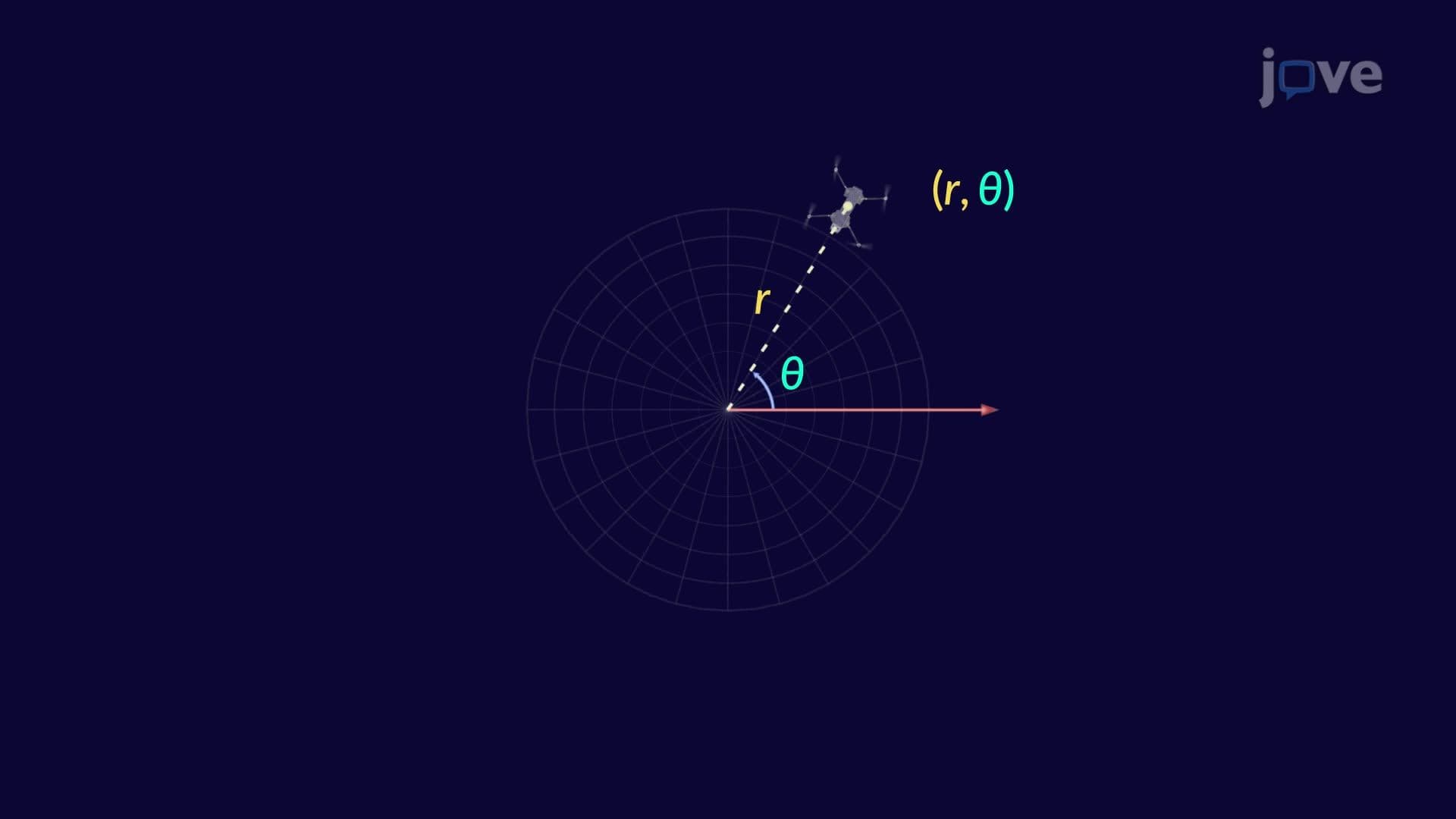
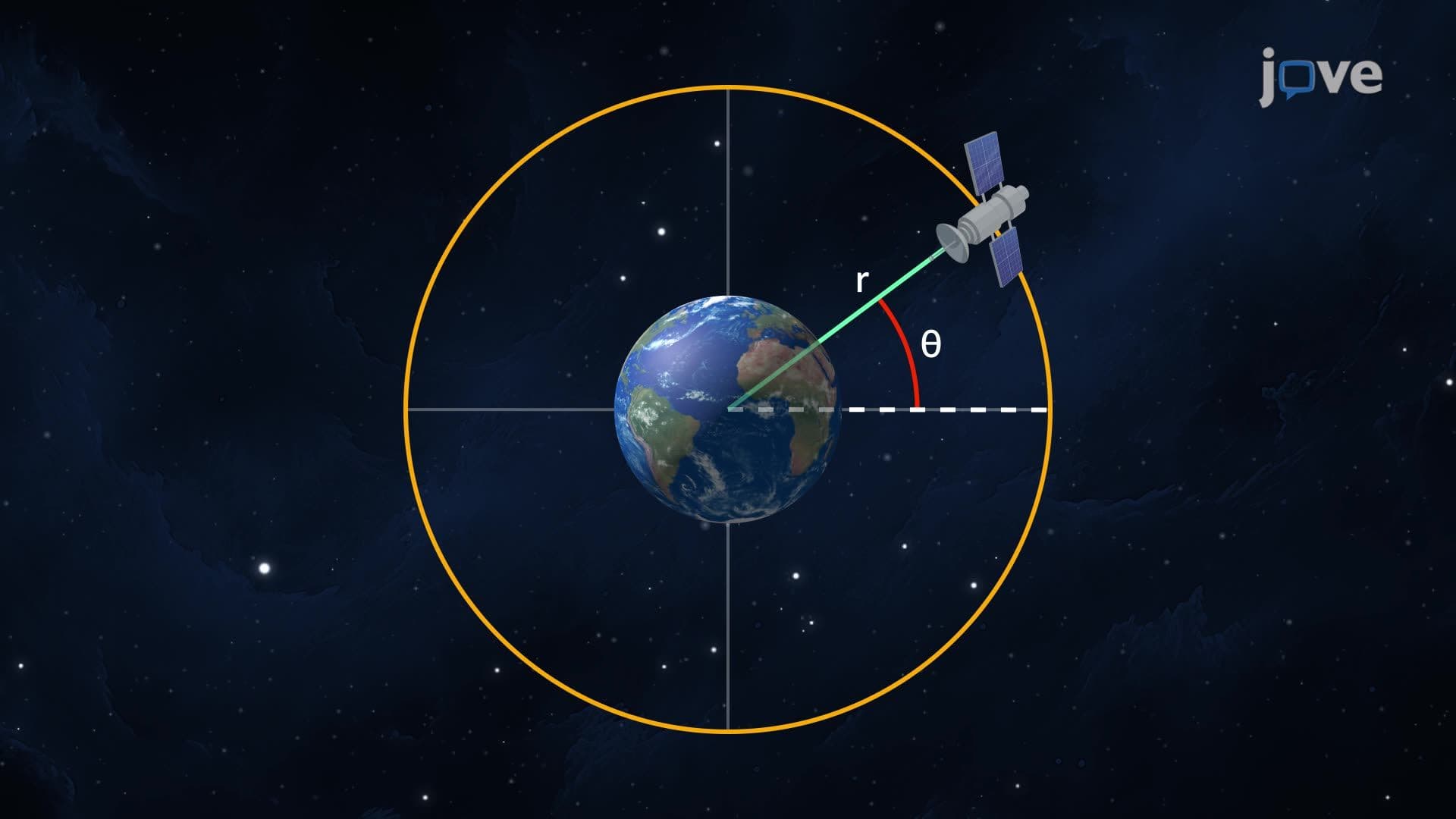
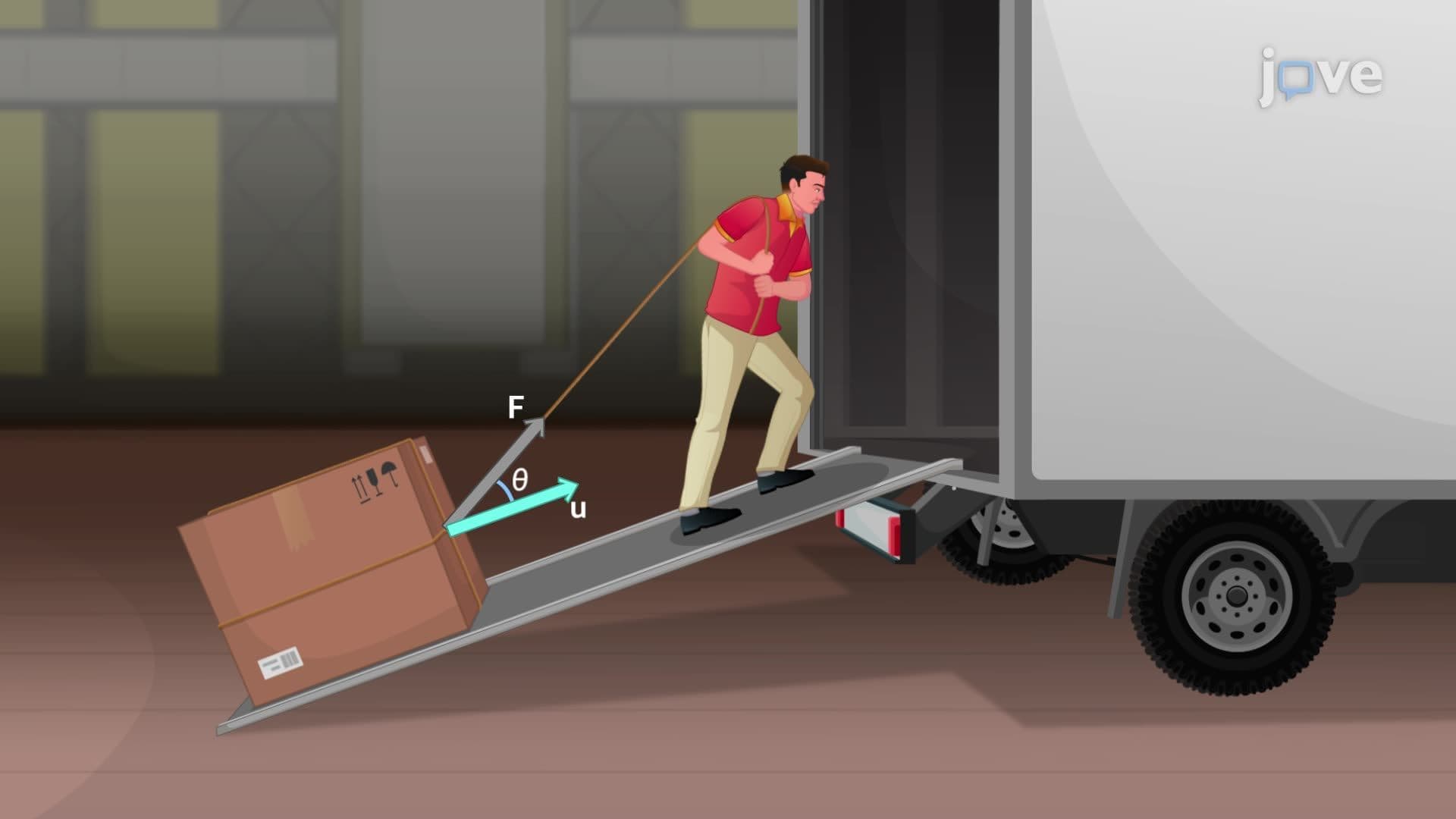
Polar coordinates provide an alternative coordinate system using distance and angle measurements, essential for describing circular motion, satellite tracking, and engineering applications. This comprehensive course from JoVE Coach explores the polar coordinate system fundamentals, graphing techniques, vector operations, and polar coordinates and vector operations through real-world examples like drone navigation and force analysis on inclined planes.
1. Polar Coordinate System Fundamentals: The polar coordinate system uses a central point called the pole and measures locations using radius (r) and angle (θ) values. Unlike Cartesian coordinates that use perpendicular grid lines, polar coordinates employ concentric circles and radial rays. A point's location is determined by its distance from the pole and the angle measured counterclockwise from the polar axis. This system proves invaluable for describing circular motion, such as tracking hurricanes around the eye or analyzing planetary orbits. Multiple representations exist for each point since adding 2π to any angle returns to the same location.
2. Coordinate Conversion Between Systems: Converting between polar and Cartesian coordinates relies on fundamental trigonometric relationships. From polar to Cartesian: x = r cos θ and y = r sin θ. The reverse conversion uses r = √(x² + y²) and θ = arctan(y/x), though careful attention to quadrant placement is essential. These conversions enable engineers to switch between coordinate systems based on problem requirements. For example, GPS navigation systems internally use spherical coordinates (similar to polar) but display locations using familiar latitude-longitude grids for user convenience.
3. Graphing Polar Equations: Polar graphs create distinctive patterns impossible to achieve easily in Cartesian coordinates. Constant radius equations (r = c) produce perfect circles centered at the origin. Fixed angle equations (θ = c) generate straight lines through the pole. Trigonometric functions create fascinating curves: r = a cos θ produces circles, while r = a cos(nθ) generates rose patterns with petals. These graphs help aerospace engineers plot satellite trajectories and marine biologists track ocean current patterns. Understanding these fundamental shapes enables recognition of more complex polar functions.
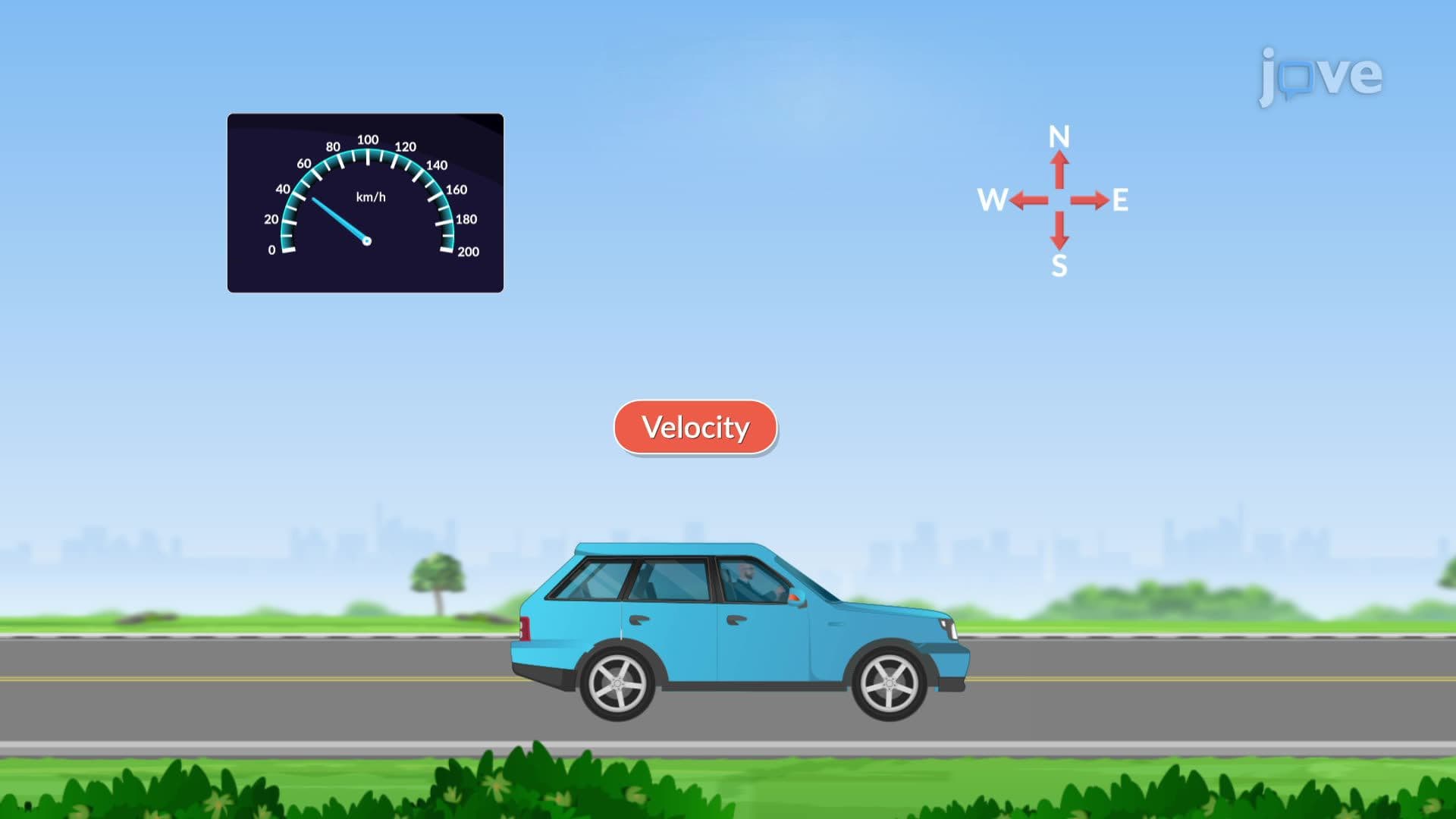
4. Vector Representation and Properties: Vectors combine magnitude and direction into single mathematical objects, essential for describing physical quantities like velocity, force, and acceleration. Represented as directed line segments with initial and terminal points, vectors can be written using bold notation (v) or arrow notation (v⃗). Two vectors are equal when they share identical magnitude and direction, regardless of position. This property allows vector translation without changing the vector's identity. Applications include analyzing aircraft flight paths where pilots must account for both airspeed (magnitude) and heading (direction) to reach destinations accurately.
5. Vector Operations and Addition: Vector addition follows the head-to-tail rule or parallelogram method, both yielding identical results. The head-to-tail method places one vector's initial point at another's terminal point, with the sum connecting the remaining initial point to terminal point. The parallelogram method uses vectors sharing a common initial point, with their sum represented by the diagonal. Vector subtraction involves adding the negative of a vector, effectively reversing its direction. These operations prove crucial in physics problems involving multiple forces, such as analyzing the net force on bridges under various load conditions.
6. Dot Product Applications: The dot product multiplies two vectors to produce a scalar quantity, calculated as a⃗ · b⃗ = |a⃗||b⃗|cos θ, where θ represents the angle between vectors. This operation determines vector projections and measures how much one vector acts in another's direction. Physical applications include calculating work done by forces, where work equals force magnitude times displacement in the force's direction. Engineers use dot products to analyze structural forces, determining how much of a cable's tension acts vertically versus horizontally in suspension bridge designs.