Loading video…

 4 Concepts
 218 views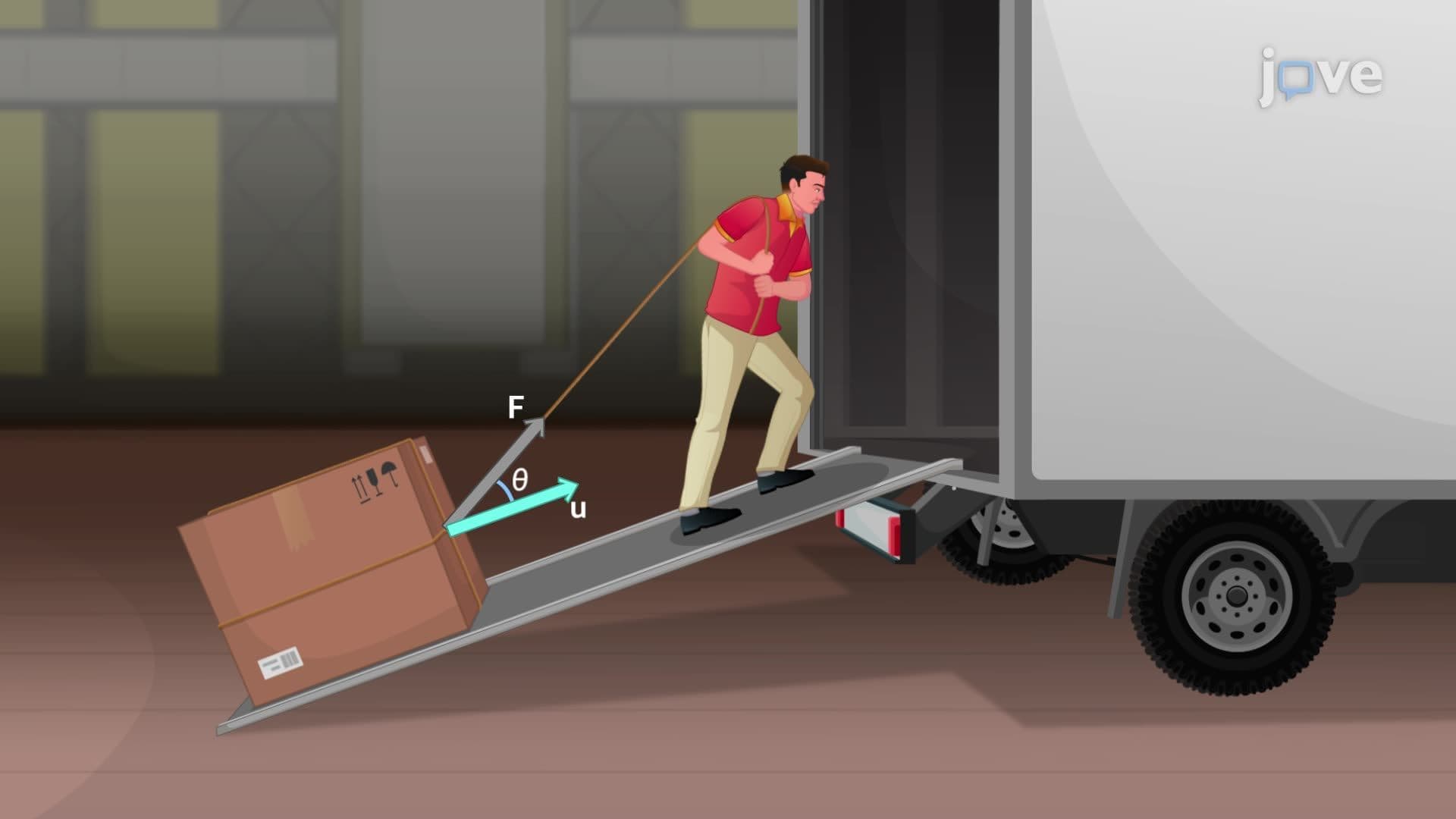

Video Summary: What Is the Dot Product
Ever wonder how engineers calculate the effective force when pulling a sled uphill at an angle? The dot product transforms two vectors into a single scalar value by multiplying their magnitudes and the cosine of the angle between them. Consider NASA engineers determining how much of a rocket's thrust actually propels it forward versus sideways-this calculation relies entirely on understanding what is the dot product. This fundamental vector operation appears everywhere from physics problems to computer graphics in video games. Watch the full video on JoVE Coach to master this concept with expert-led visuals and step-by-step explanations.
The dot product represents one of the most essential operations in vector mathematics, producing a scalar (single number) result from two vector inputs. Unlike vector addition that yields another vector, the dot product quantifies how much two vectors align with each other. This operation appears frequently on AP Physics exams, SAT Subject Tests, and college calculus courses, making it crucial for academic success.
The mathematical definition states: A · B = |A| × |B| × cos(θ), where |A| and |B| represent vector magnitudes and θ is the angle between them. This formula reveals why parallel vectors (θ = 0°) produce maximum dot products, while perpendicular vectors (θ = 90°) yield zero.
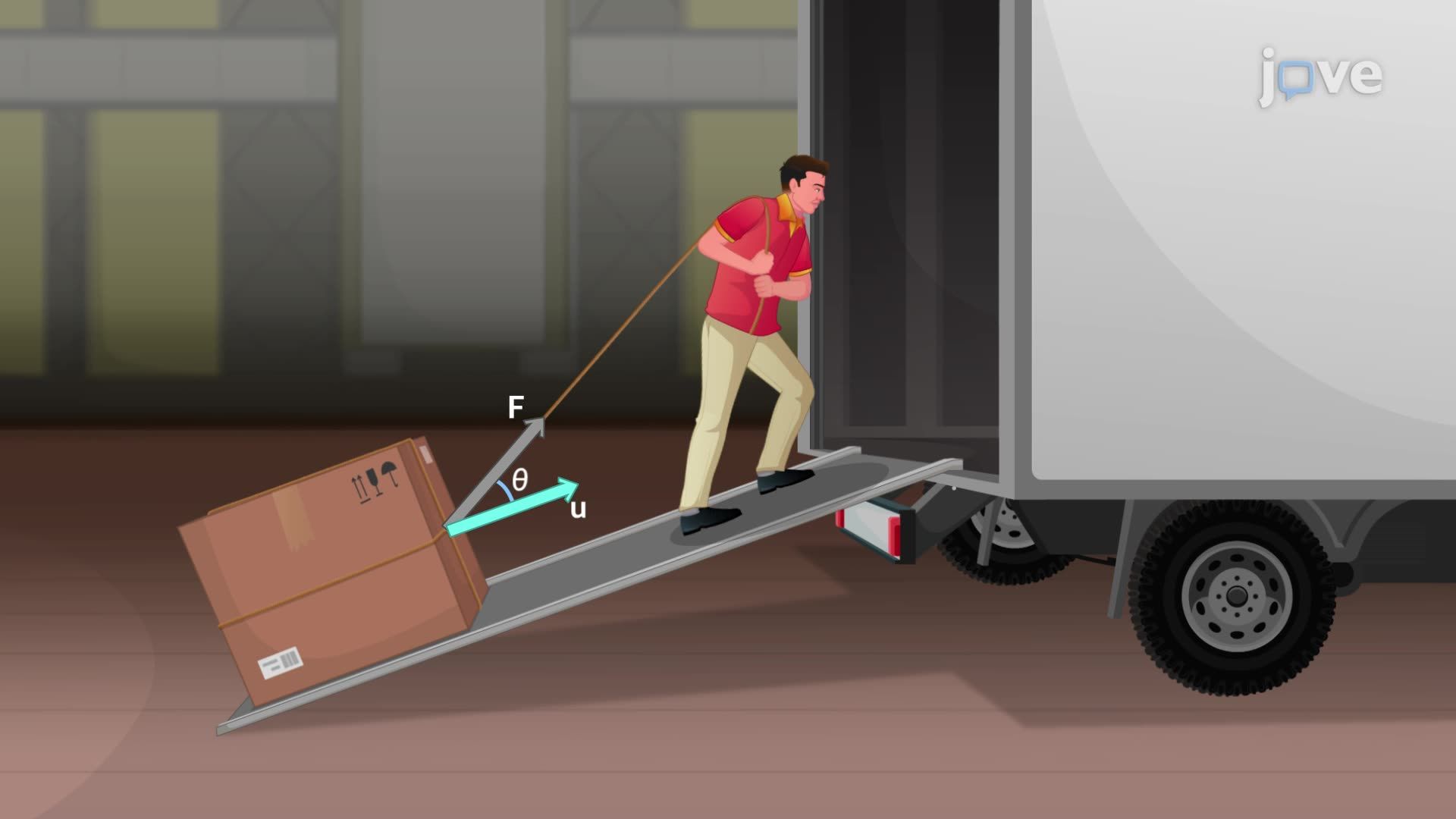
Consider a construction worker using a rope to pull equipment up a 30-degree ramp. The total pulling force might be 100 pounds, but only the component aligned with the ramp actually moves the equipment upward. Using the dot product, we calculate: effective force = 100 × cos(30°) ≈ 86.6 pounds. This demonstrates how the dot product definition helps solve practical engineering problems.
In sports biomechanics, researchers at Stanford University use dot products to analyze golf swing efficiency. They measure how much of a golfer's applied force actually transfers to the ball versus dissipating in unwanted directions. Similarly, NASA engineers employ dot product calculations when determining spacecraft trajectory corrections, ensuring thrust vectors align optimally with desired flight paths.
Beyond the magnitude-angle formula, the dot product can be calculated using vector components: A · B = (Ax × Bx) + (Ay × By) + (Az × Bz). This component method often proves more practical for homework problems and standardized tests, especially when dealing with vectors in coordinate form.
For example, if vector A = (3, 4) and vector B = (2, 1), then A · B = (3 × 2) + (4 × 1) = 10. This component approach eliminates the need to find angles explicitly, streamlining calculations for MCAT physics sections and college physics midterms.
The dot product concept extends beyond mere calculation to reveal geometric relationships. When we compute A · B = |A| × |B| × cos(θ), we're actually finding |A| times the projection of B onto A's direction. This projection concept appears in computer graphics, where game developers use dot products to determine surface lighting based on light source angles.
Understanding this projection interpretation helps students tackle complex physics problems involving work and energy. Since work equals force dot displacement (W = F · d), mastering dot products becomes essential for AP Physics C and introductory college mechanics courses.
Related Micro-courses