Loading video…

 8 Concepts
 446 views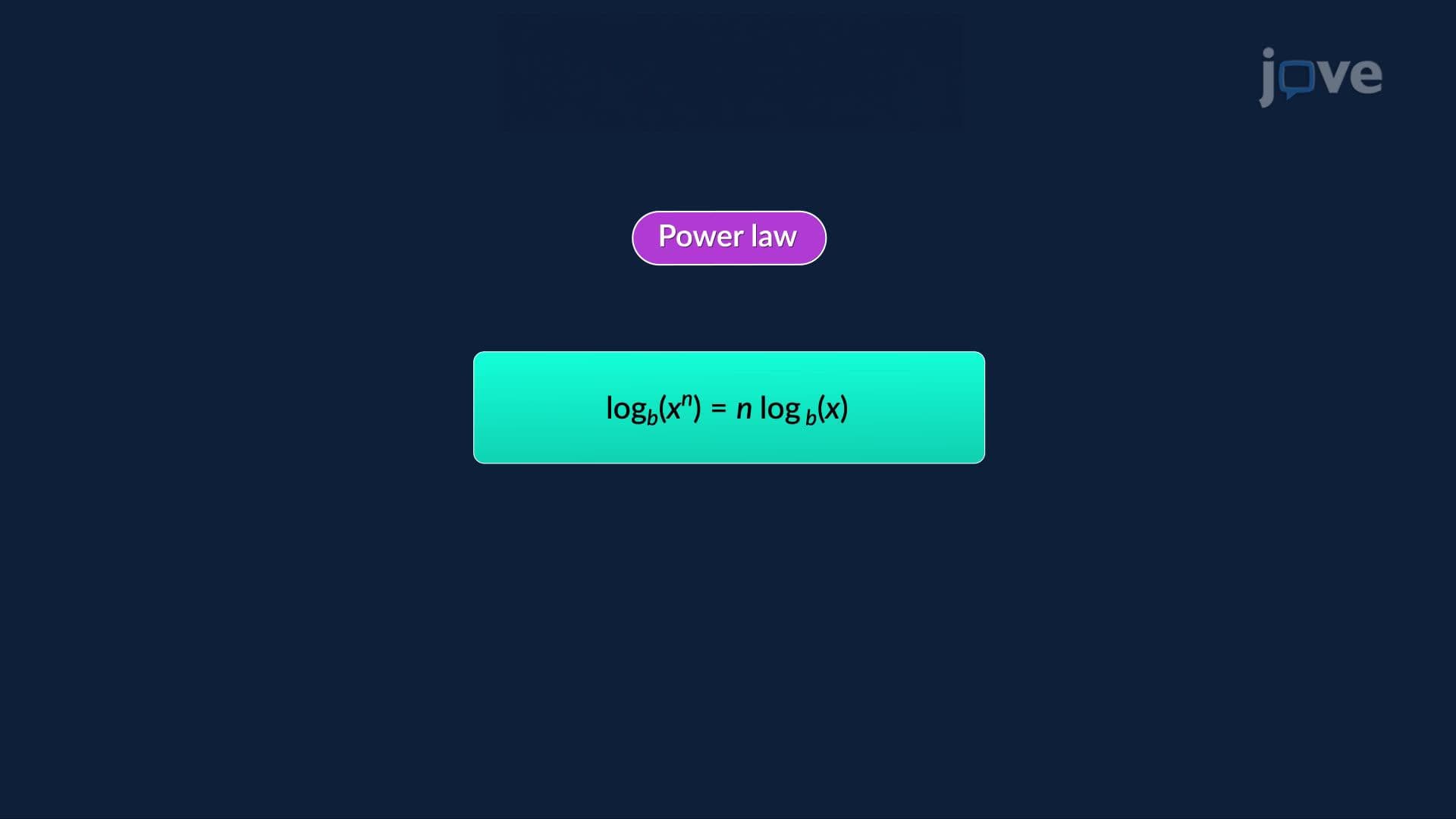

Video Summary: What are Laws of Logarithms Ii
Ever wondered how financial analysts calculate how long it takes for your college savings to double? The laws of logarithms ii unlock this mystery through powerful mathematical tools like the power law and change of base formula. These advanced logarithmic properties enable you to solve complex exponential equations, from compound interest calculations at Chase Bank to population growth models used by the CDC. Understanding what are laws of logarithms ii transforms seemingly impossible problems into manageable calculations. Watch the full video on JoVE Coach to master this concept with expert-led visuals and step-by-step explanations.
The laws of logarithms ii represent advanced logarithmic properties that extend beyond basic addition and subtraction rules. These sophisticated tools become essential when dealing with complex exponential equations commonly found in AP Calculus, college algebra, and real-world applications. Unlike elementary logarithmic laws, these advanced properties specifically address scenarios where variables appear in exponents or when base conversions are necessary.
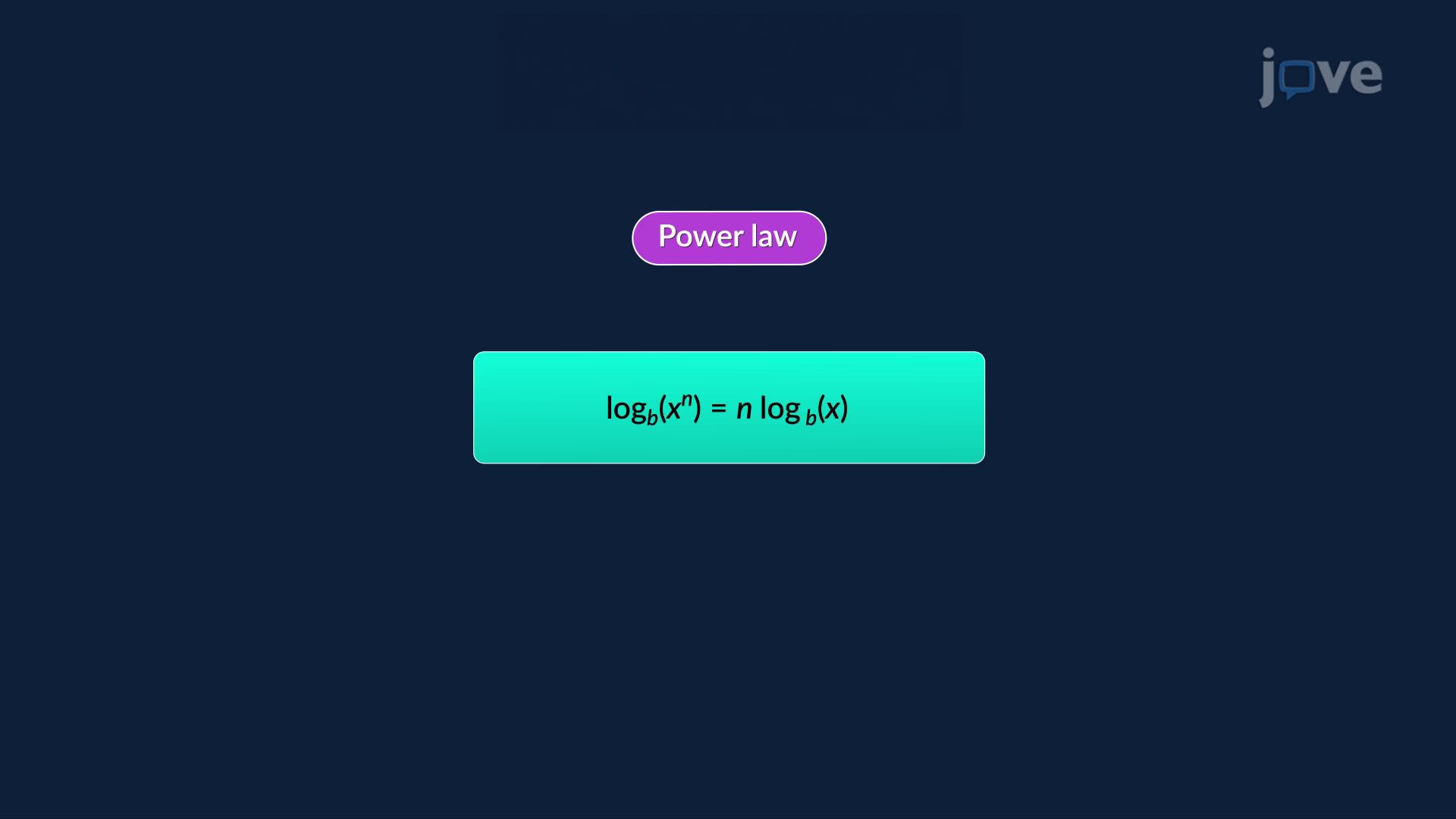
The power law stands as the cornerstone of laws of logarithms ii, stating that log(a^n) = n × log(a). This property proves invaluable when solving compound interest problems that appear on SAT Math Level 2 and AP Statistics exams. Consider a student loan scenario: if $25,000 grows to $40,000 at 6% annual interest, how long does repayment take? By isolating the exponential term (1.06)^t and applying logarithms, the power law transforms this complex equation into a simple multiplication problem.
Investment firms like Fidelity use this principle daily. When calculating retirement projections, they apply the power law to determine how long investments need to grow. The types of laws of logarithms ii specifically address these exponential relationships that basic arithmetic cannot handle efficiently.
The change of base formula, derived from quotient and power laws, enables conversion between logarithmic bases: log_a(x) = log(x)/log(a). This becomes crucial since most scientific calculators only support base 10 (log) and natural logarithm (ln) functions. Engineering students at MIT regularly use this formula when working with specialized bases in circuit analysis or signal processing.
For instance, computing log_4(50) on a standard TI-84 calculator requires the change of base formula: log(50)/log(4). This laws of logarithms ii concept ensures students can solve any logarithmic equation regardless of calculator limitations, making it essential for standardized tests and college coursework.
These advanced logarithmic laws appear throughout STEM curricula and professional applications. Chemistry students use them for pH calculations and reaction kinetics, while business majors apply them in financial modeling courses. The laws of logarithms ii study guide principles also appear on MCAT physics sections and engineering licensure exams, demonstrating their broad academic and professional relevance.
Related Micro-courses