Loading…
Loading video…

5,175 views
Ever wondered why engineers inspect the Golden Gate Bridge's center span more frequently than other sections? Maximum deflection determines the point where a beam bends the most under load, and it's rarely where you'd expect. Unlike symmetrical loading where deflection peaks at the center, unsymmetrical loads create maximum deflection at unexpected locations along the beam. Engineers use the moment-area theorem to precisely locate this critical point by finding where the beam's tangent becomes horizontal. Watch the full video on JoVE Coach to master this concept with expert-led visuals and step-by-step explanations.
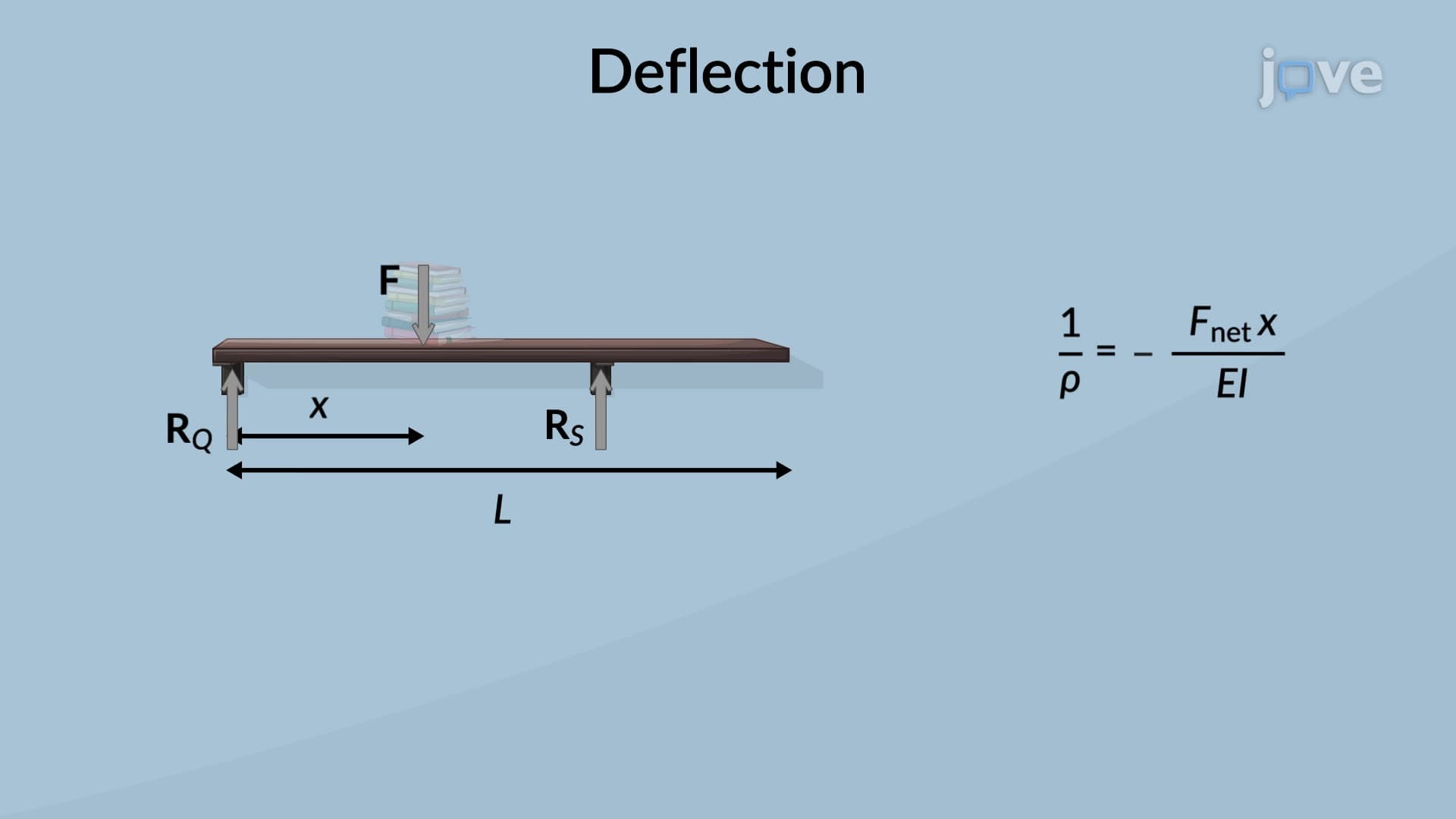
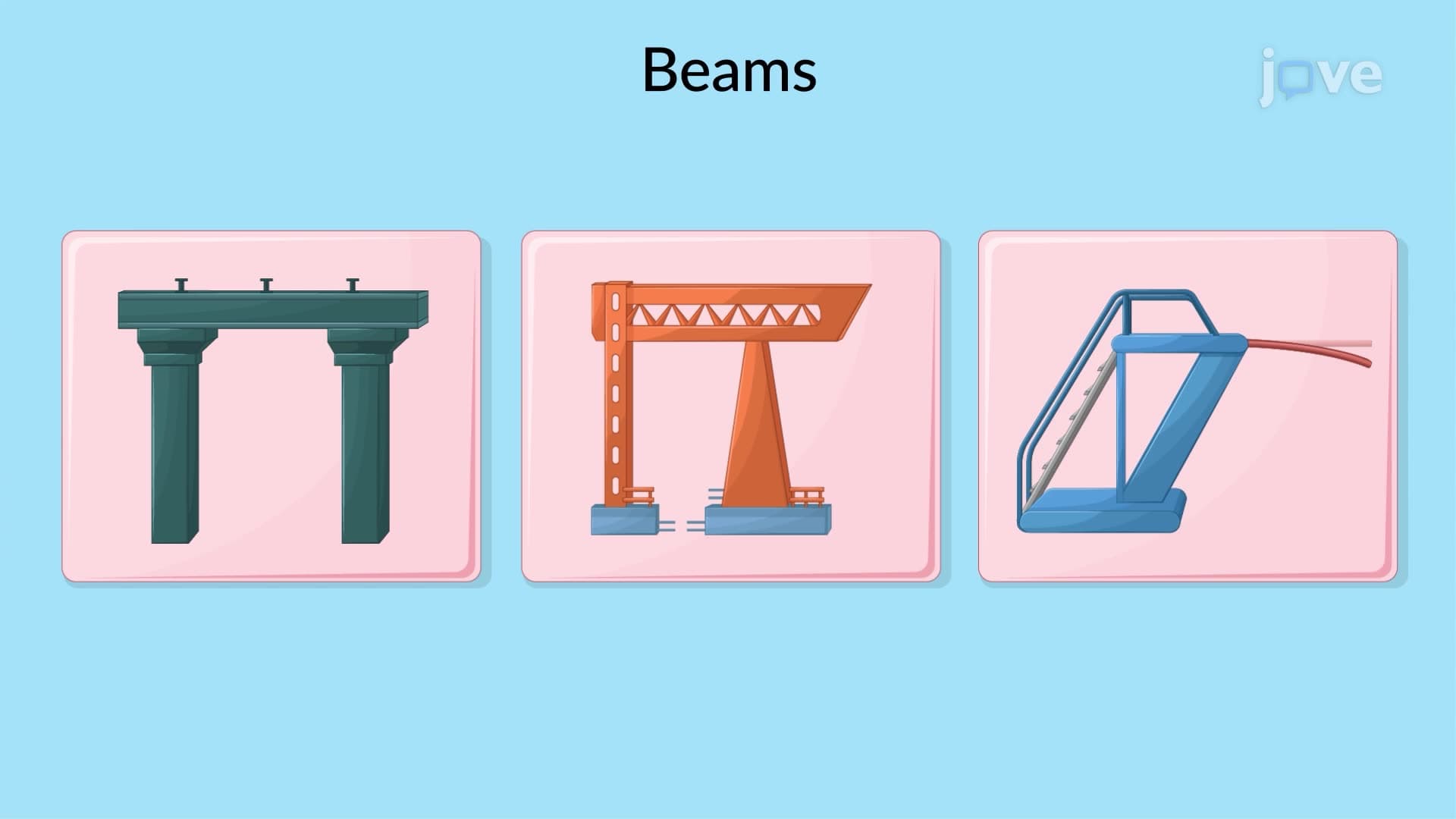
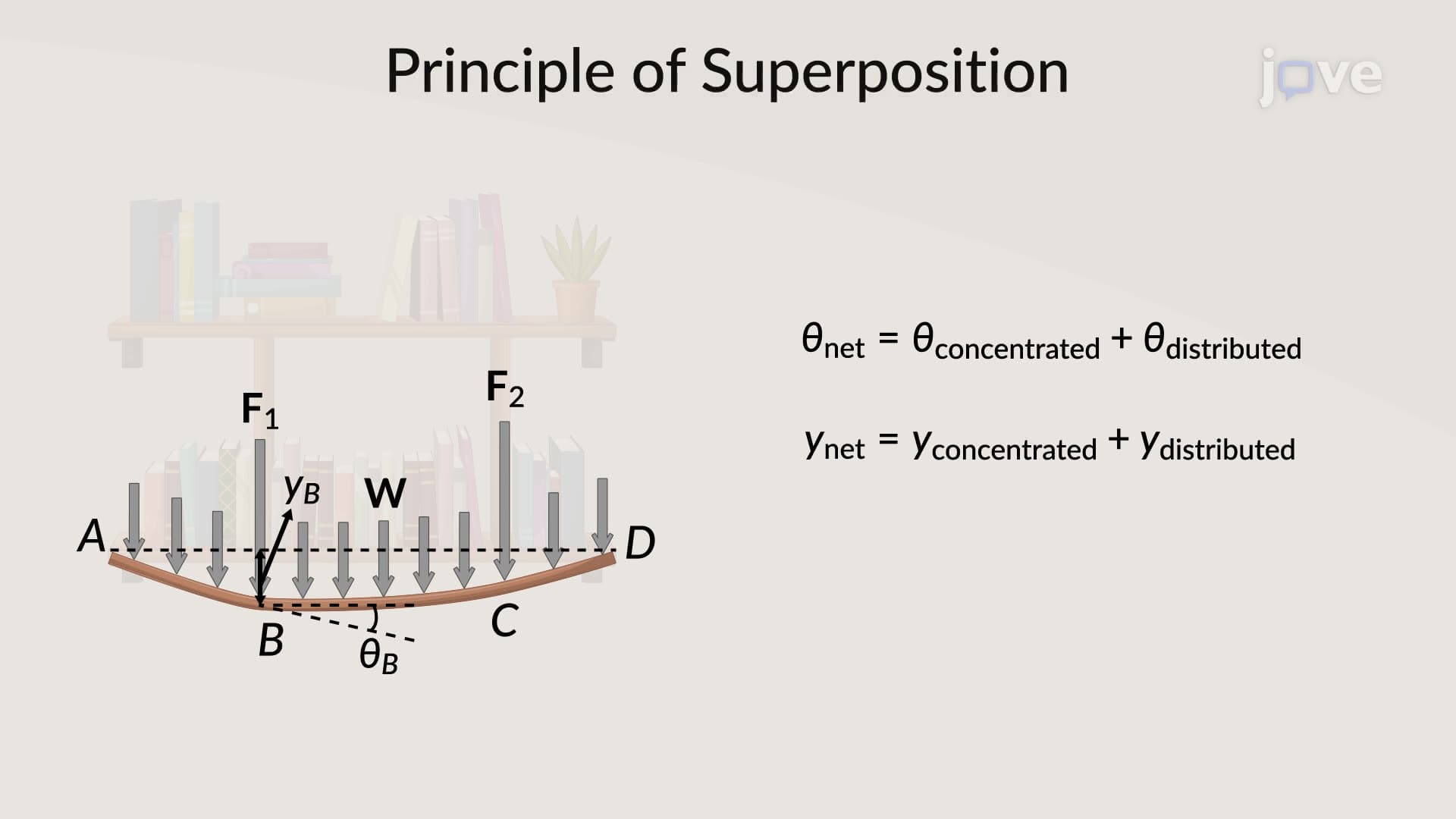
Maximum deflection represents the greatest vertical displacement that occurs anywhere along a loaded beam or structural member. This critical engineering parameter determines structural safety, performance limits, and design adequacy. Unlike intuitive assumptions, maximum deflection doesn't always occur at a beam's center—especially under unsymmetrical loading conditions common in real-world applications like highway overpasses, crane systems, and building frameworks.
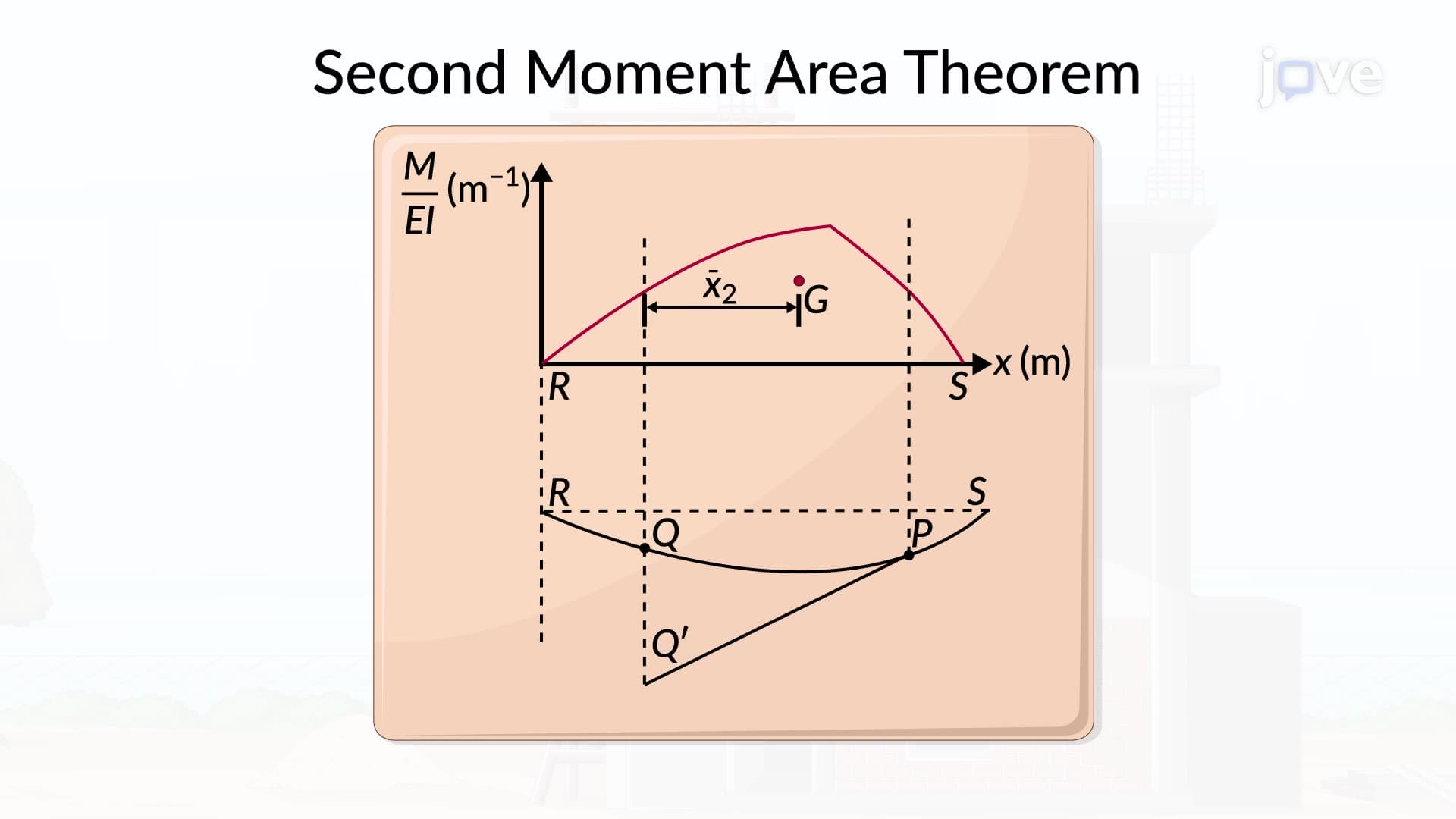
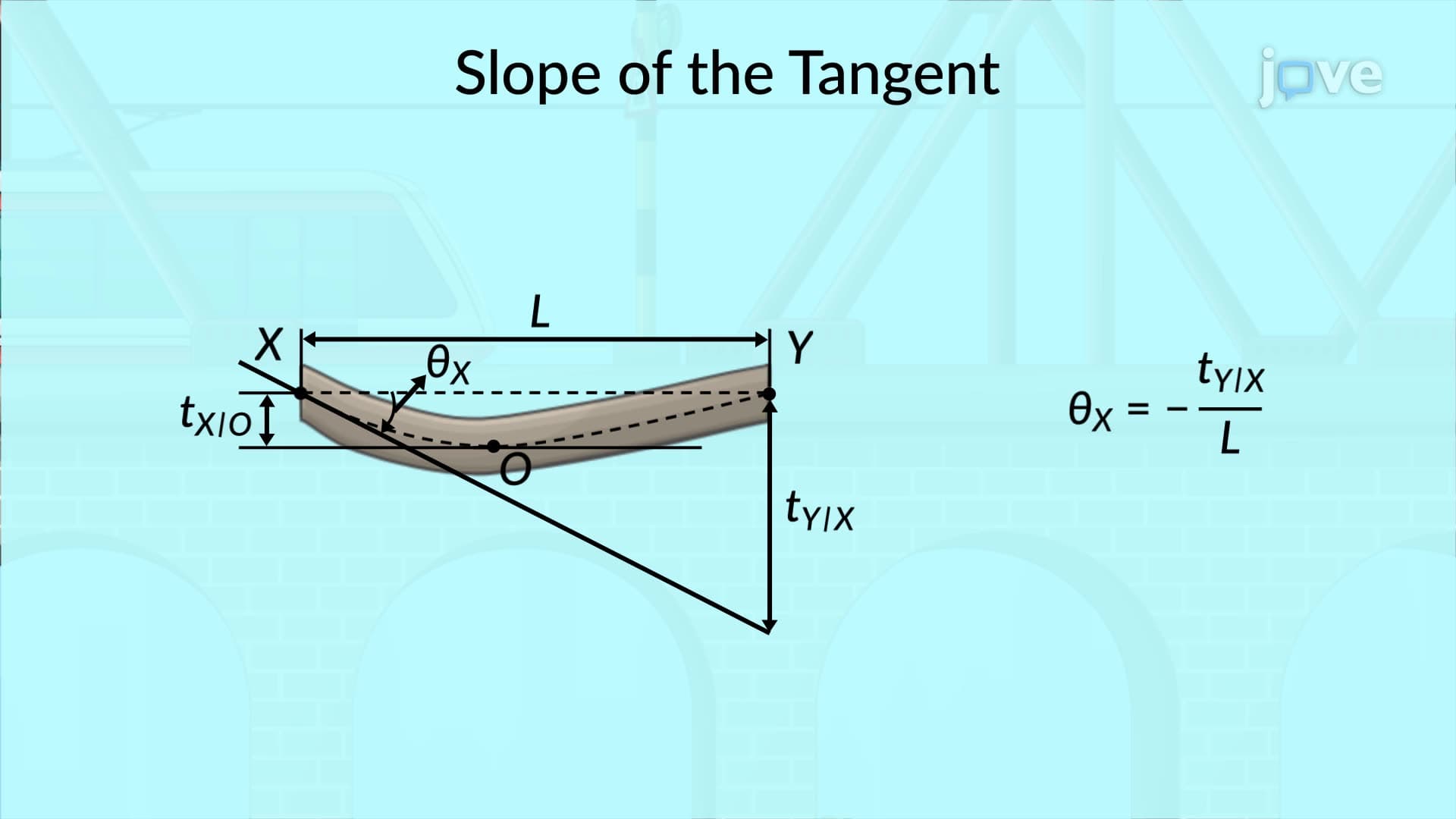
The key to finding maximum deflection lies in identifying where the beam's slope equals zero—the point where the tangent line becomes perfectly horizontal. At this critical location, the beam transitions from bending downward to bending upward (or vice versa), creating the peak deflection point. Engineers use calculus-based methods and the moment-area theorem to mathematically pinpoint this location with precision.
For unsymmetrical loads, this process involves calculating the tangential deviation between support points and analyzing the moment diagram. The first moment-area theorem provides the mathematical framework: the change in slope between two points equals the area under the M/EI (moment over flexural rigidity) curve between those points.
Consider the Chesapeake Bay Bridge in Maryland, where traffic loads create unsymmetrical loading patterns. Engineers must calculate maximum deflection under various scenarios: rush-hour traffic concentrated on one side, heavy truck convoys, and wind-induced lateral forces. These calculations ensure the bridge remains within acceptable deflection limits while maintaining structural integrity and user comfort.
In building design, maximum deflection calculations appear frequently in floor beam analysis. The International Building Code specifies deflection limits (typically L/360 for live loads) that structural engineers must verify through maximum deflection calculations. AP Physics C and college-level statics courses extensively cover these principles, while professional engineering exams test practical application skills.
The mathematical approach involves three key steps: first, determine the slope at each support using the moment-area method; second, locate the zero-slope point through geometric relationships; third, calculate the tangential deviation at this critical point. This systematic approach applies whether analyzing simply supported beams, cantilevers, or continuous beam systems common in modern construction.
Frequently Asked Questions
Maximum deflection is the greatest vertical displacement that occurs at any point along a loaded beam or structural member. It represents the critical point where engineers must verify that structural deformation stays within acceptable safety and performance limits. This measurement directly impacts structural design, material selection, and safety factor calculations.
AP Physics C frequently tests maximum deflection through beam bending problems involving calculus-based analysis. Students encounter questions requiring moment-area theorem applications, slope calculations, and deflection curve analysis. The College Board emphasizes practical problem-solving skills where students must locate maximum deflection points under various loading conditions.
Maximum deflection occurs at the point of zero slope anywhere along the beam, while center deflection specifically measures displacement at the beam's midpoint. Under symmetrical loading, these values coincide, but unsymmetrical loads create maximum deflection at unexpected locations. Understanding this distinction prevents common design errors in structural analysis.
Highway departments use maximum deflection calculations for bridge inspections across the Interstate system, ensuring structures like the Brooklyn Bridge meet safety standards. Building codes require these calculations for floor systems in skyscrapers, while aerospace engineers apply the principles to aircraft wing design. These calculations directly impact public safety and structural longevity.
Basic calculus knowledge suffices for fundamental maximum deflection understanding, specifically derivatives for slope analysis and integration for area calculations. High school students with AP Calculus background possess adequate mathematical preparation. The conceptual framework builds logically from simple beam theory, making it accessible to motivated learners.
Focus on visualizing the deflection curve and systematically identifying zero-slope points through sketching and analysis. Practice with both symmetrical and unsymmetrical loading scenarios, emphasizing the moment-area theorem applications. Work through progressively complex problems, starting with simple point loads before advancing to distributed loads and multiple loading conditions.
Maximum deflection analysis forms the foundation for dynamic analysis, vibration studies, and advanced structural modeling techniques. This knowledge directly leads to finite element analysis, structural optimization, and earthquake-resistant design principles. Professional engineers build upon these fundamentals throughout their careers in structural consulting and infrastructure development.
Statics, Mechanics of Materials, and Structural Analysis courses feature maximum deflection as core curriculum content. Civil and mechanical engineering programs emphasize practical applications, while physics programs focus on theoretical foundations. Many universities integrate computer-aided analysis tools alongside traditional hand-calculation methods for comprehensive understanding.
Related Micro-courses
Related Subjects
 Civil Engineering 30 micro-courses›Electrical Engineering 33 micro-courses›