Loading subject page…

- Mechanical Engineering
- Deflection of Beams
- Deflection of a Beam
Micro-course: Deflection of Beams
5,176 views
Learn key concepts and earn your certificate.


Deflection of a Beam


00:00
01:19
Video Summary: What Is Deflection of a Beam
Ever wondered why the Golden Gate Bridge doesn't collapse under traffic loads? The deflection of a beam determines how structures bend under forces, making it crucial for safe engineering design. From skyscrapers in New York to highway overpasses in California, understanding beam deflection prevents catastrophic failures. This fundamental engineering concept explains how beams deform when loaded, with singularity functions providing elegant mathematical solutions for complex loading scenarios. Watch the full video on JoVE Coach to master this concept with expert-led visuals and step-by-step explanations.
- Understand what deflection of a beam means and why it's fundamental to structural engineering analysis
- Identify the relationship between bending moments, shear forces, and beam deflection in loaded structures
- Analyze how singularity functions simplify complex beam deflection calculations compared to traditional integration methods
- Apply boundary conditions to determine integration constants when solving deflection problems
- Evaluate the advantages of using singularity functions for beams with multiple loading conditions
- Compare deflection calculation methods for simple versus complex loading scenarios
- Recognize how prismatic beam properties affect deflection behavior under eccentric loads
- Explore real-world applications where beam deflection analysis ensures structural safety and performance
Understanding Deflection of a Beam Fundamentals
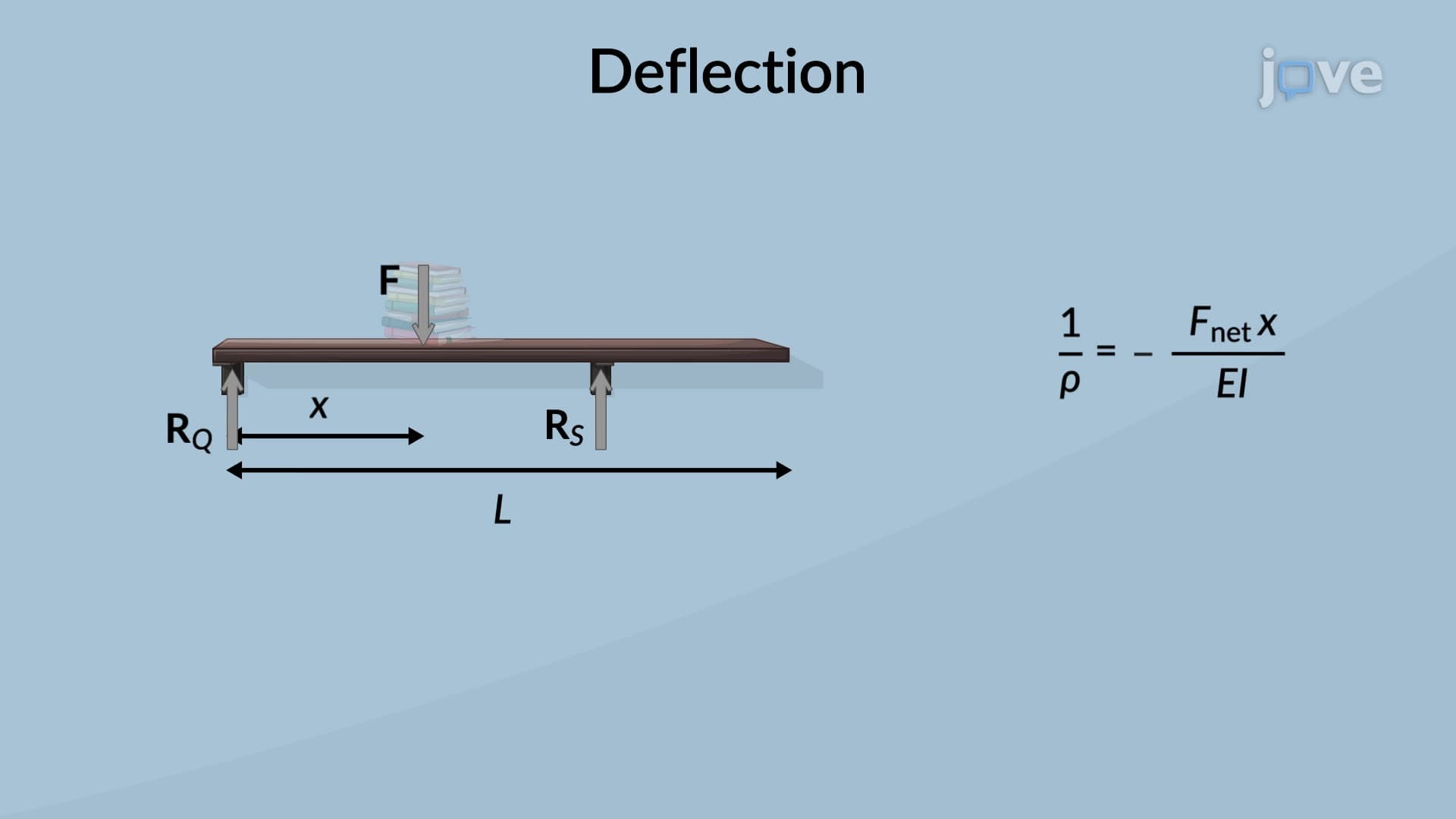
Deflection of a beam refers to the vertical displacement that occurs when a beam bends under applied loads. This displacement represents how far the beam moves from its original, unloaded position. In structural engineering, controlling deflection is as important as ensuring strength-excessive deflection can cause cracking in building facades, misalignment of machinery, or user discomfort in floor systems.
When forces act on a beam, they create internal stresses that cause the beam to curve. The magnitude of this curvature directly relates to the bending moment distribution along the beam's length. Understanding this relationship is crucial for students preparing for AP Physics exams or college-level statics courses, where beam analysis frequently appears in problem sets.
Mathematical Analysis Using Integration Methods
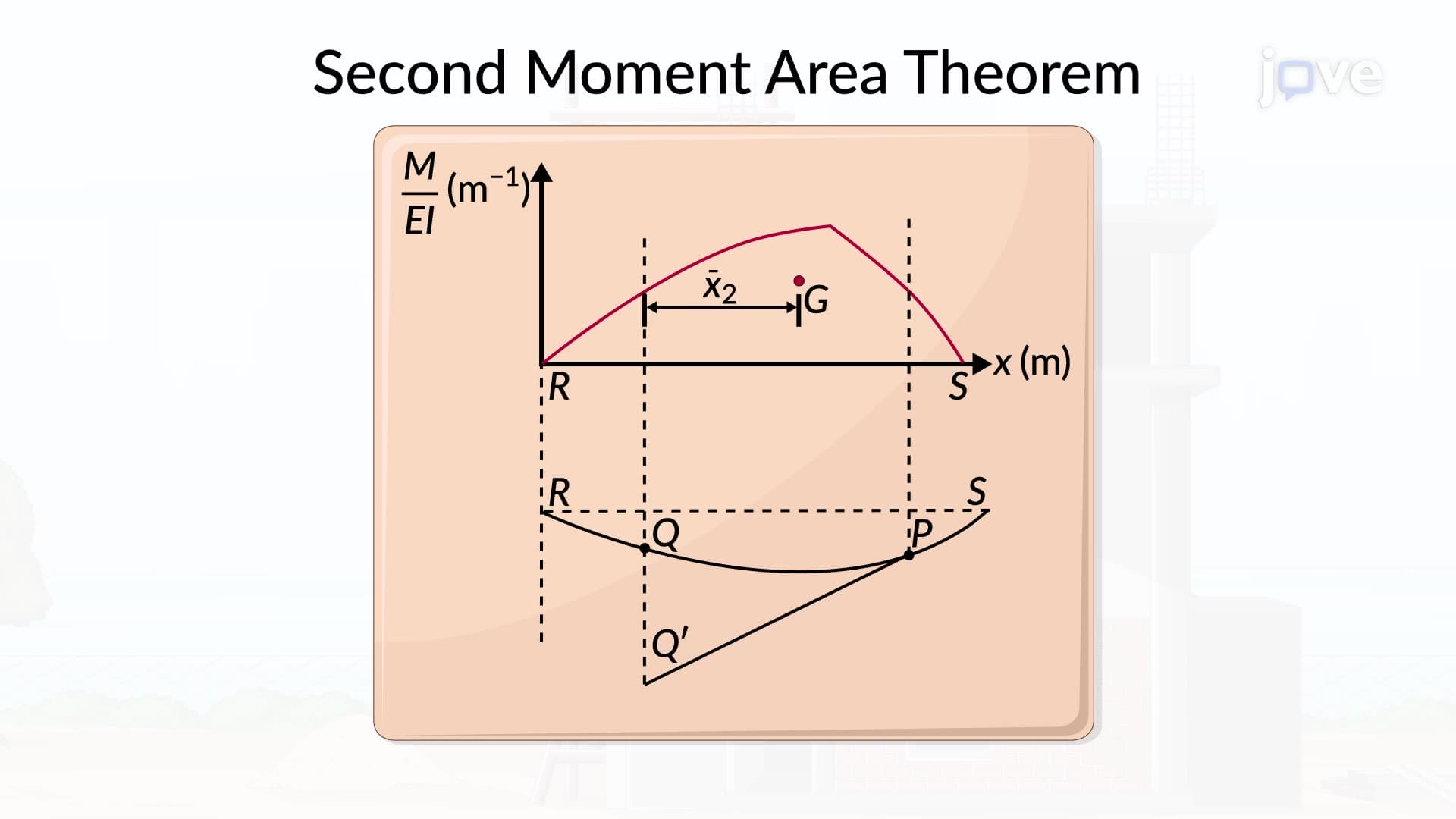
Traditional deflection analysis relies on the beam-bending equation, which relates curvature to bending moment: curvature = M/(EI), where M represents bending moment, E is the material's modulus of elasticity, and I is the beam's moment of inertia. By integrating this relationship twice, engineers obtain slope and deflection equations.
However, beams with complex loading patterns-like those found in multi-story buildings or bridge structures-require multiple mathematical functions to describe their bending moments. Each loading section demands separate integration constants, creating systems of equations that become computationally intensive. This challenge frequently appears in college structural analysis courses and professional engineering (PE) exam problems.
Singularity Functions: A Powerful Solution Method
Singularity functions revolutionize beam deflection calculations by representing complex loading patterns with single, continuous mathematical expressions. These specialized functions use bracket notation to "turn on" or "turn off" loads at specific beam locations, eliminating the need for multiple integration constants.
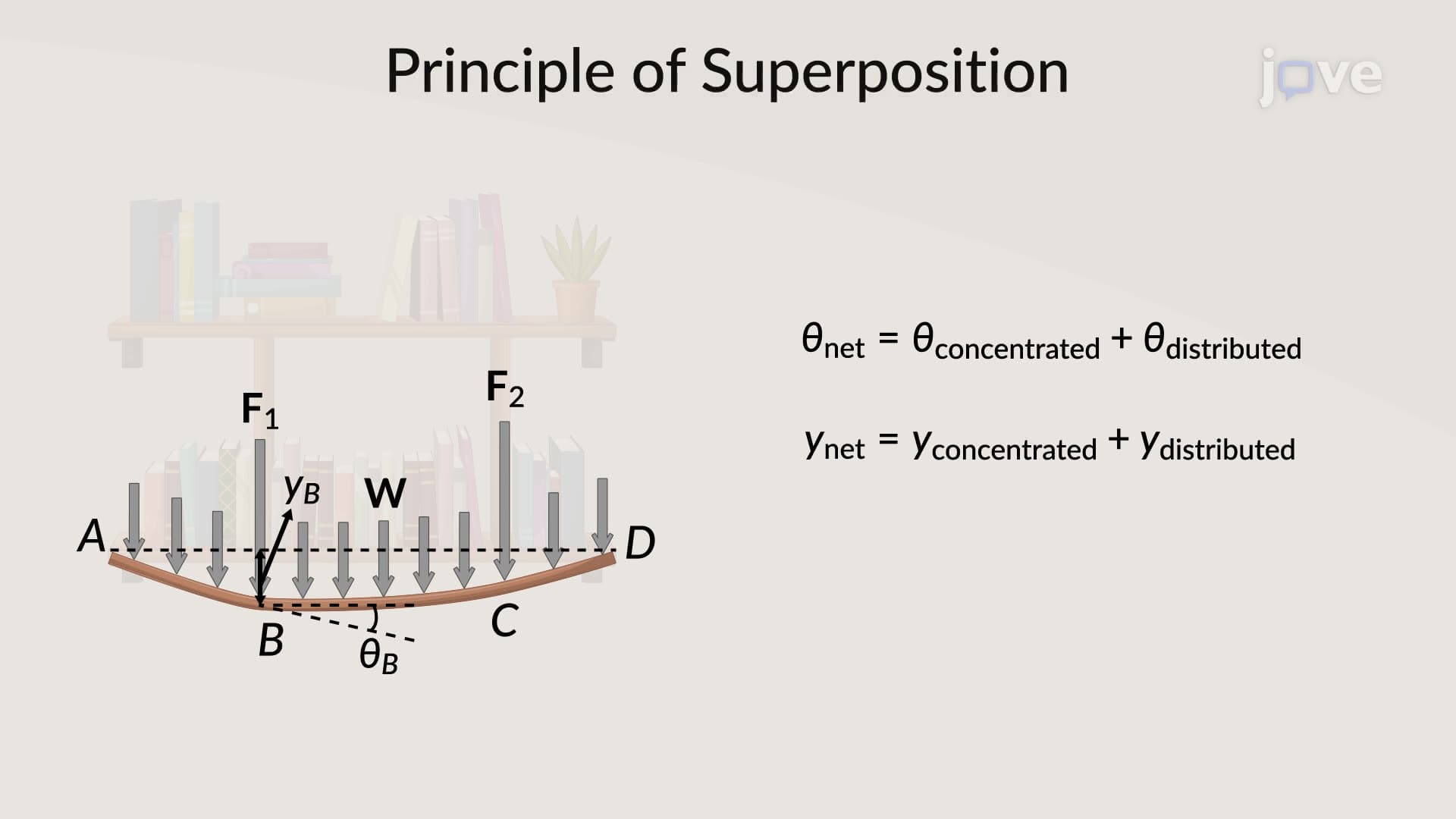
For example, consider a highway overpass beam supporting multiple concentrated loads from vehicle traffic. Instead of analyzing each load section separately, singularity functions allow engineers to write one comprehensive equation describing the entire beam's behavior. This approach appears frequently in college courses like "Mechanics of Materials" and "Structural Analysis," where students learn to handle realistic engineering problems.
Practical Applications in US Infrastructure
American infrastructure relies heavily on accurate deflection analysis. Building codes like the International Building Code (IBC) specify maximum allowable deflections for different structural elements. For instance, floor beams typically cannot deflect more than length/360 under live loads to prevent cracking in ceiling finishes.
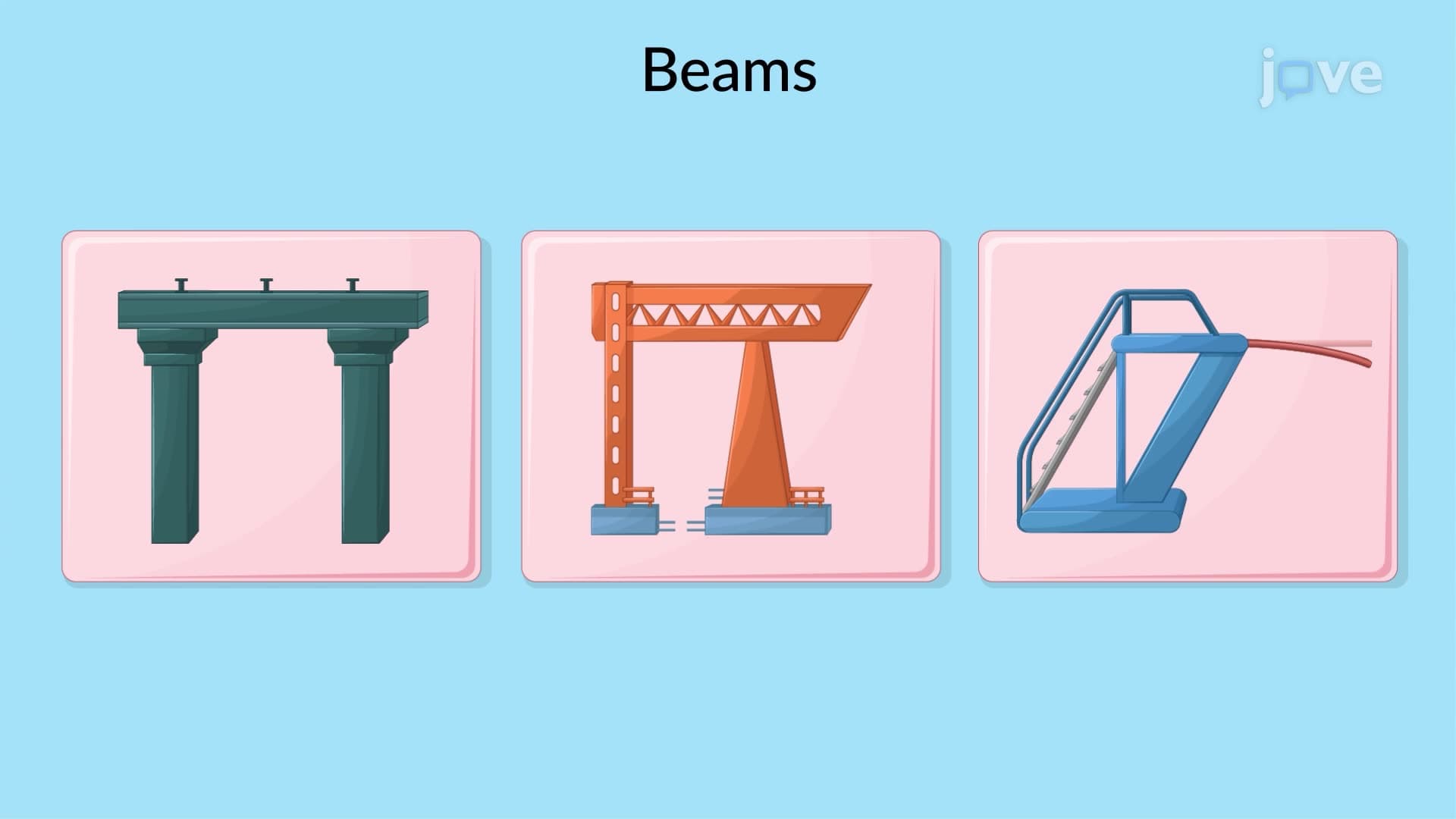
Engineers designing everything from stadium roofs to industrial crane beams must master deflection calculations to ensure public safety and structural performance. This knowledge directly applies to careers in structural, civil, and mechanical engineering, making it essential content for students considering these fields.
Frequently Asked Questions
Deflection of a beam is the vertical distance a beam moves from its original position when forces are applied to it. Think of it like a diving board bending downward when someone stands on it-that downward movement is deflection. It's measured in inches or millimeters and helps engineers ensure structures remain safe and functional under load.
Beam deflection problems commonly appear on AP Physics C: Mechanics exams and college statics/mechanics courses as calculation-based questions. Students typically solve for maximum deflection given beam properties, loading conditions, and support types. These problems test understanding of integration, boundary conditions, and the relationship between load, moment, and deflection.
Beam deflection is thoroughly covered in "Statics," "Mechanics of Materials," and "Structural Analysis" courses typically taken by engineering majors in their sophomore and junior years. These courses build from basic concepts to advanced topics like singularity functions. Many programs also include deflection analysis in "Introduction to Engineering" courses for first-year students.
Excessive beam deflection can cause serious problems in real structures like cracked walls, jammed doors, damaged equipment, or user discomfort from bouncy floors. For example, if hospital floor beams deflect too much, sensitive medical equipment might malfunction. Building codes specify maximum deflection limits to prevent these issues and ensure structures remain serviceable throughout their design life.
While basic beam deflection requires integration skills typically learned in Calculus II, the fundamental concepts are accessible to students with solid algebra and basic calculus knowledge. Most introductory problems use standard beam configurations with known deflection formulas. Advanced topics like singularity functions require stronger calculus skills but aren't necessary for understanding core principles.
Practice solving problems systematically: identify beam type and supports, draw shear and moment diagrams, select appropriate deflection formulas or integration methods, and always check units and reasonableness of answers. Create a reference sheet of common beam deflection formulas for different loading conditions. Focus on understanding the physical meaning behind mathematical calculations rather than just memorizing formulas.
Mastering beam deflection provides the foundation for advanced topics like indeterminate structures, dynamic analysis, and finite element methods studied in graduate-level courses. It also connects to practical skills needed for professional engineering work, including using structural analysis software and interpreting building code requirements. This knowledge is essential for passing the Fundamentals of Engineering (FE) exam required for engineering licensure.
After understanding beam deflection, explore more complex structural elements like continuous beams, frames, and indeterminate structures. Study topics such as moment distribution methods, influence lines, and computer-based structural analysis. These advanced concepts build directly on deflection principles and are crucial for careers in structural and civil engineering.
Related Micro-courses


