Loading video…


 9 Concepts
 5.2K views

Video Summary: What Is Elastic Curve
Ever wonder why the Golden Gate Bridge doesn't snap under traffic loads or how skyscrapers like the Empire State Building flex without breaking? The elastic curve describes the precise mathematical shape a beam takes when bent under load, following predictable patterns governed by fourth-order differential equations. Engineers use this concept to design everything from highway overpasses in California to steel frameworks in Manhattan high-rises. Watch the full video on JoVE Coach to master this concept with expert-led visuals and step-by-step explanations.
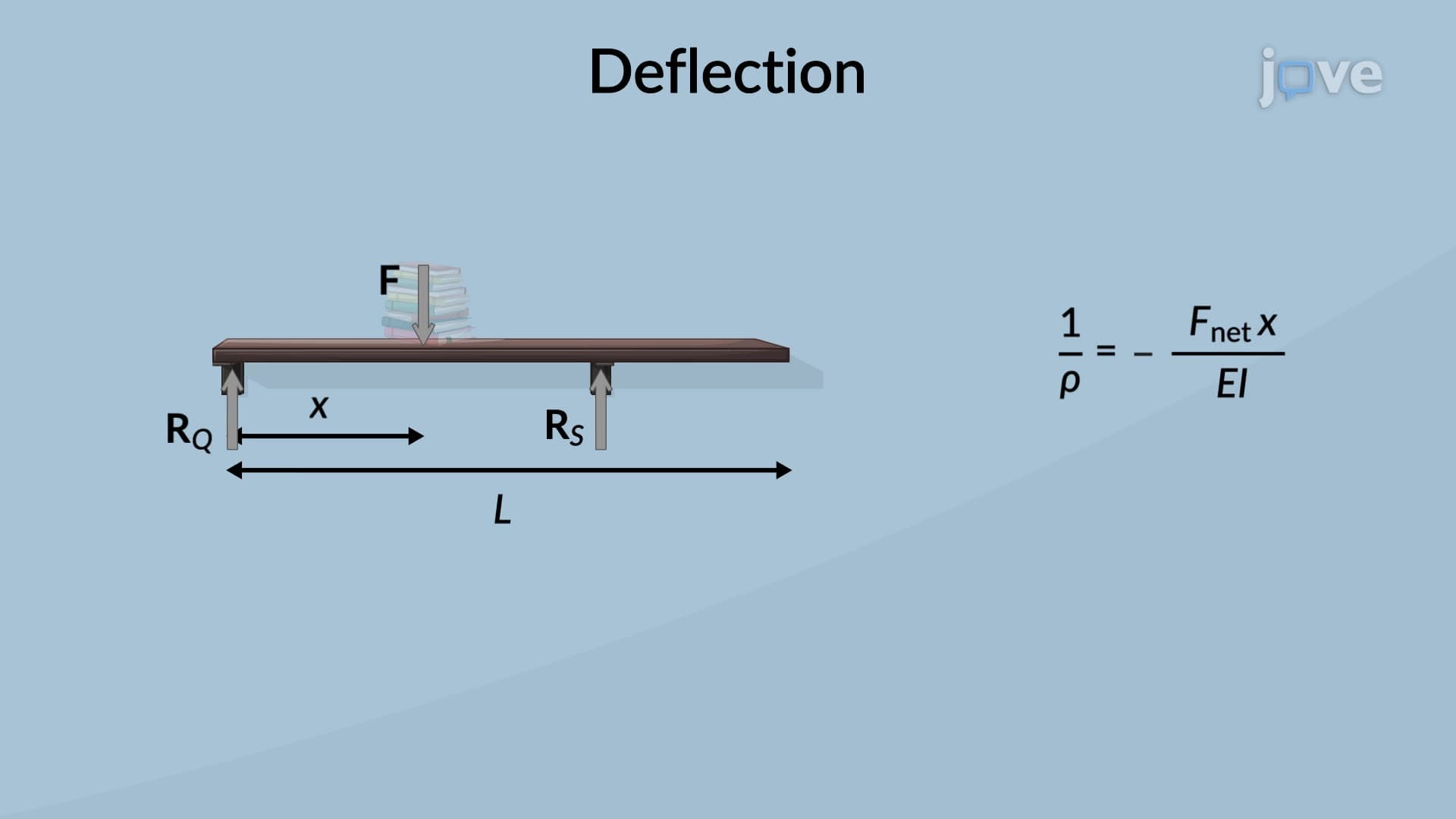
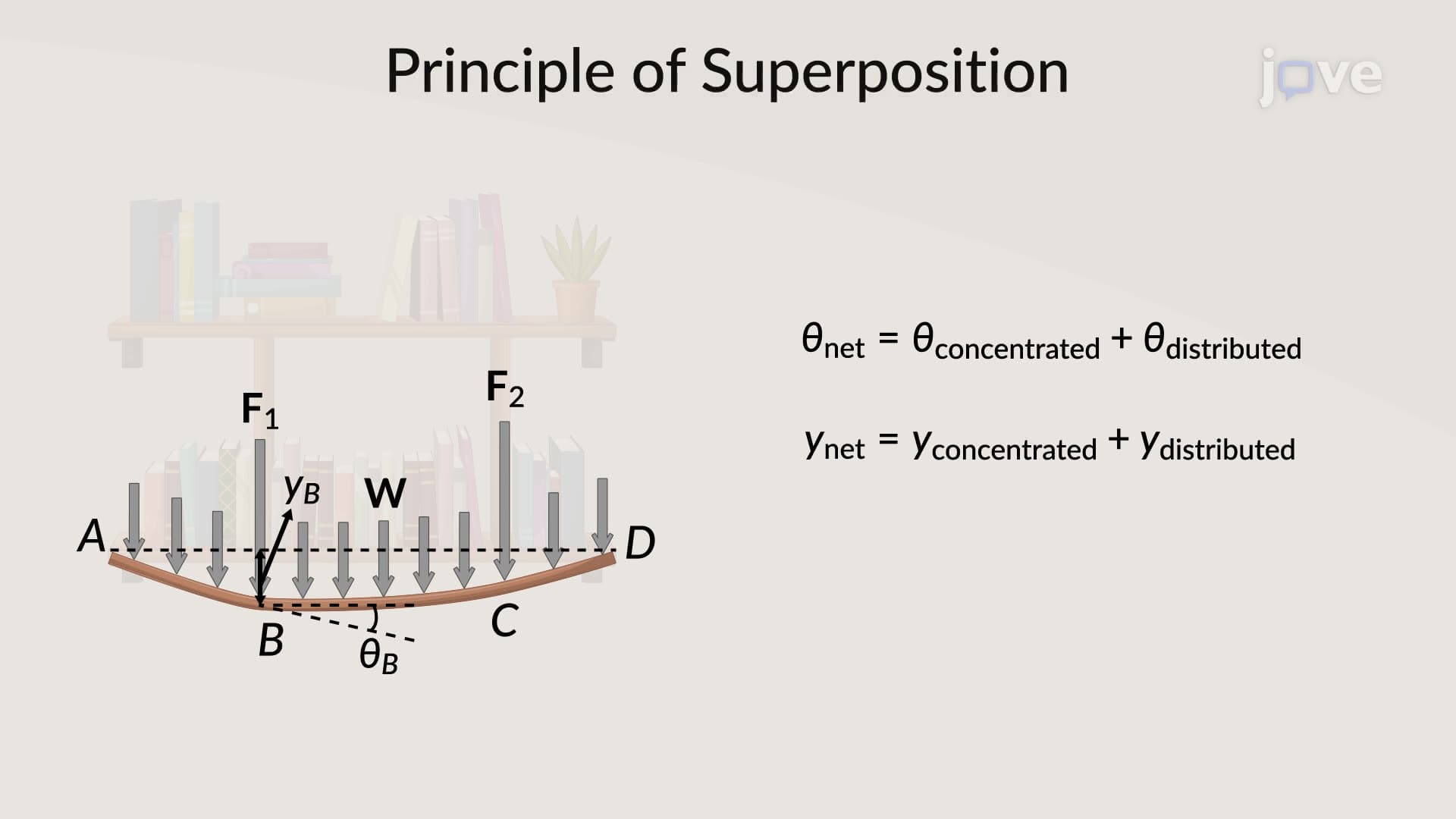
The elastic curve represents the mathematical description of how a structural beam bends and deforms when subjected to loads while remaining within its elastic limit. This fundamental concept bridges theoretical mechanics with practical engineering design, enabling engineers to predict exactly how structures will behave under various loading conditions.
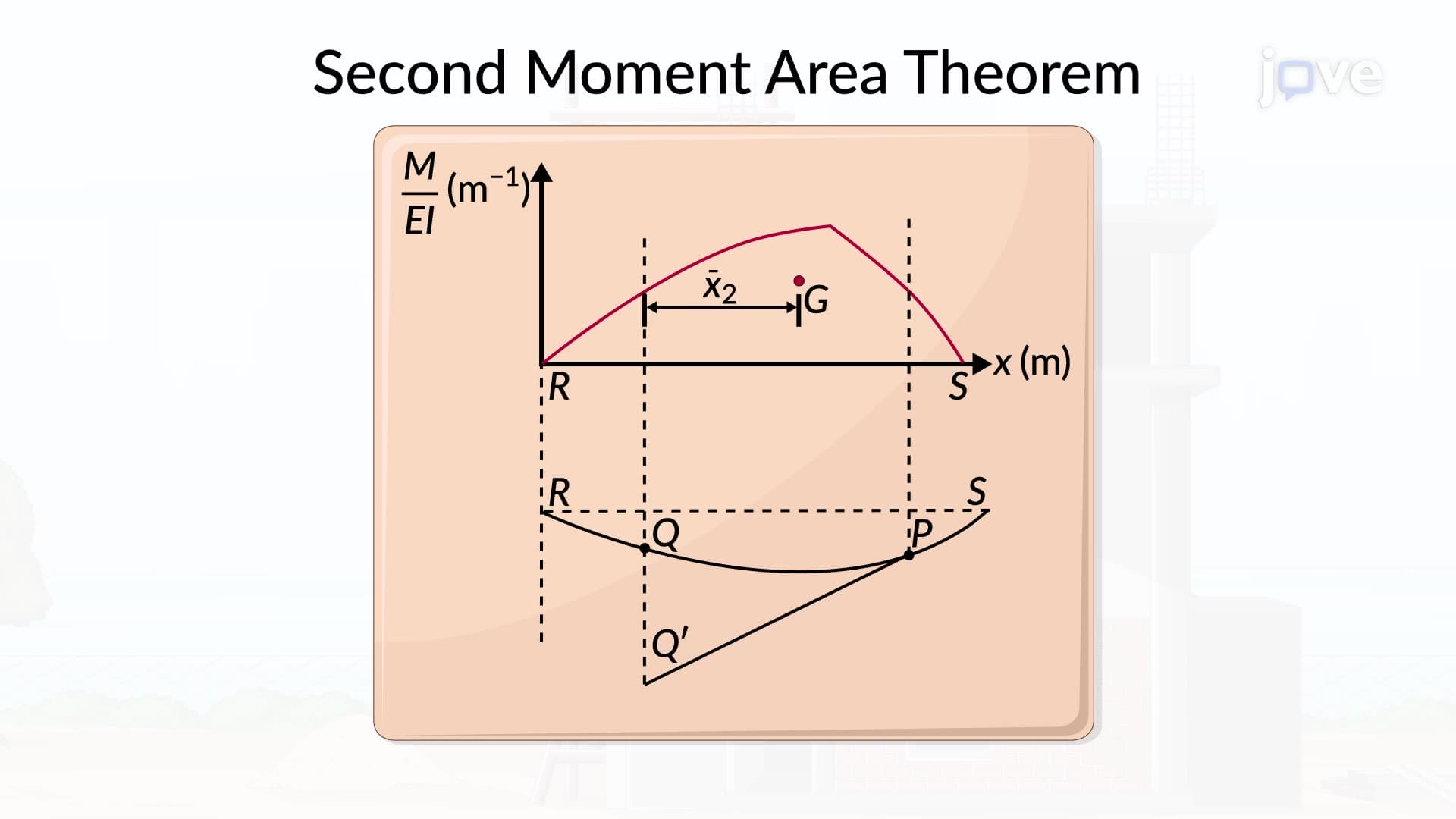
The elastic curve definition emerges from the relationship between applied loads and resulting beam curvature. Starting with basic shear force and bending moment relationships, engineers develop increasingly complex differential equations. The process begins with expressing shear force and bending moment in differential form, then progresses through successive differentiation steps.
The key breakthrough occurs when assuming constant flexural rigidity (EI), where E represents the material's modulus of elasticity and I denotes the cross-sectional moment of inertia. This assumption leads to a fourth-order linear differential equation that governs the beam's elastic curve. The equation takes the form: EI(d⁴y/dx⁴) = w(x), where y represents deflection and w(x) describes the distributed load function.
What is elastic curve in detail becomes clearer when examining how boundary conditions determine integration constants. Each integration of the fourth-order equation introduces a constant that must be evaluated using specific end conditions. For cantilever beams, typical conditions include zero deflection and zero slope at the fixed support, with zero moment and shear at the free end.
Simply supported beams present different boundary conditions, with zero deflection at both supports but allowing rotation. These varying conditions dramatically affect the final elastic curve shape, explaining why cantilever beams exhibit different deflection patterns compared to simply supported configurations.
Understanding elastic curve concepts proves essential for AP Physics C mechanics, college-level statics and mechanics of materials courses, and professional engineering licensure exams. Students preparing for the Fundamentals of Engineering (FE) exam frequently encounter elastic curve problems requiring integration of distributed load functions.
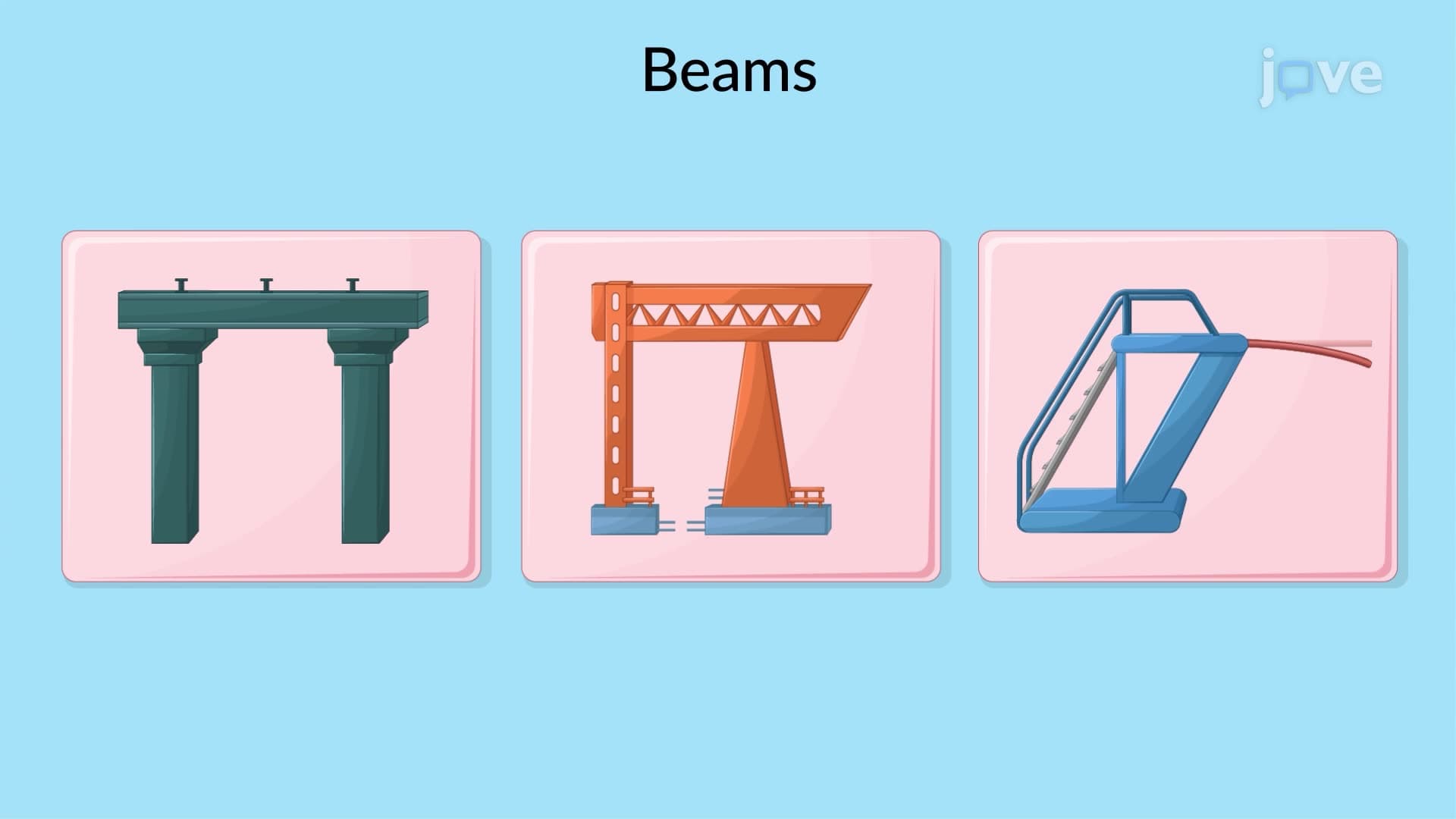
Real-world applications span from designing residential floor joists in Texas home construction to analyzing bridge girders on Interstate highways. The Federal Highway Administration relies on elastic curve calculations to establish load ratings for existing bridges, while building codes incorporate these principles to ensure structural adequacy in earthquake-prone regions like California.
Modern structural analysis software automates these calculations, but understanding the underlying elastic curve theory remains crucial for engineers to validate computer results and troubleshoot unexpected structural behavior.
Related Micro-courses