Loading video…


 9 Concepts
 5.2K views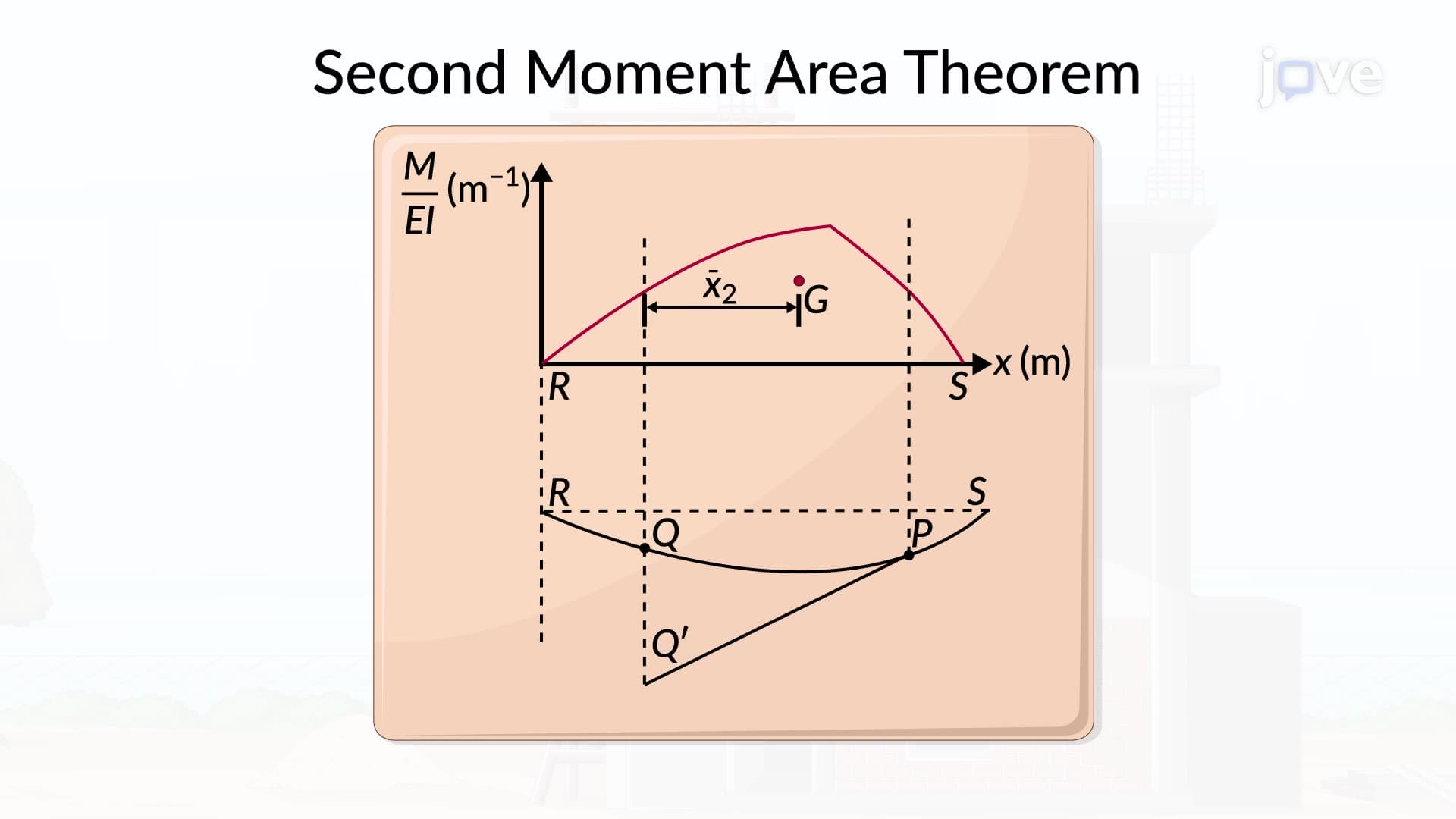

Video Summary: What are Moment Area Theorems
Ever wonder how engineers ensure a 50-story skyscraper in New York City won't wobble under wind loads? Moment area theorems are the mathematical foundation that structural engineers use to calculate beam deflections and slopes in buildings, bridges, and aircraft. These geometric principles transform complex bending moment diagrams into precise predictions of how beams will bend under load. What are moment area theorems? They're essential tools that convert the M/EI diagram into actionable engineering data for real-world construction projects. Watch the full video on JoVE Coach to master this concept with expert-led visuals and step-by-step explanations.
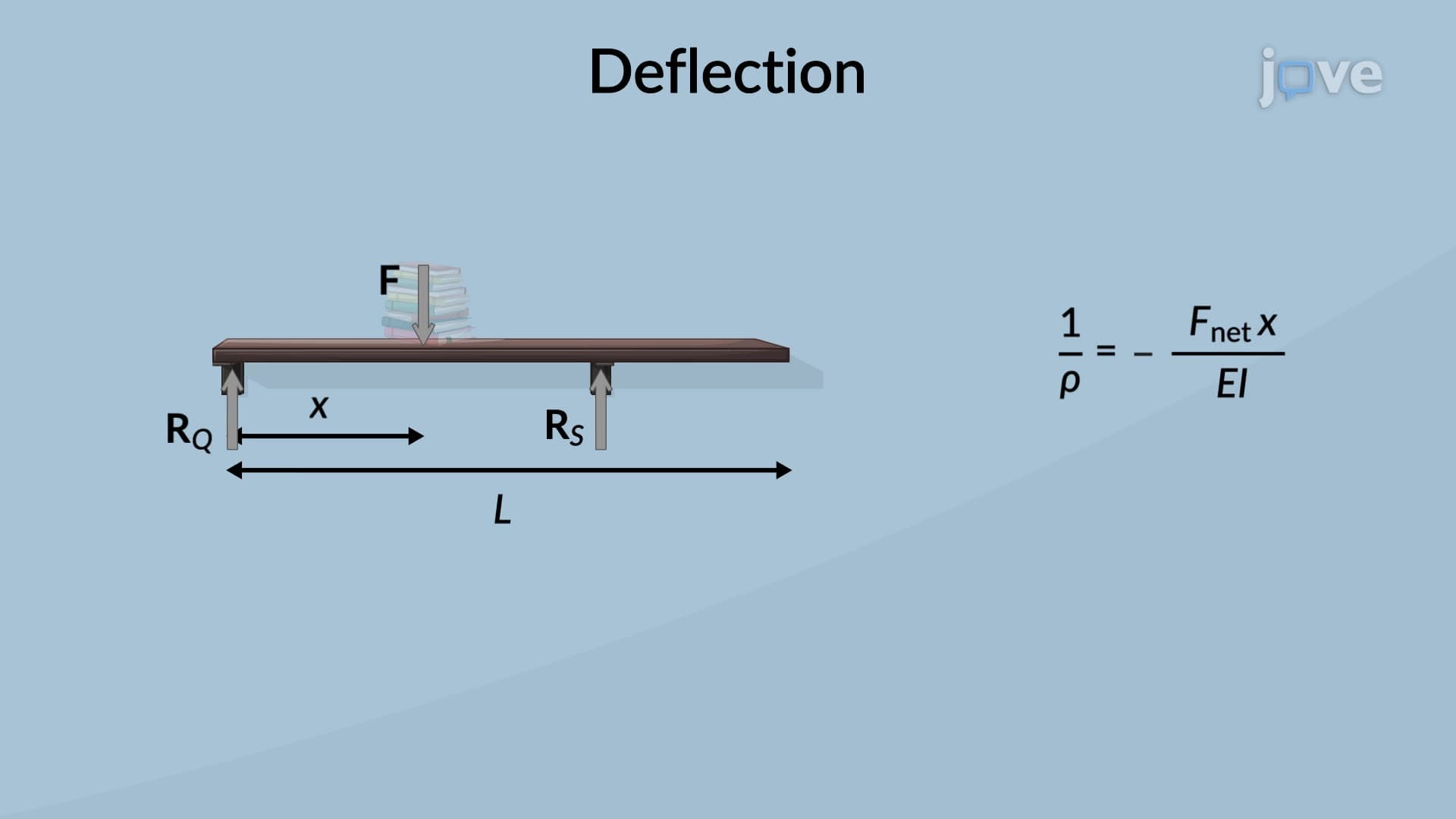
What are moment area theorems? They represent two fundamental geometric relationships that connect the mathematical properties of bending moment diagrams to the physical behavior of loaded beams. These theorems transform the abstract concept of M/EI (moment divided by elastic modulus times moment of inertia) into concrete predictions about beam deflection and rotation.
The theoretical foundation rests on the elastic curve equation, which describes how beams deform under load. When engineers plot M/EI along a beam's length, they create a diagram that directly relates to the beam's geometric changes. This relationship becomes particularly valuable when analyzing complex loading conditions that would be difficult to solve using traditional calculus methods.
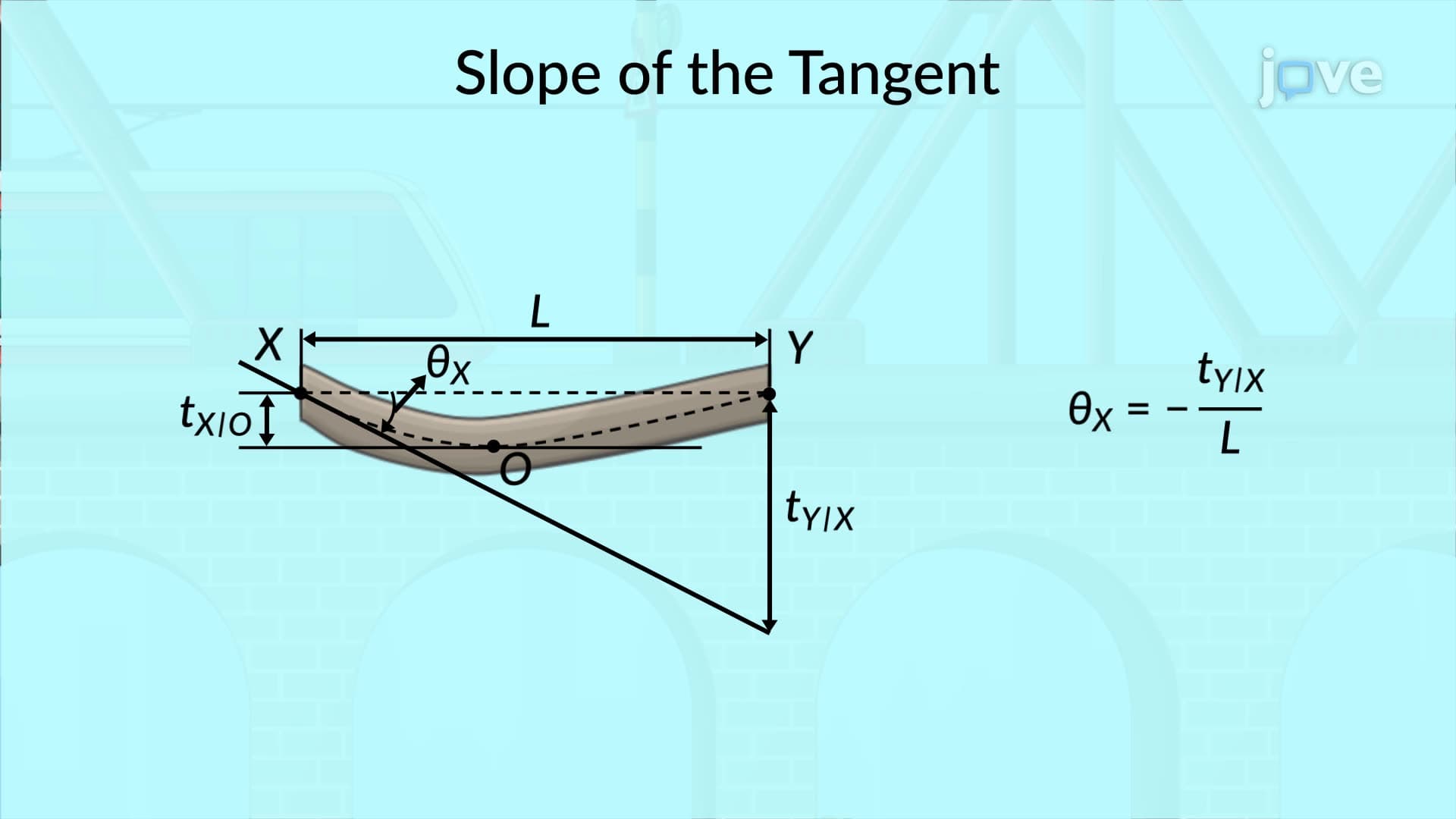
The first theorem establishes that the angle change between tangent lines at two points on a beam equals the area under the M/EI diagram between those same points. This relationship proves invaluable when determining beam slopes at supports, connections, and critical loading points.
Consider a highway bridge beam in California carrying traffic loads. Engineers use this theorem to calculate the rotation angle at each support pier, ensuring the bridge deck maintains proper drainage slopes and meets Department of Transportation specifications. The theorem converts the complex moment distribution into a simple area calculation, making hand calculations feasible even for variable loading conditions.
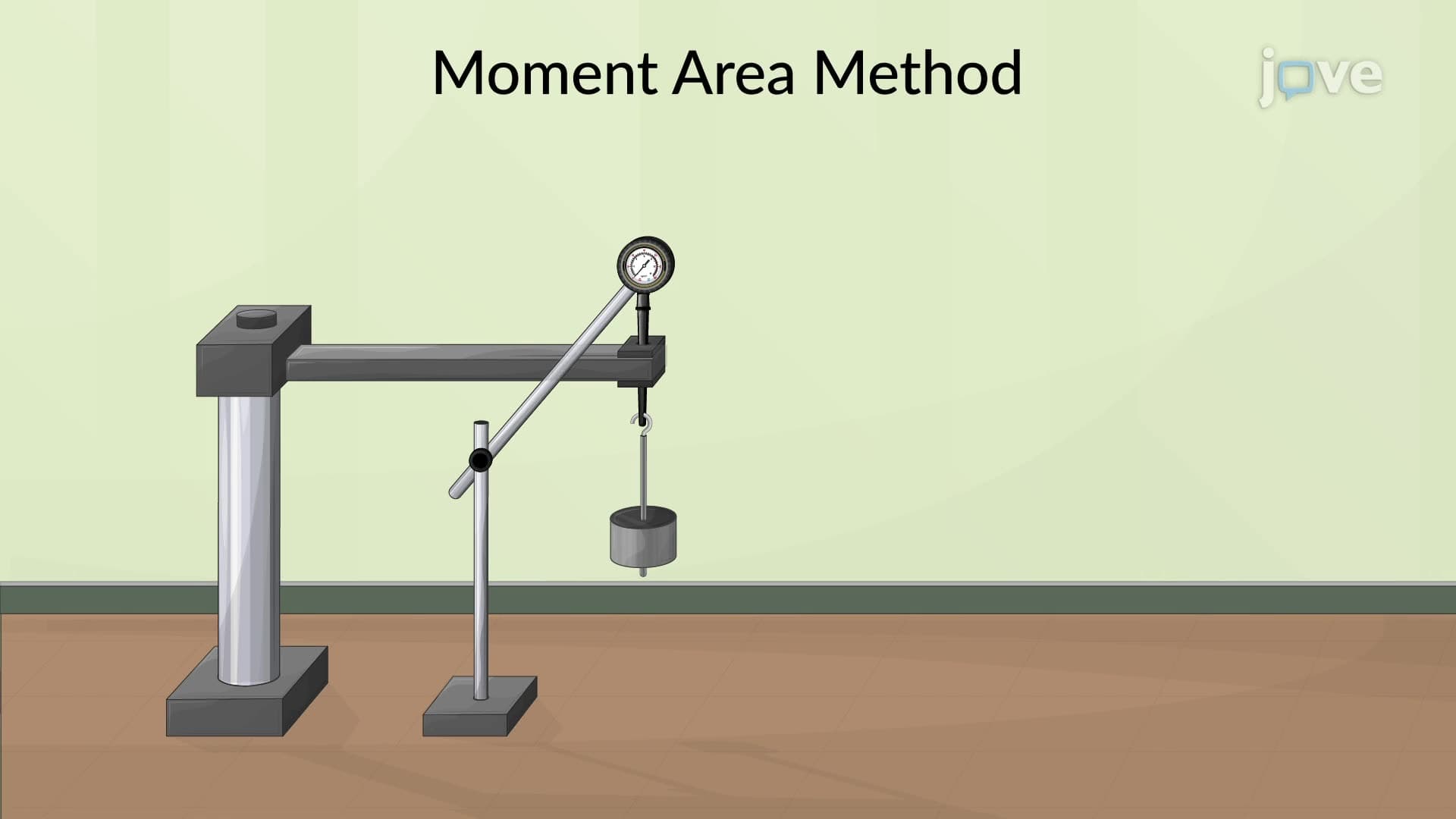
The second theorem relates tangential deviation to the first moment of area under the M/EI diagram. Tangential deviation represents the vertical distance between a point on the beam and the tangent line drawn from another reference point. This measurement directly correlates to actual beam deflection in many practical situations.
In practice, this theorem helps structural engineers verify that office building floor beams won't exceed deflection limits that could cause ceiling cracks or equipment malfunction. The calculation involves multiplying the M/EI diagram area by the distance from the area's centroid to a reference vertical axis, providing precise deflection predictions without complex integration.
These theorems appear frequently in structural engineering courses, civil engineering licensing exams, and Advanced Placement Physics C mechanics problems. Students encounter them in statics and mechanics of materials courses, where understanding geometric relationships often proves more intuitive than memorizing integration formulas.
Professional engineers rely on moment area theorems when designing everything from aircraft wing spars to stadium roof trusses. The Boeing 787 Dreamliner's composite wing structure, manufactured in South Carolina, underwent extensive deflection analysis using these principles to ensure flight safety and performance specifications.
Related Micro-courses