- Mechanical Engineering
- Energy Methods
Micro-courses:28

Energy Methods
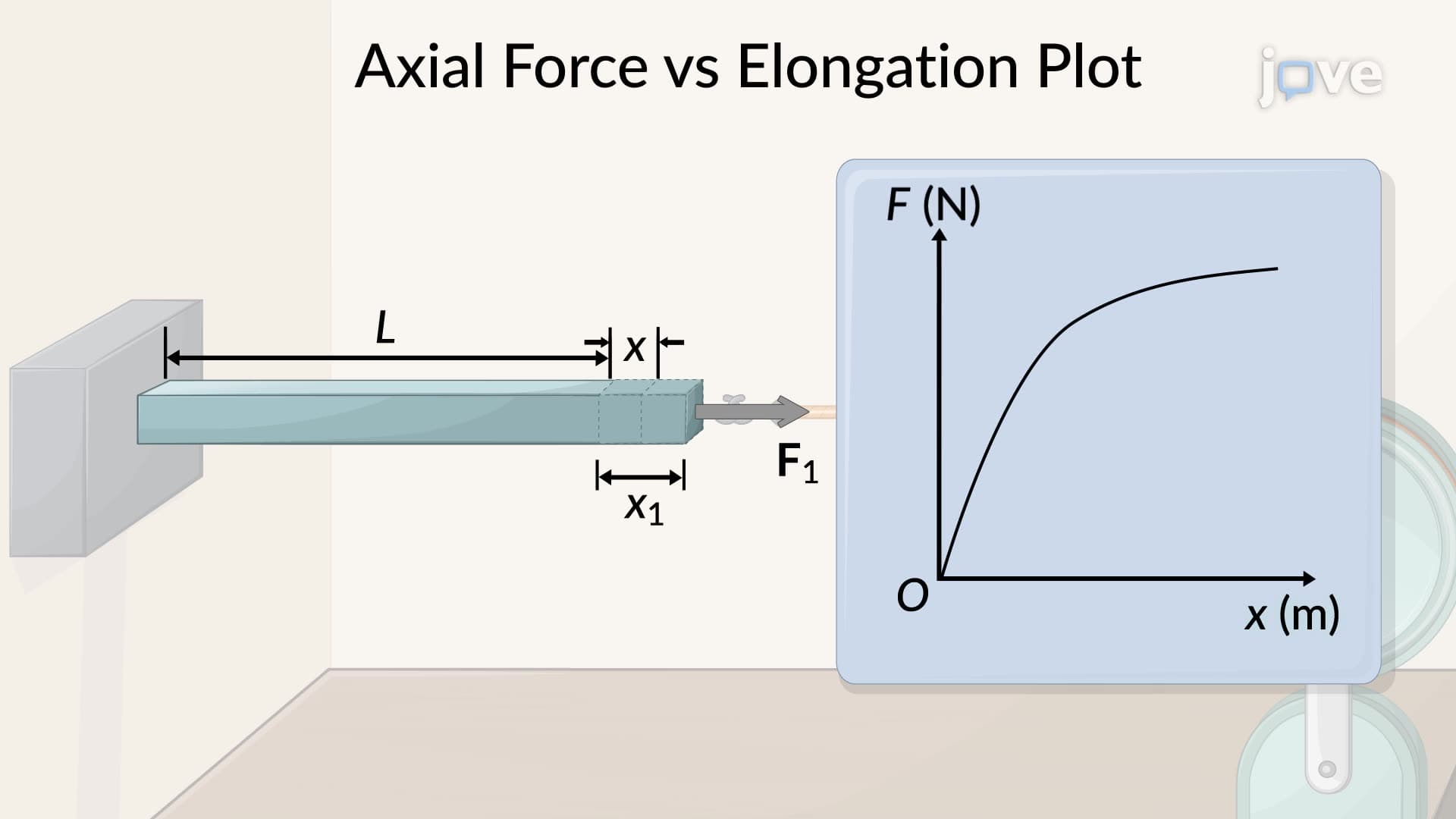
1. Strain Energy
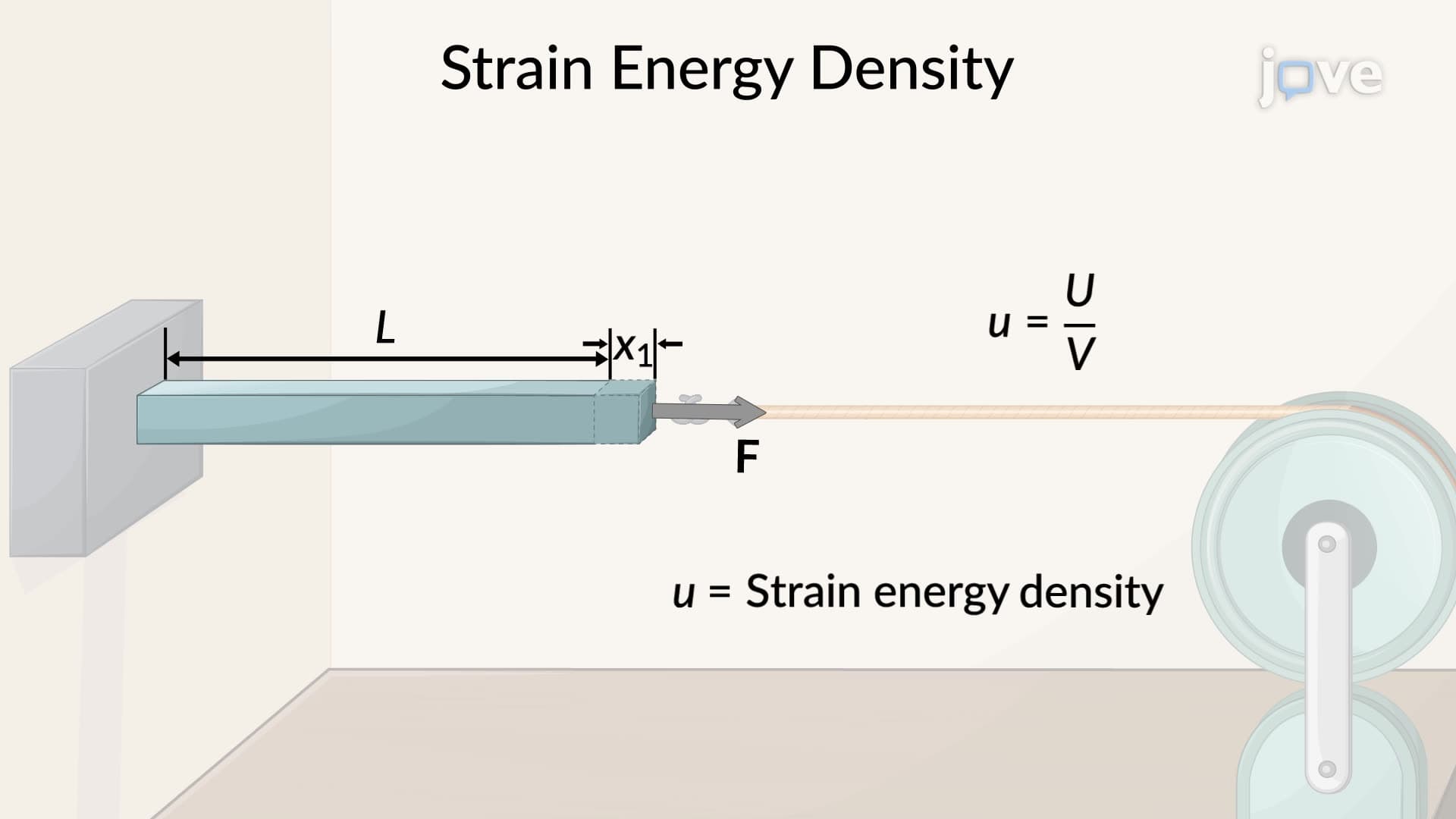
2. Strain-Energy Density
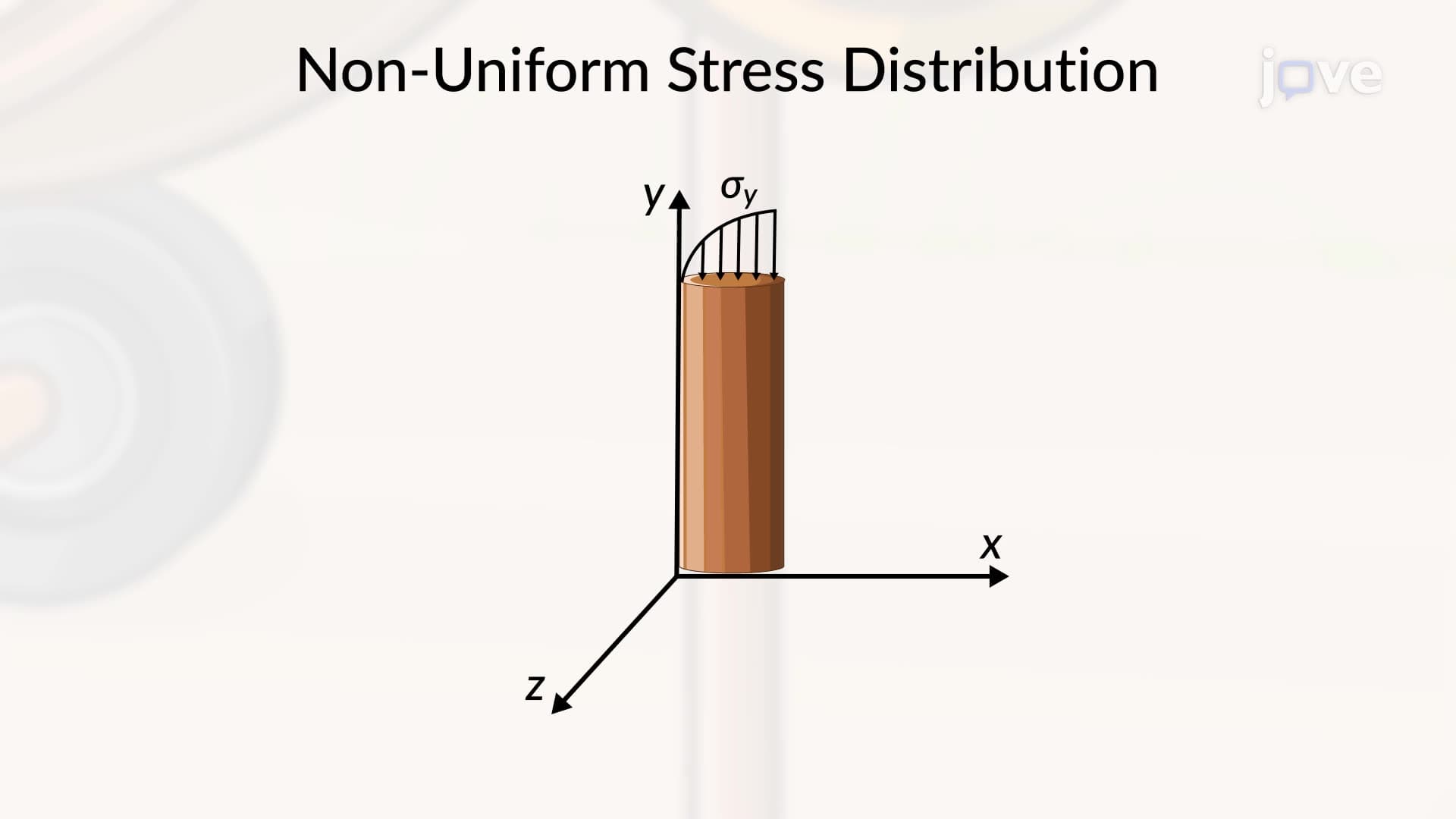
3. Elastic Strain Energy for Normal Stresses
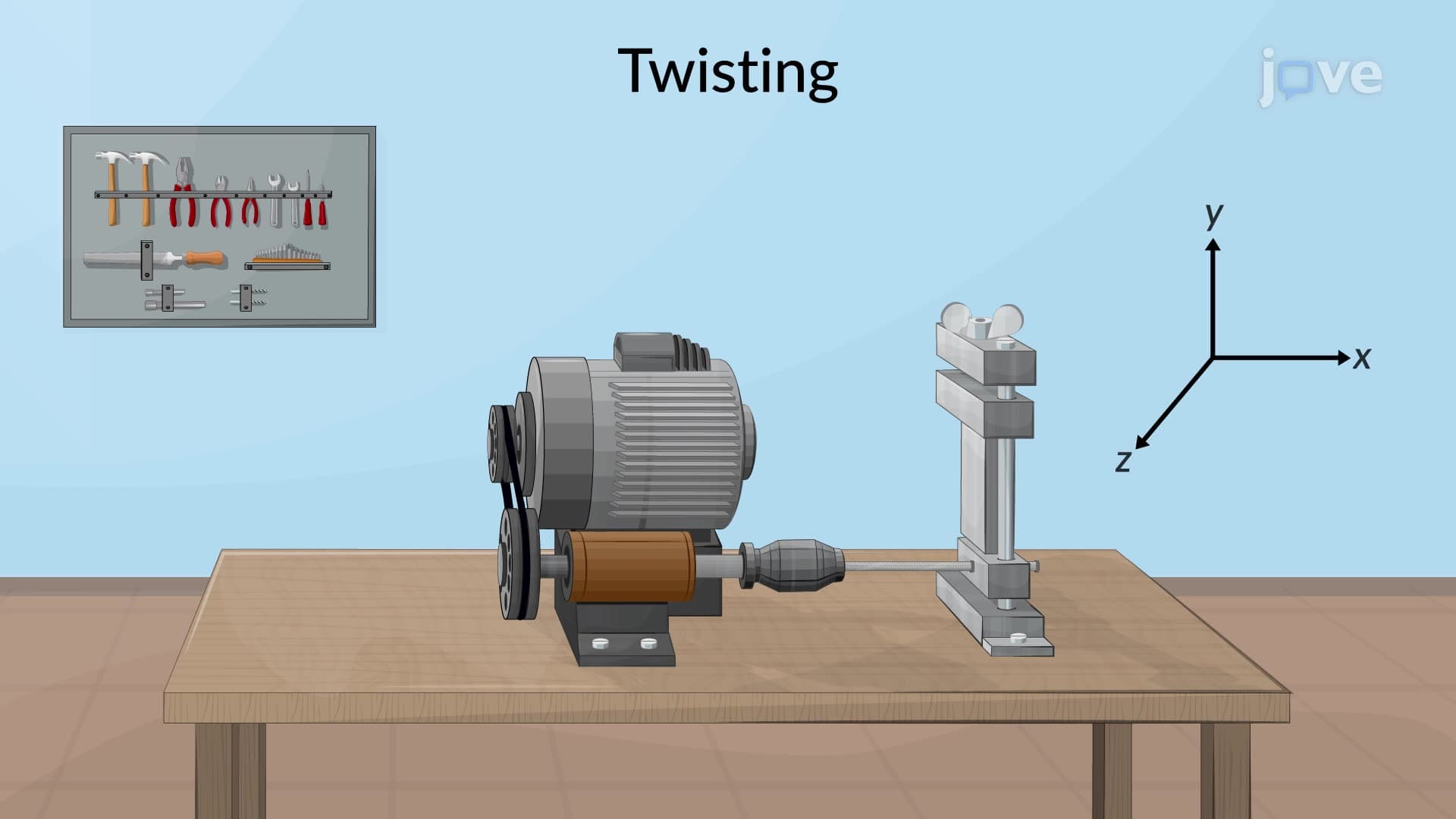
4. Elastic Strain Energy for Shearing Stresses
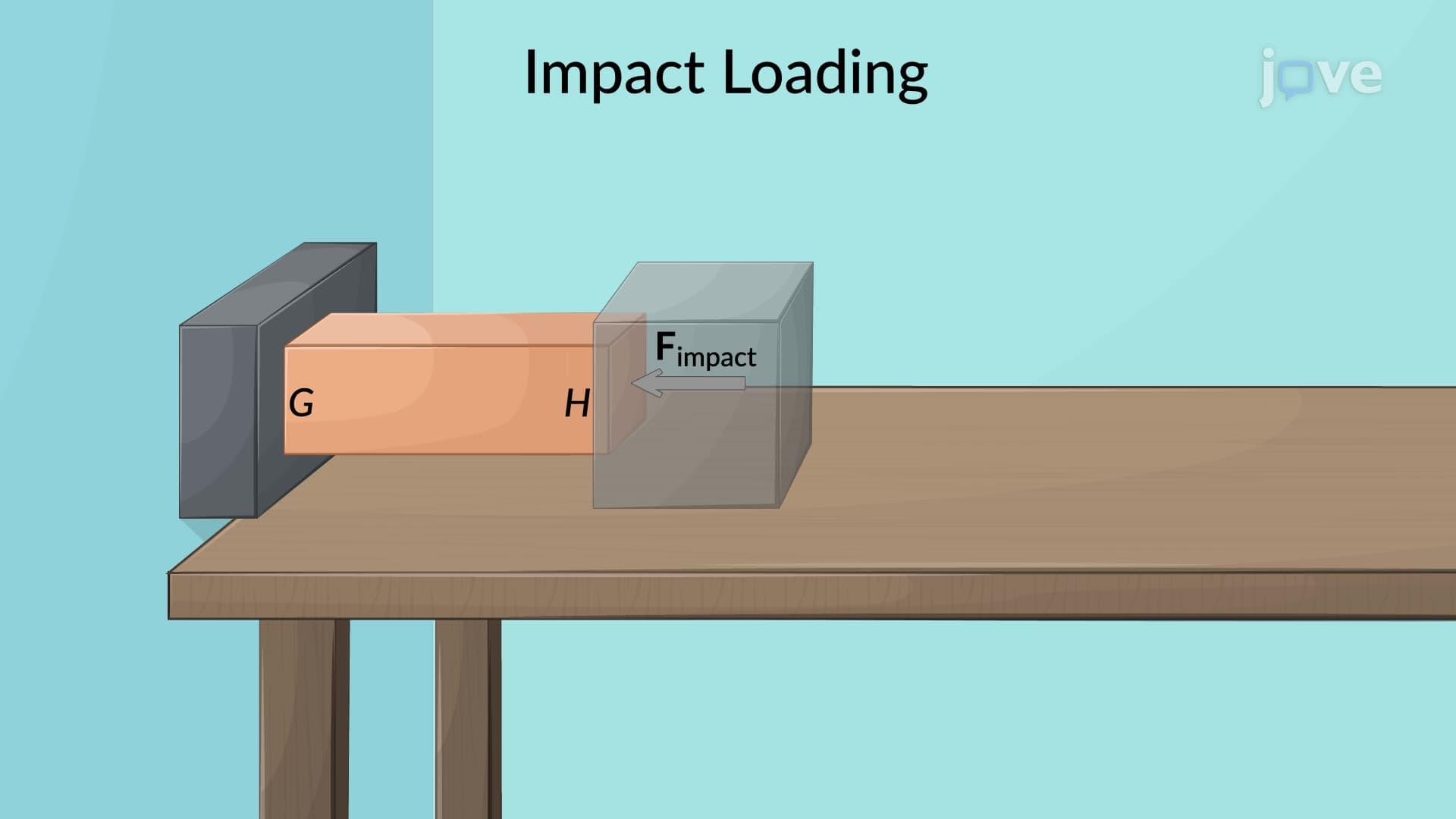
5. Impact Loading
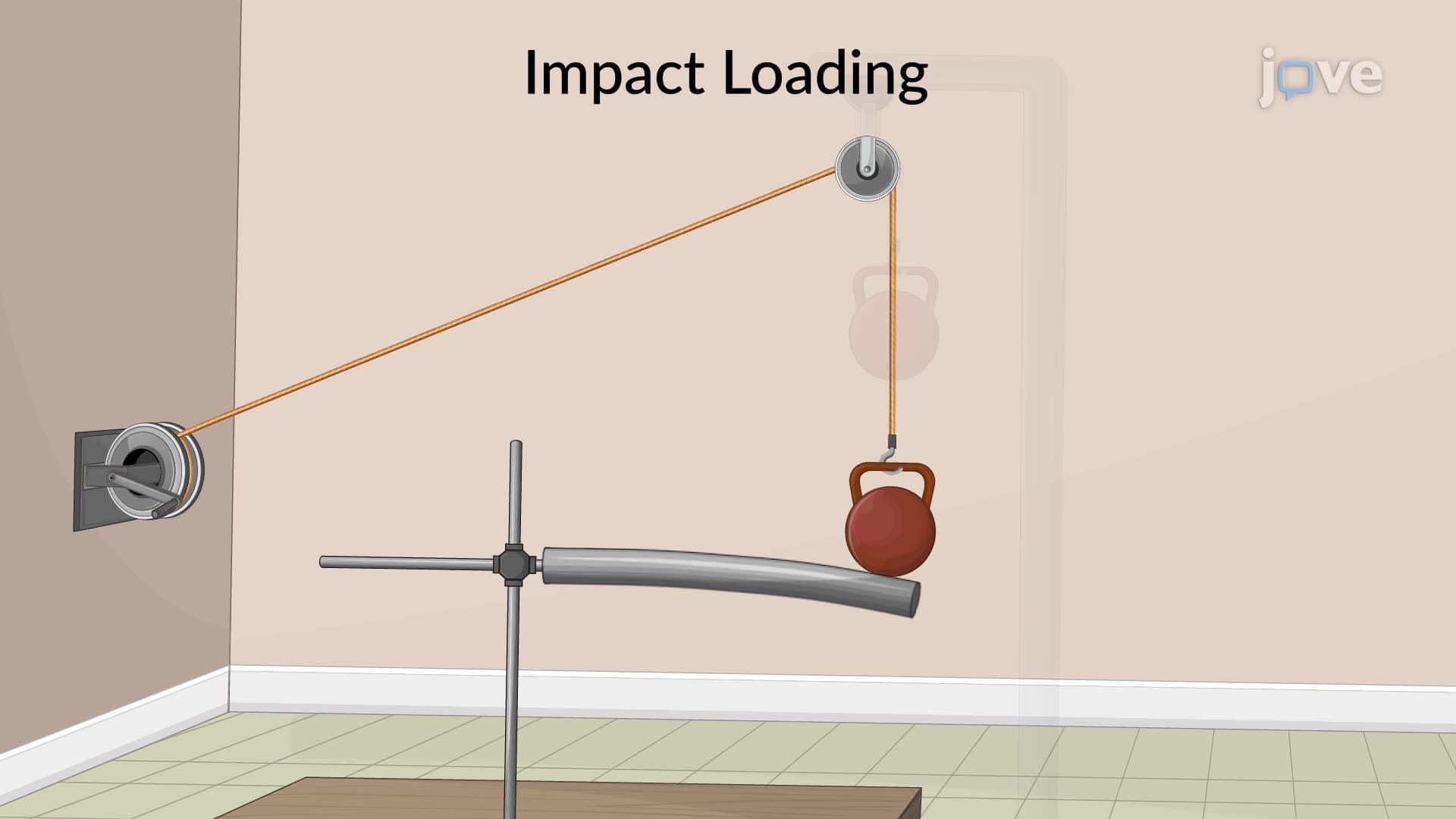
6. Impact Loading on a Cantilever Beam
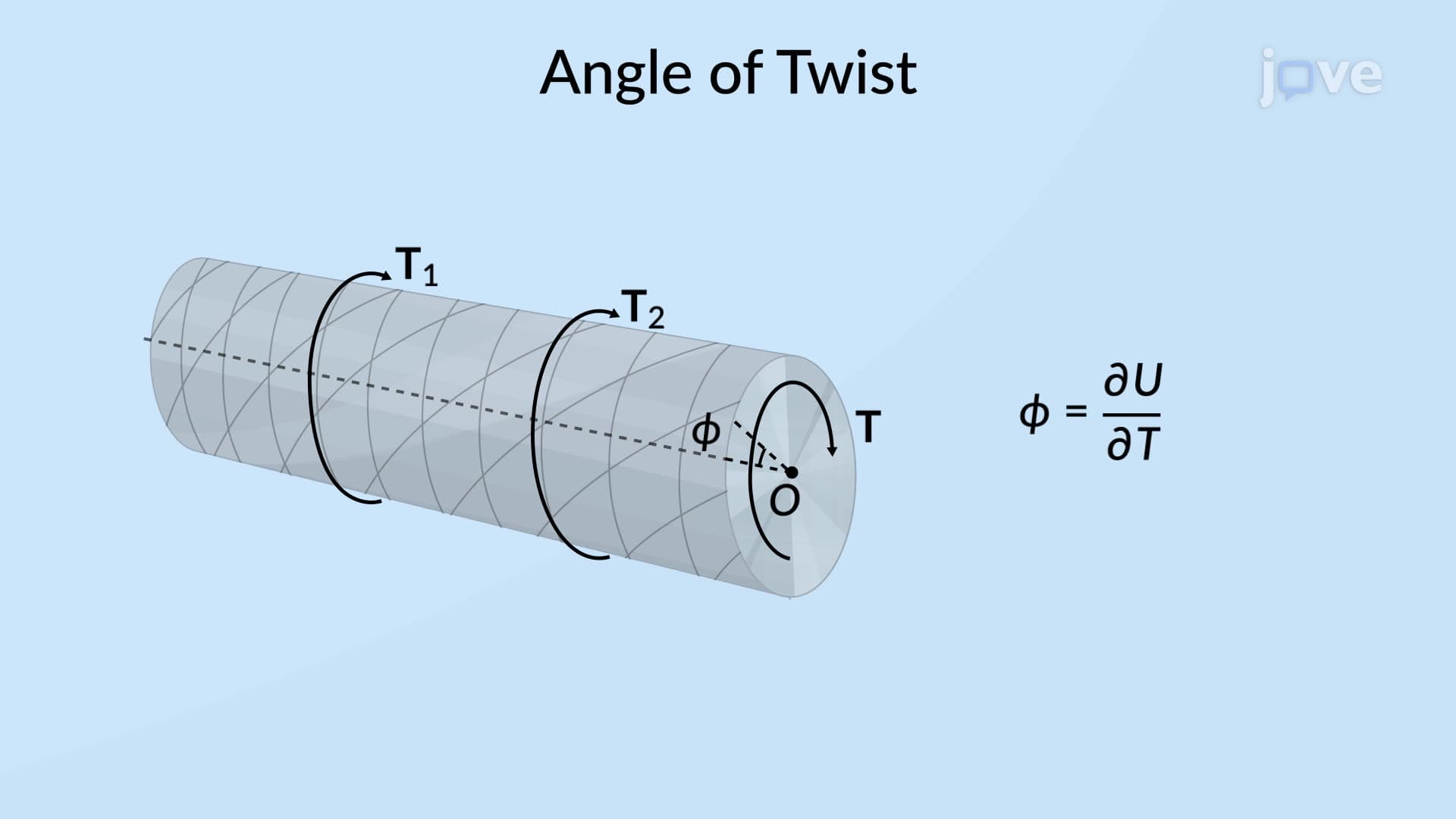
7. Castigliano's Theorem
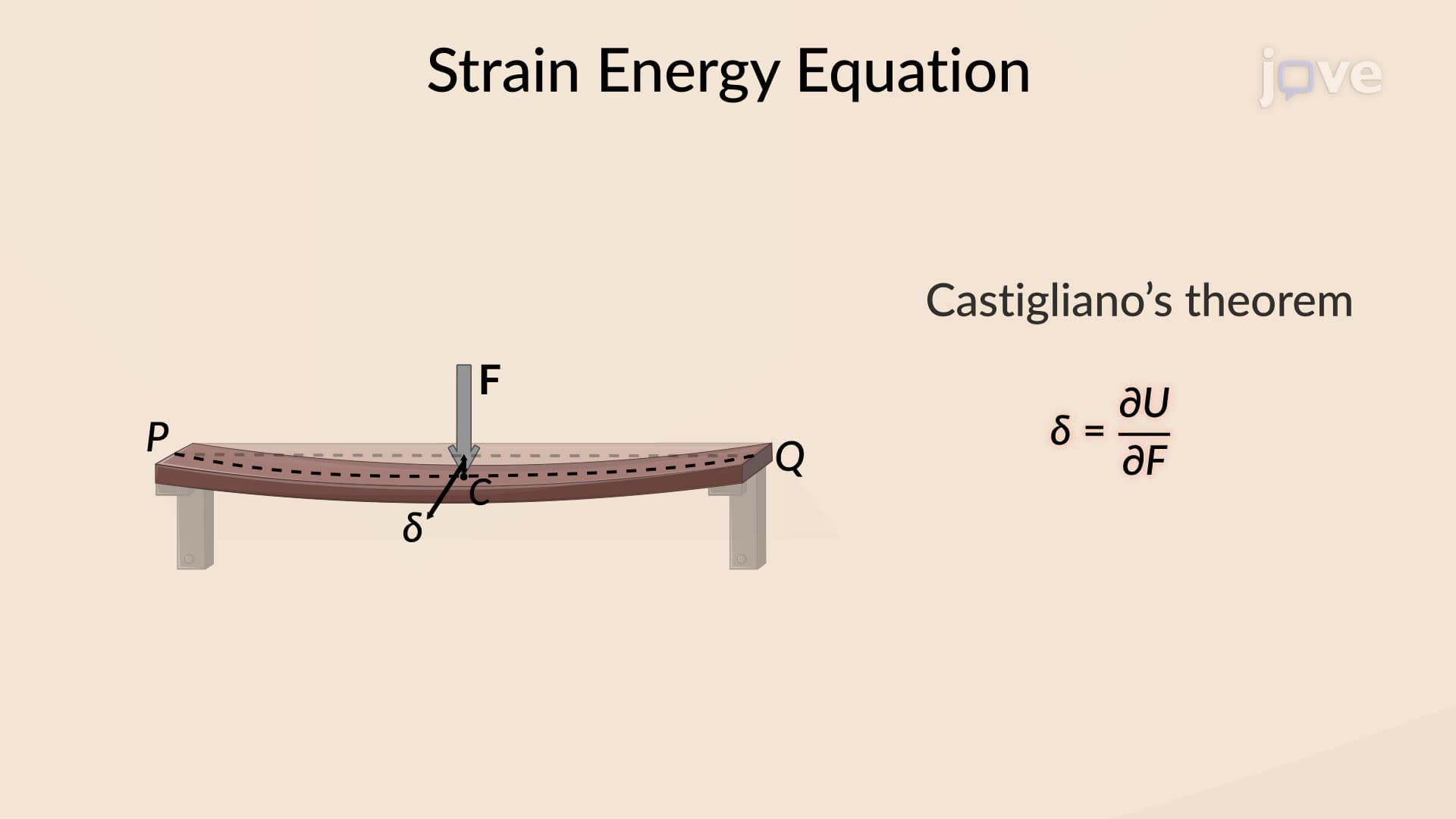
8. Castigliano's Theorem: Problem Solving
Energy methods provide powerful analytical tools for solving complex structural and mechanical engineering problems by focusing on energy transformations rather than force equilibrium. These techniques, including strain energy virtual work and Castigliano's theorem, enable engineers to determine displacements, stresses, and deformations in everything from bridge trusses to aircraft wings across the United States, making them essential for students pursuing careers in civil, mechanical, and aerospace engineering through JoVE Coach.
- Understand the fundamental concepts of strain energy and strain energy density in loaded materials
- Learn to calculate elastic strain energy for both normal and shearing stresses in structural members
- Identify the principles behind impact loading and its effects on cantilever beams and rods
- Explore Castigliano's theorem and its applications in determining structural displacements
- Analyze energy-based methods in structural mechanics for complex engineering problems
- Apply the unit load method and complementary energy principles to real-world structures
- Understand the relationship between work, energy, and deformation in elastic systems
- Learn to solve displacement problems using virtual work structures concepts
1. Strain Energy Fundamentals and Load-Deformation Relationships Understanding strain energy begins with examining how materials store energy when subjected to external forces. When a steel rod in a suspension bridge cable stretches under load, the work done by the applied force equals the area under the load-deformation curve. This stored energy, called strain energy, represents the material's ability to return to its original shape when unloaded. In the elastic region, strain energy is proportional to the square of deformation, making it crucial for designing structures like the Golden Gate Bridge's cables, where engineers must account for wind and traffic loads that cause repeated stretching and relaxation cycles.
2. Strain Energy Density and Material Properties Strain energy density represents the energy stored per unit volume of material, providing insight into material efficiency and failure mechanisms. For a concrete beam in a skyscraper like Chicago's Willis Tower, the strain energy density varies with stress and strain levels throughout the structure. The modulus of resilience defines the maximum strain energy density a material can absorb while remaining elastic, while the modulus of toughness represents the total energy required to cause failure. These properties help engineers select appropriate materials for different applications, from earthquake-resistant building frames to impact-absorbing automotive components.
3. Elastic Strain Energy for Normal Stresses When structural members experience axial loading, such as vertical columns in New York's One World Trade Center, they develop normal stresses that store elastic strain energy. For uniformly distributed stress, the strain energy calculation involves integrating the product of stress and strain over the material volume. In cases with non-uniform stress distribution, like tapered architectural columns, engineers must consider strain energy density variations throughout the member. This analysis becomes critical when designing compression members for buildings in seismic zones, where column failure could have catastrophic consequences.
4. Elastic Strain Energy for Shearing Stresses Shearing stresses develop in structural members subjected to twisting or transverse loading, such as drive shafts in wind turbines across Texas wind farms. The strain energy density for shearing deformation involves the modulus of rigidity and shearing strain, requiring integration over the member's cross-section. For circular shafts under torsion, the strain energy calculation incorporates the polar moment of inertia and internal torque distribution. Understanding shearing strain energy is essential for designing everything from aircraft propeller shafts to the torsion bars in automotive suspension systems.
5. Impact Loading Analysis Impact loading occurs when moving objects strike stationary structures, creating dynamic stress conditions that exceed static loading scenarios. Consider a hammer striking a steel beam during construction of the Interstate highway system – the kinetic energy of the hammer converts to strain energy in the beam, potentially causing stresses several times higher than equivalent static loads. Engineers assume conservative conditions where the striking object transfers all its energy to the target structure without bouncing. This analysis proves crucial for designing protective barriers, crash-resistant vehicle frames, and structures subjected to seismic loading in California earthquake zones.
6. Castigliano's Theorem Applications Castigliano's theorem provides an elegant energy-based method for determining displacements and rotations in statically indeterminate structures. By taking the partial derivative of strain energy with respect to applied loads, engineers can calculate deflections at specific points without solving complex equilibrium equations. This theorem proves particularly valuable for analyzing continuous bridge girders like those spanning the Mississippi River, where traditional force methods become mathematically intensive. The technique extends to finding rotations by differentiating strain energy with respect to applied moments, making it indispensable for analyzing rigid frame buildings and complex truss systems.
Frequently Asked Questions
Strain energy is the elastic potential energy stored within a deformed material, distinct from kinetic energy (energy of motion) or gravitational potential energy. When you stretch a rubber band, the work you do gets stored as strain energy, which can be recovered when the band returns to its original shape. In engineering structures, strain energy represents the material's capacity to absorb loads elastically without permanent deformation, making it crucial for designing everything from suspension bridge cables to aircraft wing structures.
The AP Physics exam typically includes energy methods in contexts involving elastic potential energy and work-energy theorem applications. Students encounter problems calculating work done in stretching springs, analyzing collision problems where kinetic energy converts to elastic potential energy, and applying conservation of energy to oscillatory systems. While Castigliano's theorem itself isn't tested, the underlying energy principles and strain energy concepts frequently appear in free-response questions involving springs and elastic collisions.
Choose Castigliano's theorem for finding displacements in statically indeterminate structures, especially when you need deflections at specific load points. Use virtual work methods when dealing with complex loading patterns or when you need to find displacements at points where no loads are applied. For impact problems, apply energy conservation principles equating kinetic energy to strain energy. The unit load method works best for determinate structures where you need displacements due to multiple load cases.
Energy methods often provide more direct solutions for displacement problems, but they require solid understanding of calculus and energy concepts. While force methods rely on familiar equilibrium equations, energy approaches involve partial derivatives and integration. However, once mastered, energy methods frequently yield elegant solutions to problems that would be extremely difficult using traditional force analysis. The key is practicing both approaches to recognize when each method offers advantages.
Structural engineers routinely use energy methods in finite element analysis software to model complex structures like stadium roofs and high-rise buildings. Castigliano's theorem underlies many computer algorithms for calculating structural deflections. Automotive engineers apply impact energy analysis when designing crumple zones and safety systems. Aerospace engineers use strain energy methods to analyze wing loading and fuselage stress distributions. These methods are especially valuable for optimization problems where engineers need to minimize weight while maintaining structural integrity.
Start by mastering the conceptual foundation of work and energy before diving into specific theorems. Practice identifying when energy methods offer advantages over force methods – typically for displacement calculations and statically indeterminate problems. Work through progressively complex examples, beginning with simple axially loaded members before tackling beam bending and torsion problems. Create a systematic approach for applying Castigliano's theorem: identify the strain energy expression, take appropriate partial derivatives, then integrate. Regular practice with diverse problem types builds the pattern recognition essential for exam success.
Energy methods form the theoretical foundation for finite element analysis, the primary computational tool used in modern engineering design. Advanced topics like structural optimization, dynamic analysis, and nonlinear material behavior all build upon energy principles covered in introductory courses. Understanding complementary energy and virtual work principles prepares students for graduate-level courses in continuum mechanics and advanced structural analysis. These concepts also appear in specialized fields like biomechanics, where strain energy helps analyze bone and tissue behavior under physiological loading conditions.
This microcourse includes 8 concept videos that walk you through the building blocks of Mechanical Engineering. Each video is short, about 1 minute, so you can cover a full topic during a coffee break or between classes. The full sequence starts with Strain Energy and ends with Castigliano's Theorem: Problem Solving.
The playlist moves from big-picture ideas to the precise vocabulary used in Mechanical Engineering. Early videos introduce Strain Energy, Strain-Energy Density, and Elastic Strain Energy for Normal Stresses. The middle of the series focuses on Impact Loading, Impact Loading on a Cantilever Beam, and Castigliano's Theorem. The final stretch covers Castigliano's Theorem: Problem Solving.
Related Subjects
 Civil Engineering 30 micro-courses›Electrical Engineering 33 micro-courses›