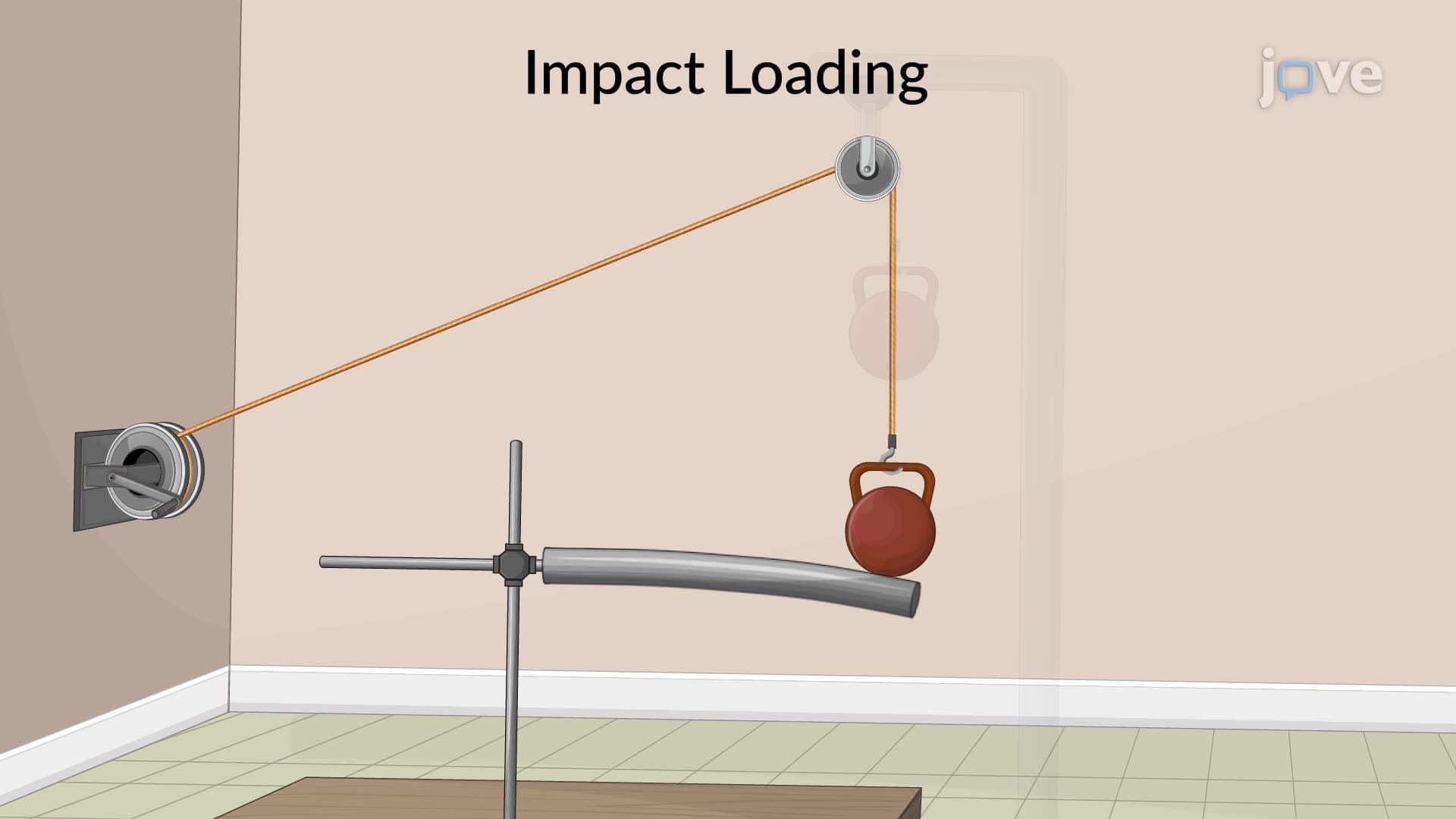
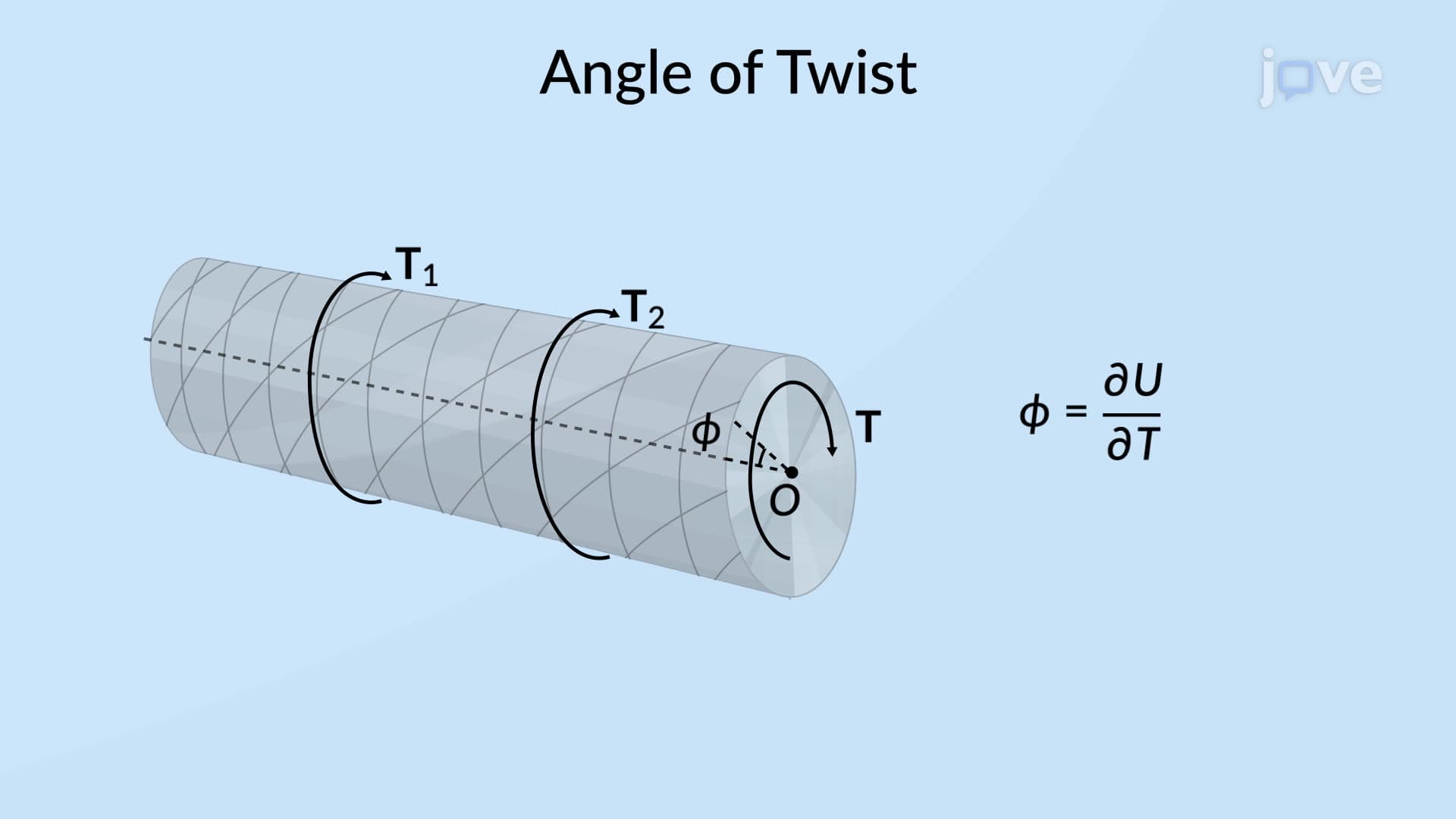
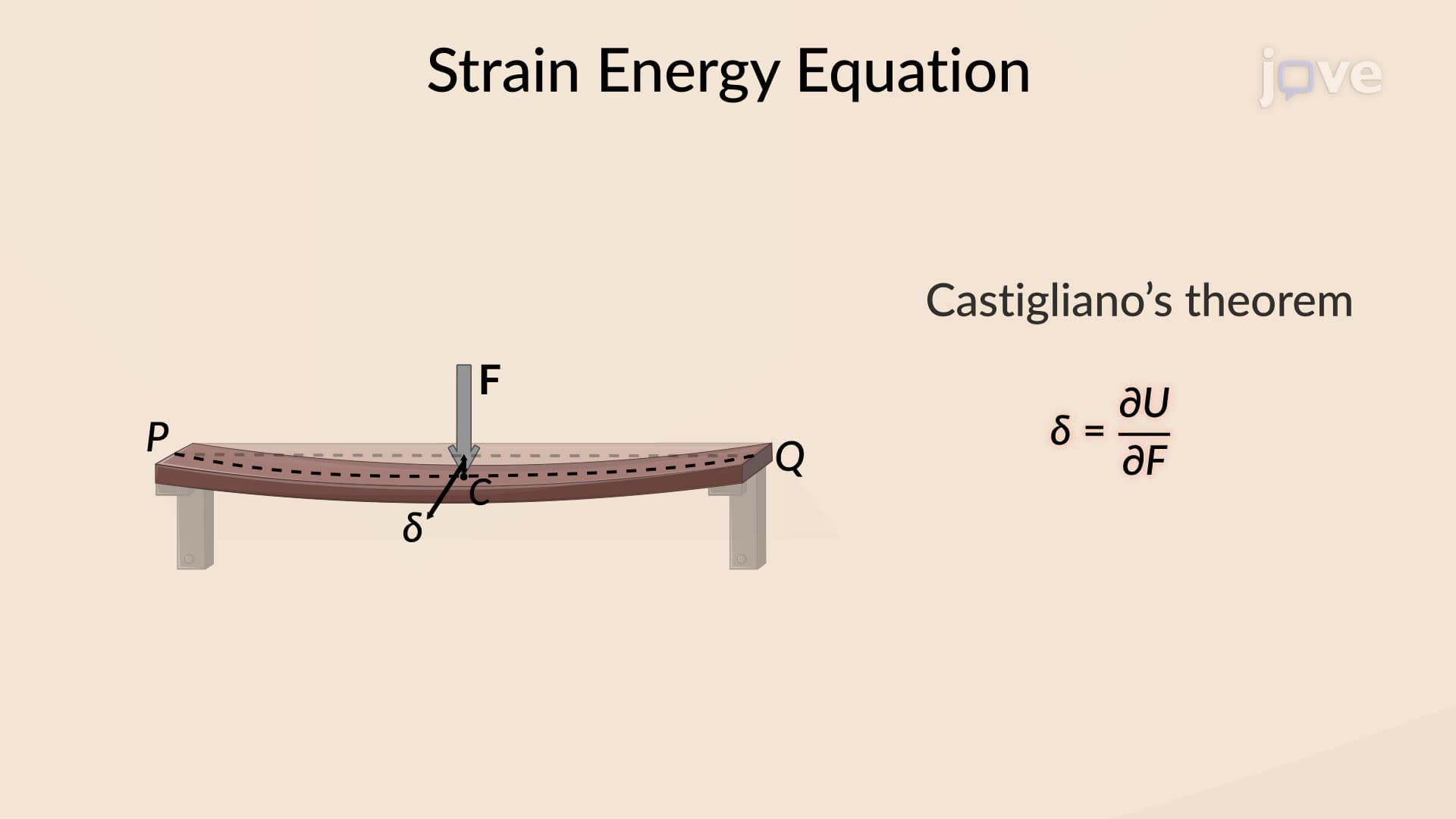
Loading…
Loading video…

4,629 views
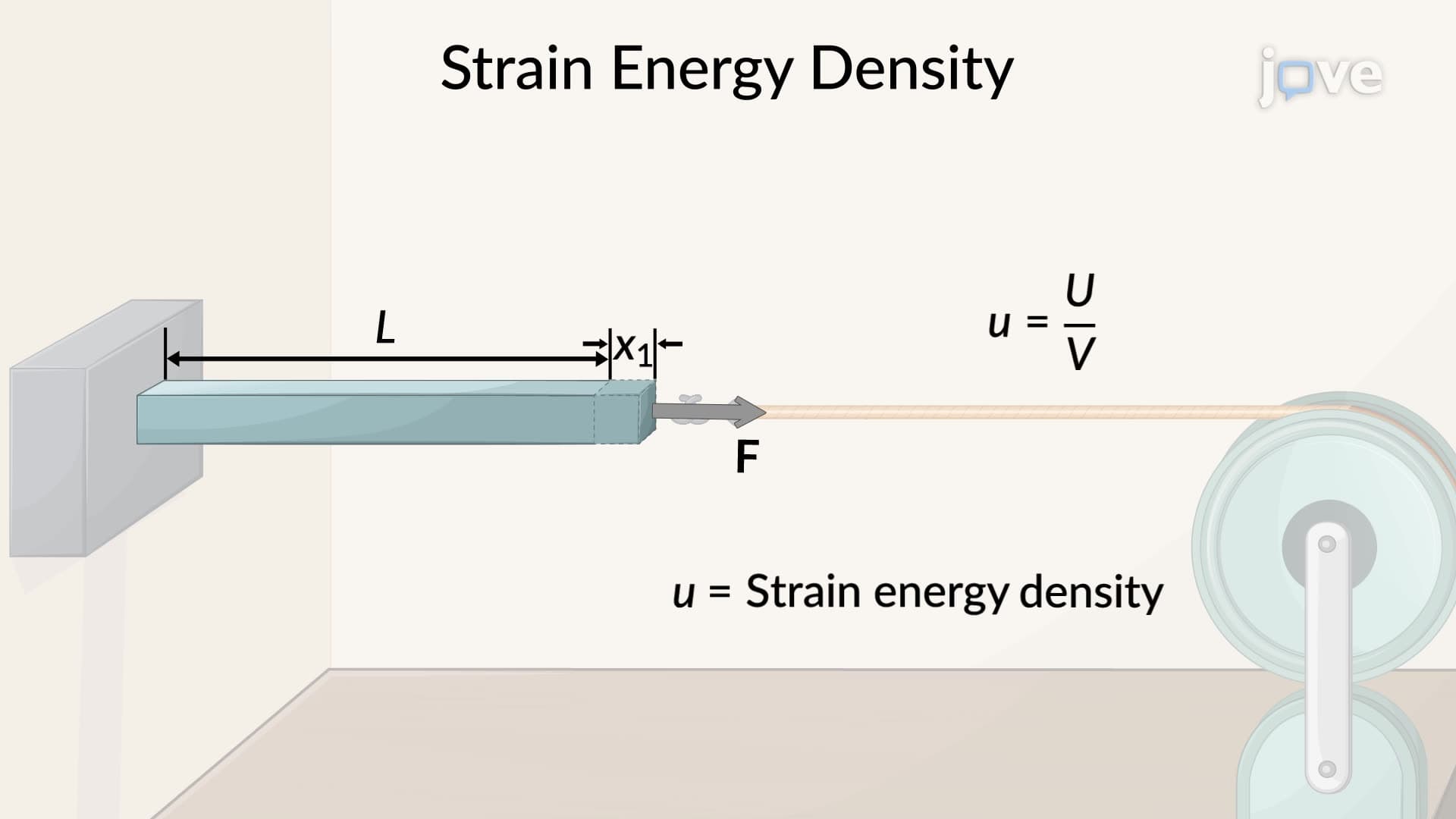
Ever wonder why a rubber band snaps back to its original shape after stretching, but a plastic bag stays permanently deformed? Strain energy density explains this fundamental difference in material behavior. This concept measures how much energy materials can store per unit volume when subjected to stress, making it crucial for designing everything from Boeing aircraft wings to suspension bridges like San Francisco's Golden Gate Bridge. What is strain energy density and how does it determine whether materials bounce back or break permanently? Watch the full video on JoVE Coach to master this concept with expert-led visuals and step-by-step explanations.
Strain energy density represents the amount of energy stored per unit volume when a material undergoes deformation under applied forces. This fundamental concept in materials science and mechanical engineering helps predict how structures will behave under stress, from the steel beams in Chicago's Willis Tower to the composite materials in Tesla vehicle frames.
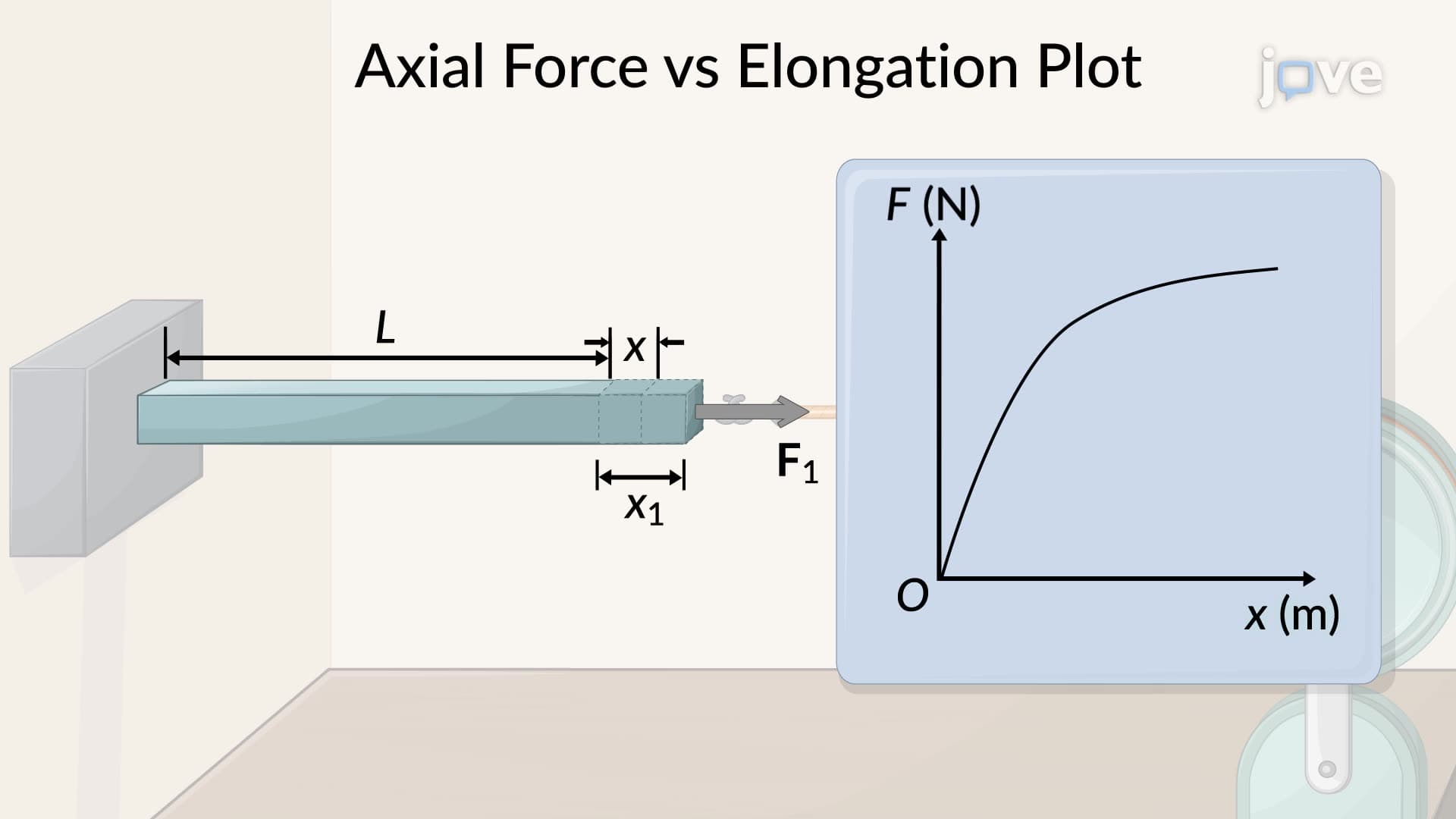
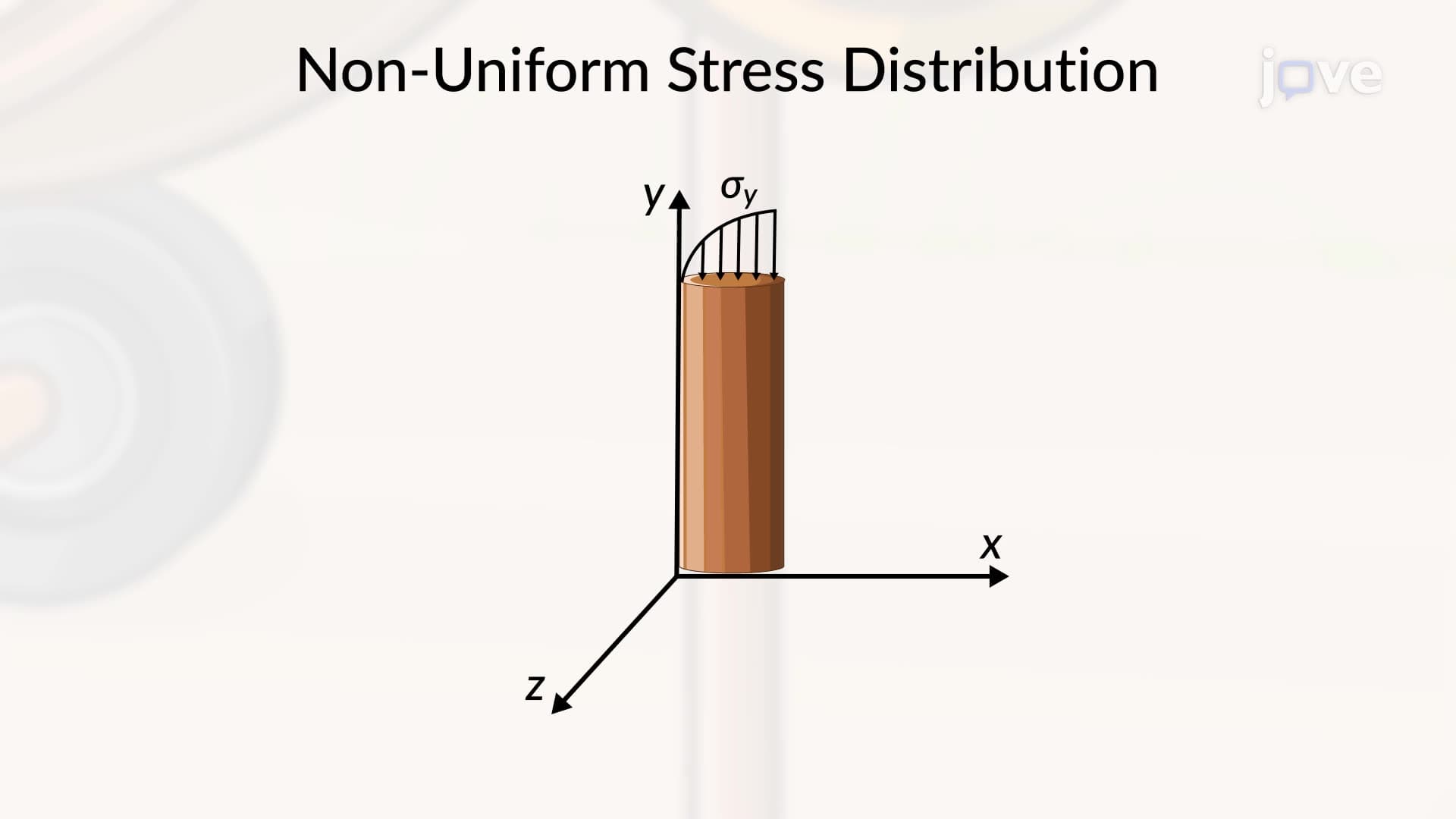
When an axial force acts on a rod or structural member, it creates internal stress (force per unit area) and strain (deformation per unit length). The material stores energy during this deformation process, similar to how a compressed spring stores potential energy. This stored energy per unit volume is the strain energy density, measured in units of energy per volume (typically joules per cubic meter or pound-feet per cubic inch).
In the elastic region, materials follow Hooke's Law, creating a linear relationship between stress and strain. Here, strain energy density can be calculated using the modulus of elasticity (Young's modulus), which varies significantly between materials. For example, steel has a Young's modulus of approximately 200 GPa, while aluminum has about 70 GPa.
The modulus of resilience represents the maximum strain energy density a material can store while remaining completely recoverable. This property is crucial for applications like automotive suspension springs or aircraft landing gear, where components must repeatedly absorb energy and return to their original shape. Engineers at companies like Caterpillar and John Deere rely on resilience calculations when designing heavy machinery that experiences cyclical loading.
Beyond the elastic limit, materials enter the plastic region where permanent deformation occurs. Unlike elastic deformation, not all strain energy is recoverable in this region. Some energy converts to heat through internal friction and molecular rearrangement, explaining why a bent paperclip becomes warm and doesn't return to its original shape.
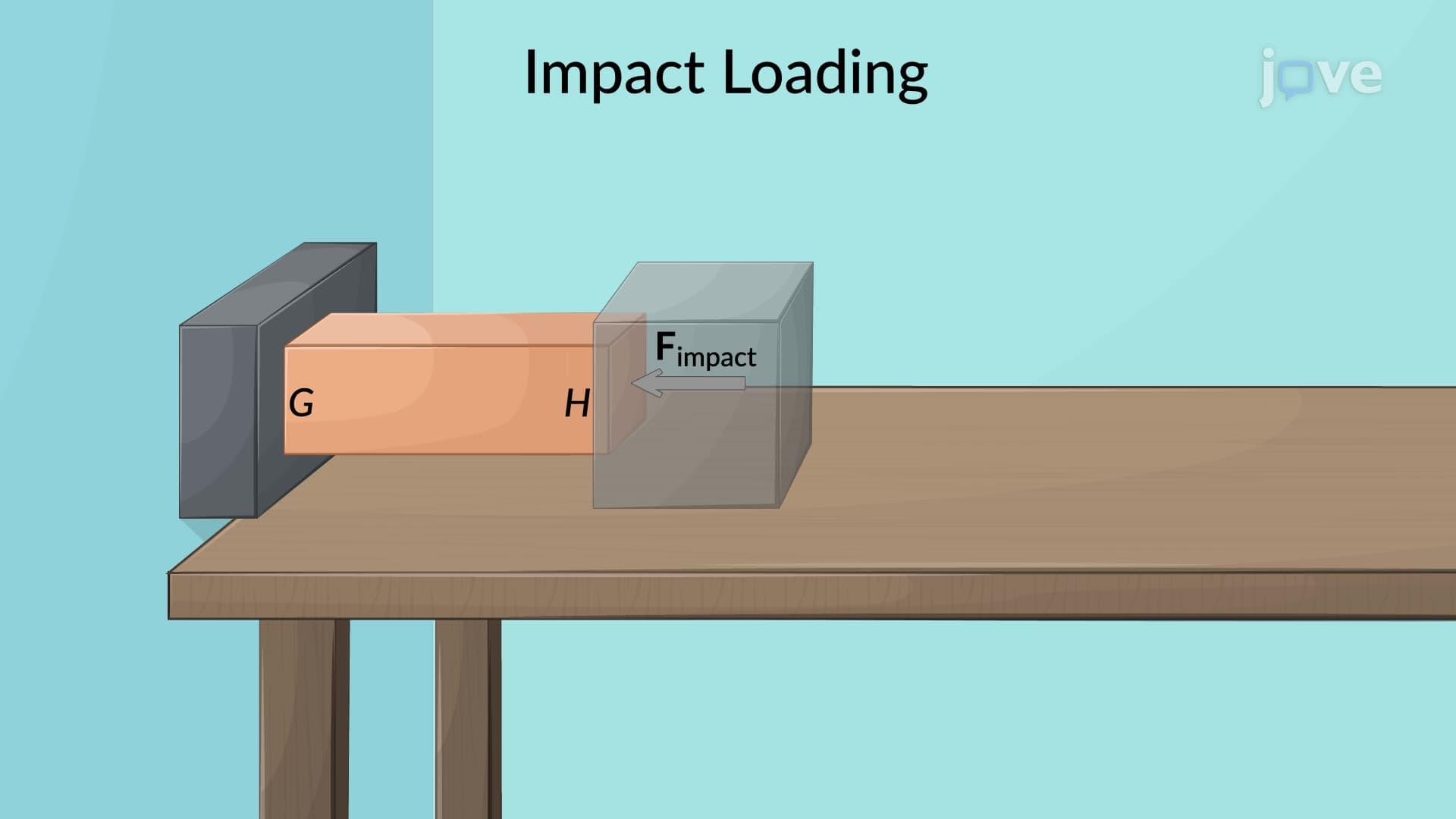
The modulus of toughness represents the total area under the stress-strain curve, indicating the total energy density required to fracture the material. This parameter is critical for crash safety applications in automotive design, where materials like high-strength steel in Ford F-150 frames must absorb maximum impact energy before failure.
Students preparing for AP Physics exams or college-level mechanics courses frequently encounter strain energy density problems involving beam deflection, spring systems, and material property comparisons. The concept appears regularly in MCAT physics sections, particularly in passages about biomechanical systems like bone structure and muscle elasticity. Understanding these relationships helps students tackle complex problems involving energy conservation in deformable systems and material selection criteria for engineering applications.
Frequently Asked Questions
Strain energy density is the strain energy stored per unit volume of material, measured in energy per volume units. While strain energy represents the total energy stored in an entire deformed object, strain energy density allows comparison between different materials and locations within a structure, making it essential for material selection and stress analysis.
AP Physics C and college mechanics exams typically test strain energy density through problems involving spring systems, beam bending, and material property calculations. Students must apply formulas relating stress, strain, and elastic modulus to determine energy storage capacity and predict material behavior under various loading conditions.
The MCAT physics section includes strain energy density in biomechanics passages about bone strength, muscle elasticity, and cardiovascular system mechanics. Understanding how biological materials store and release energy helps answer questions about joint function, arterial compliance, and injury mechanisms in human physiology.
Engineers use strain energy density to design everything from earthquake-resistant buildings in California to Formula 1 race car chassis. Boeing engineers calculate strain energy density to optimize wing structures for maximum fuel efficiency while maintaining safety margins during turbulence and landing stresses.
Not at all! High school students with basic algebra and physics knowledge can grasp strain energy density concepts. Starting with familiar examples like rubber bands and springs helps build intuition before introducing mathematical relationships and engineering applications.
Practice with stress-strain diagrams and focus on understanding the physical meaning behind mathematical formulas. Work through problems involving different materials like steel, aluminum, and rubber to see how material properties affect energy storage capacity and recovery behavior.
Strain energy density forms the foundation for advanced topics like fracture mechanics, fatigue analysis, and composite material design. Students planning careers in aerospace, automotive, or biomedical engineering will apply these concepts in designing everything from artificial joints to spacecraft components.
Explore stress concentrations, fatigue failure mechanisms, and viscoelastic behavior in polymers. Understanding how materials behave under dynamic loading conditions and cyclic stress builds on strain energy density fundamentals for advanced engineering applications.
Related Micro-courses
Related Subjects
 Civil Engineering 30 micro-courses›Electrical Engineering 33 micro-courses›