Loading…
Loading video…

4,629 views
Ever wonder why a steel beam in a skyscraper can bend under wind loads but return to its original shape? The answer lies in elastic strain energy for normal stresses—the energy stored in materials when they deform under load. When engineers design structures like the Golden Gate Bridge, they must calculate how much energy the steel cables can absorb before permanent damage occurs. This fundamental concept explains how materials store and release energy during elastic deformation under axial loading. Watch the full video on JoVE Coach to master this concept with expert-led visuals and step-by-step explanations.
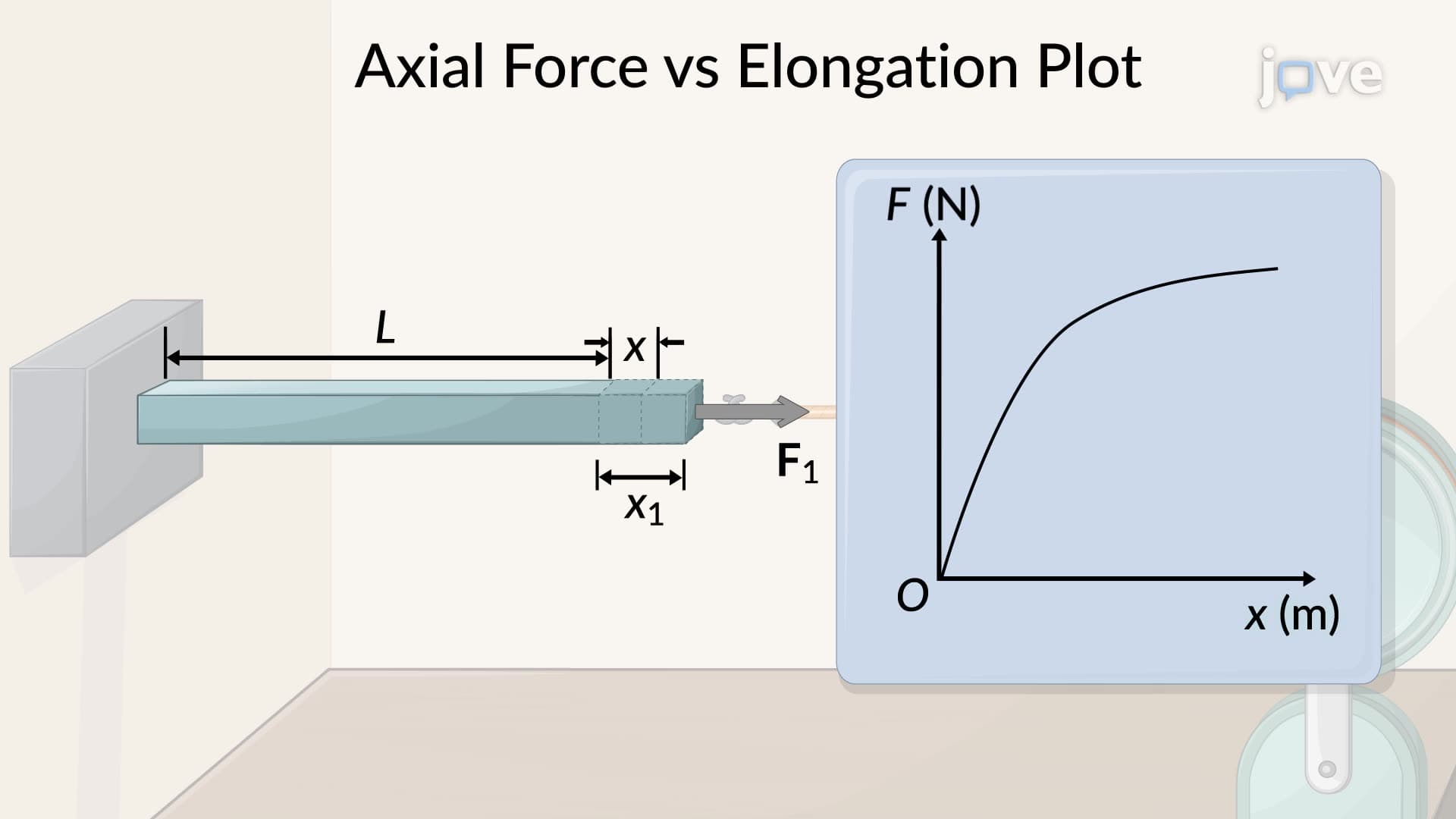
Elastic strain energy for normal stresses represents the energy stored within a material when subjected to axial loading that causes normal stress and corresponding strain. This energy storage mechanism is crucial for understanding material behavior in engineering applications, from the suspension cables on the Brooklyn Bridge to the landing gear struts on Boeing aircraft manufactured in Seattle.
When a material experiences normal stress under axial loading, it deforms elastically—meaning it will return to its original shape when the load is removed. During this deformation, energy is stored within the material's molecular structure. This stored energy can be calculated and quantified, providing engineers with essential data for design and safety analysis.
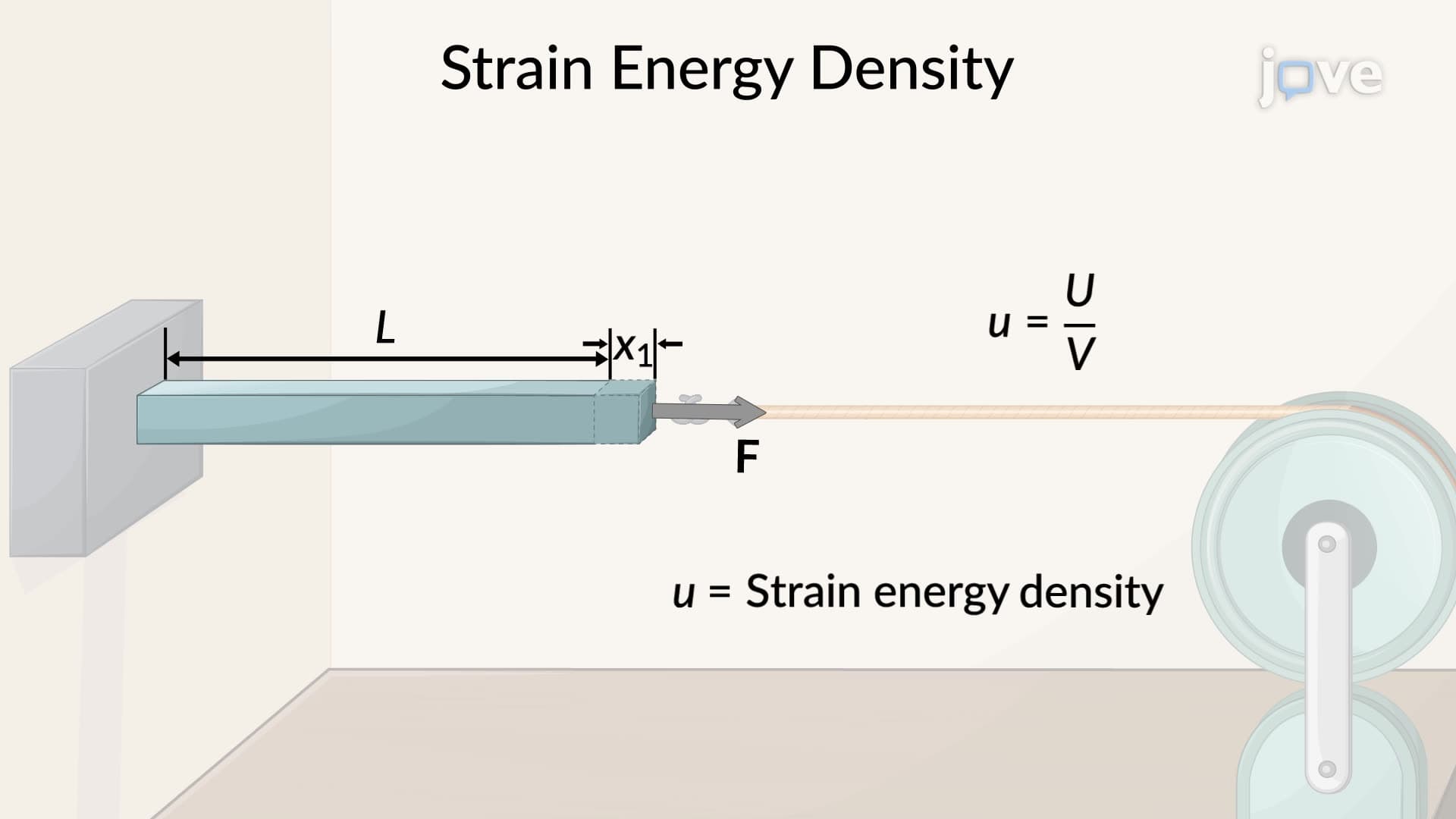
For materials experiencing uniform stress distribution, the strain energy density remains constant throughout the volume. This scenario commonly occurs in tension or compression members with consistent cross-sections, such as the vertical columns in Chicago's Willis Tower. The strain energy density is expressed as the product of applied stress and the resulting strain: u = (σ × ε)/2, where u represents strain energy density per unit volume.
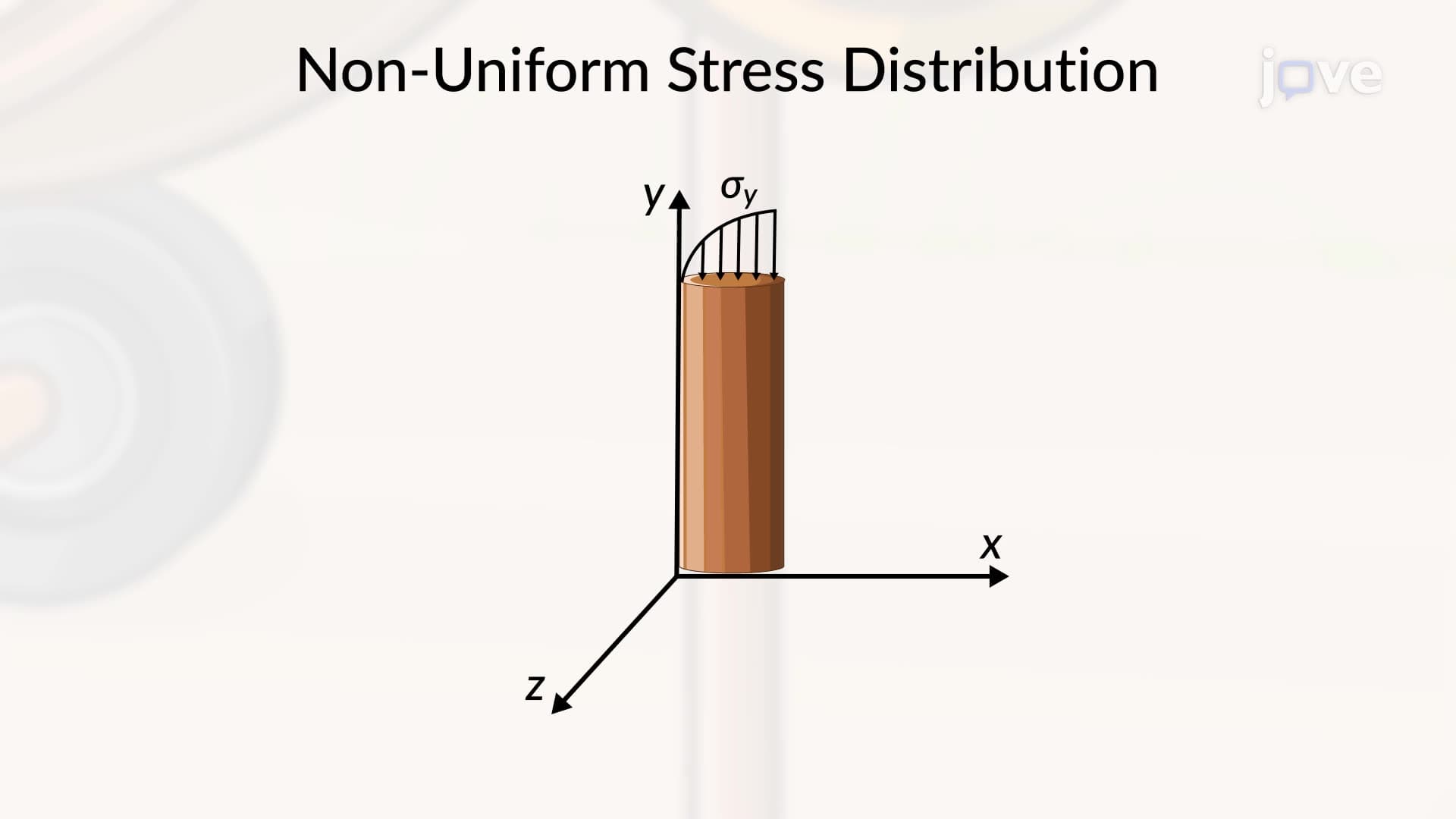
However, real-world applications often involve non-uniform stress distributions. In these cases, engineers must consider strain energy density for small volume elements and integrate over the entire material volume to determine total stored energy. This approach is particularly important when analyzing complex geometries like aircraft wing structures or automotive suspension components.
The total elastic strain energy stored in a material is obtained by integrating strain energy density over the entire volume: U = ∫(σ × ε)/2 dV. For centric axial loading with uniform stress distribution, this simplifies to more manageable forms that relate internal forces to material properties and geometry.
In AP Physics courses and college-level mechanics of materials classes, students encounter these concepts when analyzing structural members. The normal stress equation σ = P/A (where P is internal force and A is cross-sectional area) becomes fundamental for calculating strain energy in terms of applied loads and material properties. Understanding these relationships is essential for the Fundamentals of Engineering (FE) exam that many engineering students take before graduation.
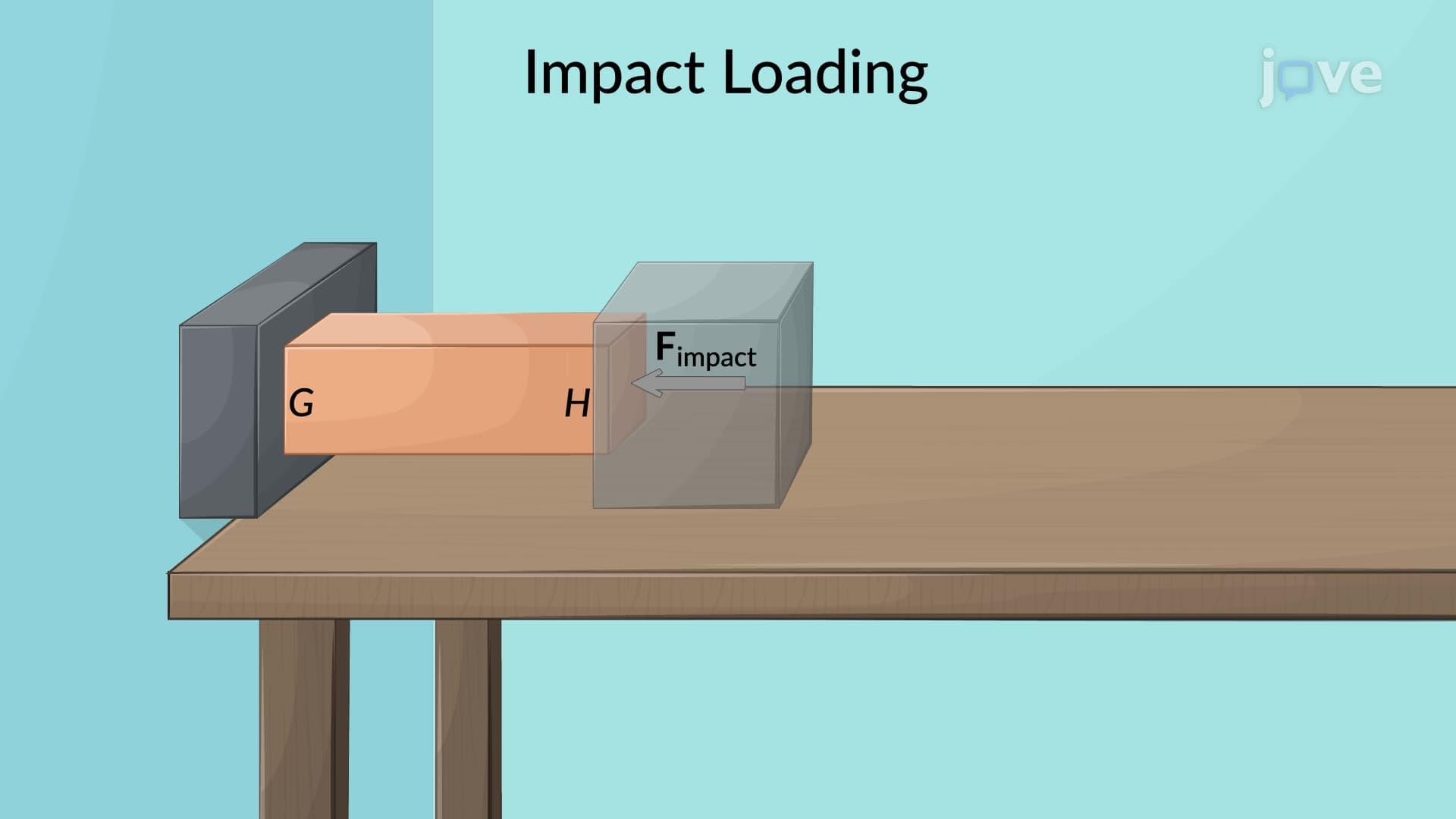
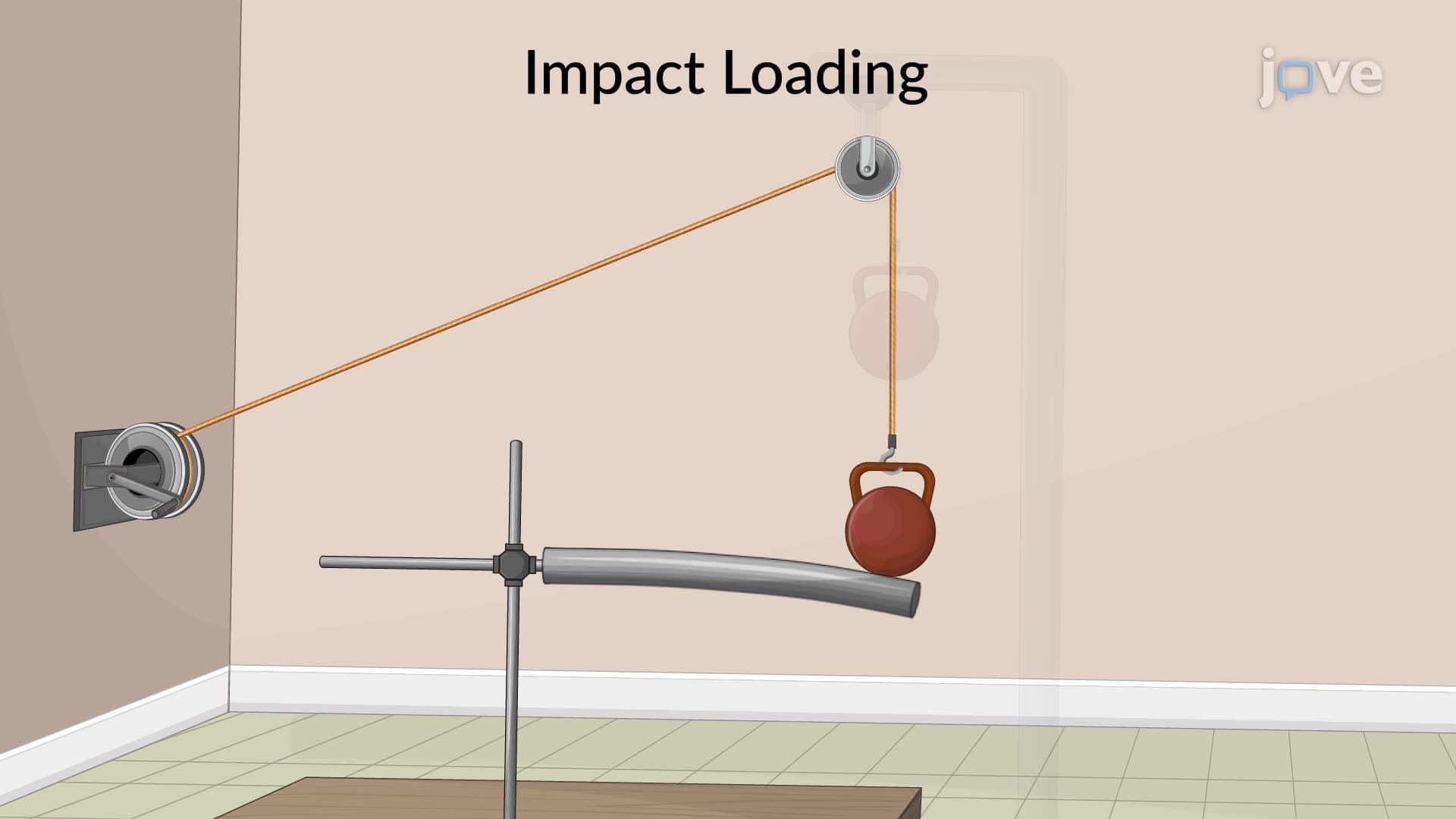
Professional engineers use elastic strain energy calculations to ensure structures can absorb expected loads without failure. For example, seismic engineers designing earthquake-resistant buildings in California must calculate how much energy structural members can absorb during ground motion. Similarly, automotive engineers designing crash-resistant vehicle frames rely on strain energy principles to create structures that absorb impact energy while protecting occupants.
Frequently Asked Questions
Elastic strain energy for normal stresses is the energy stored in materials when they deform under axial loading, causing normal stress and strain. This concept is crucial for engineers designing safe structures, as it helps predict how materials will behave under load and return to their original shape when forces are removed. Understanding this principle ensures structures can handle expected loads without permanent deformation or failure.
AP Physics C: Mechanics often includes problems involving elastic potential energy in springs and deformable materials. Students may encounter questions about energy storage in stretched or compressed objects, relating force, displacement, and material properties. The concept also appears in college-level statics and mechanics of materials courses, where it's essential for the Fundamentals of Engineering (FE) exam.
College mechanics courses typically include problems calculating strain energy in axially loaded members, comparing energy storage between different materials, and analyzing structures under various loading conditions. Students often solve problems involving tension rods, compression columns, and multi-segment structural members where they must apply integration techniques to find total stored energy.
While advanced applications require integration, the basic concepts can be understood with algebra and a solid grasp of stress-strain relationships. High school students can work with simplified uniform stress cases, while college courses introduce integration for non-uniform stress distributions. The mathematical complexity increases gradually as you advance through engineering coursework.
Engineers use these calculations when designing earthquake-resistant buildings in California, suspension bridges like San Francisco's Golden Gate Bridge, and aerospace structures for companies like Boeing and Lockheed Martin. Automotive engineers apply strain energy principles when designing crash-resistant vehicle frames, while civil engineers use them for analyzing wind loads on skyscrapers in cities like New York and Chicago.
Focus on mastering the fundamental stress-strain relationship and practice problems involving uniform loading first. Work through examples calculating strain energy density and total stored energy, then progress to more complex scenarios with varying cross-sections. Create a formula sheet linking stress, strain, elastic modulus, and energy relationships, and practice dimensional analysis to check your answers.
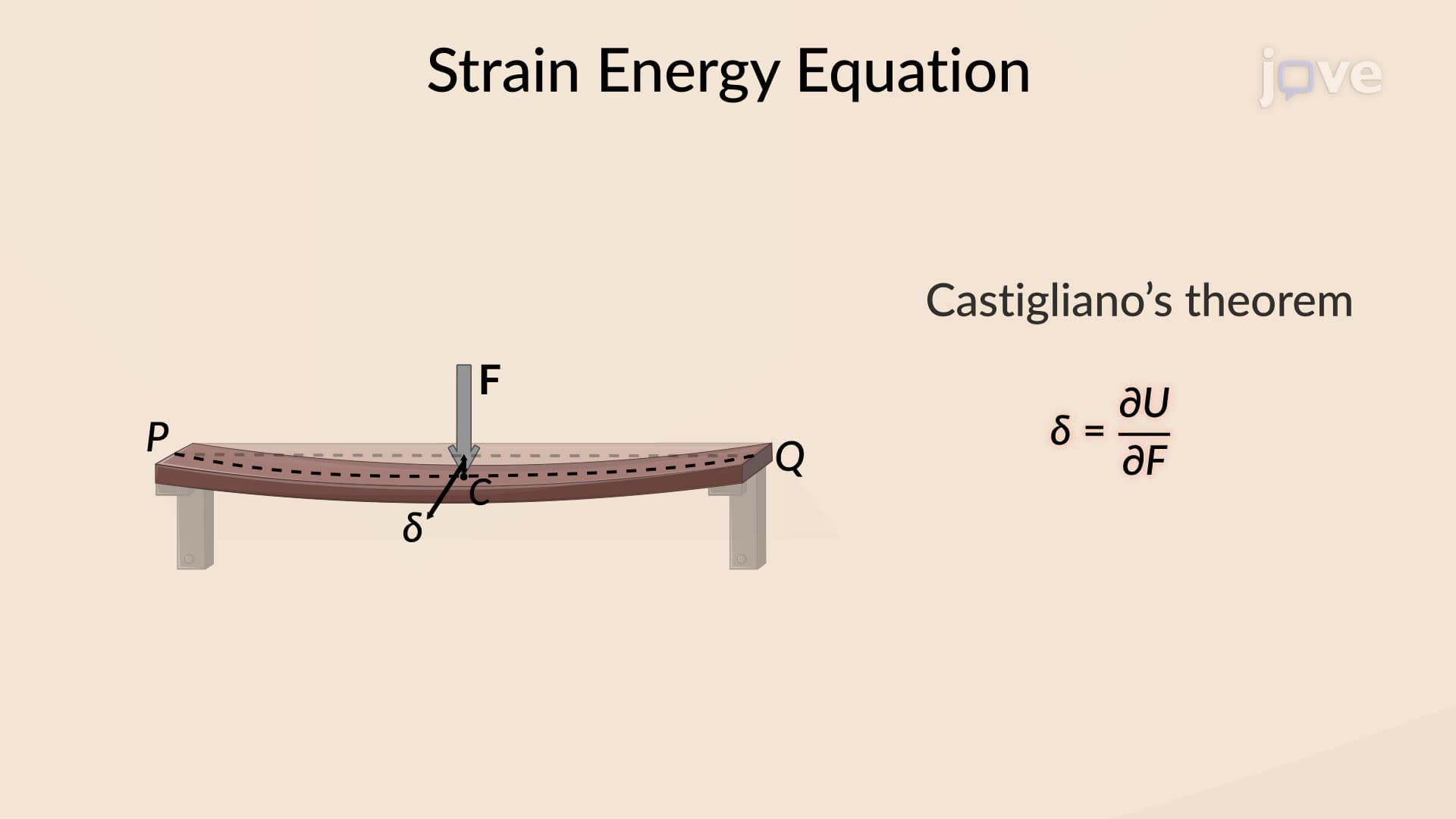
Next, explore shear strain energy, combined loading scenarios, and energy methods for structural analysis like Castigliano's theorem. Advanced topics include dynamic loading, fatigue analysis, and failure theories that build upon strain energy concepts. These form the foundation for upper-level courses in structural analysis and mechanical design.
Related Micro-courses
Related Subjects
 Civil Engineering 30 micro-courses›Electrical Engineering 33 micro-courses›