Loading subject page…
- Mechanical Engineering
- Equilibrium of a Particle
Mechanical Engineering
All Micro-courses:28

1.
Physics Basics
13 Concepts
2.
An Introduction to Statics
10 Concepts
3.
Force Vectors
17 Concepts
4.
Equilibrium of a Particle
6 Concepts
5.
Force System Resultants
20 Concepts
6.
Equilibrium of a Rigid Body
9 Concepts
7.
Structural Analysis
17 Concepts
8.
Internal Forces
14 Concepts
9.
Friction
19 Concepts
10.
Center of Gravity and Centroid
13 Concepts
11.
Moment of Inertia
12 Concepts
12.
Virtual Work
12 Concepts
13.
Kinematics of a Particle
4 Concepts
14.
Kinetics of a Particle: Force and Acceleration
5 Concepts
15.
Kinetics of a Particle: Impulse and Momentum
12 Concepts
16.
Planar Kinematics of a Rigid Body
13 Concepts
17.
3-Dimensional Kinetics of a Rigid Body
10 Concepts
18.
Concept of Stress
8 Concepts
19.
Stress and Strain - Axial Loading
20 Concepts
20.
Torsion
12 Concepts
21.
Bending
18 Concepts
22.
Analysis and Design of Beams for Bending
4 Concepts
23.
Shearing Stresses in Beams and Thin-Walled Members
6 Concepts
24.
Transformations of Stress and Strain
10 Concepts
25.
Principal Stresses under a Given Loading
4 Concepts
26.
Deflection of Beams
9 Concepts
27.
Columns
7 Concepts
28.
Energy Methods
8 Concepts
Equilibrium of a Particle
 6 Concepts
 16.5K Views
 Popular topics
Concepts: 6

01:23
1.8K views

01:28
3.1K views
01:22
2.4K views

01:30
1.3K views

01:25
4.9K views

01:30
3K views
Equilibrium of a particle occurs when all forces acting on an object result in zero net force, causing no change in motion. Through JoVE Coach, students master particle equilibrium conditions using free-body diagrams, force resolution, and equilibrium equations. Applications include analyzing structures, vehicles at constant velocity, and objects on inclined planes in engineering and physics coursework.
- Understand the fundamental conditions required for particle equilibrium in static and dynamic situations
- Learn to distinguish between static equilibrium (at rest) and dynamic equilibrium (constant velocity)
- Identify and classify different force systems: collinear, coplanar concurrent, and coplanar non-concurrent
- Explore the construction and interpretation of free-body diagrams for problem-solving
- Analyze coplanar force systems using component resolution and vector mathematics
- Apply equilibrium equations to solve real-world engineering and physics problems
- Understand how to resolve forces into perpendicular components using trigonometric functions
- Analyze complex systems involving friction, tension, and gravitational forces on inclined surfaces
1. Fundamental Equilibrium Conditions: A particle achieves equilibrium when two critical conditions are satisfied simultaneously. The net force (vector sum of all applied forces) must equal zero, and the net torque about any axis through the particle must be zero. This applies to both static equilibrium (particle at rest) and dynamic equilibrium (constant velocity motion). Consider a car traveling at steady 65 mph on Interstate 95 - the driving force equals air resistance and rolling friction, creating dynamic equilibrium. Understanding these conditions forms the foundation for analyzing structural stability in bridges, buildings, and mechanical systems throughout American infrastructure.
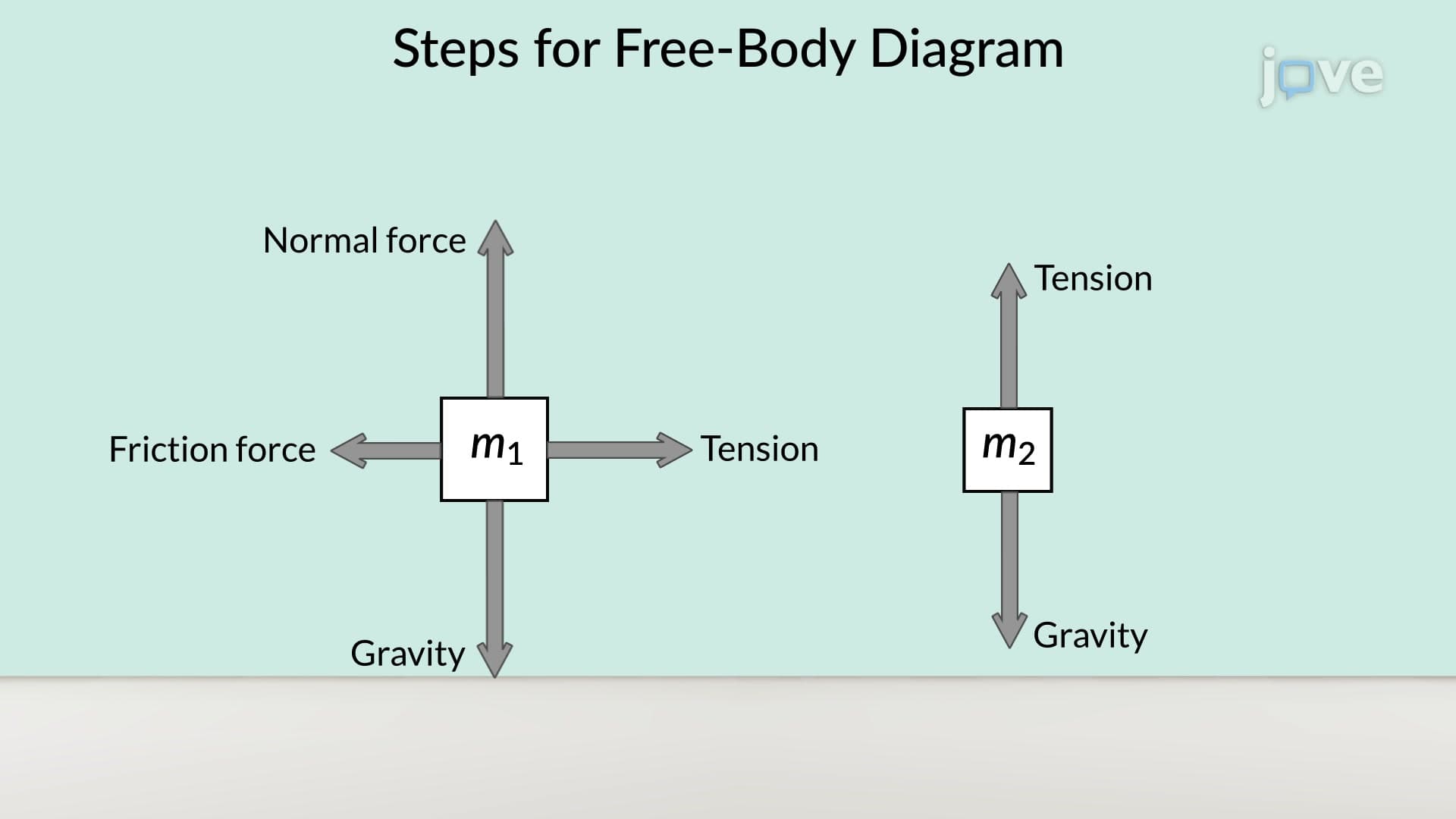
2. Free-Body Diagram Construction and Analysis: Free-body diagrams serve as essential visual tools that transform complex physical situations into manageable mathematical representations. These diagrams isolate the particle of interest and show all external forces as vector arrows, with direction indicating force orientation and length representing magnitude. For example, analyzing a traffic light suspended by cables requires drawing the light as a point with weight pointing downward and tension forces from each cable. This systematic approach enables engineers to design safe suspension systems for highway signs, building facades, and construction equipment used across American cities.
3. Coplanar Force Systems and Component Resolution: When multiple forces act on a particle within the same plane, the system requires careful component analysis for equilibrium determination. Forces are resolved into perpendicular components using trigonometric functions (sine and cosine), creating a coordinate system for mathematical analysis. The equilibrium equations state that the sum of forces in each direction must equal zero. This principle applies to analyzing forces on construction cranes, determining cable tensions in suspension bridges like San Francisco's Golden Gate Bridge, and calculating support forces in stadium roof structures throughout major American sports venues.
4. Classification of Force Systems: Understanding different force system categories enables proper analysis technique selection. Collinear forces act along the same line (like tug-of-war), coplanar concurrent forces meet at a single point (cable-supported loads), and coplanar non-concurrent forces are parallel but offset (beam loading). Each system type requires specific equilibrium equations and solution approaches. For instance, analyzing forces on a highway billboard requires coplanar concurrent analysis for wind loads meeting at the sign's center, while bridge deck loading involves coplanar non-concurrent parallel forces from vehicle weights distributed across the span.